From the specialized market of bigger pitch applications of XR and VP to the super-fine-pitch applications of mini-/micro-LEDs aimed at high-end indoor displays, including home theaters, security rooms, etc., the uses of LED displays are still growing. According to a 2023 market research analysis by LEDinside, these applications have contributed to the LED industry's robust expansion. The market value of the LED display sector is expected to reach USD 13 billion in 2026, with a projected CAGR of 14% from 2021 to 2026.
Note 1: LEDinside: Report on Cost Analysis and Views on the Global LED Display Market
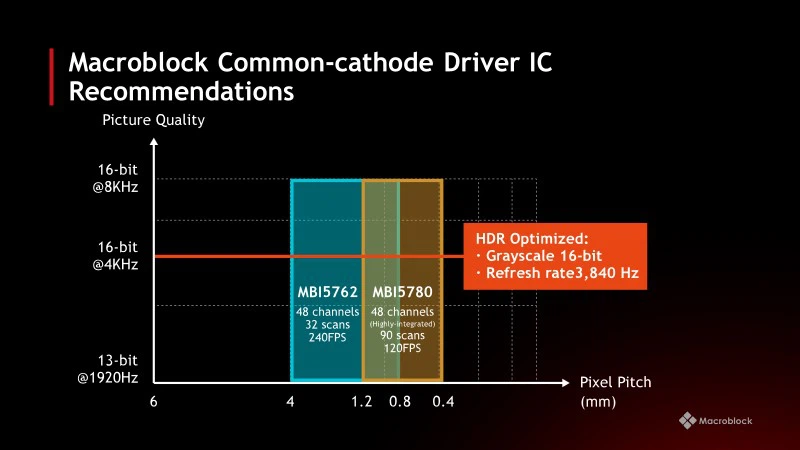
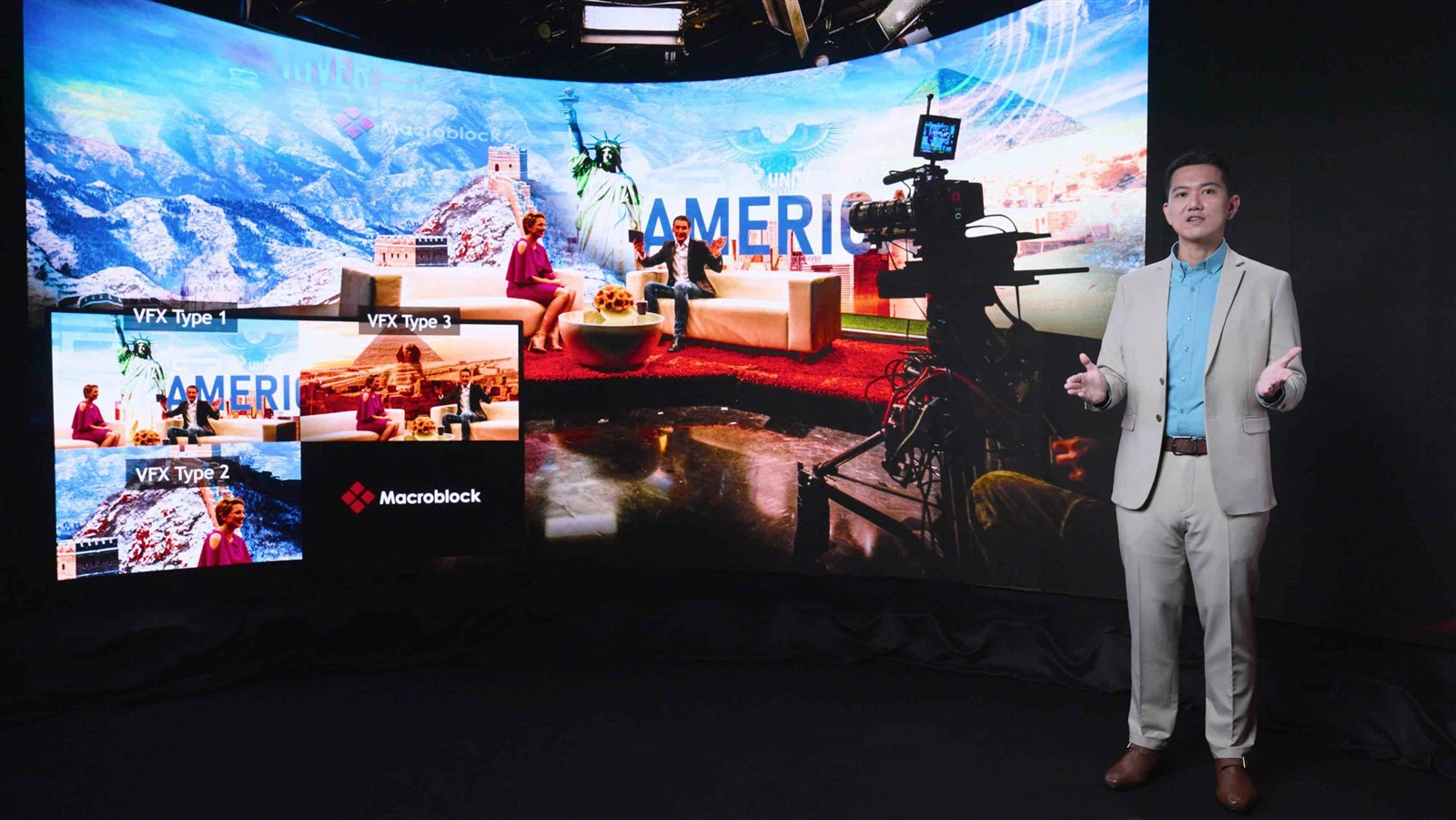
XR/VP applications demand slow-motion and multi-camera filming, and the LED display can handle a 240 FPS video feed.
Multi-camera filming is becoming more and more popular as a way to save shooting expenses and boost shooting versatility. Only two cameras can capture images from the LED screens that enable 60 frames per second. Nonetheless, four cameras may record at the same time on LED screens that handle 240 frames per second. For programs aimed for a worldwide audience, this production technique is easier. Ads for other nations will be rendered differently and captured by different cameras. 240 photos are taken every second and replayed in 4 seconds for slow-motion photography. This enhances smoothness and lessens the performers' performance challenges.
High-scan LED displays to minimize component counts; driver ICs with a QFN package to lessen maintenance challenges; mini-/micro-LED displays upgraded to 8K resolution
The resolution of mini-/micro-LED screens upscales as display performance requirements rise. At ISE 2023, LG demonstrated a micro-LED panel with 8K resolution, demonstrating the ongoing trend of resolution upscaling. Additionally, the LED display becomes smaller due to the decreasing pixel pitch. This indicates that LED screens are becoming more popular in business settings.
Compared to a 32-scan design with the same 48 channels, an LED display with a 90-scan design may lower driver IC counts by 65% in response to lighting rising pixels caused by reducing pixel pitch and resolution upscaling. Additionally, we need to focus on the driver IC package. LED modules are expensive to repair, and driver integrated circuits (ICs) with a QFN package are much simpler to rework than those with a BGA package. Cost pressures may be reduced in this manner.
LED display driver integrated circuit is prepared for gigabit frequency | Use lesser frequency to simulate greater frequency
The "core frequency" of LED driver integrated circuits is crucial for supporting LED displays with high frame rates or high scan designs while preserving 16-bit grayscale at a refresh rate of 7,680. Macroblock enhances driver integrated circuits by "algorithm optimization" and "improving computing power." This indicates that the driver IC can reach 240MHz GCLK by 30MHz GCLK by simulating 8X core frequency. Lowering the driver IC's loading contributes to lower power consumption and the fulfillment of high-end display requirements.

Compared to a 32-scan design with the same 48 channels, an LED display with a 90-scan design may lower driver IC counts by 65% in response to lighting rising pixels caused by reducing pixel pitch and resolution upscaling. Additionally, we need to focus on the driver IC package. LED modules are expensive to repair, and driver integrated circuits (ICs) with a QFN package are much simpler to rework than those with a BGA package. Cost pressures may be reduced in this manner.
LED display driver integrated circuit is prepared for gigabit frequency | Use lesser frequency to simulate greater frequency
The "core frequency" of LED driver integrated circuits is crucial for supporting LED displays with high frame rates or high scan designs while preserving 16-bit grayscale at a refresh rate of 7,680. Macroblock enhances driver integrated circuits by "algorithm optimization" and "improving computing power." This indicates that the driver IC can reach 240MHz GCLK by 30MHz GCLK by simulating 8X core frequency. Lowering the driver IC's loading contributes to lower power consumption and the fulfillment of high-end display requirements.

MBI5780 | Mini-/micro-LED screens with very fine pitch
48 channels, scan-sharing architecture, excellent integration, a maximum 90-scan design, and applied pitch beginning at 0.4mm are among the characteristics of the MBI5762 product. Additionally, it retains outstanding display performance and offers 120 frames per second. The visual performance will be impacted by power consumption because of the very tiny applied pixel pitch. Excellent power usage is seen in the thermal imaging below. The difference between regions with and without driver ICs is just 4°C. The PCB has a temperature below 40°C.

By resolving heat and power consumption challenges, Macroblock improves solutions for super-fine-pitch display applications while addressing the high frame rate problems of XR and VP. Without a doubt, this will help high-end LED displays have a bright future.