

Introduction: What "Fuller and Healthier" Actually Means
The Morphological Definition: Compactness as a Measurable Trait
A "full" plant is, in horticultural terms, a compact plant. Internode length is the primary morphological determinant of fullness: shorter internodes produce a denser canopy, more branching sites per unit stem length, and a more visually substantial plant. Internode extension is regulated by the interaction of gibberellic acid (GA) and blue-light signaling. Blue photons absorbed by cryptochrome photoreceptors activate a signaling cascade that suppresses GA biosynthesis, thereby inhibiting cell elongation and maintaining compact architecture. The practical implication is direct: a light source deficient in blue-or too weak in overall intensity-produces elongated, spindly growth regardless of how "bright" it appears to the human eye.
The Physiological Definition: Health Beyond Appearance
Health encompasses the traits that predict resilience and quality: pigment content, tissue density, root-to-shoot balance, and the accumulation of secondary metabolites that contribute to stress tolerance and nutritional value. Controlled-environment studies have demonstrated that spectral composition modulates not only yield but the metabolic profile and morpho-anatomical differentiation of the harvested tissue. A light upgrade that produces a fuller plant without supporting these underlying physiological dimensions is a cosmetic intervention; the integrated full-spectrum tube is designed to deliver both simultaneously.

The Photobiological Levers of Fullness and Health
Blue Light: The Compactness Signal
The evidence for blue light's morphological role is among the most consistent in plant photobiology. Seedlings receiving 30% blue light produced measurably shorter hypocotyls than those at 10% blue, with no reduction in dry mass accumulation-the growth rate stayed the same, but the shape changed toward compactness. In practical terms, blue-mediated cryptochrome signaling reduces internode length by approximately 12–15%, producing denser, more highly branched shoots.
This is the mechanism by which an LED tube upgrade produces a "fuller" plant. Fluorescent tubes emit a spectrum optimized for human vision, with a blue fraction that varies by color temperature and is often insufficient to suppress elongation at close shelf distances. A full-spectrum LED tube with a deliberate blue component-typically 20–30% of total photon output-supplies the signal that keeps internodes short and branching prolific.
Green Light: Penetration and Canopy Health
Green light (≈500–600 nm) is photosynthetically active but frequently undervalued because chlorophyll absorbs it less efficiently than red or blue. At the canopy scale, however, green photons penetrate deeper into leaf tissue and lower canopy layers than red and blue, which are preferentially absorbed in the upper strata. In a dense, "full" canopy, this penetration is what keeps lower leaves photosynthetically competent and delays the senescence that produces a hollow, bare lower stem.
Full-spectrum tubes that include a broad green shoulder therefore support whole-canopy health, not merely the appearance of the upper leaves. The visual benefit is compounded: white full-spectrum output allows the grower to detect leaf yellowing, pest pressure, and nutrient deficiency with the naked eye-diagnostic capabilities that are compromised under pink-purple red-blue lighting.
Far-Red and the Phytochrome Balance
A modest far-red component (≈730 nm) engages the phytochrome system, influencing leaf expansion and the plant's light-acclimation strategy. In a full-spectrum formulation, far-red signals a productive light environment rather than a shade-avoidance trigger, supporting the expansive leaf area that contributes to both fullness and photosynthetic capacity. A spectral graph showing zero photon flux above 700 nm indicates a tube designed for PAR delivery alone, without the photomorphogenic completeness that distinguishes a horticulturally mature spectrum.
Intensity and DLI: The Quantity That Sustains Quality
Spectrum sets the morphological direction; daily light integral (DLI) sets the magnitude. For vegetative growth in leafy greens and herbs, a DLI of 12–20 mol·m⁻²·d⁻¹ is the practical target, corresponding to a PPFD of 200–350 μmol·m⁻²·s⁻¹ over a 14–18 hour photoperiod. At lower DLIs, spectral treatments can have a proportionally larger impact; above approximately 7 mol·m⁻²·d⁻¹, meeting the PPFD target matters more than fine-tuning the spectrum. A full-spectrum tube that delivers sufficient PPFD at shelf distance therefore addresses both the qualitative and quantitative dimensions of fullness and health.
The Upgrade Case: Why the Tube Format and Why LED
The Physical Fit: Linear Geometry for Shelf and Rack Systems
The T8 tube format solves a constraint that panel and bulb fixtures do not: it delivers light along the full length of a growing row without consuming vertical clearance or casting the broad shadows of a point-source fixture. In multi-tier shelving, a 1200 mm tube matches standard rack widths; its slim profile sits close to the canopy, and its even bead arrangement distributes light across the shelf rather than concentrating it at a center point. The result is uniform fullness across the entire tray, not a full center and pale edges.
Efficacy and Spectrum in a Single Integrated Unit
The integrated T8 LED tube consolidates lamp, driver, and optics into a sealed unit, eliminating ballast compatibility issues and simplifying installation. Efficacy in the 2.5–2.9 μmol/J range means that the spectral quality described above is delivered at 40–60% lower electricity consumption than a fluorescent tube of comparable photon output. The upgrade therefore improves plant fullness and health while reducing the operating cost that constrains how many hours the lighting system can run-a double leverage that fluorescent systems cannot match.
Thermal and Reliability Specifications for Long-Term Health
A plant's health depends on the consistency of its light environment over weeks and months, not on a single perfect day. The tube's aluminum housing conducts junction heat away from the LED chips, preserving spectral stability and preventing the canopy heat load that can stress tissue at close mounting distances. IP65 or higher ingress protection and a rated lifespan of 35,000–50,000 hours to L70 ensure that the spectral and intensity specifications remain stable across multiple crop cycles, without the gradual output decline and annual relamping cycle of fluorescent tubes.
A Practical Specification for the "Fuller and Healthier" Upgrade
Matching the Tube to the Crop and Space
For leafy greens and herbs grown on shelves, a full-spectrum tube delivering 250–350 μmol·m⁻²·s⁻¹ at 20–30 cm is the appropriate specification, with a blue share of 20–25% to maintain compactness and a green component for lower-canopy penetration. For fruiting or flowering crops in the vegetative stage, the same tube at 300–400 μmol·m⁻²·s⁻¹ supports the structural growth that precedes reproductive development. The linear format and linkable connectors allow the grower to configure the array to the shelf width and to expand incrementally, one tier at a time.
What to Verify Before Purchase
The procurement sequence is the same regardless of crop. First, demand a measured spectral distribution graph showing non-zero flux in blue, green, red, and far-red; a graph lacking green or far-red is a narrow-spectrum tube in white packaging. Second, require efficacy ≥2.5 μmol/J and verify it by dividing stated PPF by input wattage. Third, request distance-indexed PPFD data at 15–30 cm with a uniformity statement; a center-point maximum without a distance is not actionable. Fourth, confirm aluminum housing, IP65 minimum, and a 35,000-hour L70 rating with a three-to-five-year warranty.
Table 1. Specification Targets for the Fuller-and-Healthier Upgrade
| Parameter | Target | Function |
|---|---|---|
| Blue share | 20–25% of total photons | Cryptochrome-mediated compactness |
| Green band | Meaningful 500–600 nm component | Lower-canopy penetration, visual diagnostics |
| Far-red | ≈730 nm present (non-zero) | Phytochrome balance, leaf expansion |
| PPFD at shelf | 250–350 μmol·m⁻²·s⁻¹ | DLI 12–20 mol·m⁻²·d⁻¹ |
| Efficacy | ≥2.5 μmol/J | Energy-efficient photon delivery |
| Housing | Aluminum extrusion | Thermal stability, spectral consistency |
| Ingress protection | IP65–IP66 | Reliability in humid environments |
Conclusion: The Upgrade Is Spectral and Quantitative, Not Cosmetic
The difference between a sparse, pale plant and a full, healthy one is not a matter of "care" in some diffuse sense. It is the product of blue-mediated morphological regulation, broad-spectrum canopy penetration, and sufficient daily photon dose-three variables that are directly controlled by the lighting fixture. The integrated full-spectrum T8 LED grow tube is the single most direct intervention available to the indoor grower because it addresses all three variables in a format that fits the infrastructure the grower already has. The evidence from controlled-environment research is consistent: when the blue share is adequate, compactness improves without a loss of dry mass; when the spectrum includes green and far-red, canopy health and visual quality improve; and when the tube delivers ≥2.5 μmol/J at shelf distance, the upgrade pays for itself in electricity savings while producing the fuller, healthier plants that motivated the purchase in the first place. The simple upgrade is not the fixture alone. It is the specification-and the specification is knowable before the first tube is installed.
How To Cooperate With Us?
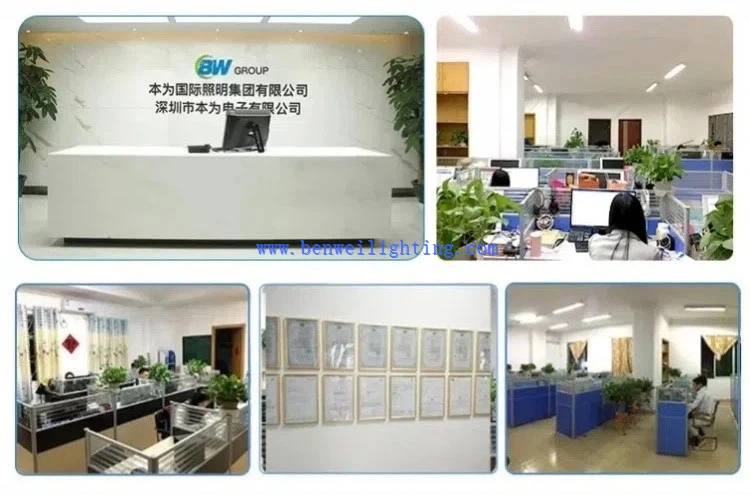
Our firm prides itself on owning its own factory, guaranteeing complete control over the production process and the quality of our goods. We are not only agents; we are manufacturers committed to offering our clients the most competitive rates available. We invite consumers to evaluate our samples first, as we are assured that the quality and pricing of our items are self-evident. Our dedication to excellence and client satisfaction compels us to consistently perform at our best and provide superior quality products.
Our address
3rd Floor, 5th Building, Hebei Industrial Park, Hualian Community, Longhua District, Shenzhen, China





