

Lighting industrial facilities, warehouses, and large commercial venues requires establishing the quantity of high bay lights. Scientific calculations underpin this estimation. Insufficient lighting generate dark regions in the workplace, hurting efficiency and safety, while excessive lights waste energy and cause glare. Quantity planning requires a thorough understanding of the space. First, measure the space's length, width, and most importantly, the ceiling or installation points. High bay lights are suited for high spaces. Effective lighting targets the working plane, such as shelves or machine operation platforms, thus its height must also be considered.
Set illumination standards and calculate total luminous flux
After calculating spatial dimensions, estimate the space's illuminance level. Lux measures light flux per unit area. Task-specific illuminance requirements vary substantially. A precision assembly or quality inspection workshop may need more above 500 lux, whereas a storage warehouse may need 200 to 300 lux. Lighting design standards or industry recommendations can help you set the target illuminance value. Calculate the total luminous flux needed. To calculate the space's total luminous flux, multiply the floor area by the goal illuminance. This number determines lighting fixture number and power.
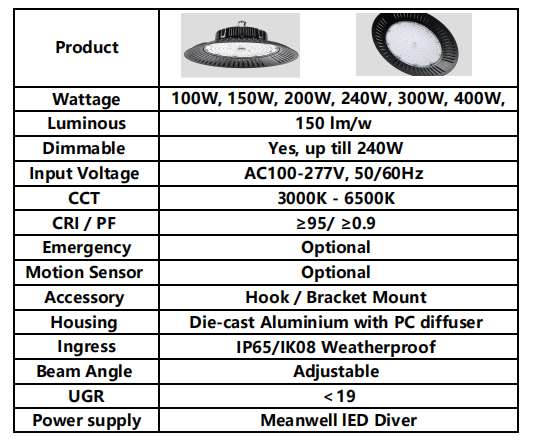
Considering essential components determines the ultimate number
The overall luminous flux requirement can be compared to a single high-bay lamp's output. Modern LED high-bay lights are more efficient than previous light sources. A 100-watt to 200-watt LED high-bay lamp may produce over 20,000 lumens. However, the calculation is not simple division. There are several main variables that attenuate light. The maintenance factor accounts for dust and lamp light attenuation-induced brightness loss. Light distribution is also affected by wall and ceiling reflectance. Lighter colors reflect better. Finally, the utilization factor, which measures the amount of light that reaches the working plane, is affected by room design, lamp light distribution, and installation height. All these elements can be added to a confirmed lighting calculation method to get the most accurate lamp suggestion. Finalize the lighting system by measuring illuminance and making modifications after installation to ensure it matches your space needs.
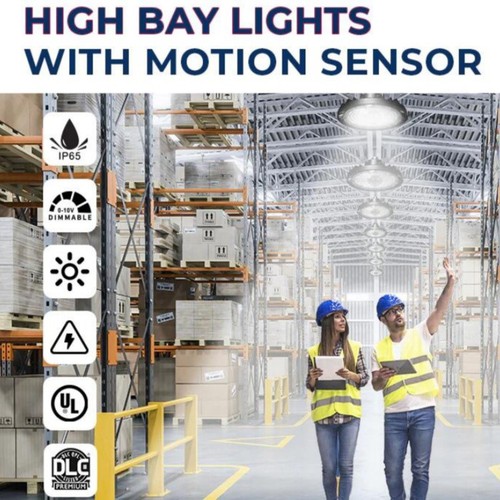
For more details about our offerings, please contact us at bwzm18@ledbenweilighting.com.
FAQ
Q: What is the high bay lamp? Where is it mainly used?
A: The high bay lamp is a high-power and high-efficiency lighting fixture specifically designed for large spaces. Its name directly indicates its application scenario - "high-rise industrial factories". These lamps are usually installed on the ceiling or roof structure, with an installation height generally above 6 meters, aiming to provide uniform and sufficient general lighting for the large area below. Typical application scenarios include: Factory workshop, manufacturing and assembly area Logistics warehouse, distribution center Sports venues, gyms The shelf area of the large supermarket Hangar, maintenance hangar
Q: What are the advantages of LED high bay light?
A: The absolute advantages of LED high bay lights: Energy saving: It is more than 50% more energy-efficient than traditional lamps, with higher light output. Long lifespan: The service life can exceed 50,000 hours, significantly reducing maintenance costs and replacement frequencies. Instant start: Lights up immediately upon power-on, without the lengthy start-up and restart time of traditional metal halide lamps. Excellent optical control: The light distribution is more precise, enabling uniform illumination and reducing glare. Better color rendering: High color rendering index, capable of more accurately reproducing the colors of objects, enhancing the quality of the working environment.





