

Introduction: The Hidden Core of LED Lighting Quality
Market Status of Recessed LED Downlights
With the continuous upgrading of indoor lighting standards, traditional incandescent lamps and fluorescent lamps have been completely phased out of commercial and residential lighting markets. Recessed LED downlights, featuring concealed installation, space-saving design, uniform light emission, and low power consumption, have become the preferred lighting fixture for home decoration, office buildings, shopping malls, hotel corridors, and engineering renovation projects. According to global lighting industry data, LED lighting products account for more than 90% of indoor civilian and commercial lighting applications, among which recessed downlights occupy the largest market share of embedded ceiling lighting products.
However, the LED downlight market presents a serious homogenization and uneven quality phenomenon. Low-cost inferior products generally adopt thin iron shells, plastic heat dissipation structures, and non-isolated drivers, which can only maintain basic lighting functions in the short term. After 1–2 years of use, these products are prone to obvious luminous attenuation, color shift, stroboscopic flicker, and even short-circuit burnout. In contrast, high-quality engineering-grade recessed LED downlights take thermal management as the core design breakthrough point, solving the fundamental pain points of short service life and unstable lighting effect of ordinary products.
The Essential Role of Heat Dissipation in LED Lighting Systems
Different from traditional light sources that emit heat through infrared radiation, LED lighting chips convert only 15%–30% of electric energy into visible light, while the remaining 70%–85% of electric energy is converted into thermal energy gathered at the LED junction. This concentrated heat cannot be dissipated automatically and must be exported through professional heat conduction and convection structures. Relevant research from the U.S. Department of Energy and international LED lighting laboratories verifies that LED junction temperature is the most critical factor affecting lighting quality and service life. Every 10°C increase in junction temperature will halve the theoretical service life of LED chips and significantly accelerate luminous decay and color distortion.
Excellent heat dissipation design is not only a technical upgrade of lamp structure, but also the core premise of realizing long-term stable, high-quality lighting. It directly determines the lamp's luminous consistency, color rendering stability, power loss control, and safety performance throughout the service cycle. Therefore, when evaluating the comprehensive performance of recessed LED downlights, heat dissipation capacity is far more important than superficial parameters such as power and brightness, and it is the core standard to distinguish high-end engineering-grade products from low-end civilian products.
Thermal Damage Mechanism: Why Ordinary Downlights Degrade Rapidly
Thermal Aggregation Causes Severe Luminous Decay
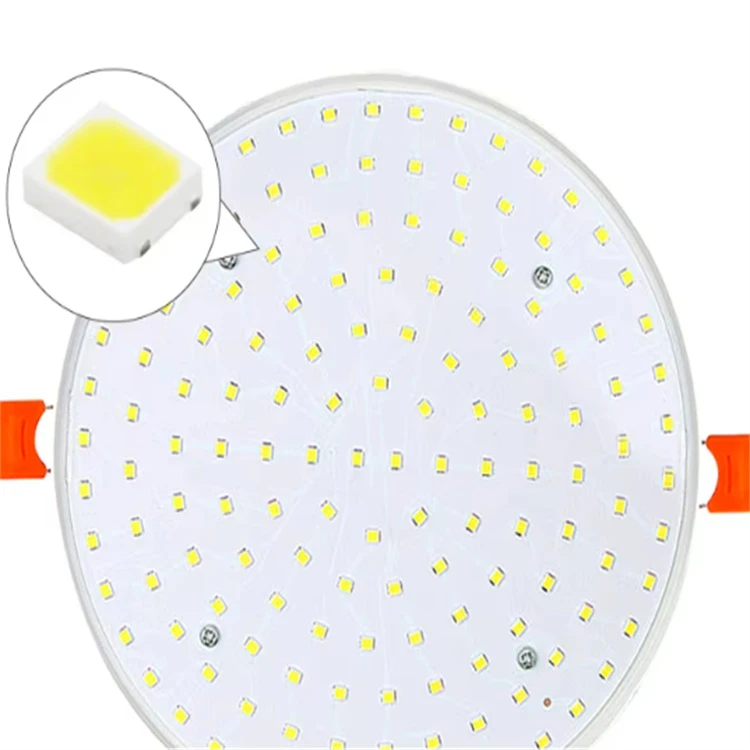
Luminous decay is the most intuitive performance degradation of LED downlights in long-term use, and excessive heat accumulation is the root cause. Inferior downlights on the market mostly use thin plastic shells or thin iron stamping shells with extremely low thermal conductivity. After long-term power-on operation, the heat generated by 2835 SMD LED chips cannot be exported in time, resulting in continuous high-temperature operation of the chip junction. Under high-temperature thermal stress, the semiconductor material of the LED chip undergoes irreversible aging, the luminous efficiency decreases continuously, and the luminous flux depreciates rapidly.
Industry test data shows that ordinary low-quality LED downlights have a luminous decay rate of 15%–30% per year. After 5,000 hours of use, the brightness will drop by more than 40%, and the lighting effect will be significantly dimmer, requiring frequent replacement. In severe cases, local overheating of the chip will cause partial light failure, resulting in uneven local brightness of the lamp surface and seriously affecting the overall lighting aesthetic and uniformity.
High Temperature Induces Color Shift and Flicker Failure
Continuous high-temperature operation will also damage the phosphor coating on the surface of LED chips, leading to uneven phosphor aging and serious color shift problems. New ordinary downlights can achieve basic white light output, but after a period of heat accumulation, the light color will turn yellow or blue, resulting in distorted object color rendering and greatly reduced indoor lighting texture. For commercial scenarios such as shopping malls, exhibition halls, and high-end hotels with high color rendering requirements, color shift will directly affect the display effect of goods and space grade.
In addition, long-term high-temperature baking will cause the internal electronic components of the LED driver to age rapidly, resulting in unstable current output. Unstable current supply will trigger high-frequency stroboscopic flicker that is invisible to the naked eye. Long-term exposure to flickering light will cause eye fatigue, dryness, and vision loss, which cannot meet the eye-friendly lighting standards of modern homes and office spaces.
Thermal Aging Shortens Overall Lamp Service Life
The service life of LED downlights is a comprehensive system index, including chip life, driver life, and shell structural life. High temperature is the biggest killer of all electronic components. High heat accumulation will accelerate the aging of driver capacitors, resistors, and integrated circuits, reduce the insulation performance of internal circuits, and easily cause short circuits, open circuits, and lightning surge damage. At the same time, long-term thermal expansion and contraction will cause structural deformation of the lamp shell, loose internal wiring, and falling off of light guide plates, resulting in premature scrapping of the entire lamp.
The average service life of ordinary heat-dissipation-deficient downlights is only 8,000–15,000 hours, which requires frequent replacement and maintenance, greatly increasing the later operation cost of household and engineering lighting projects.
Superior Heat Dissipation Design of Premium Recessed LED Downlights
Thickened Die-Cast Aluminum Integrated Heat Sink Structure
Different from the thin and simple heat dissipation structure of ordinary products, our premium recessed LED downlights adopt integrated thickened die-cast aluminum heat sink as the core thermal management structure, which is the key to realizing ultra-efficient heat conduction and convection. Ordinary products use thin iron or thin aluminum plates with flat single-layer heat dissipation, which has small heat dissipation area and low thermal conductivity. In contrast, the die-cast aluminum alloy material selected for our products has a thermal conductivity of up to 201W/(m·K), which is 3 times higher than that of ordinary iron materials and 1.5 times higher than that of ordinary thin aluminum materials.
The integrated die-casting process eliminates the assembly gaps of spliced heat sinks, realizes seamless connection between the heat sink and the LED light board, completely fits the heat source surface, and rapidly conducts the high heat generated by the LED chip from the junction to the overall lamp shell. The thickened shell design increases the heat capacity of the lamp body, avoids instantaneous heat accumulation during high-power operation, and maintains a stable low-temperature working state of the chip for a long time.
Three-Dimensional Convection Heat Dissipation System
On the basis of high thermal conductivity materials, the product adopts a three-dimensional rib convection heat dissipation structure. The surface of the die-cast aluminum heat sink is designed with dense vertical heat dissipation ribs, which greatly expand the effective heat dissipation area by more than 60% compared with flat heat sinks. The rib structure forms an independent air convection channel inside and outside the lamp body. According to the thermal convection principle, hot air rises and cold air supplements automatically, realizing passive circulating heat dissipation without electric auxiliary equipment.
This structural design ensures that the heat generated by long-term continuous operation of the LED chip can be quickly exported and dissipated into the ambient air, effectively controlling the LED junction temperature within 55°C–65°C, far lower than the 85°C critical aging temperature of ordinary downlights. Stable low-temperature operation fundamentally suppresses thermal aging of chips and electronic components, creating the most basic guarantee for long-term high-quality lighting.
Overall Anti-Temperature Aging Structural Optimization
In addition to the core heat sink, the whole lamp carries out targeted anti-thermal-aging optimization. The light guide diffuser plate adopts high flame-retardant and high-temperature-resistant PC material, which will not deform, yellow or age under long-term high-temperature baking, maintaining uniform and soft light output for a long time. The internal wiring adopts high-temperature-resistant flame-retardant wires, which can resist thermal oxidation and avoid line aging and short-circuit risks. The reinforced anti-rust spring mounting clips undergo special anti-corrosion and high-temperature-resistant treatment, maintaining stable clamping force for a long time without loosening or falling off due to thermal expansion and contraction.
How Superior Heat Dissipation Optimizes Overall Lighting Performance
Maintain Long-Term High Color Rendering and Uniform Light Output
Superior heat dissipation system completely solves the color shift and light unevenness problems caused by heat accumulation. The product is equipped with high-grade 2835 SMD LED chips with CRI>80. Under stable low-temperature working conditions, the phosphor layer of the chip will not age abnormally, which can truly restore the natural color of objects, present vivid and realistic lighting effects, and avoid the dull and distorted color of inferior lamps. Whether it is home living room lighting, commercial store display lighting, or office working lighting, it can create a high-grade and comfortable light environment.
Matching with the nano light guide diffuser panel, the product realizes 180° uniform light emission without dark areas or dazzling bright spots. Efficient heat dissipation ensures that the light guide plate will not deform or fog due to high temperature, maintaining consistent soft and eye-friendly lighting effect throughout the product life cycle.
Realize Ultra-Low Luminous Decay and Long Service Life
Benefiting from the efficient die-cast aluminum heat dissipation system, the product's luminous decay rate is strictly controlled within 3% per year, far lower than the industry average of 15%–30%. According to the international TM-21 lighting life evaluation standard, the product's rated service life reaches 35,000 working hours. Under normal daily use conditions, the brightness can still be maintained above 90% of the initial state after 10,000 hours of operation, and there is no obvious brightness attenuation within 5 years of daily use.
Every 10°C reduction in LED junction temperature can double the effective service life of the lamp. Our product's excellent heat dissipation performance reduces the long-term operating temperature by more than 30°C compared with ordinary products, directly extending the service life to 3 times that of ordinary downlights. It greatly reduces the frequency of lamp replacement and later maintenance costs, which is especially suitable for large-scale commercial projects, hotel engineering, and office building lighting projects that require long-term stable operation.
Reduce Power Loss and Improve Energy-Saving Efficiency
Thermal accumulation will cause the internal resistance of LED chips and drivers to increase, resulting in increased invalid power consumption and reduced energy utilization efficiency. Ordinary downlights will have serious power loss after long-term heating, with actual power consumption 20%–30% higher than the rated power. The efficient heat dissipation system of our product keeps the chip and driver working at a constant low temperature, maintains stable internal resistance of electronic components, and minimizes invalid thermal power loss.
While ensuring sufficient luminous brightness, the product achieves ultra-high energy conversion efficiency, converting more electric energy into visible light rather than waste heat. Compared with traditional energy-saving lamps and inferior ordinary LED downlights, it can save more than 60% of electricity consumption, realizing dual advantages of high lighting performance and low operating cost. At the same time, the low-loss isolated wide-voltage driver matched with the product further reduces idle power consumption, achieving more efficient and environmentally friendly long-term operation.
Auxiliary Performance Advantages Empowered by Heat Dissipation System
Enhanced Safety and Environmental Adaptability
Efficient heat dissipation fundamentally eliminates potential safety hazards caused by overheating. The product has passed strict safety tests, with no overheating burnout or short-circuit failure after long-term continuous power-on operation. Equipped with lightning surge protection circuit and flame-retardant overall structure, it matches IP40 professional dust-proof grade, which can effectively block large particulate dust, adapt to various dry indoor ceiling environments, and maintain stable performance in long-term humid and temperature-changing indoor environments.
The die-cast aluminum integrated shell has excellent anti-aging, anti-deformation and anti-corrosion properties, and will not rust or deform after years of use. It solves the problem of shell aging and damage caused by long-term high-temperature baking of plastic and thin iron lamps, and improves the overall safety and durability of the product.
Stable Wide-Voltage Adaptability and Anti-Interference Ability
Supported by excellent heat dissipation performance, the product's isolated wide-voltage driver can stably adapt to AC85–265V global voltage range. In the case of unstable grid voltage fluctuation, instantaneous voltage surge and frequent switching, the internal circuit will not generate excessive heat due to voltage fluctuation, ensuring constant current and constant voltage stable output. It completely avoids stroboscopic flicker, brightness sudden change and lamp burnout caused by voltage instability, and has strong grid anti-interference ability.
Low Maintenance Cost and High Project Value
For individual household users, the long-life and low-decay characteristics of the product eliminate the trouble of frequent lamp replacement and subsequent maintenance, saving time and economic cost. For engineering purchasers and wholesale merchants, the product's ultra-low failure rate and long stable operation cycle can greatly reduce project after-sales maintenance pressure, improve project delivery quality and customer satisfaction, and form a high-cost-performance and high-reliability lighting solution for bulk engineering projects.
Product Application Scenarios and Purchasing Value Analysis
Wide Application Scenarios
Benefiting from superior heat dissipation performance and comprehensive high-quality lighting performance, this recessed LED downlight is suitable for all kinds of high-standard indoor lighting scenarios. In residential scenarios, it can be used for living rooms, bedrooms, corridors, kitchens and other home decoration lighting, creating soft, eye-friendly and long-lasting home light environment. In commercial scenarios, it is widely used in shopping malls, supermarkets, hotel lobbies, corridors, office buildings, conference rooms, exhibition halls and other places with long-term continuous lighting needs. Its stable performance and low-loss characteristics perfectly match the high-frequency and long-time working requirements of commercial lighting.
Core Purchasing Advantages
Most consumers only pay attention to the initial price and brightness when purchasing downlights, ignoring the long-term comprehensive cost brought by heat dissipation performance. Inferior low-priced downlights seem cost-effective in the short term, but they have short service life, rapid luminous decay, frequent failures and high maintenance and replacement costs in the later stage. In contrast, our premium downlights with superior heat dissipation design have higher initial cost performance, longer service cycle, more stable lighting quality and almost no later maintenance cost.
From the perspective of long-term use cost, this product is a typical high-value and low-consumption lighting solution. Its professional thermal management technology ensures that the lamp maintains excellent lighting performance throughout the life cycle, realizing one-time installation and long-term stable use, which is the most worthy choice for home decoration and engineering bulk procurement.
Conclusion
Heat dissipation performance is the core decisive factor of the comprehensive quality and service life of recessed LED downlights, and it is also the essential technical gap between high-end engineering-grade products and ordinary low-quality products. Ordinary downlights with backward heat dissipation designs suffer from severe heat accumulation, rapid luminous decay, easy color shift and short service life, which cannot meet the long-term high-quality lighting needs of modern indoor spaces. This premium recessed LED downlight adopts thickened die-cast aluminum integrated heat sink and three-dimensional convection heat dissipation system, which efficiently solves the fundamental thermal aging problem of LED lamps.
Superior heat dissipation performance brings a series of comprehensive advantages: long-term high color rendering and uniform soft lighting, ultra-low luminous decay and 35,000-hour long service life, low power loss and high energy-saving efficiency, as well as stable safety and environmental adaptability. It not only optimizes the user's lighting experience in all dimensions, but also greatly reduces the long-term operation and maintenance cost of lighting projects. For modern families, commercial venues and engineering purchasers pursuing high-quality, durable and cost-effective lighting solutions, recessed LED downlights with superior heat dissipation design are undoubtedly the most professional and valuable priority choice.
How To Cooperate With Us?
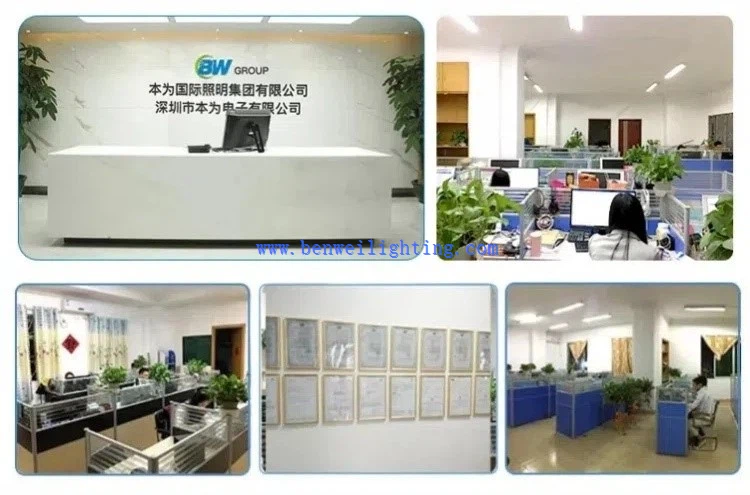
We are happy to have total control over the manufacturing process and the calibre of our products since we have our own facilities. Since we are producers rather than just brokers, we are dedicated to providing our customers with the best pricing. Since we are certain that the price and quality of our products are clear, we invite customers to see our samples first. Our commitment to quality and customer satisfaction drives us to continuously provide top-notch goods.
Our address
3rd Floor, 5th Building, Hebei Industrial Park, Hualian Community, Longhua District, Shenzhen, China





