

Throughout time, demand for solar street lights and other solar goods has increased. Solar lighting, in contrast to conventional lighting sources, is environmentally friendly. This is the rationale for the widespread use of this technology for lighting purposes. Also, because solar lights are independent of energy suppliers, you won't have to pay high electricity costs.
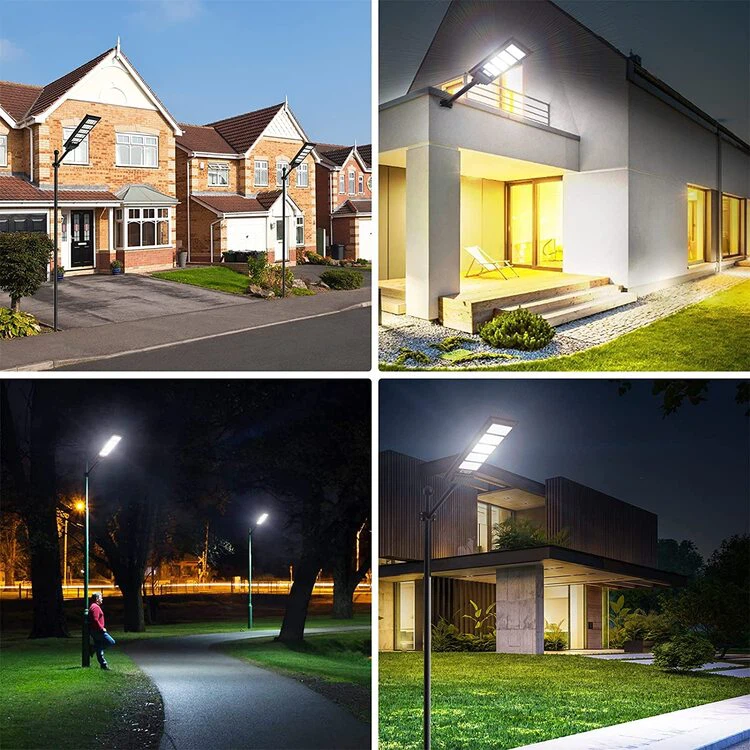
Solar street lights are lighting fixtures for the outdoors that are powered by photovoltaic, or PV, panels. When they detect light from a source like the Sun, they may charge a rechargeable battery with electricity.
Contact a Chinese producer of solar street lights if you want additional details about solar kinds. Let's now contrast the characteristics of solar illumination with conventional lighting.
Cost-Effectiveness
It is well known that purchasing solar equipment would demand a significant upfront payment. Thus, conventional street lights are substantially less expensive. Due to all the costs you will incur to keep your lights operating properly, solar street lights end up being a better investment in the long run than regular ones.
Solar street lights don't need to be replaced or maintained on a regular basis, which reduces the cost of installation and maintenance. All that is required is that you maintain them clean and free of dust.
Traditional street lights need the installation of electric poles, which may be quite costly. They also need regular maintenance, which will add to the expense.
Efficiency and Brightness
Solar-powered lights closely resemble sunshine in terms of visibility since they have LEDs embedded right into them. You may change the CRI, or color rendering index, of these LED lights to get the desired light hue. This makes it easier to see at night.
Traditional street lights, on the other hand, often include metal halide bulbs. The electric arc located within a small emission tube provides the majority of the light for these high-intensity discharge lamps. Sadly, they fall short of the visibility offered by solar-powered lights. Solar lights employ light-emitting diodes, which are more efficient in capturing energy and producing brighter light than compact fluorescent lamps.
Lifespan
Conventional lights typically last between 5,000 and 8,000 hours, or less than a year, but solar LED lights may last for five to seven years. This idea always prioritizes solar lighting above traditional lighting.
Reliability
Solar street lighting has a lower reliance on traditional energy sources and the national grid. Solar solutions are completely trustworthy for tasks involving illumination from night to morning. Because to their off-grid status, they need less maintenance and have cheap operating expenses. These lights are still on despite the power outages and grid instability.
Traditional street lights, on the other hand, are constantly impacted by grid outages and power outages since they are tied to the energy reserve.
Positive Environmental Impact
The environment and its inhabitants are not in danger from solar street lighting. Due to an absence of electrical wiring, no fire can start. Moreover, incidents like electrocution, overheating, and strangling won't ever happen. They are environmentally beneficial since they emit less carbon dioxide than do conventional lights.
Traditional lighting, on the other hand, relies only on electricity, which is affected whenever there is a grid breakdown. Traditional street lights depend on electricity produced from nonrenewable fossil fuels and are constrained by power interruptions, while solar street lights utilize renewable energy from the sun.
Maintenance
How can the performance of a contemporary smart solar street light be improved? Use a software program to remotely control your lights. Keep track of when the pedestrian frequency increases and decreases. Once understood, modify the solar lights' illumination schedules appropriately.
How do they function both day and night? The heat from the sun (solar energy) is converted to electricity by solar cells in the PV panels of a solar street light (electrical energy). The rechargeable battery then stores the solar energy. Solar lights use the energy stored in the battery to function when night falls. The following are a few of the few factors that need maintenance for solar: upkeep of the intelligent battery control systems, minor preventive maintenance, design and performance evaluation.
Traditional street lights use more power and may need more upkeep and repair. The expense of operations has increased as well.
Weather-Resistant Lights
Last but not least, the endurance of a street light is a key consideration. How is it still in the middle of the storm? Solar street lights are resistant to both rain and weather. If they go a few days without sunshine, it won't be an issue since they can use the remaining solar energy that has been transformed into electrical energy.
On the other hand, conventional street lights aren't really built to withstand all kinds of bad weather. Although some are equipped with a characteristic that can survive various weather conditions, others are readily harmed by frequent typhoons.
In conclusion, solar-powered LED lights are seen to be a step beyond conventional lights. Intelligent lighting are in demand right now. There is no question that they are able to provide people more than what they need. Walking, cycling, visiting parks, and other activities are all promoted by solar street lighting. They boost human productivity and nighttime visibility.





