

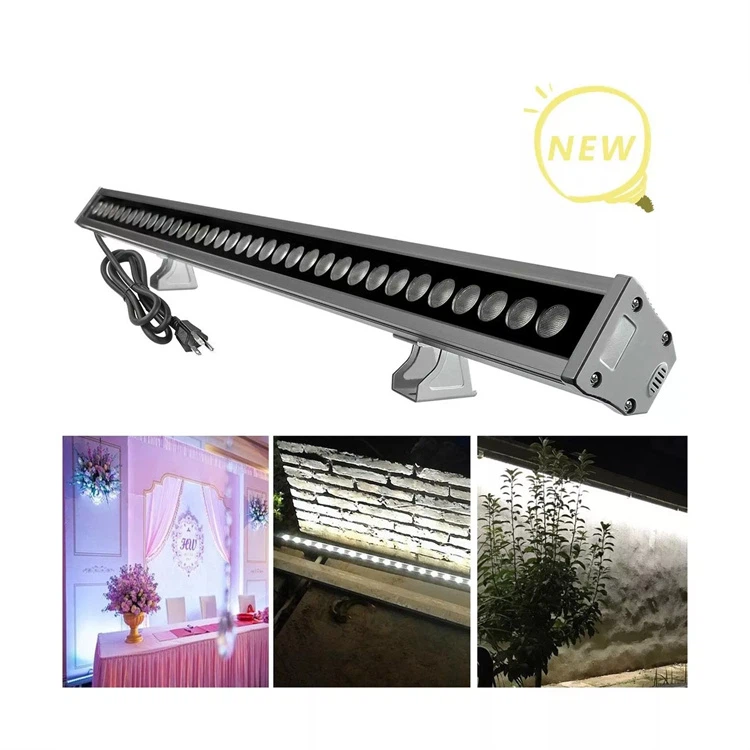
In order to provide consistent, delicate, and striking lighting effects, wall washing lights-a crucial kind of architectural and ornamental lighting-are often used in public, commercial, and residential settings. Wall washing lights may improve spatial layering, draw attention to architectural features, and create the appropriate ambience by uniformly projecting light onto vertical surfaces (walls, facades, artwork). However, in actual use, wall washing lights frequently run into a number of common issues that impact the lighting effect and user experience, including uneven lighting, glare, harsh shadows, colour distortion, and wiring failures, as a result of incorrect installation, parameter mismatch, environmental factors, or equipment defects. In order to help lighting designers, installers, and users effectively resolve issues and maximise the performance of wall washing light systems, this article systematically analyses the causes of these common problems, integrates lighting optics, electrical engineering, and architectural design principles, and offers practical, scientific solutions.
Introduction
With the continuous development of lighting technology and the increasing pursuit of spatial aesthetics, wall washing lights have become an indispensable part of modern lighting design. Unlike spotlights that focus on local highlighting, wall washing lights are designed to achieve "wall washing" effects-projecting light onto vertical surfaces with uniform intensity, no obvious light-dark boundaries, and no glare, thereby enhancing the texture of the wall, highlighting decorative elements, and creating a comfortable and artistic spatial atmosphere. They are widely used in scenarios such as residential living rooms, hotel lobbies, art galleries, commercial storefronts, and building facades.
However, the realization of an ideal wall washing effect is affected by multiple factors, including the installation position, light source parameters, optical design, environmental conditions, and wiring systems of the lights. In actual use, many users and installers find that the wall washing effect fails to meet expectations, and various problems frequently occur. These problems not only damage the aesthetic effect of the space but also may reduce the service life of the lighting equipment and even bring potential safety hazards. Therefore, it is of great practical significance to deeply explore the common problems of wall washing lights, analyze their root causes, and propose targeted solutions. This article aims to provide a comprehensive technical guide for solving common problems of wall washing lights, helping relevant practitioners and users avoid detours and achieve the desired lighting effect.
Common Problems of Wall Washing Lights and Their Root Causes
Uneven or Patchy Lighting
Uneven or patchy lighting is the most common problem in the application of wall washing lights, which is manifested as obvious light-dark differences, bright spots, dark areas, or light strips on the wall, failing to achieve the uniform "wall washing" effect. This problem not only affects the aesthetic appearance of the wall but also weakens the decorative effect of the space, making the lighting appear unprofessional and rough.
The root causes of uneven or patchy lighting are mainly reflected in three aspects: first, improper spacing and installation distance. Wall washing lights need to be installed at a reasonable distance from the wall (usually 0.5-1.5 meters, depending on the light's beam angle) and evenly spaced to ensure that the light projection areas overlap properly. If the spacing between lights is too large, there will be dark areas between the two lights; if the spacing is too small, overlapping areas will form bright spots. If the installation distance is too close to the wall, the light coverage area is small, and the light intensity is too concentrated, resulting in uneven distribution; if the distance is too far, the light intensity attenuates too much, leading to dim overall lighting and uneven brightness. Second, inconsistent light intensity of the light source. Due to differences in the quality of LED chips, driver performance, or long-term use wear, individual wall washing lights may have inconsistent light output, resulting in uneven lighting on the wall. Third, unreasonable beam angle selection. The beam angle of wall washing lights (usually 15°-60°) determines the light coverage range. If the beam angle is too small, the light coverage is narrow, and it is easy to form light strips; if the beam angle is too large, the light intensity is too scattered, and it is difficult to achieve uniform lighting on large-area walls.
Glare
Glare refers to the uncomfortable visual phenomenon caused by excessive brightness contrast in the field of view, which is another common problem of wall washing lights. When wall washing lights are installed at eye level, near reflective surfaces (such as glass, mirrors, or smooth walls), or the light source is not effectively shielded, glare will occur, which not only affects the visual comfort of users but also may cause visual fatigue, dizziness, and even affect the safety of the space (such as in corridors, stairwells, and other areas).
The main causes of glare are as follows: first, improper installation height and angle. If wall washing lights are installed at a height close to the human eye (usually less than 2.5 meters) and the light is projected directly into the human field of view, glare will be generated. In addition, if the light projection angle is too large, the light will be directly reflected into the human eye through the wall or other reflective surfaces, forming reflected glare. Second, the lack of effective light shielding and diffusion structures. The light source of wall washing lights (especially LED wall washing lights) has high brightness. If there is no diffuser, lens, or baffle, the light will be emitted directly, forming direct glare. Third, excessive light intensity. If the power of the wall washing light is too high, or the dimming function is not used, the light intensity exceeds the comfortable range of the human eye, resulting in glare.
Harsh Shadows
Harsh shadows refer to the obvious dark areas formed on the wall or surrounding space due to the unreasonable installation of wall washing lights or excessive light intensity, which destroy the uniform lighting effect and make the space appear gloomy and uneven. Harsh shadows are often accompanied by uneven lighting, which is common in scenarios such as art galleries, hotel lobbies, and residential living rooms where high requirements for lighting uniformity are required.
The root causes of harsh shadows are mainly twofold: first, the installation distance is too close to the wall. When wall washing lights are installed too close to the wall, the light source is too concentrated, and the light cannot be fully diffused, resulting in obvious shadows in the areas not covered by the light, especially at the edges of the wall or around decorative objects. Second, the light source is too intense and the beam is too narrow. High-power wall washing lights with narrow beam angles will form strong light spots on the wall, and the areas outside the light spots will form obvious dark shadows due to insufficient light. In addition, if there are obstacles (such as decorative brackets, wires, or wall protrusions) between the light source and the wall, the light will be blocked, forming harsh shadows.
Color Distortion
Color distortion is a common problem that affects the decorative effect of wall washing lights, which is manifested as the wall color or the color of decorative objects appearing distorted, faded, or discolored under the irradiation of wall washing lights, failing to show the true color of the object. This problem is particularly obvious in art galleries, exhibition halls, and spaces with colored walls, which seriously affects the aesthetic experience and the expression of decorative themes.
The main causes of color distortion are as follows: first, the color rendering index (CRI) of the light source is too low. The color rendering index is an indicator of the ability of a light source to restore the true color of an object, with a maximum value of 100. If the CRI of the wall washing light is less than 90, the light source cannot accurately restore the true color of the wall and decorative objects, resulting in color distortion. Second, the color temperature of the light source is mismatched with the wall color. Different color temperatures (warm white 2700K-3500K, neutral white 4000K-5000K, cool white 6000K-7000K) will have different effects on the presentation of wall colors. For example, warm white light will make cool-colored walls appear darker, while cool white light will make warm-colored walls appear faded. Third, the light is too close to the wall or colored objects. When the wall washing light is installed too close to the wall, the light intensity is too concentrated, which will cause the wall color to appear oversaturated or discolored, especially for bright-colored walls (such as red, blue, and yellow).
Wiring Issues
Wiring issues are potential safety hazards and functional failures of wall washing light systems, especially in large-scale lighting projects (such as commercial buildings, building facades, and large exhibition halls) where multiple wall washing lights are connected in series or parallel. Common wiring problems include poor contact, short circuits, overload, and aging of wires, which may lead to light flickering, failure to light up, or even fire accidents.
The main causes of wiring issues are as follows: first, improper wiring during installation. For example, the wire cross-sectional area is too small, which cannot bear the load current of the wall washing light, leading to wire overheating and aging; the connection between wires is not firm, resulting in poor contact and light flickering; the positive and negative poles are connected incorrectly, leading to the light not working. Second, lack of regular inspection and maintenance. After long-term use, the wires will be aged, cracked, or corroded (especially in outdoor environments), leading to short circuits or poor contact. Third, the lighting system is overloaded. If the number of wall washing lights connected to a single circuit exceeds the load capacity of the circuit, it will cause overload, triggering the circuit breaker to trip, or even leading to wire overheating and fire.
Scientific Solutions to Common Problems of Wall Washing Lights
Solutions to Uneven or Patchy Lighting
To solve the problem of uneven or patchy lighting, it is necessary to start from the aspects of installation layout, light source selection, and parameter adjustment, and take targeted measures: first, optimize the installation layout. Determine the installation distance and spacing according to the beam angle of the wall washing light and the area of the wall. Generally, the installation distance from the wall is 0.8-1.2 meters, and the spacing between lights is 1.5-2 times the installation distance, ensuring that the light projection areas overlap by 30%-50% to achieve uniform lighting. For large-area walls, it is recommended to use wall washing lights with a beam angle of 45°-60° to expand the coverage area. Second, ensure the consistency of the light source. When purchasing wall washing lights, choose products with the same batch, the same brand, and the same light intensity parameters to avoid differences in light output. For existing lights with inconsistent light intensity, replace the damaged LED chips or drivers, or use dimmers to adjust the light intensity of individual lights to achieve consistency. Third, reasonably select the beam angle. According to the wall area and installation distance, select the appropriate beam angle: for small-area walls, use a beam angle of 15°-30° to ensure sufficient light intensity; for large-area walls, use a beam angle of 45°-60° to achieve uniform coverage.
Solutions to Glare
The solution to glare mainly focuses on shielding the light source, adjusting the installation angle, and reducing the light intensity: first, use optical accessories to reduce glare. Install diffusers, angled lenses, or baffles on the wall washing lights to scatter the direct light, reduce the brightness of the light source in the human field of view, and avoid direct glare. For example, frosted diffusers can soften the light, and angled lenses can adjust the light projection direction to avoid direct light into the human eye. Second, adjust the installation height and angle. Install wall washing lights at a height of more than 2.5 meters to avoid being at eye level; adjust the light projection angle to 30°-45° with the wall, so that the light is projected onto the upper part of the wall, reducing the light entering the human field of view. For reflective surfaces, avoid installing wall washing lights directly opposite the reflective surface, or use anti-glare light sources. Third, use dimmers to adjust the light intensity. Install dimmer switches for the wall washing light system, adjust the light intensity according to the use scenario and ambient light, and avoid excessive light intensity causing glare. In addition, for outdoor wall washing lights, choose products with anti-glare designs to adapt to the complex outdoor environment.
Solutions to Harsh Shadows
To eliminate harsh shadows, the key is to adjust the installation distance, optimize the light source parameters, and remove obstacles: first, adjust the installation distance. Increase the installation distance between the wall washing light and the wall (to 1.0-1.5 meters) to make the light fully diffused, reduce the concentration of the light source, and eliminate the dark areas caused by excessive concentration. Second, choose soft light sources and appropriate beam angles. Replace high-intensity, narrow-beam wall washing lights with low-intensity, wide-beam lights, or install diffusers to soften the light and reduce the contrast between light and shadow. For example, using LED wall washing lights with a beam angle of 60° and a diffuser can effectively reduce harsh shadows. Third, remove obstacles. Check the area between the wall washing light and the wall, and remove any obstacles (such as brackets, wires, or wall protrusions) that may block the light to avoid shadow formation. In addition, for large-area walls, you can install auxiliary wall washing lights in the shadow areas to balance the light intensity and eliminate harsh shadows.
Solutions to Color Distortion
Solving color distortion requires focusing on improving the color rendering performance of the light source and matching the light parameters with the wall color: first, select light sources with high CRI. When purchasing wall washing lights, choose products with a CRI of 90 or higher (preferably 95+), which can accurately restore the true color of the wall and decorative objects, avoiding color distortion. For art galleries, exhibition halls, and other spaces with high color requirements, it is recommended to use full-spectrum wall washing lights, which can better simulate natural light and ensure color authenticity. Second, match the color temperature with the wall color. For warm-colored walls (such as beige, light yellow), choose warm white light (2700K-3500K) to enhance the warm atmosphere and avoid color fading; for cool-colored walls (such as light blue, gray), choose neutral white or cool white light (4000K-5000K) to maintain the clarity of the wall color. Third, control the installation distance. Keep the wall washing light at a distance of more than 0.8 meters from the wall to avoid excessive light intensity causing color oversaturation or discoloration. For bright-colored walls, you can appropriately reduce the light intensity to ensure that the color is presented naturally.
Solutions to Wiring Issues
To solve wiring issues, it is necessary to standardize the installation process, strengthen regular inspection and maintenance, and ensure the safety and stability of the circuit: first, standardize the installation wiring. When installing wall washing lights, choose wires with appropriate cross-sectional area (according to the total power of the lighting system, generally not less than 1.5mm² for copper wires) to ensure that the wires can bear the load current. The connection between wires should be firm, wrapped with insulating tape, and the positive and negative poles should be connected correctly to avoid poor contact or short circuits. For outdoor wall washing lights, use waterproof wires and connectors to prevent water from entering the circuit and causing short circuits. Second, strengthen regular inspection and maintenance. Inspect the wiring system every 3-6 months, check for wire aging, cracking, corrosion, and poor contact, and replace damaged wires and connectors in a timely manner. For large-scale lighting systems, install circuit breakers and leakage protectors to prevent overload and leakage accidents. Third, avoid circuit overload. Calculate the total power of the wall washing light system, and ensure that the number of lights connected to a single circuit does not exceed the load capacity of the circuit. If the number of lights is large, split them into multiple circuits to distribute the load.
Conclusion
Wall washing lights play an important role in modern lighting design, and their application effect directly affects the aesthetic quality and functional experience of the space. The common problems such as uneven lighting, glare, harsh shadows, color distortion, and wiring issues in the application process are not insurmountable; they are mostly caused by improper installation, parameter mismatch, or lack of maintenance. By deeply understanding the root causes of these problems and adopting scientific and targeted solutions-such as optimizing the installation layout, selecting appropriate light source parameters, using anti-glare accessories, standardizing wiring installation, and strengthening regular maintenance-we can effectively resolve the problems and ensure that the wall washing light system operates stably and achieves the ideal lighting effect.
In practical applications, it is also necessary to combine the specific use scenario, wall characteristics, and user needs to flexibly adjust the solutions, and pay attention to the quality of the wall washing lights and the standardization of the installation process to avoid the occurrence of common problems from the source. With the continuous advancement of lighting technology, the performance of wall washing lights is constantly improving, and the solutions to common problems are also becoming more diversified. By mastering the technical points and solutions summarized in this article, lighting designers, installers, and users can better apply wall washing lights, create more beautiful and comfortable lighting spaces, and give full play to the decorative and functional value of wall washing lights.
About Our Company

How To Cooperate With Us?
Our firm prides itself on owning its own factory, guaranteeing complete control over the production process and the quality of our goods. We are not only agents; we are manufacturers committed to offering our clients the most competitive rates available. We invite consumers to evaluate our samples first, as we are assured that the quality and pricing of our items are self-evident. Our dedication to excellence and client satisfaction compels us to consistently perform at our best and provide superior quality products.
Our address
3rd Floor, 5th Building, Hebei Industrial Park, Hualian Community, Longhua District, Shenzhen, China
bwzm09@ledbenweilighting.com





