

Introduction: The Crisis of Moisture in Poultry Facilities
In the pursuit of agricultural excellence, the physical environment of the chicken coop is often a battleground. While farmers meticulously control temperature and nutrition, the pervasive issue of moisture remains a silent, destructive force.
The Physiological Origin of Coop Moisture
A chicken house is inherently a high-humidity environment. Poultry excrete significant amounts of water through their respiratory systems and feces. In a densely populated broiler or layer house, the sheer volume of flock respiration can elevate relative humidity to 70-80%, or even higher during warmer months. Furthermore, the evaporation of water from drinker lines and wet litter compounds this moisture load. Unlike human dwellings, these facilities cannot simply be sealed and dehumidified; ventilation is necessary to remove moisture, but it often fails to keep pace with the generation rate, leaving the environment perpetually damp.
The Destructive Impact of Dampness on Traditional Lighting
The primary casualty of this damp environment is traditional electrical infrastructure. Standard fluorescent and cheaper LED fixtures are not designed to withstand prolonged exposure to moisture. Over time, condensation forms inside the light tubes and housings. This moisture attacks the internal electrical components, leading to oxidation, rust, and catastrophic short circuits.
Electrical Hazards and Fire Risks
When water contacts live electrical circuits, the risk of short-circuiting, arcing, and fire is greatly amplified. In a facility filled with dry litter and dust, a single electrical spark can lead to a catastrophic fire. Additionally, a compromised fixture in a wet environment poses a severe electrocution hazard to any farm worker attempting maintenance or sanitation.
The Need for a Paradigm Shift: Waterproof Technology
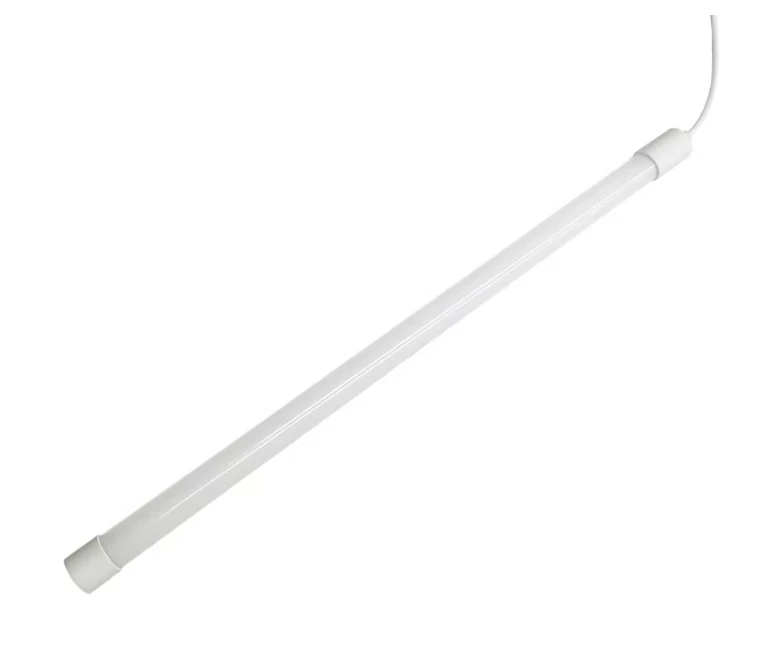
The limitations of conventional lighting necessitate a paradigm shift. The modern poultry farm requires lighting solutions that are engineered from the ground up to survive in aquatic and corrosive environments. The featured waterproof LED tube light represents this new paradigm, offering an uncompromising defense against moisture that standard fixtures simply cannot match.
The Chemical and Environmental Assault: Understanding the Threats
To truly appreciate the engineering of a waterproof LED system, one must deconstruct the specific environmental threats present in a damp chicken coop.
The Corrosive Power of Ammonia
The breakdown of uric acid in poultry litter by microbes releases ammonia (NH3) gas. This gas is an aggressive chemical agent, particularly when combined with moisture.
The Formation of Ammonium Hydroxide
When ammonia gas dissolves into the high-humidity air of the coop, it creates ammonium hydroxide-a corrosive alkaline solution. This solution acts as a potent electrolyte. If it penetrates a standard light fixture, it facilitates electrolytic corrosion (galvanic corrosion). The exposed metal pins and standard circuit boards inside typical lights are rapidly eaten away, leading to electrical failure and a severe degradation of light output.
Biosecurity and High-Pressure Sanitation
To maintain flock health, stringent biosecurity measures are mandatory. Between flocks, coops must undergo rigorous cleaning to eliminate bacteria, viruses, and parasites.
The Pressure Wash Dilemma
This sanitation process relies heavily on high-pressure washing with water and chemical disinfectants. Standard light fixtures cannot survive this process. Farmers are forced to either remove the lights entirely-a highly labor-intensive process-or carefully tarp and tape them. This inevitably leaves gaps in the sanitation protocol, allowing pathogens to survive in and around the unwashed fixtures, posing a significant biohazard to the next flock.
The Solution: Advanced Engineering of Waterproof LED Tubes
The featured waterproof LED tube lights have been specifically engineered to neutralize the threats of moisture, ammonia, and sanitation. This is achieved through a multi-layered defense system.
Fortress-Level Ingress Protection
The foundation of any waterproof light is its physical sealing. The featured product utilizes a monolithic design that prevents moisture from entering the internal chamber.
The Waterproof Base and Silicone Gland Technology
The weakest point of any tube light is the end-cap where the power cable enters. The featured product utilizes a specialized waterproof base. At the point of entry, a heavy-duty, threaded cable gland is utilized. This mechanism physically compresses a medical-grade silicone seal tightly against the power cable. This creates a watertight, airtight mechanical barrier. Even if the fixture is subjected to direct high-pressure water spray, the silicone gland prevents any moisture from wicking into the electronics.
3.1.2. Double-End Waterproof Connectors
In large coops, multiple lights are required. The connections between these lights are prime targets for moisture ingress. The featured product utilizes a Double End Wires design with molded, waterproof male and female connectors.
Seamless Daisy-Chaining
When connected, these rugged plugs create a continuous, watertight seal with internal O-rings. This plug-and-play design eliminates the need for exposed junction boxes and wire nuts, which are notorious for trapping moisture and corroding. The entire string of daisy-chained lights becomes a sealed, waterproof circuit.
Electrical Integrity in a Damp Environment
Waterproofing the exterior is crucial, but the internal electronics must also be resilient.
The Isolated Driver: Safety and Stability
The featured light incorporates an isolated driver. This is a critical safety feature. An isolated driver uses a transformer to physically separate the high-voltage AC main input from the low-voltage DC output. In the event that moisture does somehow compromise the outer shell, the isolated driver prevents the electrification of the tube, eliminating the risk of shock.
3.2.1.1. Flicker-Free Performance
An isolated driver also ensures a highly stable current. In damp environments, condensation can cause voltage fluctuations in cheaper drivers, leading to flickering. The isolated driver delivers a perfectly smooth, flicker-free light, which is scientifically proven to reduce avian stress and aggressive pecking.
High Lumen LED PCB and Moisture Resistance
The internal electronics are mounted on a High Lumen LED PCB. This aluminum-backed substrate provides excellent heat dissipation. By keeping the LEDs cool, it prevents the condensation that occurs when a hot fixture cools down in a humid environment. This thermal management ensures the light maintains its high CRI and lumen output over its 50,000-hour lifespan.
Optical Performance: The High-Efficiency PC Diffuser
The outer shell of the tube is made of a High Efficiency PC (Polycarbonate) diffusion cover. Polycarbonate is highly resistant to impact (unlike fragile glass fluorescent tubes) and is impervious to water absorption.
Uniform Light Scattering
The frosted PC cover scatters the light, providing a soft, even illumination. This prevents the harsh glare and shadows that cause crowding in damp, dim areas of the coop. The uniform light ensures every bird has access to well-lit feed and water, promoting uniform growth.
The Economic and Biological ROI of Waterproof Lighting
Upgrading to waterproof LED tube lights is a strategic financial decision that yields a rapid and substantial Return on Investment (ROI).
Eliminating Maintenance and Replacement Costs
Standard lights in a damp coop might last only a few months before corroding and failing. Each replacement costs money for the bulb and valuable labor hours to install it in a harsh environment. The waterproof LED tube, with its silicone seals and isolated drivers, is virtually maintenance-free. It can withstand the damp environment for years, eliminating the recurring costs of replacement fixtures.
Uncompromised Biosecurity and Disease Prevention
By installing lights that can withstand high-pressure washing, farmers can thoroughly sanitize the entire coop, including the lighting fixtures. This removes a major vector for disease transmission, reducing mortality rates and veterinary costs. A cleaner environment directly translates to a healthier, more productive flock.
Optimized Poultry Health and Yield
A damp, poorly lit coop is a stressful environment. Stress suppresses the immune system and diverts energy away from growth.
Improved Feed Conversion Ratios (FCR)
The combination of flicker-free lighting, high CRI, and even light distribution creates a calm, natural environment. Birds are less stressed, eat more consistently, and convert feed more efficiently. This results in faster growth cycles for broilers and better egg production for layers.
The Efficiency of Daisy-Chaining
The Double End Wires design allows for rapid installation. By linking multiple lights end-to-end, a single power drop can illuminate an entire row, saving significantly on electrical wiring, conduit, and labor costs. This streamlined installation also creates a clean ceiling environment, further improving the biosecurity and ease of cleaning.
Strategic Deployment for Damp Environments
To maximize the benefits of these waterproof lights in a damp coop, proper installation is required.
Managing the Power Drop
Because condensation is a major threat, the initial power source connection must be handled carefully. The waterproof base of the first light should be connected to the main power line, ensuring that the threaded silicone gland is tightened securely to prevent any moisture from entering the chain at its source.
Optimal Placement and Height
In a damp environment, it is advisable to mount the lights high enough to avoid direct splashing from the birds or drinker lines, but low enough to provide adequate lux at the bird level. The even distribution of the PC diffuser allows for wider spacing between rows, maximizing efficiency.
Daisy-Chaining for Expansion
The modular nature of the double-end connectors allows for rapid scaling. If a farmer expands the coop or needs to adjust the lighting layout, additional tubes can be easily plugged into the existing chain without the need for complex rewiring or adding new power drops.
Conclusion: The Definitive Solution for Damp Coops
A damp chicken coop is an ever-present threat to the electrical infrastructure, biosecurity, and profitability of a poultry operation. Standard lighting fixtures are wholly inadequate for this hostile environment, failing rapidly and posing severe safety risks.
The featured waterproof LED tube lights offer the definitive solution. By integrating a waterproof base with a heavy-duty silicone gland, seamless double-end waterproof connectors, an isolated driver for safe and flicker-free operation, a high-lumen PCB, and a durable PC diffusion cover, these lights are engineered to thrive where others fail.
Investing in this technology is a proactive step toward safeguarding the farm. It allows for rigorous, high-pressure sanitation protocols, eliminates the constant expense of replacing corroded fixtures, and provides the precise, stress-free lighting environment required to maximize feed conversion and overall poultry yield. For the modern farmer struggling with damp conditions, upgrading to these waterproof LED tube lights is not just a lighting choice; it is a critical step toward building a more resilient, biosecure, and profitable agricultural enterprise.

Shenzhen Benwei Lighting Technology Co., Ltd
Shenzhen Benwei Lighting Technology Co., Ltd is a well-known company that designs, develops, makes, and sells high-tech goods, including LED lighting products. The plant where we work opened in 2010 and is in Shenzhen.
Our address
3rd Floor, 5th Building, Hebei Industrial Park, Hualian Community, Longhua District, Shenzhen, China





