

Introduction: The Strategic Role of Lighting in Poultry Facilities
The environment within a poultry house is a complex ecosystem where micro-climatic variables and biological rhythms are in constant interplay. Among these variables, lighting is arguably the most critical non-nutritional factor influencing flock performance.
The Biological Imperative: How Light Governs Avian Physiology
Avian species are highly photosensitive. Light enters the eye and is absorbed by the hypothalamus, which subsequently regulates the pineal gland. This pathway controls the secretion of crucial hormones, including melatonin, growth hormone, and gonadotropins. Proper lighting duration (photoperiod), intensity, and spectrum directly stimulate the pituitary gland, leading to optimized feed intake, enhanced immune responses, and synchronized reproductive cycles. A deficiency or excess in any of these light parameters can induce chronic stress, suppress immune function, trigger behavioral vices (such as feather-pecking and cannibalism), and significantly diminish the genetic potential of the flock.
The Shortcomings of Traditional Coop Lighting
Historically, poultry facilities relied on incandescent and fluorescent lighting. However, these legacy systems are fundamentally incompatible with modern agricultural demands. Incandescent bulbs are highly inefficient, converting over 90% of their energy into heat, which can dangerously elevate the ambient temperature of the coop and lead to heat stress, especially in densely populated broiler houses. Fluorescent tubes, while more energy-efficient, present severe limitations: they contain toxic mercury, are highly fragile, and produce a high-frequency flicker that is imperceptible to humans but demonstrably stressful to poultry. Furthermore, neither technology offers the robust physical sealing required to withstand the aggressive environment of a commercial coop.
The Need for a Comprehensive Upgrade
To remain competitive and ensure the highest standards of animal welfare, producers must upgrade their coop lighting infrastructure. The ideal lighting solution must transcend mere illumination; it must be a biologically optimized, environmentally resilient, and economically viable technological asset. This necessitates the adoption of specifically engineered LED tube systems that address both the physiological needs of the birds and the hostile realities of the agricultural environment.
The Environmental Battlefield: Why Standard Lights Fail in Coops
To appreciate the engineering behind premium poultry lights, one must first understand the hostile conditions of a chicken house. It is an environment that aggressively attacks standard electrical equipment.
The Corrosive Effects of Humidity and Ammonia
Chickens are prolific producers of moisture through respiration and excretion. Consequently, relative humidity inside a coop often exceeds 70-80%. More critically, the microbial breakdown of uric acid in chicken manure releases ammonia (NH3) gas. Ammonia is highly corrosive and acts as a catalyst for the oxidation of metals. Standard light tubes, which often feature exposed metal pins and rudimentary rubber gaskets at their ends, are rapidly compromised. Moisture and ammonia infiltrate the microscopic gaps, leading to the corrosion of the internal circuit boards, driver failure, and potentially catastrophic electrical short circuits.
Sanitation Challenges and Electrical Hazards
Biosecurity is a cornerstone of modern poultry farming. Between flocks, coops must undergo rigorous sanitation protocols, which frequently involve high-pressure washing with disinfectants. Standard lighting fixtures cannot withstand direct water spray, forcing farmers to manually cover or avoid light fixtures during cleaning. This inevitably leads to incomplete sanitation. Furthermore, the combination of dust, high humidity, and aging wiring creates a significant fire hazard. Therefore, any lighting upgrade must feature absolute waterproof and dustproof integrity to ensure both biosecurity and electrical safety.
Engineering the Ultimate Upgrade: Core Features of Premium Poultry Lights
The "best" lighting solutions for a poultry coop are those engineered specifically for agricultural environments. A premium product, such as the advanced waterproof LED tube, integrates multiple technological innovations to deliver superior performance.
Uncompromising Waterproof Integrity
The most critical feature of an agricultural-grade light is its ability to resist moisture ingress.
The Waterproof Base and Silicone Gland Technology
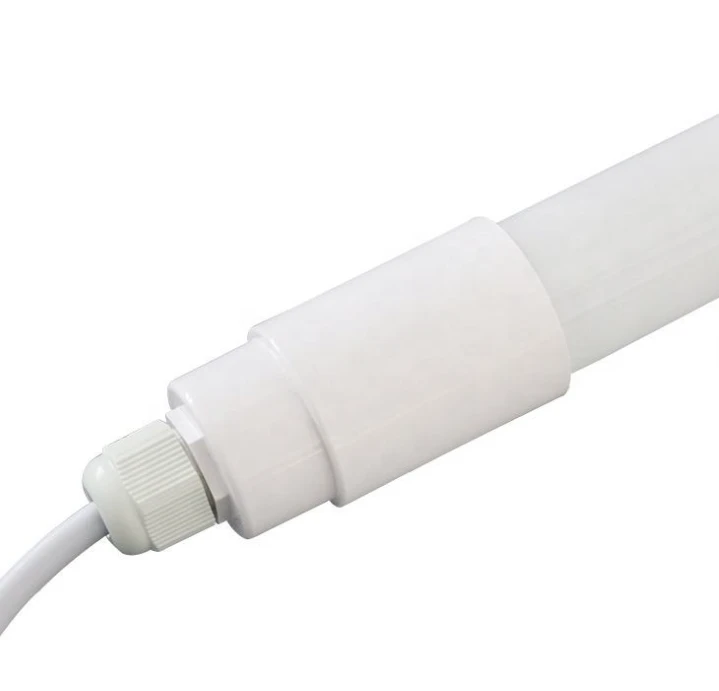
The primary vulnerability of standard LED tubes is the end-cap. Premium poultry lights feature a specialized waterproof base. As observed in the engineering design, the junction where the power cable enters the fixture is secured by a heavy-duty, threaded cable gland. This mechanism mechanically compresses a medical-grade silicone seal tightly around the power cord. This creates an airtight, watertight barrier that prevents the wicking of moisture and corrosive vapors into the internal electronics. It allows the lights to operate safely in 100% humidity environments and withstand high-pressure washdowns.
Sealed Double-End Wire Connectors
To ensure complete circuit integrity, the connections between individual lights must also be waterproof. The featured product utilizes a double-end wire configuration terminating in high-grade, molded male and female connectors. When connected, these form a seamless, watertight seal with internal O-rings. This plug-and-play connectivity eliminates the need for exposed, moisture-prone junction boxes, ensuring that the entire lighting run is protected against the elements.
Advanced Internal Electronics for Stability
The longevity and physiological benefits of LED lighting are intrinsically linked to the quality of its power supply.
The Isolated Driver: Safety and Flicker-Free Operation
Many budget LED lights utilize non-isolated drivers, which expose the end-user to high-voltage risks and are highly susceptible to voltage fluctuations. Premium poultry lighting incorporates an isolated driver. This engineering design physically separates the high-voltage AC input from the low-voltage DC output via a transformer. This provides two distinct advantages:
Safety: It eliminates the risk of electrical shock, even if the external tube is compromised.
Flicker-Free Performance: An isolated driver provides a highly stable, consistent current. Flicker-free lighting is scientifically proven to reduce avian stress and anxiety, promoting calmer behavior, reducing aggressive pecking, and optimizing rest cycles, which directly translates to better feed conversion.
High-Efficiency Power Conversion
The isolated driver operates at a very high efficiency, minimizing energy waste and heat generation within the fixture. This not only reduces the farm's electricity footprint but also ensures that the driver components do not overheat, significantly extending the operational lifespan of the light to 30,000-50,000 hours or more.
Maximizing Light Output and Heat Dissipation
An LED's performance is dictated by its thermal management and optical design.
High Lumen LED PCB Architecture
The core of the light is its Printed Circuit Board (PCB). The featured product utilizes a High Lumen LED PCB (often aluminum-backed) populated with high-quality, high-CRI (Color Rendering Index) chips. The aluminum substrate is crucial for "good dissipation." It rapidly conducts heat away from the LED junctions, preventing phosphor degradation and ensuring the light maintains its maximum lumen output and color accuracy throughout its lifespan. High CRI allows poultry to perceive colors accurately, aiding in feed identification and foraging.
The Role of the High-Efficiency PC Diffusion Cover
Direct, unshielded LED light creates harsh glare and sharp shadows, which can cause birds to crowd in specific areas, leading to smothering or uneven growth. Premium agricultural lights utilize a High Efficiency PC (Polycarbonate) diffusion cover. This specialized frosted casing scatters the light rays, transforming the directional output into a soft, uniform, and highly efficient luminous environment. This even distribution mimics natural daylight, encouraging healthy, active foraging across the entire floor area.
Driving Poultry Health & Growth: The Biological Benefits
Upgrading to a technically superior LED system is not merely an infrastructural improvement; it is a direct intervention in the biological success of the flock.
Enhancing Feed Conversion Ratios (FCR) and Weight Gain
The combination of high CRI, uniform diffusion, and flicker-free lighting creates an optimal visual environment. When birds are less stressed (due to flicker-free light) and can easily locate feed (due to high CRI and even distribution), their feeding patterns normalize. This leads to improved digestion, enhanced nutrient absorption, and ultimately, superior Feed Conversion Ratios (FCR) and accelerated weight gain in broiler operations.
Optimizing Egg Production and Reproductive Health
In layer and breeder houses, precise control over light intensity and photoperiod is essential. The stable, consistent output of these premium LED lights ensures that the flock receives the exact light stimulus required to stimulate the pituitary gland and regulate the reproductive cycle. This maximizes peak egg production, improves shell quality, and sustains laying performance throughout the production cycle.
Reducing Stress and Behavioral Vices
Stress is a major hidden cost in poultry farming. It suppresses the immune system, making flocks susceptible to disease, and triggers behavioral vices like feather-pecking and cannibalism. The isolated driver's flicker-free operation and the PC diffuser's elimination of glare directly mitigate environmental stressors. A calmer flock exhibits more natural behaviors, lower mortality rates, and a higher overall welfare index, which is increasingly important for modern certification standards.
Operational Efficiency: The "Double-End" Advantage
A successful upgrade must also consider the logistical and economic realities of farm management.
Daisy-Chaining for Seamless Installation
The Double End Wires design is a masterstroke of operational efficiency. By featuring power cables and waterproof connectors at both ends, these lights can be connected sequentially-a process known as daisy-chaining. This allows a farmer to illuminate an entire long row of a poultry house using a single power drop.
Reducing Labor and Material Costs
Traditional lighting requires extensive external wiring, conduits, and junction boxes, which are labor-intensive to install and create multiple points of potential failure. The daisy-chain capability of the double-end design drastically reduces the need for external wiring and structural mounting hardware. It saves significant installation time, reduces copper cabling costs, and results in a cleaner, more organized ceiling environment that is easier to clean and less likely to harbor dust or pathogens.
Conclusion: A Future-Proof Investment in Your Coop
The decision to upgrade your coop lighting is a strategic financial and biological investment. The harsh, corrosive environment of a chicken house quickly destroys inferior equipment, making the initial cost of cheap lights a false economy due to frequent replacement, safety hazards, and suboptimal flock performance.
The advanced waterproof, double-end wired LED poultry light represents the pinnacle of agricultural lighting engineering. By integrating an isolated driver for safe, stable, and flicker-free performance; a high-lumen LED PCB for maximum efficiency and heat dissipation; a high-efficiency PC diffusion cover for optimal light scattering; and a robust waterproof base and connector system for unparalleled durability, it addresses every major vulnerability in poultry production.
Investing in this comprehensive lighting solution guarantees a safer, more biosecure environment. It promotes superior flock health, accelerates growth, maximizes egg production, and reduces operational costs. For the modern farmer, this is not just an upgrade to a light fixture; it is a definitive upgrade to the productivity, profitability, and sustainability of the entire poultry operation.
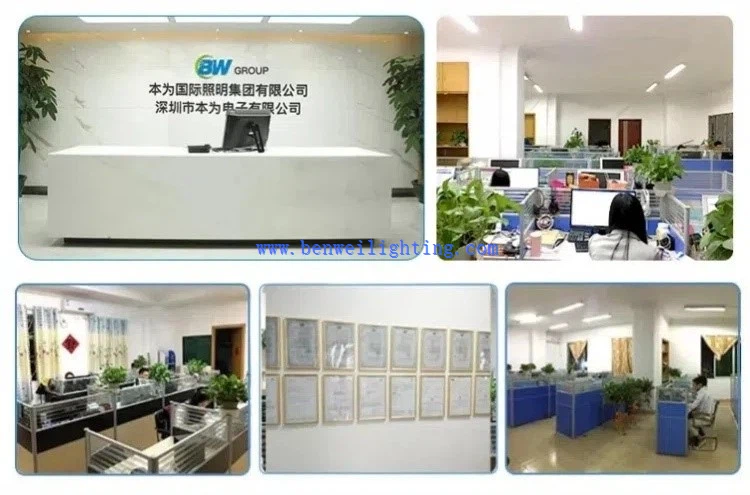
Shenzhen Benwei Lighting Technology Co., Ltd
Shenzhen Benwei Lighting Technology Co., Ltd is a well-known company that designs, develops, makes, and sells high-tech goods, including LED lighting products. The plant where we work opened in 2010 and is in Shenzhen.
Our address
3rd Floor, 5th Building, Hebei Industrial Park, Hualian Community, Longhua District, Shenzhen, China





