

Introduction: The Evolution of Poultry Illumination
The management of light in poultry houses has evolved from a rudimentary utility to a sophisticated scientific discipline. The modern poultry farm demands lighting systems that transcend mere illumination, serving instead as vital biological tools that dictate the success of the flock.
The Biological and Economic Significance of Lighting
Avian physiology is profoundly photosensitive. Light stimuli are absorbed by the hypothalamus, which regulates the pineal gland and the secretion of critical hormones, including gonadotropins and growth hormones. This endocrine response controls essential physiological processes such as feed intake, growth rate, sexual maturity, and egg production. Consequently, improper lighting-whether in intensity, spectrum, or duration-can induce chronic stress, suppress immune function, trigger behavioral vices like feather-pecking, and result in severe economic losses. From an operational standpoint, lighting represents a significant portion of a farm's energy consumption, making energy efficiency and fixture longevity paramount to maintaining a competitive edge.
The Limitations of Legacy Lighting Systems
Historically, poultry operations relied heavily on incandescent and fluorescent fixtures. Both technologies present insurmountable flaws in the context of modern agriculture. Incandescent bulbs are fundamentally inefficient, converting over 90% of their electrical energy into heat rather than light. In densely populated broiler houses, this thermal output can contribute to dangerous heat stress. Fluorescent tubes, while more energy-efficient, contain toxic mercury, are highly fragile, and exhibit a high-frequency flicker that is imperceptible to humans but demonstrably stressful to poultry. More critically, neither of these legacy systems is engineered to withstand the severe environmental hostility of a commercial chicken house.
The Paradigm Shift Towards LED Tube Technology
The transition to Light Emitting Diode (LED) technology has revolutionized agricultural lighting. Among the various LED form factors, the tube light design has proven to be the most versatile and effective for poultry houses. LED tubes provide a linear, highly directional light output that can be evenly distributed across long barns. However, not all LED tubes are created equal. To truly be the "best choice" for a modern poultry farm, an LED tube must be engineered specifically for the agricultural environment, incorporating advanced sealing, thermal management, and biological optimization that generic commercial LEDs lack.
The Environmental Realities of Modern Poultry Farms
To understand why specific LED tube lights are the optimal choice, one must first evaluate the hostile micro-environment they must endure. Standard electrical equipment rapidly fails under these conditions.
The Corrosive Triad: Ammonia, Humidity, and Dust
A poultry house is an aggressive chemical environment. The respiration of the flock and the evaporation of water from manure create relative humidity levels that frequently exceed 70-80%. Concurrently, the microbial decomposition of uric acid in the litter releases ammonia (NH3) gas. Ammonia is highly corrosive and acts as an electrolyte, accelerating the oxidation of metals and degrading standard polymer seals. The combination of high humidity and ammonia creates a corrosive vapor that seeks out any microscopic gap in an electrical fixture. Once inside, it attacks the internal circuit boards and power supplies, leading to premature failure and severe fire hazards. Additionally, the air is heavily laden with fine, conductive dust and feather dander, which can clog heatsinks and short-circuit unsealed components.
Biosecurity and Sanitation Protocols
Maintaining stringent biosecurity is a non-negotiable requirement in modern farming to prevent disease outbreaks. Between flocks, coops must undergo rigorous, high-pressure washdowns using potent disinfectants. This process physically blasts moisture and chemicals into every crevice of the facility. Traditional lighting fixtures cannot withstand this assault; they must be manually covered or avoided during cleaning, creating dangerous blind spots in the sanitation protocol. Therefore, the "best" lighting must be absolutely waterproof, allowing for complete, unobstructed high-pressure sanitation.
Thermal Stress in Poultry Housing
Poultry housing is designed for optimal thermal regulation of the birds, but electrical fixtures can disrupt this balance. High-wattage legacy lighting generates excessive radiant heat. In modern, highly insulated poultry barns with limited ventilation, this added heat load forces the ventilation system to work harder, increasing energy costs and potentially leading to heat stress in the flock. LED tubes, which run significantly cooler, are essential for maintaining a stable and comfortable thermal environment.
Core Engineering Advantages of Advanced LED Tube Lights
To survive and thrive in the poultry environment, LED tube lights must be engineered with military-grade resilience. The definitive choice for modern farms incorporates several key technological innovations.
Superior Environmental Resilience and Waterproofing
The most critical differentiator between a standard commercial LED and an agricultural-grade LED is its Ingress Protection (IP) sealing.
The Critical Role of the Waterproof Base and Silicone Gland
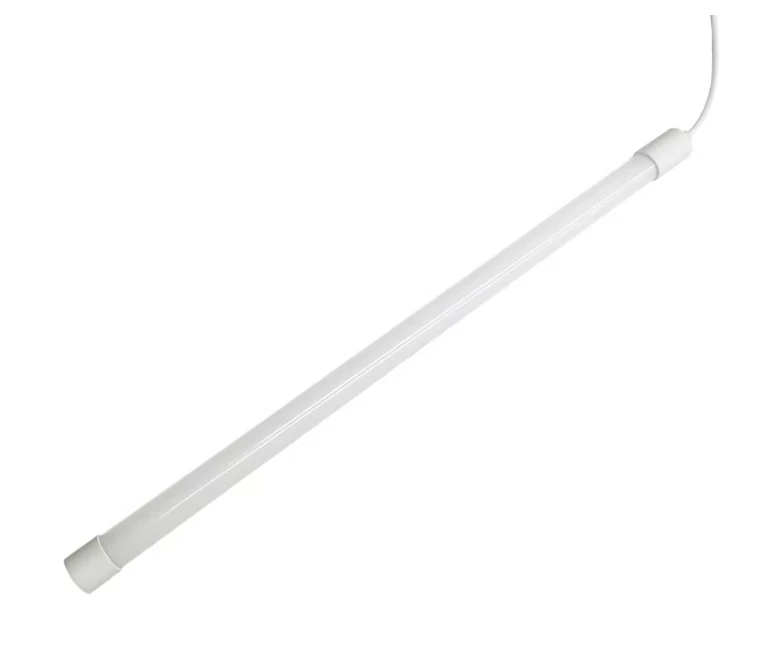
The primary point of failure in traditional tube lights is the end-cap where the power cable enters. The optimal agricultural LED utilizes a specialized waterproof base. As demonstrated in the product design, this connection features a heavy-duty, threaded cable gland. When tightened, this gland physically compresses a medical-grade silicone seal tightly against the power cable. This creates an airtight, watertight mechanical barrier that completely prevents the wicking of moisture and ammonia vapors into the tube. This design allows the light to function flawlessly in 100% humidity environments and safely endure direct high-pressure washdowns.
Seamless Double-End Wire Connectivity
To ensure the entire lighting circuit is protected, the connections between individual lights must also be impervious. The featured product utilizes a double-end wire design with molded, waterproof male and female connectors. When securely locked together, these connectors form a continuous, moisture-resistant seal with internal O-rings. This plug-and-play architecture eliminates the need for exposed junction boxes and loose wiring, which are major weak points for moisture ingress and corrosion in agricultural settings.
Advanced Internal Electronics for Maximum Stability
The longevity and biological efficacy of an LED tube are directly dictated by its power supply (the driver) and thermal management.
The Isolated Driver: Ensuring Safety and Flicker-Free Operation
Many budget LED tubes utilize non-isolated drivers, which do not have a physical barrier between the high-voltage AC mains and the low-voltage DC output. This poses a severe shock hazard, particularly in a damp environment, and makes the light highly susceptible to voltage fluctuations and flicker. Premium poultry lights incorporate an isolated driver. This engineering design uses a transformer to physically separate the high-voltage input from the low-voltage output. This provides two profound advantages:
Absolute Safety: It eliminates the risk of electrocution, even if the external polycarbonate tube is accidentally shattered.
Flicker-Free Performance: An isolated driver delivers a highly stable, smooth current, completely eliminating the stroboscopic flicker inherent in cheaper LEDs and legacy fluorescent tubes. Flicker-free light is scientifically proven to reduce avian stress, lower aggressive pecking, and promote natural, healthy resting behaviors, leading to better feed conversion.
High Lumen LED PCBs and Thermal Management
The brightness and lifespan of an LED depend on how efficiently heat is removed from the diode junction. Advanced poultry tubes utilize a High Lumen LED PCB built on an aluminum substrate. This architecture ensures "good dissipation," rapidly conducting heat away from the LED chips and into the surrounding environment. This prevents phosphor degradation and lumen depreciation, ensuring the light maintains its intense brightness and high CRI (Color Rendering Index) over 30,000 to 50,000 operational hours. High CRI is vital, as it allows the birds to accurately perceive the colors of their feed, encouraging foraging and uniform feed intake.
Optical Excellence: The High-Efficiency PC Diffusion Cover
The optical design of the tube dictates how the flock perceives its environment and utilizes the light.
Uniform Light Distribution for Flock Welfare
Direct, unshielded LED light produces harsh glare and sharp, deep shadows. In a poultry house, this uneven lighting causes birds to congregate in brightly lit spots while avoiding shadowed areas. This uneven distribution leads to crowding, localized heat buildup, and potential smothering. The optimal solution is a High Efficiency PC (Polycarbonate) diffusion cover. This specialized frosted tube acts as a sophisticated light-scattering lens. It transforms the harsh, directional LED output into a soft, uniform, and highly efficient luminous environment. This mimics natural daylight, encouraging birds to utilize the entire floor space evenly, which improves air quality, litter condition, and overall flock welfare.
Spectral Accuracy and Visual Acuity
The combination of high-lumen LED chips and an optimized PC diffuser ensures exceptional visual acuity for the flock. By providing bright, evenly diffused, and spectrally accurate light, these tubes ensure that even subordinate birds can easily locate feed and water stations, ensuring uniform growth and reducing flock disparity.
Operational and Economic Benefits for the Modern Farm
While the biological benefits are profound, the decision to upgrade to advanced LED tube lights is ultimately driven by the economic realities of farm management. These lights offer a compelling return on investment (ROI).
Unmatched Energy Efficiency and Longevity
By replacing legacy incandescent or fluorescent systems with high-efficiency LED tubes, farms can reduce their lighting energy consumption by 50% to 80%. The inclusion of an isolated driver ensures optimal power conversion, minimizing waste heat. Furthermore, the robust waterproofing and superior thermal dissipation mean that these lights rarely fail. A lifespan of 50,000 hours translates to years of maintenance-free operation, drastically reducing the labor costs associated with replacing bulbs in a hostile environment.
The Daisy-Chain Advantage: Streamlining Installation and Maintenance
The Double End Wires design is a masterstroke of operational efficiency. By featuring waterproof connectors at both ends, multiple tubes can be daisy-chained together in a continuous series.
Reduced Installation Costs: This plug-and-play capability allows a single power drop to illuminate an entire row of the barn. Farmers save significantly on copper cabling, electrical conduits, and the labor required for complex wiring installations.
Cleaner Environment: Eliminating external wiring and junction boxes creates a cleaner, more organized ceiling space that is easier to clean, less prone to accumulating dust, and reduces the risk of electrical fires.
Enhancing Feed Conversion and Egg Production
Ultimately, the engineering of the light serves the biological output of the bird. The flicker-free operation, high CRI, and uniform light distribution directly stimulate feed intake and normalize digestive processes. This leads to measurably improved Feed Conversion Ratios (FCR) and accelerated weight gain in broilers. In layer and breeder houses, the precise, consistent photoperiod provided by stable LED drivers ensures optimal hormone release, maximizing peak egg production, improving shell quality, and extending the productive lifespan of the hen.
Conclusion: The Definitive Upgrade for Agricultural Success
In conclusion, the modern poultry farm is a highly sensitive, biologically driven ecosystem that demands equally sophisticated infrastructural support. The environmental hostility of the coop-characterized by corrosive ammonia, extreme humidity, and rigorous sanitation protocols-renders traditional lighting obsolete.
LED tube lights are unequivocally the best choice for this environment, but only when they are engineered to the highest agricultural standards. The featured waterproof, double-end wired LED poultry tube embodies this standard of excellence. By integrating an isolated driver for unmatched safety and flicker-free welfare; a high-lumen aluminum-backed PCB for superior thermal management; a high-efficiency PC diffusion cover for uniform illumination; and a waterproof base with heavy-duty silicone glands for uncompromising environmental resilience, it addresses every critical failure point of conventional lighting.
Investing in this advanced LED tube lighting system is more than an equipment upgrade; it is a strategic investment in biosecurity, animal welfare, operational efficiency, and long-term profitability. For the forward-thinking poultry producer, these lights represent the definitive, future-proof solution for driving flock health and maximizing agricultural yield.
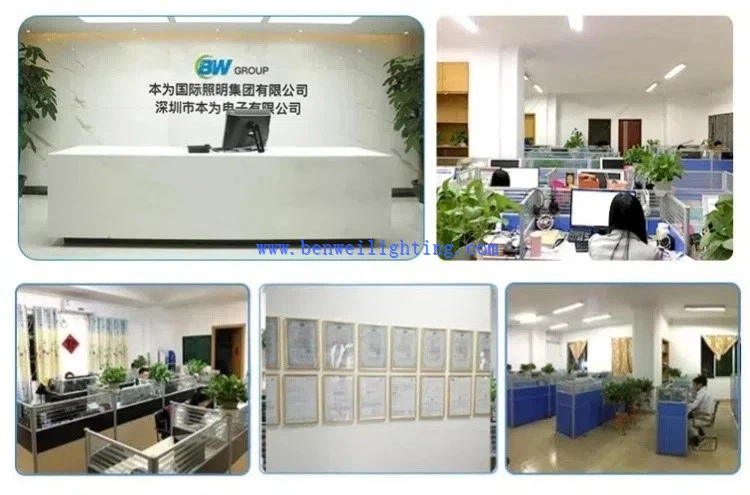
Shenzhen Benwei Lighting Technology Co., Ltd
Shenzhen Benwei Lighting Technology Co., Ltd is a well-known company that designs, develops, makes, and sells high-tech goods, including LED lighting products. The plant where we work opened in 2010 and is in Shenzhen.
Our address
3rd Floor, 5th Building, Hebei Industrial Park, Hualian Community, Longhua District, Shenzhen, China





