Ever wonder why some houseplants just seem to flourish with thick, vibrant leaves while others in your home look a bit, well, sad? A lot of the time, light is the answer. Light is the most important thing for a plant's health, and many of us can't get enough of it all year. This is where grow lights come in. But what are they really, and do you need one? Let's look into the science behind the glow and find out why a good grow light can make your indoor jungle a whole new world.
What Does a Grow Light Do?
In its most basic form, a grow light is a light source that plants use to make food through photosynthesis. Any source of light can give plants some light, but grow lights are special because they mimic the traits of natural sunshine that plants need the most. Here's another way to look at it: your plant needs a healthy diet of light colors to grow. A grow light is like a perfect meal plan-it gives your plant exactly what it needs to grow.
Why good light is important: the science behind the glow?
Light is used by plants to turn carbon dioxide and water into food during photosynthesis. This process is necessary for plants to grow. But not all light is the same. Plants mostly need light in the Photosynthetically Active Radiation (PAR) range, which is similar to the light we see and goes from red to violet.
A "full-spectrum" light is good for growing plants. In other words, it gives off a regulated mix of all these wavelengths, just like sunshine does. This is very important because various light colors do various tasks:

Blue light: This is an important part of the spectrum for plant growth, which means strong roots and lots of leaves. Plants can get tall and weak if they don't get enough blue light. Based on what the University of Minnesota Extension says, blue light helps plants stay small and encourages root growth.
Red Light: This part of the spectrum is best for photosynthesis and is needed for plants to grow and fruit. A plant might not bloom at all or will only bloom a few times if it doesn't get enough red light.
Wavelengths Other Than Red and Blue: Red and blue light are the most powerful, but green and yellow light are also important for plant growth. They can get deeper into the leaf tissue, which helps plants use the light they get better.
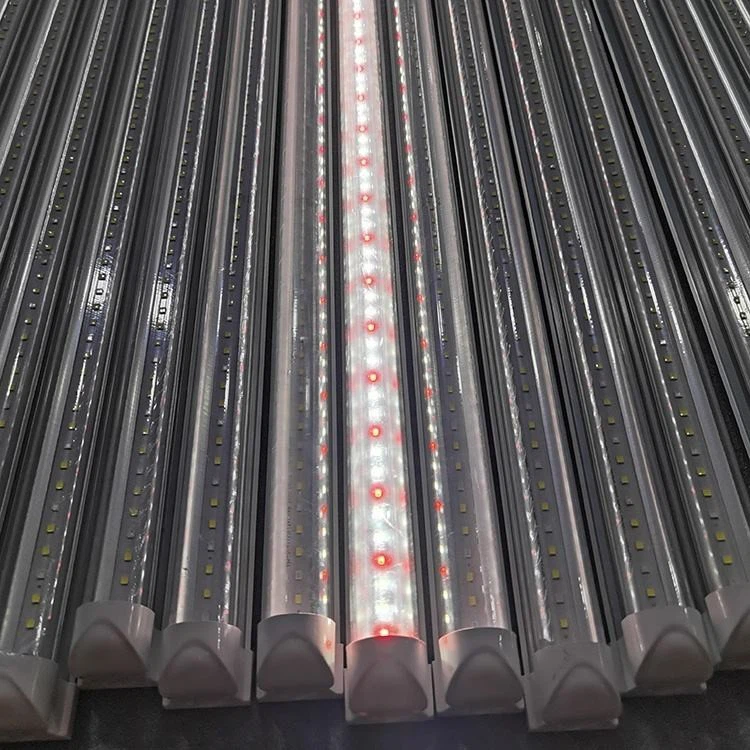
For the most part, lights that are harshly pink or purple are only giving off light from the red and blue parts of the spectrum. The best grow lights, on the other hand, are full-spectrum and give off a warm white glow that looks more natural and is much nicer to have in your home. Like Benwei LED grow lights, these full-spectrum plant lights help plants stay healthy at any stage of their growth. You don't have to choose just one type or color of light.
How to Measure Light: PPF and Why It's Important
You may see terms like PPF or PPFD when you're looking for a grow light. Do not worry, it is not hard as it seems!
Photosynthetic Photon Flux, or PPF, is a way to figure out how much light a device gives off that plants can use. It tells you how well a light makes light that plants can use.
Even more helpful is PPFD, which stands for Photosynthetic Photon Flux Density. That useful light is measured by how much of it actually hits the leaves of your plant. What affects PPFD is how far away the light is from the plant. The PPFD goes up as the light gets closer. So, even if you have a strong light source, your plant will still have trouble if it's too far away.
What kind of LED light bulb can I use for my plants?
A regular light bulb gives off some light, but not the colors (especially in the red and blue parts of the spectrum) or the amount of light that plants need to grow. A grow light is meant to give plants the right amount of "light diet" to grow well.
Just think about it this way: a normal light bulb isn't made for plants. It does shine some light on plants, but it lacks the right colors (especially red and blue) and strength for them to grow and do well. Light of different colors has different bands. For photosynthesis, which is how plants turn light into energy for growth, they use red and blue light. Most light bulbs give off a lot of different colors, but they don't focus on the important red and blue areas. Do you want to go further? We wrote a blog post about why a regular LED light bulb won't help your plants grow.
The Vita LED Grow Bulb is a good choice if you want a grow light in the form of a bulb that will actually help your plants. As always, it looks good and is sleek. It can be used in any standard light device, like lamps, recessed lights, ceiling fixtures, and so on.
When Should You Use a Grow Light?
If you can relate to any of these cases, a good grow light could be just what your plants need:
Your plant is in a corner, a room with a small window that faces north, or a room with low light.
Our days are getting shorter and the sun isn't shining as bright, so your plants are drooping or stopping to grow.
It's a variegated plant, which means that the white or colored parts of the leaves need more light to grow and keep their bright colors.
You want your plants to grow. For buds and blooms, flowering plants need a lot of light.
You want to put plants anywhere in your house. Grow lights let you do that, even in places that don't get natural light, like the middle of a room or on a table.
How do I tell if my plant needs a grow light?
It can be hard to give indoor plants enough natural light, especially in places with low light or in the winter. Plants clearly show that they need more light, which is good news.
Some common signs are:
Growth that is slow or stopped (plants stop growing or new leaves are smaller)
Stems that are tall and stretched out (thin, long stems with leaves spread out far apart as plants "reach" for light)
Loss of color or pattern (plants with pattern may turn plain green and plants with color may look dull)
When these things happen, a grow light is a great way to help your plant get back on track!
Our address
3rd Floor, 5th Building, Hebei Industrial Park, Hualian Community, Longhua District, Shenzhen, China
Phone Number
+8618878216759
bwzm6@ledbenweilighting.com