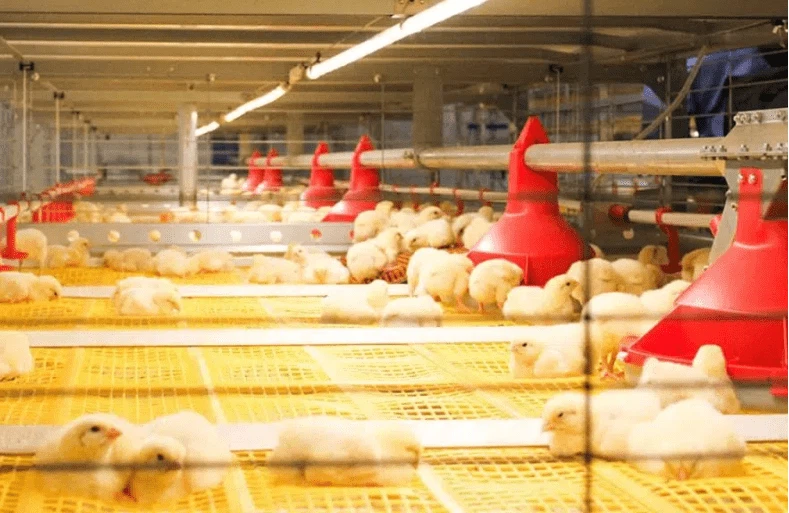
Lighting is one of the most essential conditions for poultry health and stable egg production. It directly affects chickens' metabolism, mental state, growth rate and laying efficiency. In winter with shorter daylight hours, shaded chicken coops, or continuous rainy weather, natural light is often insufficient to meet poultry growth needs. This usually leads to reduced egg yield, flock stress, and slow growth.
In this case, proper artificial lighting can effectively supplement daylight hours and simulate a natural sunlight environment. It keeps poultry in healthy condition and maintains consistent egg production throughout the year. There are many types of artificial lights available for poultry farming, and each type varies greatly in performance, application scenarios and farming benefits. This article compares four mainstream poultry lighting options to help farmers choose the most suitable light for their chicken coops.
LED Poultry Lights (Best for Commercial Farming)
LED lights are currently the most popular lighting solution for modern poultry farms, widely adopted in large-scale breeding sites due to their high efficiency, long lifespan and strong adaptability.
LED lights deliver bright and natural daylight-like illumination that perfectly matches poultry's growth and laying requirements. They effectively maintain flock health and improve overall egg production. Compared with traditional bulbs, LED lights feature ultra-low energy consumption and extremely long service life, greatly reducing farmers' electricity costs and frequent bulb replacement expenses.
In addition, LED lights produce very little heat during operation. They will not cause heat accumulation inside the chicken coop, avoiding overheating risks and heat stress for poultry in summer. This makes LED lights suitable for year-round use in all types of chicken coops.
Fluorescent Poultry Lights (Budget-Economic Option)
Fluorescent lights are cost-effective lighting solutions, ideal for small and medium-sized farmers with low-budget coop upgrades.
They provide uniform, bright white light similar to natural daylight, fully covering the basic lighting needs for poultry growth and egg laying. With stable lighting performance, fluorescent lights help poultry produce healthy and high-quality eggs steadily.
However, fluorescent lights have an obvious drawback: they generate slight working noise. In enclosed chicken coops, continuous noise may cause stress interference to flocks. Therefore, they are more suitable for open and well-ventilated coops, not recommended for large-scale use in high-density enclosed breeding environments.
Incandescent Lights (Auxiliary Supplementary Lighting)
Incandescent bulbs are rarely used as the main lighting source for poultry farming and only serve as auxiliary supplementary lights with limited application scenarios.
Incandescent lights emit warm and soft light, which can relieve chickens' tension, reduce anxiety, restlessness and flocking behaviors, and stabilize the overall mental state of the flock. Meanwhile, these bulbs generate certain heat during operation, which can assist in warming the coop in cold winter and low-temperature areas, creating a more comfortable living environment for poultry.
Even so, their high power consumption, short service life and excessive heat generation lead to extremely high long-term use costs, making them unsuitable for main lighting in large-scale poultry farming.
Full-Spectrum Poultry Lights (Professional Natural Light Simulation)
Full-spectrum lights are professional breeding lights specially designed for poultry. Their core advantage is replicating the complete natural sunlight spectrum, serving as a high-end lighting solution for improving poultry health and egg productivity.
Full-spectrum lights are available in incandescent, fluorescent and LED versions to adapt to different farming budgets and scenarios. They output pure and uniform daylight-like white light, restoring chickens' natural growth behaviors. This effectively promotes egg laying, enhances poultry immunity and reduces disease rates.
For farms pursuing high-quality breeding and long-term stable high yield, full-spectrum lights are the optimal choice to optimize the breeding environment and increase farming profits.
Final Summary of Poultry Lighting Selection
In short, each type of poultry artificial light has its own advantages and applicable scenarios. LED lights are energy-saving, durable and heat-controllable, making them the first choice for commercial large-scale farming. Fluorescent lights are highly cost-effective for low-budget small-scale breeding. Incandescent lights are only suitable for auxiliary heating and stress relief in low-temperature environments. Full-spectrum lights simulate natural light perfectly and are dedicated to high-precision, high-yield poultry farming.
Regardless of the light type you choose, there is a unified core lighting standard for poultry breeding: maintain 14 to 16 hours of light per day. Matching stable lighting hours with suitable fixtures ensures long-term flock health, continuous egg production growth and maximum farming benefits.
Need a customized poultry lighting solution based on your coop scale, breeding mode and budget? We supply high-quality energy-saving LED poultry lights and professional full-spectrum breeding lights with no light pollution, perfectly suited for all coop environments. Feel free to contact us for product specifications, wholesale prices and professional lighting layout advice to boost your poultry farming efficiency!