

In environments such as petrochemical plants or paint workshops, an electrical spark from an ordinary light fixture could trigger a serious accident. Consequently, lighting in these areas is subject to strict requirements-you cannot simply install just any light. Recently, many procurement officers and contractors have asked us: "If a site currently uses T8 fluorescent tubes, can they be replaced with LEDs without requiring major rewiring?" The answer is yes-this is where G13 LED T8 explosion-proof lights come in. Below, we will explain everything from their structure and operating principles to how to select the right model.
What exactly is a G13 LED T8 explosion-proof light?
Let's break down the name:
G13: Refers to the specification of the dual-pin base at each end of the tube; the pins are spaced 13mm apart (center-to-center), hence the name "G13."
T8: Indicates a tube diameter of 8/8 of an inch (approximately 26mm)-currently the most common size for linear fluorescent-style tubes.
LED: The light source is LED, rather than traditional fluorescent technology.
Explosion-proof: The tube is housed within an explosion-proof fixture, and the entire assembly has passed explosion-proof certification.
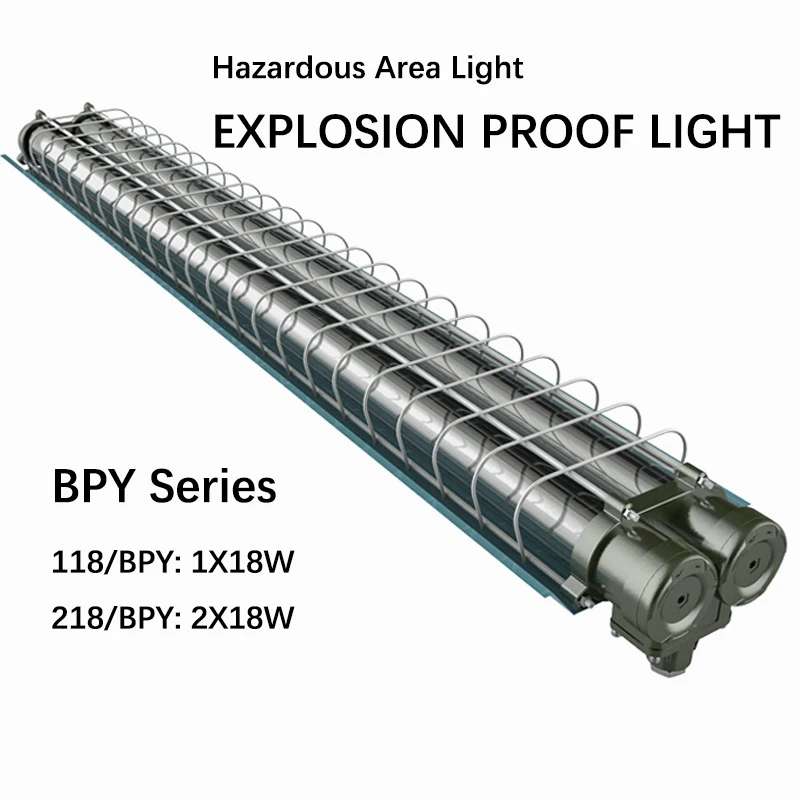
It is important to note that the explosion-proof protection is provided by the external housing and structure of the fixture, not by the tube itself. Typically, these come in the form of explosion-proof linear light fixtures-often referred to as "explosion-proof fluorescent-style lights"-which are designed to house one or two LED T8 tubes with standard G13 bases.
Explosion-proof principles: Why they don't ignite hazardous gases in the surrounding environment
The core concept behind explosion-proof lighting is to prevent any sparks or high temperatures generated inside the fixture from reaching the outside environment. There are two common approaches:
Flameproof (Ex d): The housing is built to be sufficiently robust; it can withstand the pressure of an internal explosion and prevent flames from escaping.
Increased Safety (Ex e): The design incorporates enhanced safety measures to prevent the occurrence of electrical arcs, sparks, or dangerous high temperatures. Specifically for LED T8 explosion-proof lights, the following design features are typically incorporated:
Aluminum alloy or stainless steel housings equipped with sealing gaskets.
Lens covers made of tempered glass or high-strength polycarbonate (PC).
Explosion-proof terminal compartments and cable entry devices.
Surface temperature limits for the housing, corresponding to specific temperature classes (e.g., T4, T5, T6).
Common Application Environments
Explosion-proof lighting should be considered in any environment where flammable gases, vapors, or combustible dust may be present. Typical locations include:
Oil and gas industry: Gas stations, oil depots, refineries, and natural gas processing plants.
Chemical plants: Reaction workshops, solvent storage areas, and raw material warehouses.
Spray painting and coating facilities: Paint booths and paint-mixing rooms, where concentrations of paint vapors are high.
Pharmaceutical facilities and laboratories: Areas where organic solvents-such as alcohol or ether-are used.
Grain handling and dusty environments: Flour mills, feed mills, and woodworking shops, where the risk of dust explosions is significant.
Wastewater treatment and biogas facilities: Areas prone to the accumulation of combustible gases like methane.
Coal mines and certain underground spaces: Locations requiring equipment that meets specific mining safety standards.
Hazardous materials warehouses and battery rooms: Areas where flammable chemicals are stored or where hydrogen gas may be generated.
Often-Overlooked Details in Installation and Use
Always use certified explosion-proof cable entry devices. Even with a high-quality housing, an improperly sealed cable entry point compromises the unit's explosion-proof integrity.
Do not arbitrarily change the type of LED tube. Use only the LED T8 tubes specified or approved by the manufacturer; using unauthorized replacements can negatively affect heat dissipation and invalidate safety certifications.
Never open the housing while the unit is energized. Always disconnect the power and ensure the area is safe before performing any maintenance.
Regularly inspect sealing gaskets and lens covers. Replace them promptly if they show signs of aging or cracking, as failure to do so will reduce the equipment's ingress protection (IP) rating.
Avoid unauthorized modifications to the housing. Drilling, grinding, or otherwise altering the enclosure can compromise its explosion-proof (flameproof) structure.
Conclusion
The G13 LED T8 explosion-proof light consists of a standard G13-base LED T8 tube housed within an explosion-proof certified fixture. This design meets the stringent safety requirements of high-risk environments while retaining the key advantages of T8 tubes: ease of replacement and energy efficiency. These lights are primarily used in settings where flammable or explosive gases or dust may be present, such as in the petrochemical, spray-painting, pharmaceutical, grain processing, and wastewater treatment industries.
Need G13 LED T8 explosion-proof lights? Contact us today.
If you are selecting equipment for a project or looking to upgrade existing explosion-proof fluorescent fixtures to LED, please send us your requirements. Our engineers will recommend the most suitable models for your specific needs and provide quotations and samples. You can reach out via the inquiry form on our website or by email; we will respond as soon as possible.
Our address
No. 5-3 Niujiao Road, Yanchuan Community, Yanluo Subdistrict, Bao'an District, Shenzhen
bwzm18@ledbenweilighting.com






