


What does "E14 C35 LED Filament Candle Bulb" actually mean?
Each part of the name tells you something useful when shopping:
E14 – the small Edison screw base (14 mm), also called SES. It is common in Europe, the UK, Asia and Australia.
C35 – "C" stands for candle shape and 35 is the bulb diameter in millimetres.
4W – the power draw, roughly equal to a 40W traditional incandescent bulb.
Filament – slim LED strips inside the glass that look like the glowing wire of an old-style lamp.
2700K warm white – the colour temperature, a cosy, yellow-orange light ideal for homes.
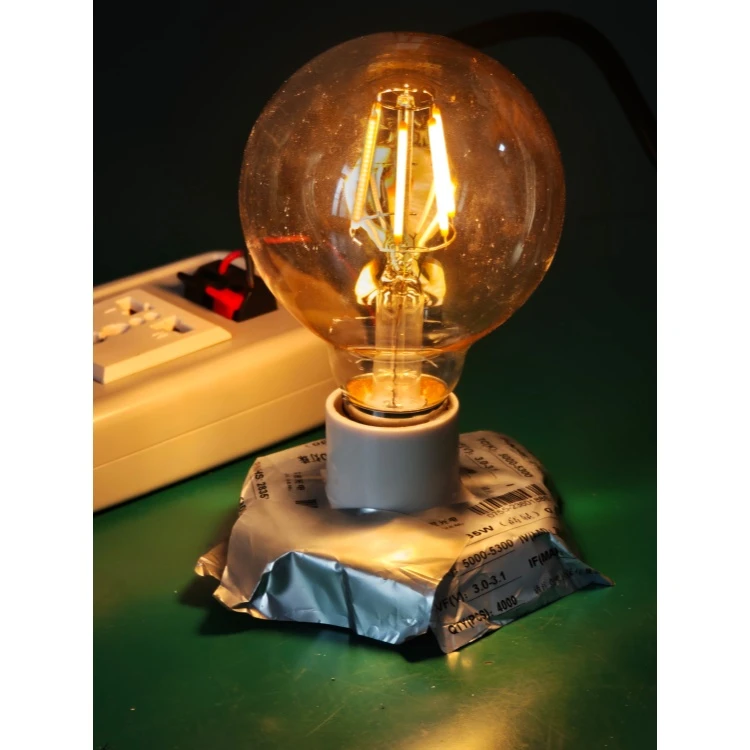
What are the typical specifications?
| Parameter | Typical value |
|---|---|
| Base type | E14 (SES) |
| Shape / size | C35 candle, 35 mm diameter, about 100–105 mm long |
| Power | 4W |
| Luminous flux | about 400 lm (clear), about 350 lm (amber) |
| Colour temperature | 2700K warm white |
| CRI | Ra 80+ |
| Input voltage | AC 220–240V (110–130V versions available) |
| Glass finish | Clear or amber |
| Beam angle | about 300° (omnidirectional) |
| Rated life | 15,000–25,000 hours |
| Dimmable | Standard (non-dimmable) or dimmable versions |
Values are typical for this bulb type. Always confirm exact figures on your supplier's datasheet.
What is the difference between clear and amber glass?
Both versions use the same 4W filament technology, but the glass changes the mood of the light. Clear glass shows off the filaments and gives slightly brighter output, while amber glass tints the light for an even warmer, antique feel.
| Feature | Clear glass | Amber glass |
|---|---|---|
| Look when off | Transparent, filaments visible | Golden tint, filaments softened |
| Light feel | Warm white, 2700K | Extra-warm, golden glow |
| Brightness | About 400 lm | About 350 lm |
| Best for | Chandeliers, exposed fixtures, task areas | Ambient lighting, bedrooms, cafés, bars |
| Style | Modern vintage | Classic retro |
How much energy and money can you save?
A 4W filament candle bulb replaces a 40W incandescent bulb with similar brightness. The example below assumes 3 hours of use per day and an electricity price of $0.20 per kWh.
| Item | 40W incandescent | 4W LED filament (C35) |
|---|---|---|
| Energy per year | 43.8 kWh | 4.38 kWh |
| Electricity cost per year | $8.76 | $0.88 |
| Rated lifespan | about 1,000 hours | 15,000+ hours |
| Years of use at 3 h/day | about 0.9 years | about 13.7 years |
| Heat output | High | Low |
That is roughly 90% less energy per bulb, and the savings multiply quickly in a chandelier with five or six candle bulbs.
Where should you use E14 C35 filament candle bulbs?
Chandeliers and pendant lights – the candle shape looks authentic and the 300° beam fills the fixture evenly.
Wall sconces and bedside lamps – 2700K light is relaxing and does not disturb sleep routines.
Restaurants, cafés and hotels – amber glass creates a warm, inviting atmosphere.
Salt lamps, range hoods and small appliances – many use E14 bases (check the fixture's maximum wattage and temperature rating).
How do you choose the right bulb?
| Check | Why it matters |
|---|---|
| Base and voltage | E14 must match your socket; confirm 220–240V or 110–130V for your region. |
| Dimmer compatibility | Only dimmable bulbs work with dimmer switches; use a trailing-edge LED dimmer. |
| Fixture size | C35 is slim, but check enclosed shades for clearance. |
| Glass colour | Choose clear for brightness and style, amber for a cosier mood. |
| Certifications | Look for CE, RoHS, and where needed UL, ETL or SAA marks. |
FAQ
Is 2700K too yellow? Not for living spaces. It matches the glow of traditional bulbs and candlelight, which is exactly the retro feel this bulb is designed for.
Are 4W filament bulbs bright enough? At about 350–400 lumens each, they work well as decorative and ambient light. Use several bulbs, or add task lighting, for reading or work areas.
Do LED filament bulbs get hot? They run much cooler than incandescent bulbs, though the glass can still feel warm after long use.





