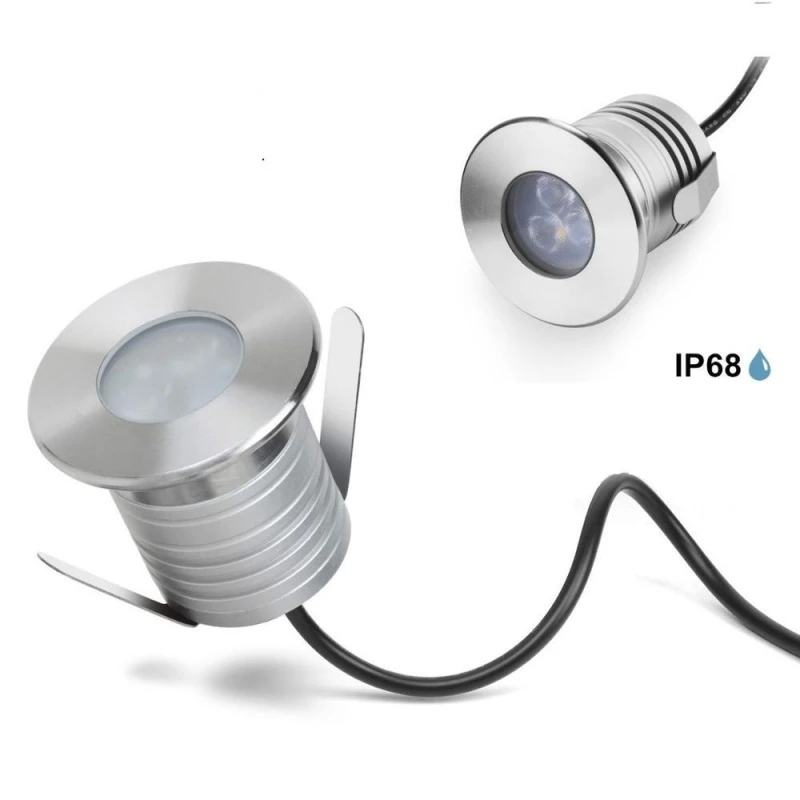
If you walk past the entrance plaza of a hotel at night and notice the entire exterior wall illuminated by beams of light-yet you can't spot a single light fixture on the ground-it is likely the work of an in-ground light. These fixtures are concealed beneath the surface, leaving only the light itself visible to you.
For professionals in project procurement, lighting design, or wholesale distribution, in-ground lights are a common yet tricky category of outdoor lighting, with plenty of potential pitfalls during the selection process. This article covers everything you need to know-from definitions and construction to application scenarios and key purchasing criteria.
What exactly is an LED in-ground light?
An LED in-ground light is an outdoor fixture designed to be recessed into the ground. Utilizing LED technology, the majority of the unit is buried within soil, paving, or concrete, with only the faceplate exposed at the surface. Light is projected upward or at an angle to illuminate trees, walls, sculptures, or building facades, or to provide guidance lighting for pedestrian walkways.
Compared to standard garden or lawn lights, in-ground lights are distinguished by their load-bearing capacity, superior waterproofing, and space-saving design. They must be robust enough to withstand being driven over slowly by vehicles, stepped on by pedestrians, and submerged during heavy rain.
What are the components of an in-ground light?
While an in-ground light may appear simple, its internal components are highly specialized:
Faceplate: Typically made from 304/316 stainless steel, aluminum alloy, or copper. As the part in direct contact with the ground, it determines the fixture's resistance to corrosion and foot traffic.
Tempered Glass: Usually 8–12mm thick, this must be both highly transparent and capable of withstanding significant pressure.
LED Light Source and Optics: This includes the LED chip and lenses or reflectors, which determine the light distribution angle.
Housing and Heat Dissipation Structure: Often made of die-cast aluminum; effective heat dissipation is crucial, as trapped heat will significantly shorten the LED's lifespan.
Recessed Housing (Sleeve): Installed into the foundation during construction, this facilitates future maintenance (such as replacing the fixture) and ensures proper drainage. Power Supply and Cabling: Some units feature built-in drivers, while others utilize external constant-voltage or constant-current power supplies. Waterproofing at the cable exit point is critical.
Key Features
High Concealability: Virtually invisible during the day, ensuring the overall aesthetic of the landscape remains undisturbed.
High Ingress Protection (IP) Rating: Standard products typically offer an IP67 rating, with some reaching IP68, allowing for short-term or long-term submersion in water.
High Pressure Resistance: Standard models can withstand foot traffic, while reinforced versions can support the passage of light vehicles.
Energy-Efficient and Long-Lasting: LED light sources offer low power consumption and a typical lifespan of 30,000–50,000 hours.
Versatile Lighting Effects: Available in single-color, warm/cool white, RGB, and even DMX-controlled color-changing options.
Common Application Scenarios
① Building Facade Lighting
Upward-directed lighting accentuates building contours and surface textures; commonly used for commercial buildings, hotels, and office complexes.
② Gardens and Landscaping
Used to illuminate trees, shrubs, and flower beds. Narrow-beam fixtures can "lift" tree trunks against the night sky, creating a strong sense of depth.
③ Plazas, Pedestrian Zones, and Parks
Embedded in paving to serve as guide lighting or decorative light strips, enhancing the atmosphere without obstructing pedestrian flow.
④ Hotels, Villas, and Residential Courtyards
Installed along entrance driveways, pool edges, or garden paths, these in-ground lights provide both safety and a sophisticated design element to outdoor spaces at night.
⑤ Bridges, Sculptures, and Monuments
Provides accent lighting for large structures, highlighting specific contours or intricate details.
⑥ Water Features and Pool Surroundings
IP68-rated, corrosion-resistant fixtures are suitable for use in fountains, shallow pools, and similar environments.
Selecting Optics and Power
Narrow Beam (10°–15°): Ideal for illuminating tall trees, columns, or projecting light onto distant walls.
Medium Beam (30°–45°): Suitable for medium-sized objects such as shrubs or sculptures. Wide beam angle (over 60°): Suitable for ground wash lighting and illuminating pathways.
Power guidelines: 3–9W is generally sufficient for small courtyards; for building facades or large trees, 12–36W-or even higher-is recommended.
Beam angle and power should be considered in relation to the projection distance; an 18W light will produce vastly different effects depending on whether it has a narrow or wide beam angle.
Installation and Maintenance Tips
Ensure proper drainage: Place crushed stone at the bottom of the recessed housing to prevent water accumulation and prolonged submersion.
Use waterproof cable connectors: In many cases, "water ingress" in inground lights actually occurs at the wiring connection points, not within the fixture itself.
Allow space for future maintenance: Ensure there is enough room around the fixture so that it can be replaced later without damaging the surrounding ground surface.
Clean the cover regularly: Dirt, fallen leaves, and moss can obstruct light and hinder heat dissipation.
Inspect the sealing rings: Silicone seals may degrade after two to three years of use; regular checks are recommended.
Summary
LED inground lights are outdoor fixtures designed to be discreet, durable, and highly effective. Their core value lies in their ability to provide precise upward or directional illumination for buildings, landscapes, and public plazas, all while maintaining the visual integrity of the environment.
Need customization or a quote?
If you are planning a project, or would like information regarding samples, minimum order quantities (MOQ), lead times, or wholesale pricing, please leave a message or send an inquiry. Let us know your specific application and the required quantity, and we will provide a tailored solution and quotation as soon as possible.