

Introduction: Two Mainstream Structures of Modern T8 LED Retrofit Tubes
Industry Background of T8 LED Tube Iteration
With the global promotion of energy-saving and low-carbon building standards, traditional fluorescent T8 tubes with high power consumption, severe stroboscopic flicker, and short service life are being comprehensively phased out. As the core upgraded alternative, T8 LED tubes have achieved full market coverage relying on high energy efficiency, long service life, and eco-friendly performance. After years of technical iteration, the market has formed two mature and stable product structures: full glass housing T8 LED tubes and aluminum-plastic composite T8 LED tubes. These two products adopt the same SMD2835 LED chip light source and constant-current IC driver core configuration in mid-to-high-end markets, but differ fundamentally in shell structure, material characteristics, and process design, resulting in huge differences in actual use performance and scenario adaptability.
Core Value of Distinguishing Two Tube Types for Commercial Purchasers
For residential and small civilian lighting, the structural difference between the two tubes has negligible impact on use effect. However, for commercial scenarios with long-term continuous operation, large-area coverage, and high-standard lighting requirements, product structure directly determines lighting uniformity, later maintenance cost, service life stability, and comprehensive project income. Many purchasers simply judge products by initial quotation, ignoring the matching degree between product structure and application scenarios, which leads to problems such as narrow lighting angle of aluminum-plastic tubes causing dark zones, poor heat dissipation of low-quality aluminum-plastic tubes causing rapid light decay, and excessive glass tube inventory in anti-collision demanding scenarios. Therefore, systematically sorting out the differences between glass-type and aluminum-plastic T8 LED tubes is the core premise of high-cost-performance commercial lighting project selection.
Basic Structural Definition of Two Products
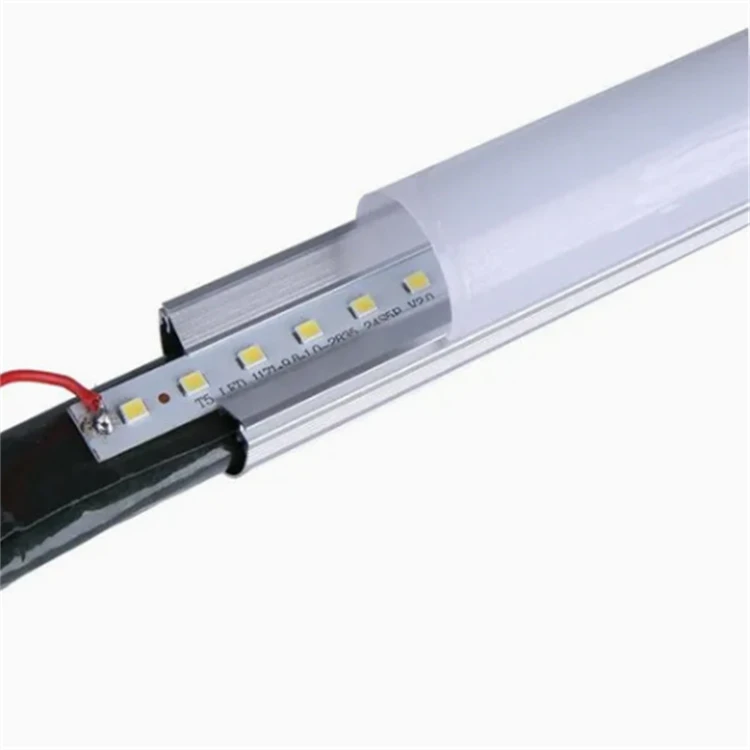
The glass-type T8 LED tube adopts an integrated high-transmittance frosted glass shell, with the LED light source and driving circuit built into the closed glass tube body, forming an all-glass integrated structure. It retains the outer diameter and installation interface of traditional fluorescent tubes, compatible with G13 and FA8 standard lamp caps. The aluminum-plastic T8 LED tube adopts a composite structure of aerospace-grade aluminum alloy heat sink and PC high-transmittance plastic diffuser plate. The aluminum substrate with LED chips is closely attached to the aluminum heat sink, and the PC cover is used for light diffusion and protection, forming a semi-closed heat dissipation structure. The two structural designs determine their respective unique performance advantages and inherent scenario limitations.
Structural & Optical Performance Differences (Core Lighting Experience)
Beam Angle & Light Distribution Uniformity
Optical performance is the most intuitive core difference between the two types of T8 tubes. The glass-type T8 LED tube adopts integral glass optical diffusion technology, realizing a320° ultra-wide beam angle, which is close to the 360° omnidirectional light emission of traditional fluorescent tubes. The frosted glass shell uniformly diffuses light in all directions, with almost no lighting blind spots or shadow dead zones. In large-area open spaces, the light overlap rate between adjacent lamps is extremely high, realizing full-space uniform brightness without layering and dimming, perfectly restoring the classic comfortable lighting effect of traditional fluorescent lamps.
In contrast, the mainstream beam angle of aluminum-plastic T8 LED tubes is concentrated between 120° and 180°, belonging to directional downward lighting. Limited by the composite structure of aluminum alloy and PC diffuser, the light can only be emitted downward in a concentrated manner, forming obvious dark areas on both sides and the top of the tube body. Even with high-quality PC diffuser optimization, it cannot eliminate the edge shadow problem fundamentally. In scenarios requiring overall space brightness such as high-ceiling warehouses, large offices, and supermarket shelves, the narrow beam angle of aluminum-plastic tubes will lead to uneven ground illuminance, affecting overall lighting quality and visual comfort.
Light Transmittance & Long-Term Optical Stability
The full glass housing of glass-type tubes has ultra-high light transmittance up to 90%. The glass material has stable physical and optical properties, no aging, yellowing, or light attenuation after long-term light exposure and high-temperature operation. After 30,000 hours of use, the light transmittance remains above 88%, ensuring long-term consistent luminous efficiency and color temperature without color difference in the whole space. This optical stability is irreplaceable for chain stores, office buildings, and educational spaces with high requirements for lighting consistency.
The aluminum-plastic tube relies on a PC plastic diffuser plate for light transmission and diffusion. Although the initial light transmittance can reach 80%-85%, plastic materials are prone to photoaging and thermal aging after long-term high-temperature irradiation. After 8,000-10,000 hours of operation, the PC cover will gradually turn yellow and fog, resulting in reduced light transmittance, blurred light output, and inconsistent color temperature. In the later service cycle, the overall space brightness will decline significantly, requiring regular inspection and replacement of aging lamps, increasing project maintenance costs.
Light Softness & Eye Protection Performance
Both tubes are equipped with high-precision constant-current IC drivers to realize flicker-free lighting, meeting eye-protection lighting standards. However, the glass-type tube has more uniform light diffusion, softer light output, no local glare and concentrated bright spots, and better visual comfort for long-term indoor work and study. The ultra-wide beam angle avoids partial strong light stimulation and shadow alternation, effectively reducing eye fatigue of indoor personnel.
The directional light emission of aluminum-plastic tubes leads to concentrated downward luminous energy, forming obvious bright areas directly below the lamp and dark areas on both sides. The alternating light and shadow will cause subtle visual adaptation fatigue for people working in the space for a long time. In addition, the aging PC cover is prone to uneven light transmission, resulting in local glare, which slightly reduces eye protection performance compared with glass-type tubes.
Heat Dissipation, Lifespan & Light Decay Performance Differences
Thermal Management & Heat Dissipation Mechanism
Heat dissipation performance directly determines the service life and stability of LED tubes, and the two products adopt completely different heat dissipation mechanisms. The aluminum-plastic T8 tube takes the lead in heat dissipation advantage. Its built-in aerospace-grade aluminum alloy heat sink has ultra-high thermal conductivity, which can quickly conduct the heat generated by LED chips during operation to the external environment. The close fitting of the aluminum substrate and the heat sink realizes efficient active heat dissipation, effectively reducing the working temperature of the chip and avoiding heat accumulation. It is very suitable for long-term high-intensity continuous lighting scenarios.
The glass-type T8 tube adopts passive heat dissipation through air convection inside the closed glass tube. Although the heat dissipation efficiency is not as good as that of aluminum alloy materials, thanks to the high-quality SMD2835 low-heat chips and optimized internal cavity structure, the heat distribution is uniform without local overheating. The high-temperature resistant glass shell can withstand long-term thermal radiation without deformation and aging. For conventional commercial lighting scenarios with 8-12 hours of daily operation, its heat dissipation performance is fully sufficient to support stable operation, and the overall temperature rise is gentle and controllable.
Service Life & Lumen Depreciation Loss
Both glass-type and aluminum-plastic T8 LED tubes have a rated service life of 30,000 hours under standard working conditions, with a formal 2-year manufacturer warranty. However, there are obvious differences in long-term light decay performance due to different heat dissipation structures. The aluminum-plastic tube has efficient active heat dissipation, with slower light decay in the whole life cycle, and can retain more than 75% of the initial luminous flux after 30,000 hours of operation, showing more stable long-term brightness for high-frequency continuous lighting.
The glass-type tube has slightly higher light decay rate than aluminum-plastic tube under ultra-long continuous working conditions (12+ hours daily operation), but can still maintain more than 70% of the initial lumen after 30,000 hours, far better than traditional fluorescent tubes and low-end ordinary LED tubes. In conventional commercial scenarios with intermittent lighting or daily lighting hours less than 10 hours, the light decay difference between the two is negligible, and the glass tube can always maintain uniform and soft lighting effects.
Long-Term Operational Stability
The aluminum-plastic composite structure has strong thermal stability, no heat accumulation failure risk, low later failure rate, and extremely stable performance in high-temperature and long-term working environments. Its only defect is the aging problem of the PC diffuser plate, which affects optical performance but does not damage the circuit and light source, with low overall maintenance risk.
The integrated glass structure has excellent overall structural stability, no aging and yellowing of shell materials, and consistent optical performance throughout the whole life cycle. The closed glass cavity can effectively isolate dust, moisture, and external impurities, avoid internal circuit oxidation and dust accumulation failure, and maintain stable lighting output for a long time. It has obvious advantages in anti-pollution and long-term appearance integrity.
Safety Protection, Material Durability & Environmental Performance
Impact Resistance & Structural Durability
In terms of mechanical durability, aluminum-plastic T8 tubes have absolute advantages. The aluminum alloy main body and PC plastic cover are lightweight, anti-collision, drop-resistant, and not easy to deform and damage. They are suitable for scenarios with frequent personnel activities and easy collision such as factory workshops, logistics warehouses, and large supermarkets. The composite structure can resist daily accidental impact and friction, with low damage rate in transportation, installation and use, and low after-sales maintenance pressure.
Glass-type T8 tubes are made of glass materials, which have good pressure resistance but are fragile and easy to break under strong impact. They have higher requirements for transportation and installation protection, and are not suitable for harsh scenarios with frequent collision and extrusion. However, the thickened industrial glass adopted by high-quality glass tubes has improved impact resistance, which can meet the safe use requirements of conventional office, classroom, and retail spaces.
Insulation Performance & Safety Level
Glass is a natural high-insulation and flame-retardant material, so glass-type T8 tubes have excellent electrical safety performance. The integrated glass shell completely isolates the internal live circuit from the outside world, with zero electric leakage risk, good high-voltage resistance and anti-breakdown ability, and higher safety coefficient in humid and complex power environment. It fully meets the strict electrical safety standards of public commercial buildings and is very suitable for crowded scenarios such as schools, malls, and office buildings.
The aluminum-plastic tube has a metal aluminum alloy shell, which needs to rely on internal insulating layers and insulating lamp caps for electrical isolation. Although it meets IP20 safety protection standards, compared with the natural insulation of glass materials, its electrical safety margin is slightly lower. In the case of improper installation or aging of insulating parts, there is a potential electric leakage risk. However, regular qualified aluminum-plastic tubes can fully meet the safety use requirements of conventional dry indoor scenarios.
Environmental Protection & Aging Resistance
Both products are mercury-free and lead-free, compliant with global green environmental protection standards, and belong to eco-friendly green lighting products. The glass-type tube has no polymer plastic aging problem, no harmful gas precipitation after long-term use, and no yellowing and deterioration of shell materials. The waste glass can be recycled, with extremely low environmental pollution risk, and meets the green building certification requirements of high-end commercial projects.
The aluminum-plastic tube contains PC plastic components, which will slowly age and deteriorate after long-term use, and the waste plastic is difficult to degrade and recycle. Although it does not affect normal use performance, it is slightly inferior to glass tubes in environmental protection and long-term appearance maintenance.
Scenario Adaptability & Purchasing Value Analysis
Optimal Application Scenarios of Glass-Type T8 Tubes
Relying on 320° ultra-wide beam angle, uniform and soft light, natural insulation safety, and long-term optical consistency, glass-type T8 tubes are the preferred solution for high-quality commercial lighting scenarios. First, they are suitable for office buildings, schools, training classrooms and other long-term eye-use scenarios, providing full-space uniform flicker-free lighting to improve work and learning comfort. Second, they are perfect for retail stores, shopping malls, catering spaces and other commercial display scenarios, eliminating display blind spots and shadow areas, improving product display effect and store grade. Third, they are suitable for high-end office renovation, green building projects and scenarios with high requirements for lighting consistency and environmental protection, with high comprehensive aesthetic and practical value.
Optimal Application Scenarios of Aluminum-Plastic T8 Tubes
With efficient heat dissipation, strong anti-collision durability and stable long-term heat resistance, aluminum-plastic T8 tubes are more suitable for industrial and high-intensity lighting scenarios. They are the best choice for large industrial warehouses, logistics parks, factory workshops and other spaces with long-term 24-hour uninterrupted lighting, large area and low maintenance frequency. Their excellent heat dissipation performance ensures stable operation under high-load working conditions, and anti-collision structure reduces damage rate and maintenance cost. In addition, they are also suitable for ordinary indoor auxiliary lighting scenarios with low requirements for lighting uniformity, with higher cost performance and stronger durability.
Comprehensive Cost-Performance & Investment Return Comparison
In terms of initial procurement cost, the price of glass-type T8 tubes is slightly higher than that of aluminum-plastic tubes of the same specification. But in high-end commercial projects focusing on lighting effect, safety and long-term consistency, glass tubes have higher comprehensive cost performance. They avoid later lighting unevenness, color difference and other problems caused by plastic aging, reduce the frequency of overall lamp replacement, and save long-term maintenance and renovation costs. For brand chain stores, high-end office buildings and educational institutions, the premium of glass tubes can bring stable high-quality lighting experience and implicit brand value improvement.
Aluminum-plastic tubes have lower initial investment cost and stronger durability, suitable for large-scale industrial and warehouse lighting projects with budget-sensitive and low aesthetic requirements. Their efficient heat dissipation and low damage rate can reduce long-term failure maintenance costs, bringing rapid cost return for industrial lighting renovation projects. For purchasers with large-volume industrial lighting demand, aluminum-plastic tubes are the most cost-effective pragmatic choice.
Selection Suggestions for Commercial Bulk Purchasers
Select Glass-Type T8 Tubes If You Need
First, scenarios requiring high uniform lighting and no shadow blind spots: office buildings, classrooms, shopping malls, retail chain stores, exhibition halls. Second, scenarios with high safety requirements and large pedestrian flow: schools, public service buildings, catering spaces. Third, projects focusing on long-term lighting consistency and green environmental protection: green building renovation, high-end commercial space upgrading, long-term lease operation projects. Fourth, scenarios requiring restoration of traditional fluorescent omnidirectional lighting effects and improvement of space grade.
Select Aluminum-Plastic T8 Tubes If You Need
First, high-intensity continuous lighting industrial scenarios: factory workshops, logistics warehouses, storage centers, 24-hour uninterrupted lighting spaces. Second, scenarios prone to collision and extrusion: large supermarkets with dense personnel, open industrial operation areas. Third, budget-sensitive large-scale industrial lighting projects with low requirements for lighting uniformity and aesthetic effect. Fourth, scenarios requiring extremely low damage rate and simple later maintenance.
Universal Compatible Advantages of Both Products
It is worth noting that both tube types support single-end and double-end dual power supply modes, compatible with all traditional T8 lamp fixtures, realizing plug-and-play rapid renovation without replacing the original lamp frame and circuit, saving a lot of renovation time and labor costs. Both adopt high-quality SMD2835 chips and flicker-free constant-current drivers, with 30,000-hour ultra-long service life and 2-year official warranty, meeting the basic energy-saving and durable use needs of all commercial lighting scenarios.
Conclusion
The essential difference between glass-type and aluminum-plastic T8 LED tubes lies in the balance of optical performance, heat dissipation durability and scenario adaptability, and there is no absolute distinction between good and bad, only scenario matching. The glass-type T8 tube takes the lead in 320° ultra-wide beam angle uniform lighting, natural insulation safety, long-term optical consistency and environmental protection performance, and is the preferred high-quality solution for commercial and public service lighting scenarios focusing on lighting effect, safety and space experience. The aluminum-plastic T8 tube relies on efficient aluminum alloy heat dissipation, anti-collision durability and cost advantages, and is the most cost-effective choice for industrial and high-intensity continuous lighting scenarios.
For professional commercial lighting purchasers and engineering contractors, accurate selection according to project scenario positioning and demand priorities is the key to maximizing project cost performance. Reasonable matching of tube types can not only effectively improve lighting quality and operational safety, but also greatly reduce long-term operation and maintenance costs, realize precise investment and efficient return of lighting projects, and create long-term stable economic and space value for commercial and industrial lighting spaces.

How To Cooperate With Us?
We are happy to have total control over the manufacturing process and the calibre of our products since we have our own facilities. Since we are producers rather than just brokers, we are dedicated to providing our customers with the best pricing. Since we are certain that the price and quality of our products are clear, we invite customers to see our samples first. Our commitment to quality and customer satisfaction drives us to continuously provide top-notch goods.
Our address
3rd Floor, 5th Building, Hebei Industrial Park, Hualian Community, Longhua District, Shenzhen, China





