

What's the difference between UV-A and UV-C?
Ultraviolet light is almost as varied as the colours of the visible spectrum. However, when we think about UV, we tend to overlook this and merely classify it as a spectrum of wavelengths linked with its utility in fluorescence, curing, and disinfection, as well as its possible carcinogenic consequences. It is critical, however, to differentiate between several forms of UV radiation, since each has unique qualities. In this article, we look at the key distinctions between UV-A and UV-C radiation in terms of applications and uses.
Look for the Wavelength Value First
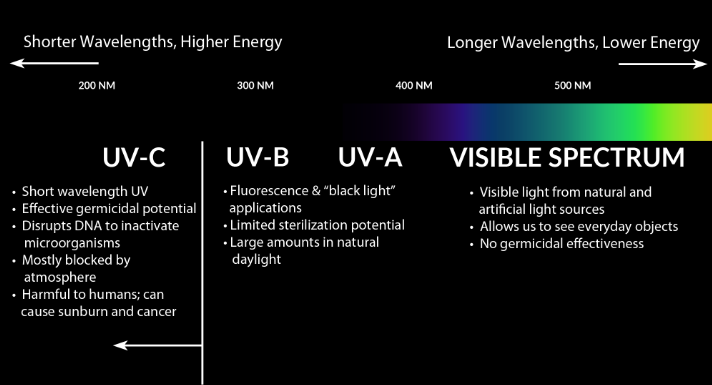
The wavelength of ultraviolet radiation is the most important factor in identifying it. The wavelength, measured in nanometres (nm), influences the kind of UV light. UV-A wavelengths range from 315 to 400 nanometres, whereas UV-C wavelengths are between 100 and 280 nanometres. UV-B wavelengths range between 280 and 315 nanometres.
Both UV-A and UV-C are not visible to the human eye, therefore it may seem counterintuitive since you cannot visually distinguish between these two forms of UV in the same way that we can visually determine if a light source is red or blue. As a result, it is critical that you understand the wavelength light source you will want for your specific application, as well as the distinctions between UV-A and UV-C radiation.
UV-A: Fluorescence and Curing
The majority of UV-A lamp applications are classified as fluorescence or curing, and they use a wavelength of 365 nanometres. Fluorescence occurs when materials such as paints, pigments, or minerals transform UV-A light into a visible wavelength. UV lamps used in such applications are known as blacklights because they look dark, yet when shone on different things, they produce a variety of visible colours.
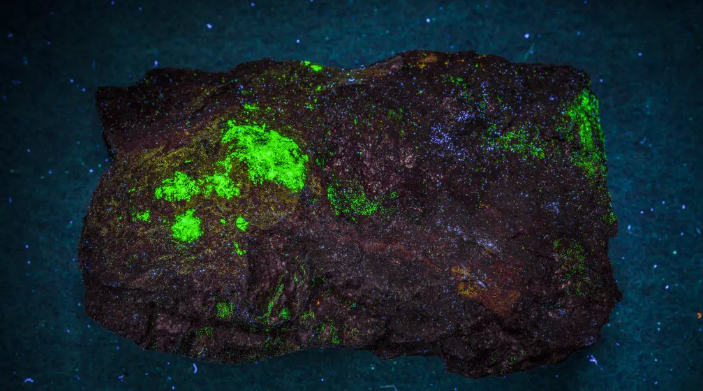
The realUV™ LED flashlight produces green fluorescence on a rock, as seen below. UV-A fluorescence is very useful in a variety of applications, including forensics, medicine, molecular biology, and geology, where the ability to detect the presence of certain luminous compounds that would otherwise be undetectable under normal illumination circumstances is a substantial benefit.
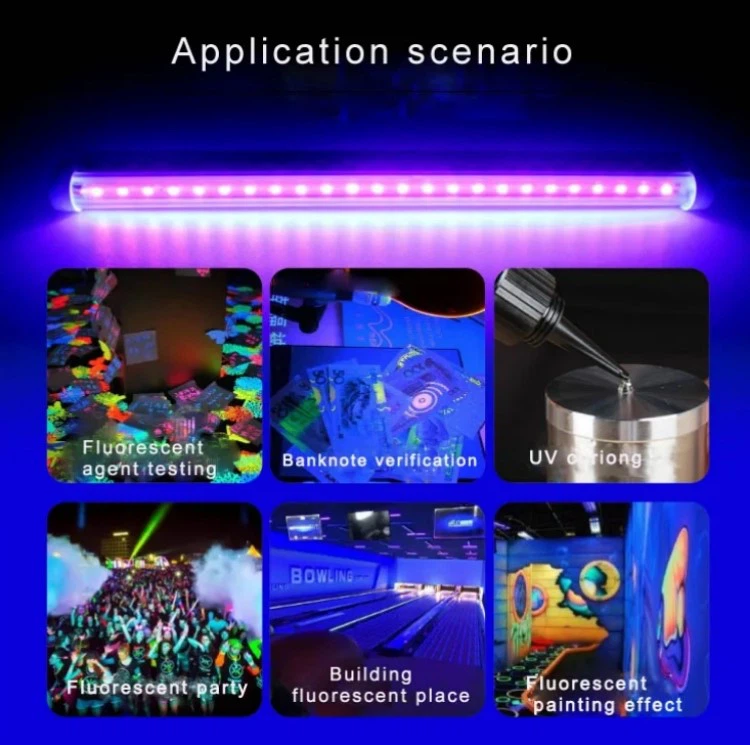
Not all fluorescence applications are limited to scientific ones. Fluorescence may be utilised to provide a broad range of striking visual effects, including fluorescence photography and blacklight art installations. Many entertainment venues, like that blacklight party you may or may not recall, may employ UV-A to produce fluorescence effects.
The most frequent UV-A fluorescence wavelengths are 365 and 395 nm. In general, both 365 and 395 nm produce fluorescence effects; however, 365 nm produces a "cleaner" UV effect with less visible light output, and 395 nm has a modest visible violet / purple component.
Unlike fluorescence, UV-A may cause chemical and structural changes in a variety of materials and is employed in curing processes. Curing requires a substantially greater amount of UV intensity, yet it is still performed using the same UV-A wavelengths. As with fluorescence, 365 nm is a frequent cure wavelength.
UV-A wavelengths are used to cure emulsion paint in screen printing, as well as epoxies for industrial usage and nail gel. In addition to intensity, overall exposure duration is an important consideration in UV-A curing applications.
UV-C: Germicidal and Disinfectant Applications
Unlike UV-A, UV-C wavelengths are substantially shorter, ranging from 100 nm to 280 nm. UV-C wavelengths have been highlighted as an efficient method of inactivating pathogens such as viruses, bacteria, moulds, and fungus.
UV-C is an efficient germicidal wavelength because DNA and RNA are vulnerable to damage at or around 265 nanometres. When pathogens are subjected to UV-C wavelength radiation, double bonds that connect thymine and adenine are broken in a process known as dimerisation, which alters the structure of the pathogen's DNA. Because of this change, when the virus tries to replicate or reproduce, the genetic corruption stops it from succeeding.
UV-C is unique in its capacity to conduct germicidal actions due to the wavelength vulnerability of thymine (uracil in RNA). The graphic below illustrates that thymine and uracil do not absorb UV light at wavelengths greater than 300 nanometres.
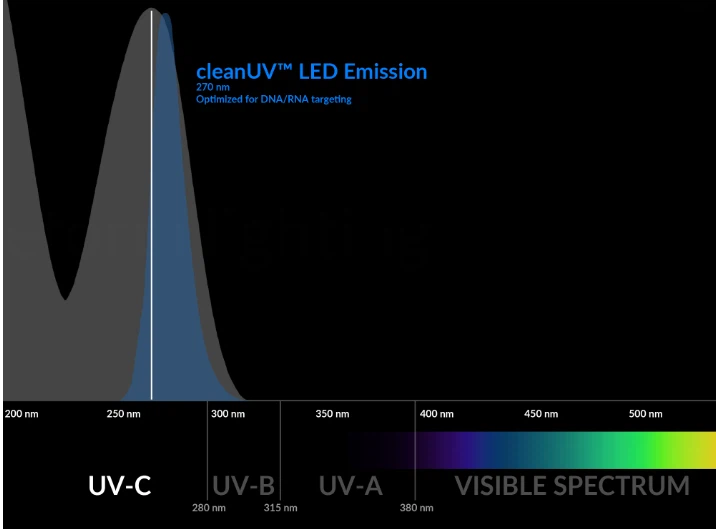
According to the chart, UV-A radiation cannot induce dimerisation in the same manner that UV-C light does. As a result, all available research suggests that UV-A is ineffective as a disinfectant because it cannot target pathogen DNA structures.
UV-A is present in daylight, but UV-C is not
A widespread misperception is that natural sunshine contains all types of ultraviolet radiation. While solar radiation contains all wavelengths of UV energy, only UV-A and some UV-B travel through the earth's atmosphere. UV-C, on the other hand, is absorbed by the earth's ozone layer before reaching the ground.
According to the US HHS, all UV wavelengths, including UV-A, UV-B, and UV-C, are suspected carcinogens and must be handled with extreme care. UV radiation is particularly hazardous since it does not prompt us to squint or turn away in the same way that visible light does. However, we do know that UV-A radiation is fairly common in natural daylight, and as a consequence, there are significantly more research and population-level studies that provide us with a better knowledge of the possible hazards and damage that UV-A might bring.
In contrast, UV-C radiation is not something that most people are exposed to on a regular basis. Most studies have been conducted with occupational health and safety in mind, focusing on particular sectors and vocations such as welders. As a result, significantly less research have been conducted on the risks and possible damage posed by UV-C. From a physics standpoint, UV-C has a considerably greater energy level owing to its shorter wavelength, and we know it directly destroys DNA molecules. It is reasonable to believe that it has the potential to inflict greater human damage than lesser kinds of UV, namely UV-A and UV-B. As a result, extra precautions should be made to prevent UV-C exposure.





