

In the lighting industry, the downlight-an embedded lighting fixture that seamlessly blends functionality with aesthetics-is widely utilized across a diverse range of settings, including residential homes, commercial spaces, and large-scale engineering projects. Consequently, purchasers, project contractors, and end-users frequently pose the question: "What is the use of a downlight?" Unlike the focused illumination provided by spotlights or the linear lighting characteristic of fluorescent tubes, downlights distinguish themselves through their core strengths: "invisible integration" and "uniform light diffusion." Their utility extends far beyond mere basic illumination; they are equally adept at fulfilling multifaceted requirements, such as creating specific atmospheres and enhancing the visual aesthetics of a space. Moreover, the specific applications of downlights vary significantly depending on their size, type, and specifications. This article offers a comprehensive breakdown of the utility and industry application logic of downlights-covering their core definitions, primary functions, classifications and suitable scenarios, selection criteria, common misconceptions, and concluding with a summary and inquiry guide-thereby providing a precise and authoritative reference for industry professionals and buyers alike.
Downlight: Core Definition and Product Characteristics
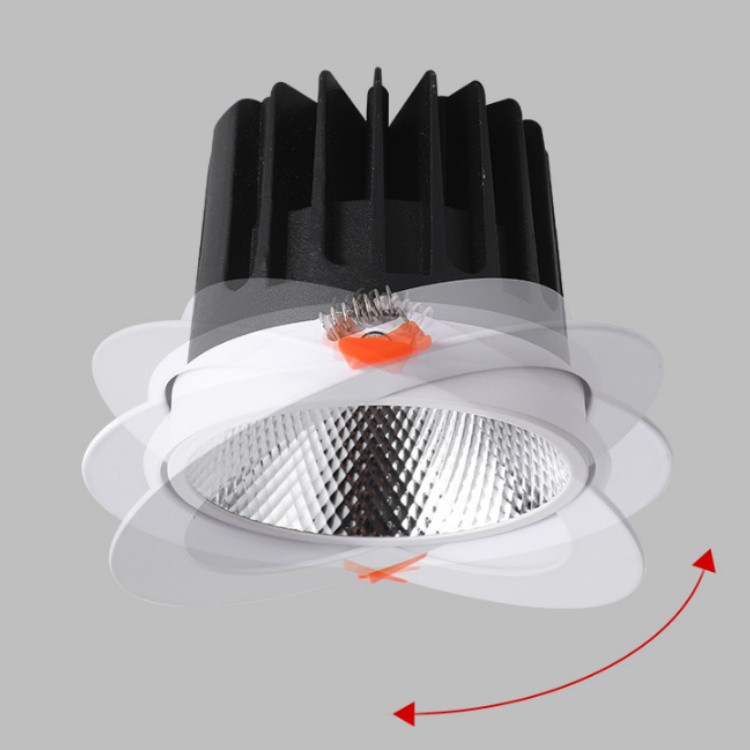
Lighting Characteristics: Features a wide beam angle (typically ≥60°, commonly 90°–120°); the light is uniform and soft, free from significant glare. It achieves the effect of "seeing the light, but not the fixture," preventing harsh direct illumination and enhancing the overall comfort of the space.
Performance Characteristics: Demonstrates outstanding energy efficiency-particularly LED downlights-characterized by high luminous efficacy, low power consumption, and a long service life (typically exceeding 5 years). Available in a variety of materials (iron, aluminum, die-cast alloys, etc.) to suit diverse environmental requirements; select models feature anti-fog and waterproofing capabilities, making them suitable for use in humid environments.
Downlight: Core Applications
Residential Settings: Creating a Cozy and Welcoming Home Atmosphere
In residential settings, downlights serve as the core light source in "no-main-light" designs. They are suitable for various spaces-including living rooms, bedrooms, hallways, kitchens, and bathrooms-and their applications align perfectly with daily household needs:
Living Rooms/Bedrooms: Acting as primary lighting, multiple downlights are arranged to provide uniform illumination, replacing traditional central fixtures. The light is soft and glare-free, preventing the visual fatigue often caused by direct light sources, thereby creating a warm and airy home atmosphere. They can also serve as supplementary lighting-paired with pendant lights or spotlights-to enrich the interplay of light and shadow within the space.
Hallways/Entryways: Single or multiple downlights are installed in a continuous sequence to uniformly illuminate passageways, preventing accidents caused by dim lighting. Furthermore, their minimalist profile occupies minimal space within narrow corridors, enhancing the overall sense of neatness and order.
Kitchens/Bathrooms: Fog-resistant downlights are selected to withstand humid environments, providing uniform illumination for food preparation and grooming areas. This eliminates shadows, ensures safety during use, and prevents the fixtures themselves from sustaining moisture-related damage.
Commercial Settings: Enhancing Spatial Quality and the Customer Experience
In commercial settings, the application of downlights focuses on "atmosphere creation" and "elevating brand quality." They are suitable for a wide variety of venues, including shopping malls, hotels, cafes, and specialty retail stores:
Shopping Malls/Specialty Stores: Serving as primary lighting, downlights provide broad, uniform illumination that ensures the space feels bright and open. They highlight the true colors of merchandise (particularly when using high Color Rendering Index downlights), guide the customer's gaze, and boost product appeal. In specific zones, downlights are utilized as supplementary lighting to accentuate the spatial layering and depth.
Hotels/Cafes: Downlights with warm color temperatures are selected to cultivate a soft, tranquil atmosphere that enhances the guest experience. Additionally, their recessed design complements high-end interior aesthetics, underscoring the venue's sophisticated style without allowing the lighting fixtures to detract from the overall decorative beauty.
Offices/Conference Rooms: Downlights emitting neutral-temperature light are employed to provide uniform illumination that minimizes visual fatigue, ensuring a comfortable environment for employees during work and meetings. Moreover, their minimalist design aligns seamlessly with the clean, streamlined aesthetic of modern office spaces, avoiding any visual distractions.
Engineering Applications: Meeting the Demand for Large-Area, Long-Duration Lighting
In engineering settings, the application of downlights prioritizes "practicality and stability," making them ideally suited for large-scale spaces such as office buildings, schools, hospitals, and underground parking garages:
Office Buildings / Schools / Hospitals: Downlights are installed across expansive areas to provide uniform, stable ambient lighting that meets the demands of continuous, long-duration use. Furthermore, their energy-efficient and durable characteristics help reduce long-term maintenance costs while ensuring compliance with engineering lighting safety standards (specifically, the requirement to pass 3C certification).
Underground Parking Garages: High-brightness, anti-glare downlights are selected to uniformly illuminate driving lanes and parking bays, thereby eliminating dark spots and ensuring the safety of both vehicles and pedestrians. Additionally, these fixtures are designed to withstand the humid and dusty conditions typical of underground garages, thereby extending their operational lifespan.
Common Classifications of Downlights
To suit various applications and settings, downlights are categorized according to several key dimensions. Products within different categories emphasize distinct functions and applicable scenarios, helping to prevent confusion during the selection process:
By Installation Method: Divided into recessed downlights and surface-mounted downlights. Recessed downlights are the mainstream choice, suitable for spaces featuring a suspended ceiling. Surface-mounted downlights do not require a suspended ceiling; they are installed directly onto the ceiling surface and are ideal for scenarios where no suspended ceiling exists (such as in older home renovations).
By Light Source Type: Divided into standard downlights (utilizing incandescent or energy-saving bulbs) and LED downlights. LED downlights are currently the mainstream standard, offering energy efficiency, durability, and superior luminous efficacy; they serve as an excellent replacement for standard downlights. Their primary drawback is that if a single LED point fails, the individual point cannot be replaced independently.
By Size and Specifications: Divided into three mainstream sizes: small (2.5 inches), medium (4 inches), and large (5 inches). The 2.5-inch size (typically paired with a 5W energy-saving bulb) is commonly used in residential settings, while commercial and engineering projects may opt for larger sizes depending on the scale of the space. Key parameters to consider regarding size include the ceiling cutout diameter and the faceplate diameter.
By Functional Features: Divided into standard downlights and anti-fog downlights. Anti-fog downlights are specifically designed for humid environments such as kitchens and bathrooms. Additionally, there are dimmable and color-tunable downlights, which allow users to adjust the color temperature according to their needs (e.g., 2700K warm light, 4000K neutral light, 6700K cool white light), thereby catering to a wide range of atmospheric requirements.
Key Considerations When Purchasing Downlights
When selecting downlights, it is essential to consider both the intended purpose and the specific setting. Focus on the following four key points to avoid common pitfalls and ensure the product perfectly meets your requirements:
Check for Certifications: You must select products that have passed the *3C Certification* (China Compulsory Certification). This helps avoid
issues associated with unbranded downlights-such as lamp holders that lack heat resistance or are prone to deformation-thereby ensuring user safety. For products intended for export markets, pay additional attention to international certifications such as *CE* and *RoHS*.
Evaluate Materials: Prioritize downlights with a high-strength steel chassis (base plate). For the reflector, choose aluminum materials (either matte aluminum or mirror-finish aluminum) rather than plastic reflectors with sprayed coatings, as the latter tend to dim or blacken over time. The lamp holder should be made of ceramic material. For the spring clips/fasteners, prioritize copper or aluminum components to ensure better contact and stability. Finally, opt for a three-wire power connection (live wire, neutral wire, and ground wire) to significantly enhance safety. Evaluate Lighting Performance: Look for a Color Rendering Index (Ra) of ≥90, which accurately reproduces the true colors of objects-making it ideal for commercial, residential, and other settings where color fidelity is critical. Select the color temperature based on the specific environment: 2700K–4000K is recommended for homes, while 4000K–6700K is suitable for offices and commercial projects. Additionally, prioritize flicker-free and low-glare designs to safeguard visual health.
Assess Installation Compatibility: Choose the appropriate downlight based on ceiling specifications. For recessed downlights, verify the ceiling thickness in advance (compatible with thicknesses ranging from 3mm to 25mm). For surface-mounted downlights, confirm the ceiling's load-bearing capacity to prevent detachment after installation.
In summary, the primary function of downlights is to provide a combination of "basic illumination and supplementary lighting." Thanks to their discreet integration, soft light output, energy efficiency, durability, and ease of installation, they serve three core sectors-residential, commercial, and engineering projects-effectively meeting the diverse lighting requirements of various spaces. With clear product classifications based on installation method, light source type, dimensions, and functional features, selecting the right product is straightforward. When making a purchase, focus on key factors such as product certifications, materials, lighting performance parameters, and installation compatibility to ensure you find the downlight that best meets your specific needs.
As a lighting solution that seamlessly blends functionality with aesthetics, the application scope of downlights continues to expand. Driven by advancements in smart lighting technology, downlights that integrate with smart platforms-offering features such as dimming and color tuning-are emerging as a major new trend within the industry. Whether you are sourcing for home renovation projects, outfitting commercial developments, engaging in wholesale distribution, or seeking custom manufacturing solutions, we invite you to contact us at any time. We are dedicated to providing cost-effective, highly adaptable downlight products and solutions tailored to your specific requirements. We sincerely welcome the opportunity to discuss potential collaborations and explore new market opportunities in the lighting sector together!
www.benweilighting.com/professional-lighting/led-ceiling-lighting/embedded-cob-ceiling-lighting.html
Our address
No. 5-3 Niujiao Road, Yanchuan Community, Yanluo Subdistrict, Bao'an District, Shenzhen
bwzm18@ledbenweilighting.com






