

Fundamental Overview of UGR Rating
Definition and Core Connotation of UGR
UGR, the full name of Unified Glare Rating, is a unified glare rating standard formulated by the International Commission on Illumination (CIE 117:1995) and incorporated into mainstream global lighting specifications including EN 12464-1 and ISO 8995-1. It is a professional quantitative index used to evaluate psychological discomfort glare generated by artificial lighting sources in indoor working environments. Different from simple brightness parameters such as lumens and illuminance, UGR does not measure the absolute brightness of light sources, but focuses on the subjective visual discomfort caused by the spatial distribution, luminance contrast, and viewing angle of light sources to human eyes. It is the most authoritative evaluation criterion for indoor glare control in modern commercial and industrial lighting fields.
Unlike disability glare that directly impairs visual ability, UGR targets discomfort glare, which will not cause immediate visual loss but will induce continuous visual fatigue after long-term exposure. This subtle and cumulative visual hazard is often ignored in traditional workplace lighting design, but it is the key factor affecting employee work status and long-term visual health. The UGR value range is standardized from 10 to 30, with a negative correlation between the value and visual comfort: the lower the UGR value, the weaker the glare sensation and the higher the visual comfort level; the higher the value, the more intense the light irritation and the more obvious the visual discomfort.
Professional Calculation Principle of UGR
The UGR rating adopts a standardized mathematical calculation model, which comprehensively integrates multiple core variables of lighting environments to ensure objective and accurate evaluation results. The core calculation formula is based on the CIE unified standard, covering four key parameters: the average luminance of the light source, the solid angle of the luminous area relative to the observer's eyes, the Guth position index related to the viewing line of sight, and the background luminance of the lighting space. This multi-dimensional calculation mechanism avoids the one-sided judgment of single brightness data and realizes scientific quantification of glare degree.
In actual workplace lighting evaluation, UGR calculation follows unified space and installation standards, taking conventional rectangular office spaces and standardized ceiling lamp grid layout as the basic model. It eliminates evaluation errors caused by different space sizes, lamp installation heights, and layout modes, enabling UGR data to form unified reference standards for global lighting projects. It is worth noting that the UGR value of lamps is not fixed; it will change slightly with the installation environment, but high-quality UGR<19 lamps can maintain stable low-glare performance in most standard workplace scenarios, meeting unified compliance requirements.
UGR Grading Standards and Scenario Adaptation
According to international lighting industry specifications and workplace health management standards, UGR values are divided into five core grades, corresponding to different indoor application scenarios, forming a complete matching system for lighting design and space functions. First, UGR<16 represents ultra-low glare level, suitable for high-precision working scenarios such as laboratory testing, surgical operating rooms, and professional design studios that require extreme visual comfort. Second, UGR 16–19 is the optimal low-glare range, which is the mandatory standard for conventional office work, classroom teaching, and hospital ward lighting, realizing zero obvious visual discomfort for long-term work.
Third, UGR 19–22 is a moderate glare range, acceptable for short-term rest spaces such as office corridors and lounge areas, but not suitable for long-term fixed work stations. Fourth, UGR 22–25 belongs to high glare level, which will cause obvious eye irritation, dryness and fatigue, and is prohibited for all long-term workplace scenarios. Fifth, UGR>25 is severe glare, which will seriously interfere with visual judgment, cause dizziness and visual tension, and does not meet the basic lighting safety standards for indoor manned spaces. This grading system clearly defines the bottom line of workplace lighting design, and UGR<19 has become the core threshold for distinguishing high-quality professional lighting from ordinary civilian lighting.

Hazards of High-UGR Lighting in Workplace Environments
Impairment of Employee Visual Health
Most modern workplace employees need to face electronic screens and paper documents for 6–8 hours a day, and long-term superimposed use of eyes in high-UGR lighting environments will cause irreversible cumulative damage to visual health. High-glare light sources will form strong light reflection on computer screens, keyboards, and desktop surfaces, resulting in screen ghosting, blurred vision, and frequent eye adjustment actions. In the short term, it will induce dry eyes, eye soreness, photophobia, and frequent blinking; in the long term, it will lead to decreased vision, astigmatism deepening, and chronic visual fatigue syndrome, which is one of the main causes of sub-health visual problems among modern office workers.
For special workplace groups such as teachers, medical staff, and precision operators, high UGR glare hazards are more prominent. Long-term high-glare environment will reduce the eye's ability to adjust to light and dark, weaken visual resolution, and even increase the risk of eye diseases. Statistics from international occupational health institutions show that the visual fatigue rate of employees in high-UGR (UGR>22) office environments is 68% higher than that in UGR<19 low-glare environments, and the annual vision decline probability is more than twice that of low-glare working scenarios.
Reduction of Workplace Work Efficiency and Concentration
Visual discomfort caused by high glare will directly affect employees' mental state and work efficiency, forming a hidden efficiency loss in enterprise operation. When the human eye is stimulated by continuous glare, the nervous system will remain in a state of tension for a long time, resulting in distracted attention, slow thinking response, and reduced work accuracy. In document processing, data analysis, creative design, and other refined work scenarios, subtle visual interference will lead to increased error rates and prolonged single-task working hours.
In addition, high-UGR lighting will cause uneven indoor light distribution, local over-bright or over-dark areas will interfere with employees' spatial perception and visual judgment, making it difficult to maintain a continuous focused working state. A number of workplace environment research data show that after upgrading from high-glare ordinary lamps to UGR<19 low-glare lamps, the overall work efficiency of office employees increases by 15%–22%, and the effective working time per capita increases by more than 1 hour per day, bringing significant invisible economic benefits to enterprises.
Non-compliance Risks and Increased Operating Costs
With the continuous improvement of global occupational health and safety standards, workplace lighting has been included in the mandatory inspection scope of commercial project acceptance, environmental certification, and enterprise safety assessment. European EN 12464-1 standard, American LEED green building certification, and international BREEAM environmental assessment all clearly stipulate that long-term workplace lighting must meet UGR<19 low-glare requirements. The use of high-UGR lighting equipment will lead to project acceptance failure, inability to obtain green building certification, and even face occupational health compliance risks and rectification penalties.
At the same time, high-UGR ordinary LED lamps mostly adopt edge-lit design with uneven light emission, serious luminous attenuation, and short service life. They need frequent replacement and maintenance in the later stage, which increases the labor cost and material cost of enterprise operation. Moreover, poor lighting quality will affect employee job satisfaction and workplace comfort, indirectly leading to increased turnover rate and reduced team stability, bringing long-term hidden cost losses to enterprise operation and management.
Structural and Technical Advantages of UGR<19 Backlit LED Panel Lights
Optimized Backlit Optical Layout to Eliminate Glare Source
Different from traditional edge-lit LED panel lights that easily produce concentrated light spots and edge glare, our premium backlit LED panel lights adopt symmetrical SMD backlight source layout design, which uniformly distributes high-quality low-heat lamp beads on the inner side of the lamp frame. The light source emits light vertically and evenly towards the diffuser panel, avoiding the local high-luminance light concentration problem of edge-lit lamps that rely on side light refraction. This core structural optimization fundamentally eliminates the direct glare and reflected glare sources inside the lamp body, realizing overall uniform light output of the lamp surface.
Matched with imported Mitsubishi PMMA high-transmittance optical lens and professional light-homogenizing diffuser panel, the light is softened and homogenized twice, realizing ultra-fine light distribution without bright spots, dark areas, or stroboscopic shadows. After professional optical laboratory testing, the overall UGR value of the lamp is stably controlled below 19, which fully meets the ultra-low glare standard for long-term workplace lighting. Even in a close-range viewing environment and multi-lamp dense layout scenarios, it will not produce cumulative glare stimulation, adapting to all standard office and commercial workplace lighting layouts.
High-Strength Diffuser Panel to Optimize Light Uniformity
The UGR<19 backlit LED panel is equipped with a high-strength anti-glare diffuser panel that has passed 0.2N·m mechanical strength impact test, with excellent light homogenizing performance and structural stability. Compared with ordinary thin diffuser panels on the market that are prone to light leakage and local highlight deviation, this professional diffuser material can balance light transmittance and glare control, ensuring high luminous efficiency while realizing zero glare interference. The nano-level light homogenizing technology makes the lamp surface luminance difference less than 3%, achieving real full-surface uniform soft light emission.
In addition, the diffuser panel is added with anti-UV and anti-aging additives, which can resist yellowing and light attenuation caused by long-term high-temperature operation. It maintains stable low-glare optical performance throughout the 50,000-hour service life of the lamp, avoiding the problem of increased glare caused by material aging and light deviation of ordinary lamps after 2–3 years of use. It realizes long-term consistent UGR<19 low-glare effect and reduces the hidden danger of lighting quality degradation in the later stage of workplace operation.
Sealed Heat Dissipation Structure to Stabilize Long-Term Optical Performance
Glare deterioration of LED lamps is often closely related to chip overheating and light source aging. This UGR<19 backlit panel light adopts 0.3mm thick cold-rolled iron grid heat dissipation backplate and 6063 aviation-grade aluminum alloy seamless frame, forming a three-dimensional circulating heat dissipation system. The grid heat dissipation groove enlarges the heat exchange area, quickly conducts the heat generated by the LED chip out of the lamp body, controls the internal working temperature below 60°C under full load, and avoids light source deviation and local highlight caused by chip overheating.
The fully sealed assembly structure prevents dust and water mist from entering the lamp body, avoids light scattering and glare increase caused by internal dust accumulation, and ensures that the optical system is always in a clean and stable working state. Cooperated with the isolated constant-current driver, it eliminates low-frequency flicker and unstable current fluctuations, ensures continuous and stable light output, and maintains UGR<19 low-glare standard throughout the whole life cycle of the product, which is impossible for ordinary high-glare LED panel lights to achieve.
Core Value of UGR<19 Backlit LED Panels for Workplace Lighting
Meet International Workplace Lighting Compliance Standards
UGR<19 is the universal mandatory standard for global high-standard workplace lighting, covering office buildings, school classrooms, hospital wards, research laboratories, and other core workplace scenarios. Our UGR<19 backlit LED panel lights fully comply with CIE 117:1995, EN 12464-1, ISO 8995-1 and other international lighting specifications, and pass CE, RoHS, EMC and other full certification systems. They can meet the project acceptance and green building certification requirements of European, American, Southeast Asian and other global markets, helping overseas engineering contractors and project purchasers avoid compliance risks.
For commercial real estate developers, school and hospital engineering projects, and government public facility renovation projects, standardized low-glare lighting is an important part of project qualification evaluation. The stable UGR<19 performance of the product can effectively help projects pass official inspection, obtain green building marks, and enhance the professional grade and market competitiveness of the building space.
Improve Employee Comfort and Long-Term Productivity
The ultra-low glare soft light environment created by UGR<19 backlit panels effectively relieves eye pressure, eliminates visual fatigue caused by long-term office work, and improves employee workplace comfort. The flicker-free and high-uniformity light output avoids visual interference such as screen reflection and light shadow occlusion, enabling employees to maintain a stable and focused working state for a long time, significantly reducing work errors and improving overall team work efficiency.
From the perspective of human resource management, a high-comfort low-glare lighting environment can optimize the workplace experience, enhance employee sense of belonging and job satisfaction, reduce absenteeism and turnover rate caused by sub-health visual state, and create a healthy, efficient and high-quality office atmosphere for enterprises and institutions.
Reduce Long-Term Operation and Maintenance Costs of Enterprises
While realizing low-glare lighting, this UGR<19 backlit LED panel has the advantages of ultra-long service life and ultra-low luminous attenuation. The rated service life is up to 50,000 hours, and the luminous flux retention rate remains above 85% after 30,000 hours of operation. It can realize 8–10 years of stable use without frequent replacement, greatly reducing the later-stage maintenance labor cost and material procurement cost of enterprise lighting equipment.
In terms of energy saving, the product has a high luminous efficiency of 120lm/W, which saves 70% of power consumption compared with traditional fluorescent lamps and ordinary low-quality LED lamps. While meeting high-standard low-glare lighting, it realizes long-term energy saving and consumption reduction, effectively reducing the daily operation power cost of commercial buildings. The dual advantages of low maintenance and high energy saving make it the most cost-effective long-term lighting solution for workplace scenarios.
Application Scenarios and Market Advantages of UGR<19 Backlit LED Panels
Core Workplace Scenario Matching
UGR<19 backlit LED panel lights are perfectly adapted to all high-demand workplace lighting scenarios. In modern office buildings, they solve the glare problem of multi-screen office environments and create a comfortable efficient office space. In primary and secondary school classrooms and university teaching buildings, low-glare eye-protective lighting protects students' visual health and adapts to long-term classroom learning scenarios. In hospital wards, clinics and medical laboratories, IP44 dust-proof and splash-proof performance combined with UGR<19 low-glare design meets the high-standard lighting requirements of medical and health environments.
In addition, it is also widely used in supermarket business areas, retail stores, library reading rooms, government office halls and other scenarios that require long-term manned work and high visual comfort. The standardized 600×600mm size is compatible with global universal ceiling grid systems, with simple and fast installation, suitable for large-scale batch engineering renovation and new construction projects.
Competitive Advantages in Global B2B Procurement
In the global commercial lighting market, low-glare UGR<19 lighting has become the mainstream procurement trend for high-end engineering projects. Most ordinary LED panel lights on the market can only reach UGR 20–22, which cannot meet the high-standard workplace lighting requirements of European and American markets. Our products take the lead in realizing stable UGR<19 mass production, with both professional optical performance and industrial durability, filling the gap of high-cost-effective low-glare backlit panels in the mid-to-high-end market.
With full international certification, stable supply capacity, customizable power and color temperature parameters, and optional dimming functions, the product can meet the personalized needs of different engineering projects and distributors. It is the preferred bulk procurement product for global lighting contractors, commercial property suppliers, and lighting distributors, with strong market competitiveness and broad market prospects.
Conclusion
UGR rating is the core professional index to measure the comfort and compliance of modern workplace lighting, and UGR<19 has become the indispensable basic standard for high-quality workplace lighting design. High-UGR traditional lighting not only endangers employees' visual health and reduces work efficiency, but also brings hidden risks such as project non-compliance and increased enterprise operating costs. Compared with ordinary edge-lit LED panels and high-glare lighting equipment, UGR<19 backlit LED panel lights rely on optimized backlit optical structure, high-quality optical materials, professional heat dissipation design and sealed safety structure, realizing perfect integration of ultra-low glare, high uniformity, long life, energy saving and environmental protection.
In the context of the global emphasis on occupational health and green building development, UGR<19 low-glare workplace lighting has become an irreversible industry trend. This high-performance backlit LED panel light can not only help enterprises and institutions create healthy, efficient and compliant workplace lighting environments, but also bring long-term cost-saving benefits and project value-added effects. It is the most professional and cost-effective lighting solution for global workplace new construction and renovation projects, and will continue to lead the development trend of high-quality commercial lighting in the future.
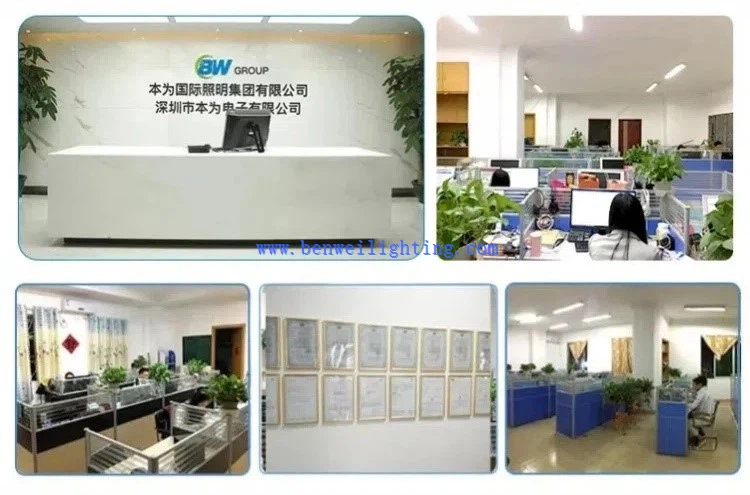
How To Cooperate With Us?
Because of our own facilities, we have complete control over the production process and the quality of our goods, which makes us very pleased. We are committed to giving our clients the greatest price since we are manufacturers rather than just brokers. We encourage clients to evaluate our samples first since we are certain that the cost and quality of our items are transparent. Our dedication to excellence and client happiness motivates us to consistently provide superior products.
Our address
3rd Floor, 5th Building, Hebei Industrial Park, Hualian Community, Longhua District, Shenzhen, China





