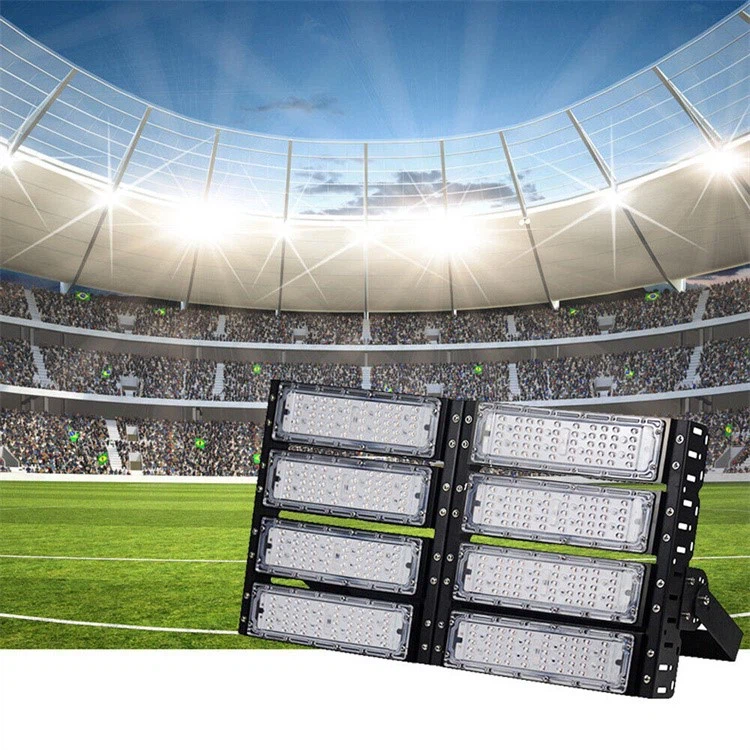
Professional stadium lighting is one of the most critical infrastructure components for large-scale sports competitions, public performances and mass gatherings. Stadiums are an important open-air and indoor venue for sports events and other activities that require a large gathering of people. And, while many functional aspects of a stadium are often taken for granted by audiences, the professional lighting system used in these massive venues plays a crucial role in creating a safe, high-visibility and immersive viewing experience for attendees, athletes and on-site staff.
Traditional HID Stadium Lighting & Classifications
In order to provide high-brightness, adequate full-coverage lighting for a stadium's large-area venues, high-intensity discharge (HID) bulbs are often adopted as traditional mainstream lighting equipment. HID lights are extremely luminous efficient and high-power, making them ideal and reliable for illuminating wide open areas like professional stadiums. They are available in two core types widely used in the lighting industry: metal halide bulbs and high-pressure sodium bulbs.
Light Characteristics & Application Scenarios of Two HID Bulbs
Metal halide bulbs produce a bright, high-clarity white light that is ideal for formal sports games and large-stage performances. They are excellent for replicating natural daylight conditions, which is perfectly suitable for outdoor sports activities that take place during the day and require high color accuracy. High-pressure sodium bulbs produce a soft warm yellow light, which delivers stable lighting output and is more suited for long-duration night-time activities and daily stadium venue standby lighting.
Hybrid Lighting Solution: HID Bulbs Combined With LED Lights
Modern stadiums often adopt a scientific hybrid lighting solution that uses a combination of both types of HID bulbs, as well as upgraded LED lights. LED stadium lights are rapidly gaining huge popularity in professional stadium lighting renovation and new projects due to their extreme energy efficiency, greatly lower long-term maintenance costs, and enhanced color rendering abilities that optimize on-site visual effects for both athletes and audiences.
Essential Factors to Consider for Professional Stadium Lighting
When it comes to selecting and installing standard stadium lighting, there are several essential practical factors to consider for compliant and high-performance lighting. Firstly, the lighting luminance must be strong and uniform enough to provide adequate, flicker-free visibility for attendees, stage performers, and competitive athletes. Secondly, the lighting solution must be energy efficient and environmentally friendly to reduce operational energy consumption. Lastly, the lights used must be durable and long-lasting, as they will need to withstand harsh outdoor weather elements and long-term frequent use.
Conclusion
In conclusion, the type of lights used in stadiums plays a significant decisive role in creating a comfortable, enjoyable and fully safe experience for all attendees and participants. High-intensity discharge bulbs, including metal halide and high-pressure sodium bulbs, are commonly used in combination with modern LED lights to achieve optimal stadium lighting effects. Core factors such as lighting efficiency, product durability and suitability for different types of sports and events must be carefully considered when choosing customized lighting for a stadium.
Are you looking for high-performance, weather-resistant and energy-saving stadium lighting solutions for sports venues, stadium renovations or new construction projects? Contact our professional team today! We offer standard-compliant stadium light products and tailored lighting design schemes to meet your venue's professional lighting requirements.