

Introduction
Market Application Background of Outdoor LED Shoebox Lights
With the global promotion of green energy-saving lighting policies, traditional high-energy-consuming outdoor lighting equipment such as metal halide lamps and high-pressure sodium lamps has been gradually phased out of municipal and commercial lighting projects. LED shoebox lights, as a new generation of integrated outdoor area lighting products, have occupied more than 70% of the global outdoor commercial lighting market by virtue of their ultra-high luminous efficiency, flexible light distribution, and low operating maintenance costs. Different from indoor lighting products, outdoor LED shoebox lights need to face complex and changeable extreme working environments throughout the year, including high-temperature exposure in summer, low-temperature freezing in winter, strong wind and rain erosion, sand and dust invasion, and ultraviolet radiation.
In actual project operation, the failure rate of outdoor LED shoebox lights is far higher than that of indoor lamps. Industry data shows that more than 85% of outdoor lamp damage is not caused by the failure of LED chips or driving power supplies, but by structural aging, heat dissipation failure, shell corrosion and deformation caused by unqualified housing materials. Therefore, the selection of housing materials is the key link to determine the overall quality and service life of outdoor LED shoebox lights.
Importance of Housing Material Selection
The housing of LED shoebox lights undertakes three core functional responsibilities in the working process: physical protection of internal light sources and electrical components, efficient heat dissipation of lamp bodies, and environmental weather resistance protection. A high-quality lamp housing can isolate internal precision components from external harsh environments, continuously export the heat generated by LED chips during operation, and maintain the structural integrity and sealing performance of the lamp for a long time. In contrast, inferior housing materials will lead to a series of problems such as poor heat dissipation, rapid light decay, shell cracking, water and dust ingress, and circuit short circuit, which greatly shorten the service life of the lamp and increase the later maintenance cost of the project.
At present, the mainstream housing materials for low-end outdoor shoebox lights on the market are ABS plastic and spray-painted iron sheet, while mid-to-high-end products mostly adopt extruded aluminum or die-cast aluminum alloy. Through long-term market verification and engineering practice, die-cast aluminum housing has obvious comprehensive performance advantages in outdoor high-frequency and long-term lighting scenarios, and has become the standard configuration of high-quality engineering-grade LED shoebox lights. This paper will elaborate on the core advantages and application value of die-cast aluminum housing from multiple professional dimensions.
Basic Performance Characteristics of Die-Cast Aluminum Alloy Material
Material Composition and Physical Properties
The die-cast aluminum alloy used for LED shoebox light housing is mainly high-purity ADC12 aluminum alloy, which is a special industrial aluminum material with high fluidity, high toughness and high thermal conductivity after optimized proportioning. Compared with ordinary aluminum materials, ADC12 die-cast aluminum has stable physical and chemical properties, with a thermal conductivity of up to 118 W/(m·K), which is dozens of times higher than that of plastic materials and 30% higher than ordinary iron sheet materials. This excellent thermal conductivity lays a solid foundation for the efficient heat dissipation of LED shoebox lights.
In terms of structural performance, die-cast aluminum alloy has high compressive strength and impact resistance, with a tensile strength of 150MPa and a hardness of HB85. It can resist external strong impact, wind pressure and mechanical extrusion without permanent deformation or cracking. At the same time, the material has low density and light weight, which reduces the overall load of the lamp body, avoids the risk of pole bending and falling, and improves the safety of outdoor lighting installation.
Process Advantages of Die-Cast Molding
Different from extruded aluminum's linear molding, die-cast aluminum housing adopts integral high-pressure die-casting process. The molten aluminum alloy is injected into the precision mold at high temperature and high pressure to form an integrated lamp housing structure with no splicing gaps and no welding points. The integral molding process completely avoids the structural defects such as gap leakage and loose splicing existing in assembled iron sheet and extruded aluminum housings, ensuring the overall sealing performance of the lamp body.
In addition, the die-casting process can realize customized structural design, and the surface of the housing can be integrally formed with dense heat dissipation rib structures. The hierarchical heat dissipation rib design increases the heat dissipation surface area of the lamp body by more than 60% compared with flat housing, realizing three-dimensional omnidirectional heat convection. This process customization feature makes die-cast aluminum housing more adaptable to the high-heat generation working state of high-power LED shoebox lights.
Core Advantages of Die-Cast Aluminum Housing for Outdoor Shoebox Lights
Ultra-Efficient Heat Dissipation, Effectively Suppressing Light Decay
Light decay is the core factor affecting the long-term lighting performance of LED shoebox lights. The main cause of LED light decay is the excessive junction temperature of the chip caused by accumulated heat during long-term operation. When the LED chip works at a high temperature of more than 85℃ for a long time, the luminous flux will drop rapidly, and the service life will be shortened by more than 50%. Therefore, the heat dissipation capacity of the housing directly determines the light decay rate and service life of the lamp.
Die-cast aluminum housing relies on its excellent thermal conductivity and integrated heat dissipation rib structure to form a perfect heat dissipation system. The heat generated by the LED chip is quickly conducted to the entire housing surface through the aluminum substrate, and then rapidly dissipated through air convection and heat radiation of the heat dissipation ribs. In actual high-temperature outdoor environments, the working temperature of lamps with die-cast aluminum housing can be controlled below 70℃, which is far lower than the safe temperature threshold of LED chips and driving power supplies.
Engineering test data shows that after 50,000 hours of continuous operation, LED shoebox lights with die-cast aluminum housing still maintain more than 75% of the initial luminous flux, with an ultra-low light decay rate. In contrast, lamps with plastic and iron sheet housings have a luminous flux retention rate of less than 50% after the same working hours, and serious brightness attenuation occurs, which cannot meet long-term engineering lighting standards.
Grade IP66 High-Level Sealing and Protection
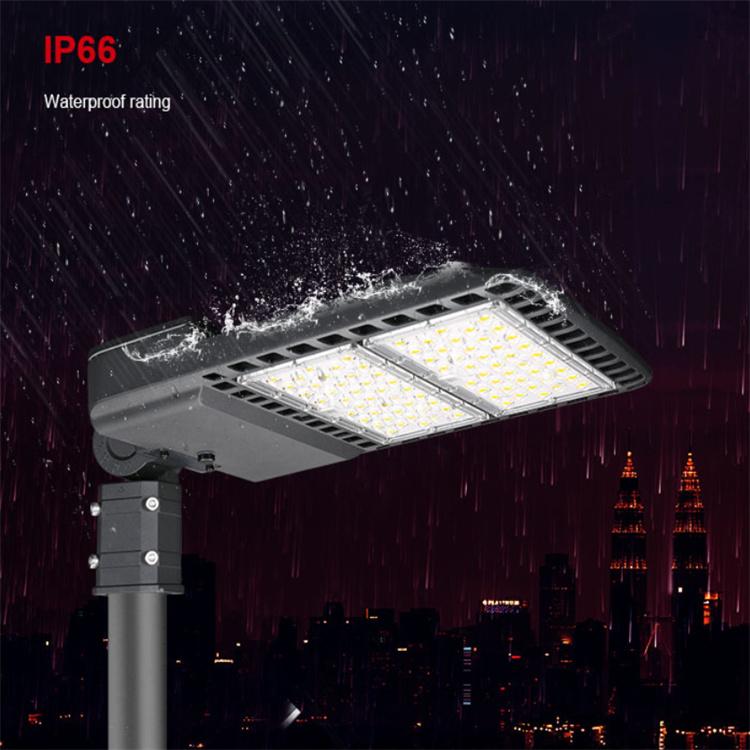
Outdoor LED shoebox lights need to resist various external environmental invasions such as rainwater immersion, dust accumulation, fog and moisture. The integral die-cast molding process of die-cast aluminum housing ensures that the lamp body has no structural gaps, and with the matching high-quality silicone sealing ring, it can reach the industry's highest IP66 waterproof and dustproof grade. This protection grade can completely prevent dust from entering the lamp body, and resist high-pressure rainwater flushing and temporary immersion, adapting to extreme weather such as heavy rain, typhoon and sandstorm.
Compared with spliced extruded aluminum housing and plastic housing, die-cast aluminum housing has no loose assembly gaps, avoiding the problem of water and dust ingress caused by aging and loosening of splicing parts after long-term outdoor use. In high-humidity coastal areas and rainy southern regions, die-cast aluminum housing can effectively prevent internal circuit short circuit, chip oxidation and component corrosion, ensuring stable operation of the lamp in all weather conditions throughout the year.
Excellent Weather Resistance and Anti-Aging Performance
Long-term outdoor ultraviolet radiation, temperature difference alternation and humid air will cause aging, fading, cracking and corrosion of lamp housing materials. The surface of die-cast aluminum housing adopts electrostatic anti-oxidation and anti-UV spray treatment, which forms a dense protective film on the material surface. This special coating has strong resistance to ultraviolet radiation and chemical corrosion, and can effectively resist oxidation and rust caused by humid air, rainwater and acid-base substances.
In high-temperature and strong ultraviolet environments, plastic housings are prone to aging, brittleness and cracking, and iron sheet housings are easy to rust and peel off. However, die-cast aluminum housing can maintain stable structural performance and appearance integrity for a long time. After 8 years of outdoor field verification, the die-cast aluminum housing has no fading, no cracking, no rust and no deformation, and the overall performance is still intact, which greatly reduces the frequency of lamp replacement and maintenance costs.
High Structural Strength and Impact Resistance
Outdoor lighting lamps are often faced with accidental impacts such as external object collision, strong wind shaking and man-made scratching. Die-cast aluminum alloy has high structural toughness and impact resistance, and the integral molded structure has strong overall rigidity, which can resist external impact and vibration without deformation and damage. It can adapt to harsh outdoor environments such as windy and sandy areas and suburban roads with complex traffic conditions.
In addition, the die-cast aluminum housing has strong pressure resistance, which can bear the gravity of snow accumulation in winter and will not be crushed or deformed. Compared with brittle plastic housing and thin iron sheet housing, it has higher safety and durability, avoiding lamp damage and lighting safety hazards caused by structural fracture.
Comparative Analysis of Die-Cast Aluminum and Other Housing Materials
VS ABS Plastic Housing
ABS plastic housing is mostly used in low-cost low-power outdoor shoebox lights, with the advantages of low price and light weight, but its inherent performance defects are very prominent. First of all, the thermal conductivity of plastic is extremely poor, which cannot export the heat generated by LED chips, resulting in serious heat accumulation inside the lamp, rapid light decay, and easy burnout of driving power supply. Secondly, plastic materials are prone to aging and brittleness under long-term ultraviolet radiation, and are easy to crack and damage in low-temperature and high-temperature alternating environments. In addition, plastic housing has poor flame retardancy and is prone to fire hazards in high-temperature working environments. In contrast, die-cast aluminum housing perfectly solves all the above pain points, with far better heat dissipation, weather resistance and safety performance than plastic housing.
VS Spray-Painted Iron Sheet Housing
Spray-painted iron sheet housing has high structural strength and low cost, and is widely used in medium and low-grade outdoor lighting products. However, the biggest defect of iron sheet housing is poor corrosion resistance. After the surface spray coating is worn, the iron sheet is easy to rust and corrode, resulting in housing perforation and water ingress. At the same time, the thermal conductivity of iron sheet is low, the heat dissipation efficiency is poor, and the lamp body heats up seriously during long-term operation, which affects the service life of internal components. Moreover, the iron sheet housing is formed by splicing, with many gaps, and the sealing performance is poor, which is easy to cause dust and water accumulation inside the lamp. Die-cast aluminum housing has natural anti-rust and anti-corrosion performance, and the integral sealing and heat dissipation performance are comprehensively ahead of iron sheet housing.
VS Extruded Aluminum Housing
Extruded aluminum housing also has good thermal conductivity, but it is formed by linear extrusion and assembled by splicing, with inevitable assembly gaps. In long-term outdoor use, the sealing rubber strip is easy to age and loose, resulting in reduced sealing performance and water and dust ingress. In addition, the structural design of extruded aluminum housing is single, and it is impossible to form a three-dimensional heat dissipation rib structure, with limited heat dissipation area. The integral die-cast aluminum housing has no splicing gaps, excellent sealing performance, and customizable three-dimensional heat dissipation structure, with more stable overall performance and longer service life, which is more suitable for high-power and long-term continuous outdoor lighting scenarios.
Engineering Application Value of Die-Cast Aluminum Housing Shoebox Lights
Reduce Long-Term Project Operation Costs
For municipal lighting projects, commercial park lighting and industrial park lighting projects, the later maintenance cost is an important part of the project investment. LED shoebox lights equipped with die-cast aluminum housing have a service life of more than 50,000 hours, which is 2-3 times that of lamps with plastic and iron sheet housings. The ultra-low light decay rate and failure rate greatly reduce the frequency of lamp replacement and manual maintenance. At the same time, efficient heat dissipation ensures the stable luminous efficiency of the lamp, maintaining high energy-saving effect for a long time, and reducing the long-term power consumption cost of the project. In the whole life cycle of the project, die-cast aluminum housing lamps can save more than 40% of the comprehensive operation and maintenance costs for customers.
Improve Project Lighting Quality and Compliance
High-quality die-cast aluminum housing provides a stable working environment for LED chips and driving power supplies, ensuring long-term consistent and uniform illumination of shoebox lights, no stroboscopic, no glare, and stable color temperature. It can fully meet the lighting standard requirements of municipal roads, parking lots and industrial venues. For engineering contractors and purchasers, selecting die-cast aluminum housing LED shoebox lights can effectively avoid project quality problems such as unqualified illumination and substandard lighting effects caused by lamp aging and light decay, ensuring project acceptance pass rate and project reputation.
Adapt to Diverse Complex Outdoor Scenarios
Due to its excellent weather resistance, sealing performance and structural stability, die-cast aluminum housing LED shoebox lights can adapt to global diverse complex climatic environments, including high-temperature desert areas, rainy and humid coastal areas, cold snow areas and windy and dusty plateau areas. Whether it is municipal road lighting, large parking lot lighting, factory yard lighting, logistics park lighting or campus and community outdoor lighting, it can maintain stable and efficient operation all year round, with strong scenario adaptability and engineering practicability.
Conclusion
As the core structural component of outdoor LED shoebox lights, the housing material determines the overall performance, service life and application value of the lamp. Die-cast aluminum alloy housing, with its excellent thermal conductivity, integral sealing structure, ultra-strong weather resistance and high structural strength, perfectly matches the harsh working environment requirements of outdoor lighting. Compared with traditional plastic, iron sheet and extruded aluminum housings, die-cast aluminum housing has comprehensive advantages in heat dissipation and light decay control, IP66 protection, anti-aging and impact resistance.
In the context of the global lighting industry's pursuit of high efficiency, energy saving and long-life durability, die-cast aluminum housing has become the inevitable choice for high-quality engineering-grade outdoor LED shoebox lights. It not only solves the common pain points of short service life, fast light decay and easy damage of traditional outdoor lamps, but also creates higher economic value and stable lighting effect for outdoor lighting projects. For outdoor lighting project selection, die-cast aluminum housing LED shoebox lights are the most cost-effective and reliable long-term lighting solution, which is worthy of widespread promotion and application in global municipal and commercial lighting projects.
How To Cooperate With Us?
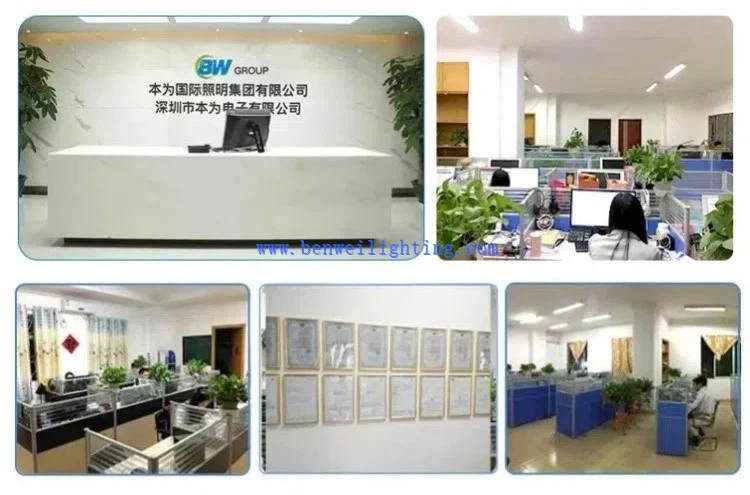
We are happy that we have total control over the manufacturing process and the quality of our products since we have our own facilities. Since we are producers rather than just brokers, we are dedicated to providing our customers with the best pricing. Since we are certain that the price and quality of our products are transparent, we advise customers to examine our samples first. Our commitment to quality and customer satisfaction drives us to continuously provide top-notch goods.
Our address
3rd Floor, 5th Building, Hebei Industrial Park, Hualian Community, Longhua District, Shenzhen, China





