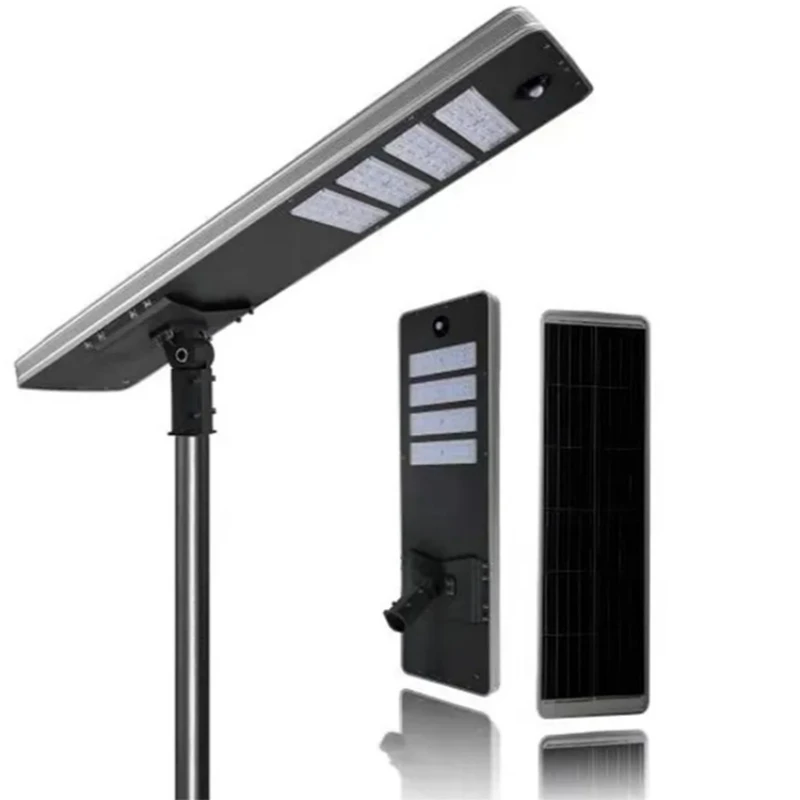
For street lighting projects in coastal areas, deserts, high-altitude/cold regions, or cities with frequent rainfall, a purchaser's greatest concern isn't the initial cost-it's the prospect of the lights developing leaks, yellowing, paint peeling, or experiencing rapid light degradation just two or three years after installation. In recent years, an increasing number of clients have begun asking, "Are your streetlights made of die-cast aluminum?"This is a very pertinent question. A luminaire's housing is far more than just a "shell"-it is the primary factor determining how well the light will withstand harsh environmental conditions. Let's explore why die-cast aluminum LED streetlights offer superior durability.
One-piece die-casting: Eliminating potential leak points at the source
Water ingress often occurs at the seams of a luminaire. Fixtures assembled from extruded profiles or bent sheet metal rely on screws, rivets, and gaskets to join various components; the more seams there are, the more points of potential failure exist.
Die-casting involves injecting molten aluminum alloy into a mold under high pressure to create a single, integrated piece. The main housing-including heat-dissipation structures, mounting points, and structural reinforcements-is formed in one go. With fewer seams, there are fewer gaps for wind, rain, or dust to penetrate.
High thermal conductivity: Preventing "heat-induced failure" in LEDs
While LEDs are unaffected by cold, they are highly sensitive to heat. High junction temperatures accelerate light degradation and shorten the lifespan of the electrolytic capacitors within the LED driver-a problem particularly pronounced in regions with high summer temperatures or intense solar radiation.
Aluminum alloy offers thermal conductivity far superior to that of plastic or standard steel. The die-casting process allows for integrated cooling fins, enabling heat generated by the LED chips to be dissipated directly into the surrounding air. This eliminates the need for external cooling fans, thereby removing the risk of mechanical fan failure. By effectively managing temperature, the stability of both the light source and the power supply is ensured-a fundamental requirement for a truly durable, long-lasting luminaire.
Robust Surface Treatment: Salt-Spray and Corrosion Resistance
Aluminum naturally forms an oxide layer on its surface, making it more resistant to rust than standard carbon steel. However, in coastal environments with high salt-spray levels or industrial areas prone to acid rain, this natural oxide layer is insufficient.
Therefore, high-quality die-cast aluminum streetlights undergo specialized surface pre-treatment followed by an outdoor-grade powder coating. This coating acts as a barrier against salt, moisture, and dust, while also providing UV resistance to prevent fading or chalking over time. When selecting a streetlight, it is worth asking about the specific coating process and the duration the product can withstand in a salt-spray test. Such data is far more convincing than a vague claim that the material is "high quality."
High Structural Strength: Wind and Impact Resistance
Mounted on tall poles, streetlights must endure typhoons, strong gusts, and flying debris. If the housing is too thin or flimsy, long-term exposure to wind-induced vibrations can lead to fatigue and loosening at mounting points or connections.
With die-cast components, wall thickness and reinforcing ribs can be strategically designed-thicker in high-stress areas and thinner elsewhere-to achieve an optimal balance between strength and weight. A rigid housing also ensures better impact resistance for the lens and casing, protecting the unit from damage caused by unexpected impacts, such as hail or flying stones.
Reliable Sealing: Achieving IP65/IP66 Ratings
An Ingress Protection (IP) rating is a fundamental requirement for outdoor lighting. Die-cast housings offer superior surface flatness and dimensional precision; when combined with silicone gaskets and waterproof ventilation valves, they facilitate a highly reliable, sealed structure.
A key detail to look for is the inclusion of a ventilation valve within the light cavity. This balances internal and external air pressure as temperatures fluctuate, preventing a "breathing effect" that could otherwise draw moisture into the fixture. Die-cast designs allow for the easy integration of such components.
Resistance to Thermal Cycling: Preventing Deformation and Cracking
In regions with significant diurnal temperature variations-such as deserts or high-altitude plateaus-lighting fixtures are subject to constant thermal expansion and contraction. Plastic components are prone to aging and becoming brittle, while thin sheet materials may warp.
Aluminum alloys, by contrast, maintain dimensional stability across a wide temperature range and do not become brittle or crack at low temperatures-unlike certain plastics. When the lamp housing remains undeformed, the seals can maintain a tight fit over the long term; this point reinforces the concept mentioned in item 5.
Summary
The resistance of die-cast aluminum LED streetlights to harsh weather is not due to a single factor, but rather the synergy of several key attributes:
Integrated, one-piece construction that minimizes seams and the risk of water ingress.
Excellent thermal conductivity, which protects the light source and the driver.
High-quality surface treatment, providing resistance against salt spray and UV radiation.
High structural strength, offering durability against wind and mechanical impact.
Robust sealing, facilitating a high IP (Ingress Protection) rating.
Dimensional stability across temperature fluctuations, ensuring long-term sealing effectiveness.
It is worth noting that while products may all be labeled "die-cast aluminum," there can be significant differences between manufacturers regarding alloy grades, wall thickness, coating processes, and quality control. When making a purchase, do not rely solely on the material name; ask for detailed specifications and test reports.
If your project is located in a coastal, high-temperature, high-rainfall, or high-wind area, please share the operating environment, installation height, and lighting requirements with us. We can recommend the appropriate power, light distribution, and protection solutions for your specific needs, and provide samples, technical specifications, and relevant test reports.