

The Core Status of LED Driver in Panel Light System
Basic Working Principle of LED Panel Light Driver
LED panel lights cannot be directly connected to municipal AC power. The built-in LED chip group relies entirely on a professional constant-current driver to convert 110V-240V alternating current into stable low-voltage direct current, ensuring the chip works within the rated current and voltage range. Different from ordinary voltage-stabilizing power supplies, LED dedicated constant-current drivers feature precise current output control, which can avoid chip burnout or brightness attenuation caused by current fluctuations. A complete LED driver system consists of core components such as electrolytic capacitors, transformer chips, power transistors, and control circuit boards. All electronic components have strict temperature threshold limits for safe operation, and high-temperature resistance is the basic guarantee for the continuous and stable operation of the entire circuit system.
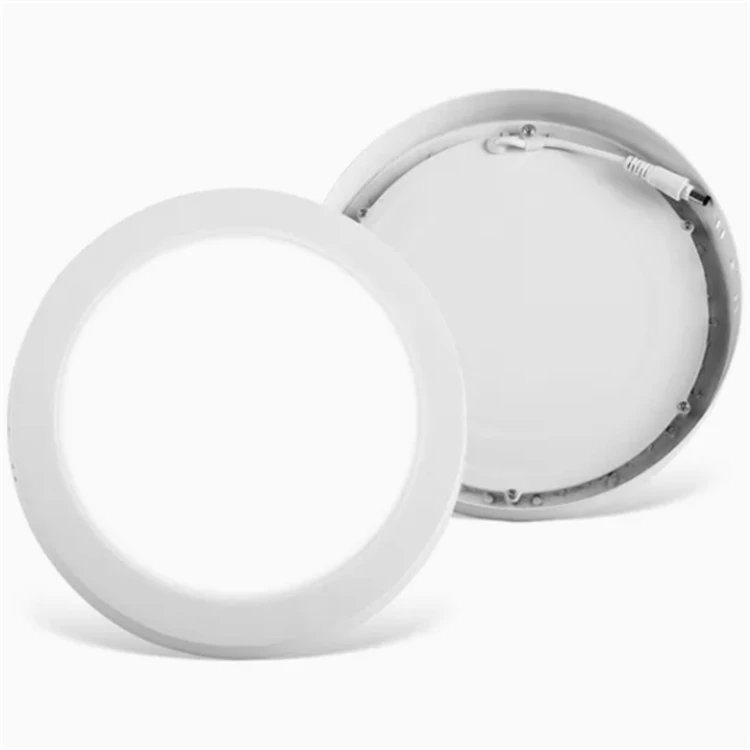
Our ultra-thin square and round LED panel lights adopt a dedicated isolated constant-current driver solution, matching high-precision control circuits to achieve a power factor (PF) above 0.9. Compared with low-PF ordinary drivers on the market (PF 0.5-0.7), this configuration greatly reduces grid harmonic loss and reactive power waste, laying a foundation for efficient and low-loss operation. More importantly, the core advantage of our driver lies in its 85°C ultra-high temperature resistance rating, which breaks through the temperature limit of ordinary drivers (60°C-70°C) and adapts to the closed and poorly ventilated installation environment of ceiling embedded and surface-mounted panel lights.
Why Ceiling Installation Amplifies Driver Thermal Pressure
Most users underestimate the thermal accumulation problem of ceiling LED panel lights. Whether it is spring-clip recessed installation or surface-mounted installation, the lamp body is attached to the ceiling for a long time, forming a semi-closed heat dissipation space. The hot air generated by the operation of LED chips and drivers cannot form effective air convection, resulting in continuous heat accumulation inside the lamp body. In actual indoor environments, the ceiling ambient temperature in summer or high-density lighting spaces (offices, shopping malls, classrooms) often reaches 35°C-45°C. After superimposing the operating heat of the lamp itself, the internal working temperature of ordinary drivers will quickly exceed 70°C, triggering component aging and performance attenuation.
Ordinary low-temperature-resistant drivers are designed for open ventilation environments and cannot adapt to the closed ceiling installation scenario. Long-term high-temperature operation will trigger a series of performance degradation chain reactions, including unstable current output, increased light flicker, accelerated chip light decay, and shortened overall lamp life. In contrast, our LED panel light driver is professionally optimized for ceiling thermal environments, with a maximum sustainable operating temperature of 85°C, which completely covers the extreme temperature range of indoor ceiling operation and eliminates performance risks caused by thermal stress.
Thermal Aging Mechanism: How Temperature Resistance Determines Core Performance
Temperature Resistance Decides Driver Component Service Life
Electrolytic capacitors are the most temperature-sensitive and shortest-lived core components in LED drivers, and their aging rate follows the classic Arrhenius equation of electronic thermal aging. Industry authoritative test data verifies that every 10°C increase in the operating temperature of electrolytic capacitors beyond the rated threshold will reduce their service life by 50%. Ordinary low-cost drivers use ordinary low-temperature capacitors with a rated temperature of 65°C. When the ceiling internal temperature rises to 75°C, the capacitor life is directly reduced to 50% of the original; when the temperature reaches 85°C, the component life is less than 20% of the standard value, leading to premature driver failure within 1-2 years.
Our premium LED panel light drivers adopt industrial-grade high-temperature electrolytic capacitors and high-precision control chips with a rated temperature resistance of 85°C. Under the standard ceiling operating temperature (40°C-70°C), the components are always in a safe and stable working state, with almost no accelerated aging. Under extreme high-temperature working conditions, the components can still maintain stable physical and chemical properties, avoiding electrolyte drying, leakage, and capacitance attenuation. This core advantage ensures that the driver can maintain stable performance for a long time, and the overall service life of the lamp is extended to 50,000 hours, far exceeding the service cycle of ordinary products.
High Temperature Resistance Eliminates Light Flicker and Illumination Instability
Light flicker and uneven brightness are the most intuitive performance problems of LED panel lights caused by insufficient driver temperature resistance. When ordinary drivers work at over-temperature, the internal circuit parameters drift, the current sampling loop fails, and the output current produces high-frequency ripple and fluctuation. This problem will cause visible low-frequency flicker to the human eye, which cannot only reduce lighting comfort but also cause visual fatigue, dizziness, and eye damage after long-term viewing, seriously affecting the lighting experience of homes, offices, and teaching spaces.
In addition, high-temperature-induced current instability will cause uneven illumination of the panel light, local bright spots and dark areas, and damage the uniform light output effect of the original optical diffuser panel. Our 85°C high-temperature-resistant driver is equipped with a precise constant-current stabilization algorithm and temperature compensation mechanism. When the ambient temperature changes drastically, the driver can automatically adjust the output parameters to maintain constant current and voltage output. The lamp realizeszero flicker, zero light leakage, and uniform soft light output in the full temperature working range, with a high color rendering index (CRI) that truly restores the original color of objects, meeting high-standard eye protection and commercial lighting needs.
Temperature Resistance Controls Long-Term Lumen Degradation Rate
Lumen depreciation is the core indicator to measure the long-term performance of LED panel lights, and the driver's thermal stability is the key factor controlling the light decay rate. Many high-brightness LED panel lights on the market will have obvious dimming after 1-2 years of use, essentially because the overheating driver outputs abnormal current for a long time, which continuously impacts and damages the LED chip, accelerating chip light decay and phosphor aging. Ordinary drivers with poor temperature resistance will cause the lamp's luminous flux to drop by more than 30% after 20,000 hours of use, completely losing the original lighting effect and requiring frequent replacement.
Our LED panel light relies on the excellent temperature resistance of the driver and the high-efficiency aluminum alloy heat dissipation structure of the lamp body to form a dual thermal protection system. The driver maintains ultra-stable current output for a long time, avoiding current impact on the LED chip. Meanwhile, the aluminum heat sink quickly conducts and dissipates the heat generated by the chip and driver, keeping the chip junction temperature in a low and safe range. Test data shows that after 30,000 hours of continuous operation, our panel light still maintains more than 80% of the initial luminous flux, with an ultra-slow light decay rate, realizing long-term stable brightness output and avoiding frequent replacement losses caused by rapid light decay.
Comparative Analysis: High-Temperature Resistant Driver vs Ordinary Driver
Short-Term Operating Performance Comparison
In the initial stage of use (0-6 months), the performance gap between ordinary drivers and high-temperature-resistant drivers is not obvious, and both can achieve normal lighting output. However, with the accumulation of operating heat, the performance difference gradually appears. Ordinary low-temperature-resistant drivers will have obvious temperature rise after 2-3 hours of continuous operation, with internal temperature exceeding 75°C, accompanied by subtle light flicker, reduced brightness, and increased operating noise. In high-temperature summer environments, this performance attenuation is more obvious, and even intermittent lighting failure occurs in severe cases.
Our 85°C high-temperature-resistant driver has excellent thermal stability, with a stable shell temperature after long-term operation, no flicker, no brightness attenuation, and no abnormal noise. The high-power-factor circuit design ensures low power loss during operation, effectively reducing reactive power waste, saving 20%-30% of long-term electricity costs compared with ordinary low-PF products. Whether it is short-term high-intensity continuous lighting or long-term daily cycle use, it can maintain consistent high-performance output.
Long-Term Service Life and Maintenance Cost Comparison
The biggest value of driver temperature resistance is reflected in long-term use cost savings. Ordinary LED panel lights with low-temperature-resistant drivers have an average service life of only 15,000-20,000 hours, and problems such as driver burnout, lamp dimming, and flicker will occur within 2-3 years of use, requiring frequent replacement and maintenance. For commercial spaces such as offices, shopping malls, and hotels with a large number of lamps, the later maintenance labor costs and product replacement costs are extremely high, bringing invisible economic losses to users.
Our LED panel lights equipped with 85°C high-temperature-resistant drivers have a rated service life of up to 50,000 hours, which is 2-3 times that of ordinary products. The whole lamp has excellent anti-aging performance, the aluminum shell is not easy to yellow and deform, and the driver has built-in over-temperature protection and surge protection functions. When the temperature is abnormally overheated, the driver will automatically trigger the protection mechanism to cut off the circuit and restart after cooling down, avoiding permanent component burnout. This design greatly reduces product failure rate and later maintenance costs, realizing one-time installation and long-term stable use, with extremely high cost performance for home decoration and commercial engineering projects.
Safety and Environmental Adaptability Comparison
Insufficient temperature resistance of the driver is also a potential safety hazard for LED panel lights. Long-term over-temperature operation will cause the internal circuit board to age, the insulating layer to fail, and even short circuits and burnout, which may trigger hidden dangers such as circuit fires. Ordinary drivers lack over-temperature protection mechanisms and cannot respond to extreme temperature changes, with poor safety and stability. In addition, high-temperature aging will cause the internal components of the driver to volatilize harmful substances, which is not in line with modern green lighting standards.
Our high-temperature-resistant driver has passed strict CE safety certification, with a fully insulated DC connector design to avoid short-circuit risks. The built-in NTC temperature sensing module monitors the operating temperature in real time, and the active over-temperature protection mechanism ensures safe operation in the full temperature range. The whole lamp uses mercury-free and environmentally friendly materials, which are non-toxic and pollution-free. It has an IP40 professional protection grade, which can effectively block solid foreign objects larger than 1mm, adapting to various dry indoor environments such as living rooms, bedrooms, offices, corridors, and shopping malls, with extremely high safety and environmental adaptability.
Core Product Advantages: 85°C High-Temperature Resistant Driver Empowers High-Quality Lighting
Dual Installation Scenarios Adapt to Complex Thermal Environments
Our LED panel lights support two mainstream installation methods: spring-clip recessed installation and surface-mounted installation, and the 85°C high-temperature-resistant driver perfectly adapts to the different thermal accumulation characteristics of the two installation scenarios. The recessed embedded lamp body is completely hidden in the ceiling, with a more closed heat dissipation space and more concentrated heat accumulation; the surface-mounted type is attached to the ceiling surface, with slightly better air circulation but still unable to form strong convection. Relying on the ultra-high temperature resistance of the driver, our products can maintain stable performance in both closed and semi-closed installation environments, without performance attenuation or failure caused by poor heat dissipation.
At the same time, the product is available in round and square shapes, with ultra-thin aluminum alloy shell design and excellent passive heat dissipation performance. The heat generated by the driver and chip is quickly conducted to the shell and dissipated, forming a linkage protection of "high-temperature-resistant driver + high-efficiency heat dissipation structure", which further optimizes the thermal working environment of the product and ensures long-term stable operation.
Low Loss and High Efficiency, Creating Long-Term Economic Value
Excellent driver temperature resistance brings low power loss and high energy efficiency benefits. Ordinary drivers will have increased internal resistance and higher power consumption under high-temperature operation, resulting in serious electric energy waste. Our high-temperature-resistant driver can maintain stable circuit efficiency in the full temperature range, with low internal power loss and high power utilization rate. The PF value is stably above 0.9, which effectively reduces grid load and electric energy waste, helping users reduce long-term electricity expenses.
For engineering purchasers and bulk buyers, the high stability and long service life of the product mean lower overall procurement costs and higher project reputation. The product's ultra-low failure rate reduces after-sales maintenance pressure, shortens project construction and maintenance cycles, and is the preferred high-value lighting solution for medium and high-end decoration projects, commercial engineering, and home improvement scenarios.
Professional Buying Suggestions: Prioritize Driver Thermal Resistance Performance
Most market buyers have wrong purchasing logic, focusing only on surface parameters such as power, brightness, and appearance, while ignoring the core thermal resistance performance of the driver, resulting in frequent replacement of lamps and high comprehensive use costs. Through the above systematic analysis, it is clear that driver temperature resistance is the core determinant of LED panel light's long-term performance, stability, and service life.
When purchasing LED panel lights, users and engineers should take the driver's maximum sustainable operating temperature as the core evaluation index, prioritize products with a temperature resistance of 85°C and complete over-temperature protection mechanisms, and avoid low-cost products with low-temperature-resistant ordinary drivers. Combined with the IP40 protection grade, high heat dissipation aluminum structure, high CRI, and high PF performance of our products, our LED panel lights can perfectly meet the long-term stable lighting needs of various indoor scenarios, with superior performance, higher cost performance, and more reliable safety.
Conclusion
Driver temperature resistance is not a dispensable technical parameter, but the core foundation that determines the overall performance and service life of LED panel lights. The thermal aging law of electronic components determines that low-temperature-resistant drivers will inevitably have performance attenuation, light flicker, accelerated light decay, and premature failure in ceiling closed working environments. Our LED panel lights adopt industry-leading 85°C high-temperature-resistant constant-current drivers, equipped with over-temperature protection, surge resistance, and high-efficiency heat dissipation systems, which completely solve various performance problems caused by thermal stress.
With the dual advantages of professional technical performance and long-term economic value, the product realizes zero flicker and zero light leakage high-quality lighting output, ultra-long 50,000-hour service life, and ultra-low maintenance cost. It is a high-reliability and high-cost-performance lighting solution for modern home decoration, commercial offices, retail stores, and public infrastructure. Choosing products with excellent driver temperature resistance is not only a guarantee of lighting experience but also the key to reducing long-term use costs and realizing high-value investment.
How To Cooperate With Us?
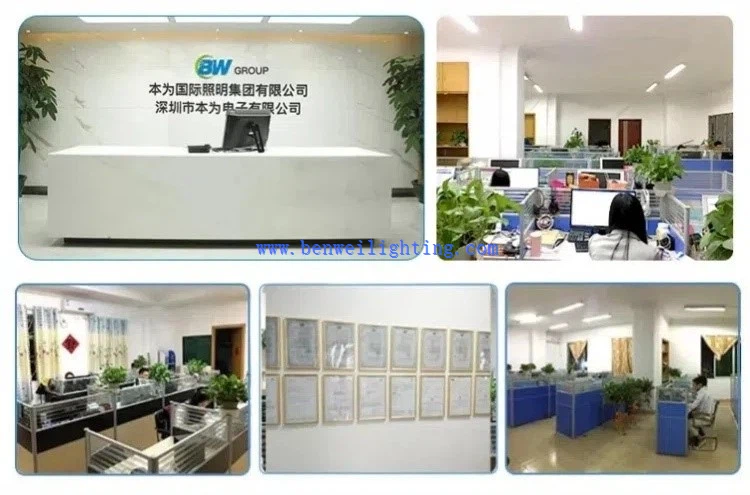
We are happy to have total control over the manufacturing process and the calibre of our products since we have our own facilities. Since we are producers rather than just brokers, we are dedicated to providing our customers with the best pricing. Since we are certain that the price and quality of our products are clear, we invite customers to see our samples first. Our commitment to quality and customer satisfaction drives us to continuously provide top-notch goods.
Our address
3rd Floor, 5th Building, Hebei Industrial Park, Hualian Community, Longhua District, Shenzhen, China





