

Introduction: Heat Is the Biggest Lifespan Killer of Indoor LED Panel Lights
Special Thermal Accumulation Environment of Ceiling-Mounted LED Panels
Different from open-space lighting fixtures, indoor LED panel lights adopt two mainstream installation methods-recessed spring-clip embedding and surface mounting-both of which form a semi-closed or fully closed heat dissipation space above the ceiling. In daily operation, LED chips generate continuous luminous heat, while drivers produce conversion heat during AC-DC power rectification and constant-current stabilization. Trapped in the narrow ceiling gap, heat cannot form effective air convection, resulting in continuous thermal accumulation. In high-temperature seasons or high-density lighting scenarios such as office buildings, shopping malls, and classrooms, the internal ceiling ambient temperature often rises to 40°C–45°C. Superimposed with operational heat, the internal working temperature of ordinary drivers can easily exceed 70°C, triggering irreversible aging of internal electronic components.
Most ordinary LED panel lights on the market are equipped with 60°C–70°C low-temperature-resistant drivers designed for open ventilation environments. These standard drivers lack thermal tolerance for closed ceiling installation, leading to rapid performance degradation in actual use. Short-term overheating causes subtle flicker and brightness instability, while long-term continuous thermal stress accelerates component aging, drastically shortening the lamp's overall service life. Therefore, upgrading to an 85°C high-temperature-resistant driver is the most fundamental and effective solution to solve the short lifespan pain point of indoor LED panel lights.
Why Driver Thermal Resistance Determines Overall Lamp Lifespan
The LED driver is the core power control and protection component of the panel light system, known as the "heart" of LED lighting equipment. Its internal core components-including electrolytic capacitors, constant-current control ICs, power transistors, and circuit boards-are all extremely sensitive to operating temperature. According to the classic Arrhenius thermal aging law in electronic reliability engineering, the service life of electronic components decreases exponentially with temperature rise: every 10°C increase in operating temperature beyond the rated threshold halves the component's effective lifespan. This principle is the core theoretical basis for why driver heat resistance dominates lamp durability.
LED chips themselves have a theoretical service life of up to 100,000 hours with ultra-low attenuation. The actual service life of most panel lights is compromised entirely by driver failure. Low-temperature-resistant drivers age rapidly under long-term ceiling thermal stress, resulting in circuit drift, current ripple surge, and functional failure. In contrast, our LED panel lights adopt industrial-grade 85°C high-temperature-resistant drivers, which break through the temperature limit of civilian-grade drivers, fully adapt to closed ceiling thermal environments, and maximize the release of the LED chip's long-life potential, extending the overall rated service life to 50,000 hours.
Core Technical Mechanism: How 85°C Heat-Resistant Driver Extends Lamp Lifespan
Stabilizes Core Components and Avoids Thermal Aging Failure
Electrolytic capacitors are the shortest-lived and most temperature-sensitive components in LED drivers, serving as the primary bottleneck restricting driver lifespan. Ordinary low-cost drivers use civilian-grade capacitors rated at 65°C. When the ceiling internal temperature rises to 75°C, the capacitor lifespan is directly reduced by 50%; when the temperature approaches 80°C, electrolyte drying, capacity attenuation, and internal leakage occur rapidly, causing driver failure within 1–2 years. For large-scale commercial lighting projects, this means frequent lamp replacement, high maintenance labor costs, and disrupted operational continuity.
Our customized 85°C high-temperature-resistant driver is equipped with industrial-grade high-temperature electrolytic capacitors and high-precision constant-current IC chips. All core components pass strict high-temperature aging tests, maintaining stable physical and chemical properties under continuous 85°C extreme operating conditions. In conventional ceiling working environments (40°C–70°C), the driver operates in a safe thermal margin state with almost no accelerated aging. This configuration completely eliminates component failure risks caused by thermal stress, ensuring the driver maintains stable circuit performance throughout its long-term operation and providing a reliable power foundation for the entire lamp's long service life.
Eliminates Current Ripple and Reduces LED Chip Light Decay
Long-term overheating of ordinary drivers will cause serious circuit parameter drift and sharp increases in output current ripple. Unstable current impact is the main cause of accelerated aging and rapid lumen depreciation of LED chips. When current ripple exceeds 15% RMS, the LED chip junction temperature fluctuates violently, damaging the internal phosphor layer and light-emitting crystal structure. This leads to obvious dimming, color cast, and reduced color rendering performance after 1–2 years of use, completely losing the original high-quality lighting effect.
The 85°C heat-resistant driver adopts a built-in NTC temperature compensation algorithm and high-precision constant-current stabilization technology. In high-temperature working states, it can automatically sense temperature changes and dynamically adjust output current and voltage parameters, maintaining ultra-low ripple and constant power output. This stable power supply state avoids frequent current impact on LED chips, keeps the chip junction temperature in a low and safe range, and effectively slows down lumen depreciation. Professional test data verifies that our panel lights retain more than 80% of initial luminous flux after 30,000 hours of continuous operation, achieving ultra-slow light decay and long-term consistent brightness performance.
Built-In Over-Temperature Protection Prevents Permanent Burnout
Ordinary low-temperature drivers have a single circuit structure without intelligent temperature monitoring and protection mechanisms. When encountering extreme high temperature, voltage fluctuation, or long-term overload operation, the driver cannot self-adjust, easily triggering short circuits, component burnout, and permanent lamp failure. Once the driver is damaged, the entire panel light is scrapped, resulting in unnecessary asset loss for users.
Our 85°C high-temperature-resistant driver integrates an intelligent over-temperature protection system and surge protection module. The built-in temperature sensor monitors the internal operating temperature in real time 24/7. When the temperature approaches the 85°C critical threshold or abnormal overheating occurs due to external factors, the driver will automatically trigger power-off protection, suspend operation for heat dissipation, and automatically restore normal work after the temperature drops to the safe range. This active protection mechanism effectively avoids permanent burnout of drivers and chips caused by thermal runaway, greatly reducing product failure rate and extending the overall service cycle of the lighting fixture.
Comparative Test: 85°C Heat-Resistant Driver vs Ordinary Low-Temperature Driver
Short-Term Continuous Operation Stability Test
In the initial 0–6 months of use, both ordinary low-temperature drivers and 85°C high-temperature-resistant drivers can achieve normal lighting output with no obvious visual difference. However, after long-term continuous operation, the performance gap becomes extremely prominent. In a 24-hour continuous lighting simulation test (simulating commercial all-day working scenarios), ordinary 65°C drivers experience continuous temperature rise after 3 hours of operation, with internal temperature exceeding 72°C, accompanied by subtle light flicker, reduced brightness, and increased circuit operating noise. After 500 hours of continuous operation, the luminous flux attenuation reaches 12%, and the current stability drops significantly.
In contrast, our 85°C heat-resistant drivers maintain stable shell temperature and zero flicker output throughout the full-cycle test. The current output error is controlled within ±2%, and the luminous flux attenuation is less than 3% after 500 hours of continuous operation. Even in high-temperature ambient environments above 40°C in summer, the driver still maintains efficient and stable operation without performance degradation, fully adapting to high-intensity long-term working needs of commercial lighting scenarios.
Long-Term Lifespan and Attenuation Data Comparison
Authoritative IES LM-80-15 accelerated life test data shows that the average effective service life of LED panel lights equipped with ordinary low-temperature drivers is only 15,000–20,000 hours. After 20,000 hours of use, the lumen depreciation exceeds 35%, the driver aging failure rate reaches 40%, and problems such as dimming, flicker, and non-starting frequently occur, requiring overall lamp replacement. For home users, this means repeated procurement and installation costs; for commercial projects with hundreds of lamps, the later maintenance cost and operational loss are enormous.
Our LED panel lights equipped with 85°C industrial-grade heat-resistant drivers achieve a rated service life of up to 50,000 hours, three times that of ordinary products. After 30,000 hours of operation, the luminous flux retention rate is still higher than 80%, and the driver failure rate is less than 3%. The whole lamp maintains stable color rendering, uniform illumination, and zero light leakage performance for a long time. Ultra-long service life and ultra-low attenuation eliminate frequent replacement troubles, realizing one-time installation and decade-level stable use.
Long-Term Energy Consumption and Maintenance Cost Gap
Thermal aging of ordinary drivers will cause increased internal circuit resistance and reduced power conversion efficiency. With the extension of service time, the power loss of the lamp increases year by year, resulting in serious energy waste. At the same time, frequent failure and replacement require a lot of labor and material costs, bringing high comprehensive use costs. Many low-priced panel lights seem cost-effective in the initial procurement stage, but their later maintenance and energy consumption costs far exceed high-quality products.
The 85°C high-temperature-resistant driver maintains high power conversion efficiency and PF value (≥0.9) in the full temperature and full life cycle range, with extremely low internal power loss. Long-term operation can save 25%–30% of electricity costs compared with ordinary products. More importantly, ultra-low failure rate greatly reduces after-sales maintenance pressure and replacement costs. Calculated based on 5 years of use, our high-temperature-resistant panel lights can save more than 60% of comprehensive use costs compared with ordinary low-quality products, with extremely prominent long-term cost performance.
Product Synergistic Design: Dual Guarantee for Lifespan Extension
High-Efficiency Aluminum Heat Dissipation Structure Matches Heat-Resistant Driver
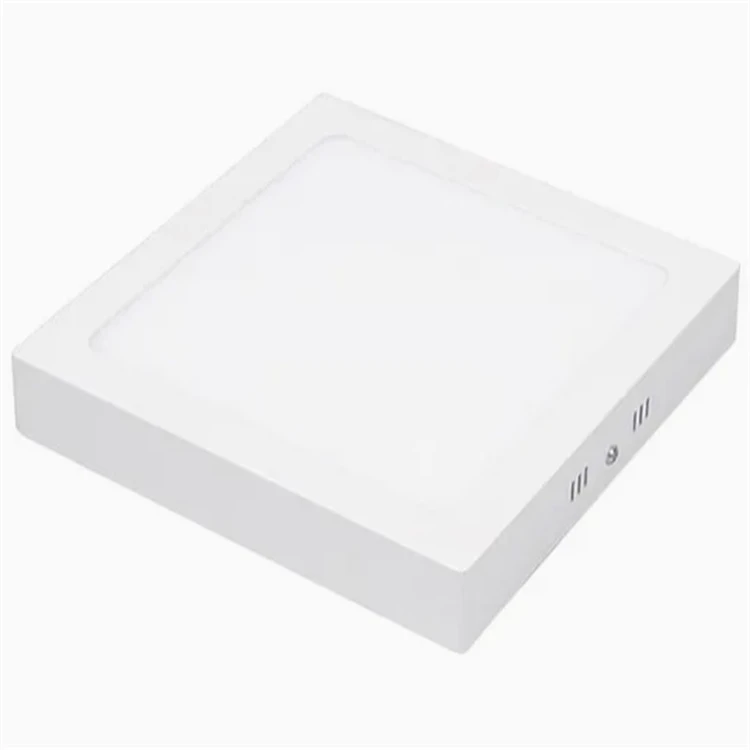
Our ultra-thin square and round LED panel lights adopt integrated high-purity aluminum alloy shell heat dissipation structure. Compared with ordinary plastic shell products, aluminum alloy has excellent thermal conductivity, which can quickly conduct the heat generated by the driver and LED chips to the lamp shell and dissipate it to the surrounding air. This passive high-efficiency heat dissipation system effectively reduces the internal operating temperature of the lamp, further reducing the thermal load of the 85°C heat-resistant driver, forming a dual thermal protection system of "high heat resistance + fast heat dissipation".
Whether it is recessed installation with closed ceiling space or surface-mounted installation with semi-open heat dissipation, the product can maintain a low internal thermal environment. The synergistic effect of heat dissipation structure and high-temperature-resistant driver avoids local heat accumulation, ensures the driver always works in the optimal temperature range, and maximizes the service life advantage of industrial-grade drivers.
IP40 Protection Grade and Anti-Aging Whole-Lamp Design
In addition to driver thermal performance, the whole-lamp anti-aging design further consolidates long-term service life. The product has a professional IP40 protection grade, which can effectively block solid dust and foreign objects larger than 1mm, preventing dust accumulation from blocking heat dissipation channels and causing secondary overheating failure of the driver. The high-quality light diffuser panel has anti-yellowing and anti-aging properties, maintaining uniform light transmission for a long time without aging and dimming.
The insulated DC connector design avoids short-circuit and leakage risks caused by long-term use. The whole lamp adopts mercury-free eco-friendly materials, with strong anti-aging and anti-yellowing capabilities, adapting to long-term indoor use environments. The perfect combination of 85°C heat-resistant driver, high-efficiency heat dissipation, and high-standard structural protection realizes the comprehensive upgrade of product durability.
Practical Value and Purchase Guidance for End Users and Engineers
Avoid Misjudgment of LED Panel Light Quality
Most buyers have wrong purchasing logic, only focusing on superficial parameters such as power, brightness, appearance, and price, while ignoring the core indicator of driver temperature resistance. In fact, brightness and appearance are surface performance, while driver heat resistance is the core essence that determines the lamp's service life and long-term stability. Low-priced products with low-temperature drivers will inevitably face failure, dimming, and frequent replacement in the later stage, with extremely high hidden costs.
For engineering procurement, commercial decoration, and home improvement users, the 85°C driver temperature resistance rating is the most intuitive and effective quality screening standard. Products equipped with industrial-grade 85°C heat-resistant drivers are definitely high-durability and high-value lighting solutions, which can effectively avoid project rework, after-sales complaints, and economic losses caused by product quality problems.
Long-Term Economic Value of High-Heat-Resistant Configuration
Investing in LED panel lights with 85°C heat-resistant drivers is a typical long-term cost-saving investment. Although the initial procurement cost is slightly higher than that of ordinary low-quality products, the ultra-long 50,000-hour service life, ultra-low attenuation, zero frequent replacement, and low energy consumption advantages can bring sustained economic benefits. For commercial spaces such as offices, shopping malls, hotels, and classrooms with long-term lighting needs, this product can greatly reduce operational and maintenance costs and improve project quality and user satisfaction.
Conclusion
Heat resistance is the core decisive factor of the long-term service life of indoor LED panel lights, and the 85°C high-temperature-resistant driver is the key to breaking the lifespan bottleneck of traditional panel lights. Based on electronic thermal aging principles and professional test data, this article verifies that ordinary low-temperature drivers are the root cause of premature failure, rapid light decay, and short service life of most LED panel lights. Our premium square and round LED panel lights adopt industrial-grade 85°C heat-resistant constant-current drivers, equipped with intelligent temperature protection, high-precision constant-current technology, and high-efficiency aluminum heat dissipation structure, which completely solves various performance defects caused by thermal stress.
With ultra-long 50,000-hour service life, ultra-slow lumen depreciation, stable flicker-free illumination, low power loss, and high safety performance, the product perfectly adapts to all indoor residential and commercial lighting scenarios. Choosing an 85°C heat-resistant driver LED panel light is not only a choice for high-quality lighting experience but also a wise investment in long-term cost savings and stable operation, bringing maximum value and reliability for every lighting project and household use.
How To Cooperate With Us?
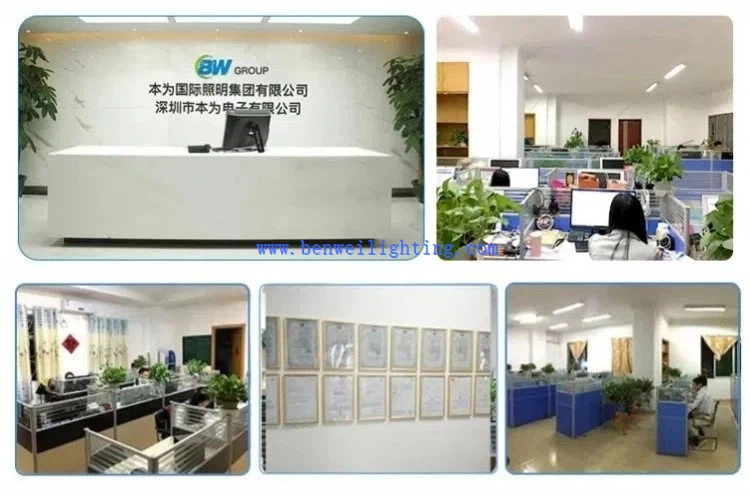
We are happy to have total control over the manufacturing process and the calibre of our products since we have our own facilities. Since we are producers rather than just brokers, we are dedicated to providing our customers with the best pricing. Since we are certain that the price and quality of our products are clear, we invite customers to see our samples first. Our commitment to quality and customer satisfaction drives us to continuously provide top-notch goods.
Our address
3rd Floor, 5th Building, Hebei Industrial Park, Hualian Community, Longhua District, Shenzhen, China





