

Introduction: The Core Status of Thermal Management in LED Downlight Performance
The Energy Conversion Characteristics of LED Lighting Devices
Different from traditional incandescent and fluorescent lamps, LED lighting products adopt semiconductor electroluminescence technology, but their energy conversion efficiency is far from perfect. In the actual working process, only 30% to 40% of the electric energy input into the LED chip is converted into visible light energy, while the remaining 60% to 70% of electric energy is directly converted into heat energy and gathered at the chip junction. As a closed embedded lighting device, recessed LED downlights are installed in narrow ceiling cavities with poor natural air circulation. Heat generated by long-term continuous operation cannot be discharged in time, forming continuous high-temperature accumulation inside the lamp body. Unlike surface-mounted lamps with open heat dissipation conditions, embedded downlights face stricter thermal dissipation challenges, making thermal management the primary indicator restricting product durability.
Industry Misunderstanding in LED Downlight Procurement
In the current lighting procurement market, most buyers and even engineering designers have obvious cognitive deviations. They often regard high brightness and low unit price as the core purchasing standards, while ignoring the heat dissipation structure design that determines the whole life cycle cost of the product. Many low-cost downlights on the market adopt simple plastic shells and thin stamping iron heat sinks, which can meet the basic lighting needs in the short term. However, after 1 to 2 years of continuous use, problems such as obvious luminous attenuation, color temperature drift, lamp body aging and yellowing, and even driver burnout frequently occur. For commercial scenarios such as hotels, office buildings, and shopping malls that require 8–12 hours of long-term continuous lighting, unqualified heat dissipation design will lead to frequent equipment replacement and high maintenance costs, which virtually increases the overall operating cost of the project. Therefore, excellent heat dissipation performance is the core prerequisite for LED downlights to achieve long life and low light decay.
Mechanism Analysis: How Heat Triggers LED Downlight Aging and Luminous Decay
The Correlation Between Junction Temperature and Luminous Decay
LED luminous decay, also known as lumen depreciation, refers to the irreversible gradual reduction of luminous flux generated by the LED chip during long-term operation, which is the core standard to measure the service life of lighting products. The industry universally adopts the L70 standard, that is, the effective service life of the lamp is defined as the time when the luminous flux decays to 70% of the initial value. The core factor determining the speed of luminous decay is the LED junction temperature (Tj). Professional experimental data verifies that there is an accurate quantitative correlation between junction temperature and light decay speed: every 10°C increase in the chip junction temperature will double the luminous decay rate of the LED and halve the service life of the internal driver electrolytic capacitor. Under ideal heat dissipation conditions, when the junction temperature is stably controlled below 55°C, the L70 service life of LED chips can reach more than 100,000 hours. In contrast, for ordinary downlights with poor heat dissipation, the long-term junction temperature is as high as 85°C or more, and the luminous flux will decay by 40%–60% within 20,000 hours, completely losing the original lighting effect.
Thermal Aging Damage to Internal Core Components
Excessive heat accumulation will cause irreversible aging damage to the three core components of LED downlights, accelerating product failure in an all-round way. First, high temperature will damage the phosphor layer on the surface of the LED chip, resulting in uneven phosphor aging, color temperature drift, and distorted color rendering effect, making the light tone yellowish or bluish and unable to restore the true color of indoor objects. Second, continuous high-temperature baking will accelerate the aging of the driving power supply, cause the internal circuit board to oxidize and fall off, and the electrolytic capacitor to fail and bulge, resulting in lamp flicker, intermittent lighting, or direct burnout. Third, long-term high-temperature operation will cause thermal fatigue of the lamp body structure, leading to aging and embrittlement of ordinary plastic shells, yellowing and cracking of the light-transmitting panel, and loose internal wiring, which greatly reduces the structural stability and safety of the lamp.
Hidden Risks of Long-Term High-Temperature Operation
In addition to luminous decay and component aging, poor heat dissipation will also bring potential safety and operational risks. For embedded downlights installed in ceiling cavities filled with gypsum boards, wooden keels, and other combustible materials, long-term high-temperature heat accumulation will increase the ambient temperature of the installation area, bringing hidden fire dangers. At the same time, high temperature will cause the internal wire sheath to age and melt, leading to short circuit and electric leakage faults. For large-scale commercial lighting projects, batch equipment failure caused by heat dissipation problems will not only increase maintenance labor and material costs but also affect the normal operation of the venue and damage the project reputation. These hidden risks are often ignored in the initial procurement stage but become major pain points in the later operation cycle.
Advanced Heat Dissipation Design of High-Performance Recessed LED Downlights
Optimized Fin-Type Integrated Heat Sink Structure
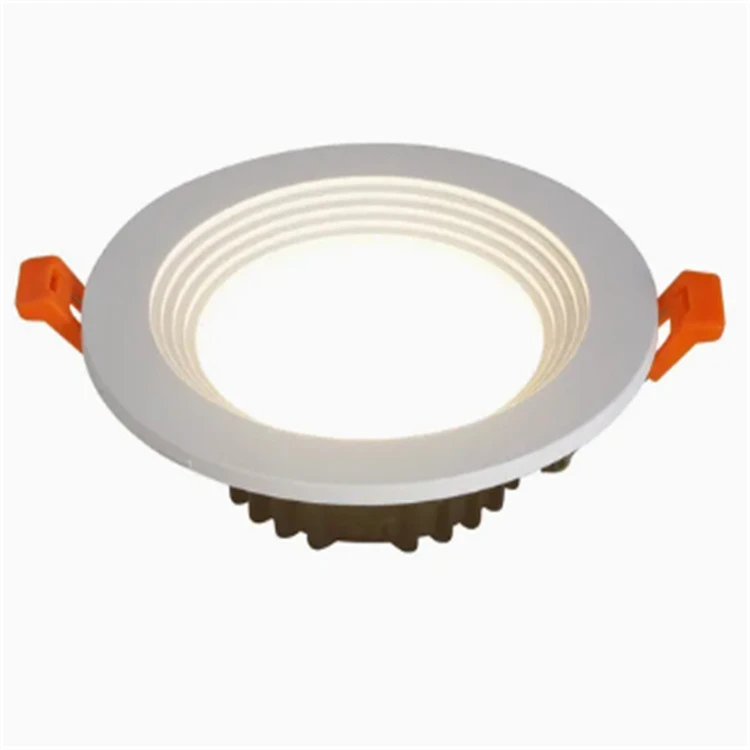
Different from the simple thin heat dissipation structure of ordinary low-quality downlights, our high-performance recessed LED downlight adopts an exclusive black fin-type integrated heat sink design, which is the core technical support for efficient thermal management. The fin structure maximizes the heat dissipation surface area in a limited lamp body space, forming a three-dimensional three-circulation heat dissipation channel. Compared with traditional flat heat sinks, the effective heat dissipation area is increased by more than 45%, which can quickly conduct the high heat generated by the LED chip to the entire heat sink surface. The integrated molding process eliminates the thermal resistance problem caused by the gap of spliced heat sinks, realizing zero-delay heat conduction. This structure can stably control the LED chip junction temperature below 60°C even under long-term full-load continuous operation, fundamentally inhibiting the rapid luminous decay caused by high temperature.
High-Quality Anti-Aging Thermal Conductive Materials
The thermal conductivity of materials directly determines the heat dissipation efficiency of the lamp body. Most low-cost downlights on the market adopt recycled impure aluminum or ordinary plastic heat dissipation parts, whose thermal conductivity is reduced by more than 30% compared with high-purity thermal conductive materials, resulting in serious heat accumulation inside the lamp. Our products adopt high-purity die-cast thermal conductive materials with uniform internal density and no impurity gaps, which ensure efficient and stable heat conduction performance. Matched with high-temperature resistant thermal conductive silica gel, it fills the tiny gaps between the chip and the heat sink, further reducing thermal resistance and improving heat transfer efficiency. In addition, the anti-UV PC light-transmitting panel has excellent high-temperature resistance, which will not deform, yellow or age under long-term high-temperature radiation, maintaining the long-term aesthetic and light transmission uniformity of the lamp body.
Scientific Internal Structural Thermal Cycle Design
Aiming at the closed heat dissipation dilemma of embedded ceiling installation, our downlight adopts a scientific internal hollow thermal cycle structure. Through the reasonable layout of internal components, it forms a natural hot air rising and cold air supplement circulation system inside the lamp body, realizing passive air convection heat dissipation without external power. This structural design effectively solves the problem of heat accumulation in narrow ceiling cavities and ensures that the internal temperature of the lamp body remains stable in a safe range even in a fully enclosed installation environment. At the same time, the patented cable locking buckle structure fixes the internal power cord firmly, avoiding wire loosening and poor contact caused by thermal expansion and cold contraction of long-term temperature changes, ensuring the long-term electrical stability of the lamp and further extending the overall service life.
Practical Advantages: Heat Dissipation Optimization Brings Lifespan and Value Upgrade
Ultra-Long Service Life and Ultra-Low Luminous Decay Performance
Benefiting from the efficient and stable thermal management system, our recessed LED downlight achieves an ultra-long rated service life of 50,000 hours, which is 2–3 times that of ordinary downlights on the market. Calculated by 8 hours of daily use for home scenarios, the continuous service life can reach more than 17 years; for commercial scenarios with 12 hours of long-term continuous lighting, the stable operation cycle is up to 11 years. Under standard working conditions, the product still maintains more than 70% of the initial luminous flux after long-term operation, and the annual luminous decay rate is controlled below 3%, far lower than the 15%–20% annual decay rate of ordinary products. It completely avoids the problem of obvious dimming and poor lighting effect in the later stage of use, realizing one-time installation and long-term stable lighting.
Full-Cycle Cost Reduction for Engineering and Wholesale Users
For engineering contractors and bulk procurement merchants, excellent heat dissipation performance means substantial reduction of full-cycle operating costs. Although low-cost downlights have a low initial procurement price, they need large-scale replacement and maintenance every 2–3 years due to rapid light decay and short service life, with high comprehensive labor and material costs. Our high heat-dissipation downlights eliminate frequent replacement needs, greatly reducing post-project maintenance pressure and after-sales service costs. In large-scale projects such as hotel renovation, office building lighting, and mall interior decoration, batch application of this product can effectively improve project quality, reduce customer complaint rates, and enhance the market competitiveness of engineering and wholesale businesses.
Stable and Consistent High-Quality Lighting Effect
Stable temperature control brings lasting and high-quality lighting performance. The product maintains a constant low junction temperature during long-term operation, avoiding color temperature drift and color rendering attenuation caused by high-temperature phosphor aging. It maintains a high CRI lighting effect for a long time, truly restoring the natural color of indoor space and articles. At the same time, the stable working temperature ensures that the LED chip and driver work in a rated safe state, without light flicker, glare, and stroboscopic problems, providing eye-friendly and comfortable lighting environment. Whether it is home living space, high-end hotel guest rooms, or commercial display areas, it can maintain consistent high-grade lighting effects for many years.
Comprehensive Matching Advantages of Product Performance and Scenarios
Stable Voltage Adaptability and Structural Durability
On the basis of excellent heat dissipation performance, this LED downlight is equipped with a wide voltage working system of 85–265V, which can resist grid voltage fluctuation and ensure stable luminous output in different regional power environments. The whole lamp body adopts anti-corrosion and anti-aging structural design, matched with high-elastic stainless steel spring clips, which will not lose elasticity after long-term ceiling compression and repeated installation, ensuring firm installation and no falling off. The IP20 professional protection grade effectively isolates large particle dust and accidental touch of live parts, which is perfectly suitable for all dry indoor lighting scenarios.
Diversified Specifications and Efficient Installation
The product series covers multiple power and opening size specifications, which can meet the personalized lighting needs of different space sizes and brightness requirements. The modular integrated structure design simplifies the on-site installation process, no complex auxiliary tools are needed, and the construction efficiency is greatly improved. While ensuring professional-grade heat dissipation and durability, it takes into account the simplicity of engineering construction and the diversity of terminal applications, realizing the perfect integration of high performance, high practicability and high cost performance.
Conclusion
Heat dissipation performance is the fundamental determinant of the lifespan and luminous decay performance of LED recessed downlights, and it is also the core indicator that distinguishes high-quality professional lighting products from inferior low-cost products. High-temperature heat accumulation will irreversibly damage LED chips, driving systems and structural components, leading to accelerated luminous decay, shortened service life, and frequent equipment failures. The advanced fin-type integrated heat dissipation structure, high-quality thermal conductive materials and scientific thermal cycle design of our high-performance LED downlights effectively solve the industry pain point of heat accumulation, stably control the internal working temperature of the lamp body, and achieve ultra-low luminous decay and ultra-long service life. For residential users, it realizes long-term stable lighting and reduces replacement troubles; for engineering and wholesale buyers, it greatly reduces the full-cycle operation and maintenance costs and improves project competitiveness. In the field of modern interior lighting with increasingly strict performance requirements, thermal management optimization is the core value of high-quality LED downlights, and it is also the most reliable choice for long-term lighting investment.
How To Cooperate With Us?
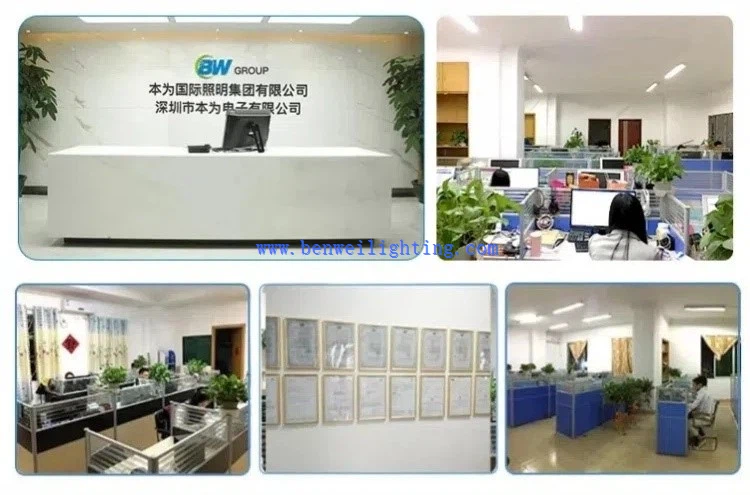
We are happy to have total control over the manufacturing process and the calibre of our products since we have our own facilities. Since we are producers rather than just brokers, we are dedicated to providing our customers with the best pricing. Since we are certain that the price and quality of our products are clear, we invite customers to see our samples first. Our commitment to quality and customer satisfaction drives us to continuously provide top-notch goods.
Our address
3rd Floor, 5th Building, Hebei Industrial Park, Hualian Community, Longhua District, Shenzhen, China





