

Introduction
We may feel wet and gloomy while we are in subterranean spaces like parking lots, tunnels, and underground storage rooms. Tri-proof lights are an alternative since standard lighting fixtures often cannot withstand these rather demanding circumstances. This post will explain how tri-proof lights work in subterranean environments and provide advice on selecting the best one.

Challenges of Underground Environments
Compared to ordinary indoor situations, underground rooms have drastically diverse circumstances, which puts more strain on lighting systems. Typical difficulties in subterranean settings include:
• High humidity: Moisture in the air may cause regular lights to malfunction or short circuit, and underground parking lots, tunnels, and storage places are often wet.
• Dust and particles: Inadequate ventilation in subterranean areas causes dust to build up, which may lower light efficiency, interfere with heat dissipation, and need more frequent maintenance.
• Chemical corrosion: Over time, the fixture and internal components may corrode due to the presence of cleaning solvents, vehicle exhaust, or other chemicals in certain subterranean conditions.
• Extended operation hours: Standard fixtures may have limited lifespans or often fail in underground facilities, which frequently need continuous or prolonged illumination.
• Maintenance challenges: Because underground locations are sometimes small or difficult to reach, installation and maintenance are more complex, which raises the bar for dependability and durability.
Tri-Proof Light Meaning: What Makes These Lights Special?
The three primary protective qualities that a tri-proof lamp provides-waterproof, dustproof, and corrosion-resistant-give it its name.
1. Waterproof: The fixture's sealed construction successfully keeps moisture and water out, guaranteeing steady functioning even in wet conditions.
2. Dustproof: By keeping dust and tiny particles out, the casing shields internal electrical components and prolongs the light's useful life.
3. Corrosion-resistant: Usually constructed from materials like stainless steel, PC, or aluminium alloy, tri-proof lights are resistant to chemical exposure and the humidity that is often present in subterranean settings.
They are appropriate for tough subterranean situations that need constant illumination since they usually have high protection ratings, such IP65 or IP66, and provide exceptional energy economy and extended service life.
Typical Underground Applications for Tri-Proof Lights
Tri-proof lights are often used in a variety of subterranean settings because of their excellent protective qualities, such as:
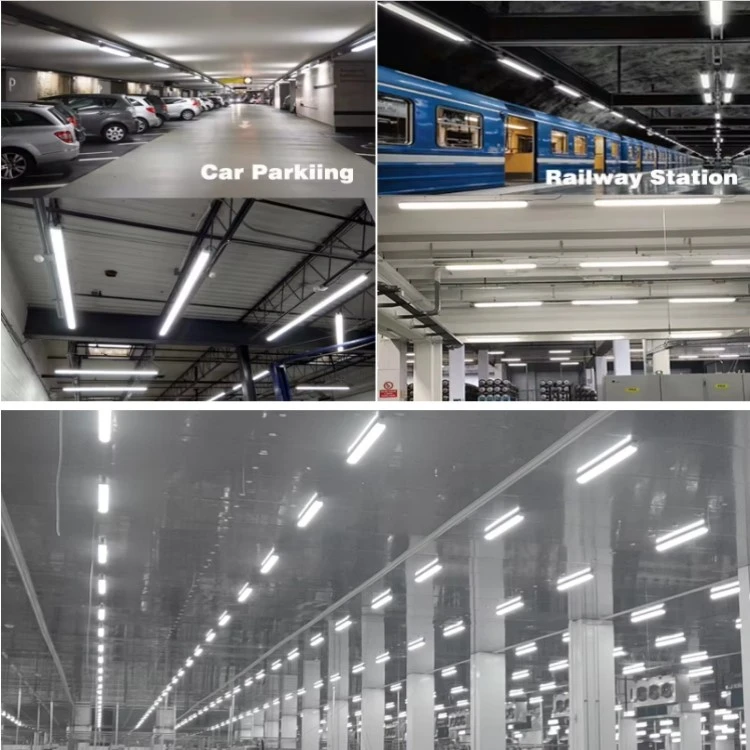
• Parking lots underneath
Tri-proof lights efficiently withstand dust, moisture, and vehicle exhaust, guaranteeing steady lighting over time and lowering the need for maintenance.
• Underground passageways and tunnels
LED tri-proof lights guarantee the safety of both cars and pedestrians by offering constant brightness and homogeneous illumination.
• Storage rooms and underground warehouses
Tri-proof lights prolong the life of internal electrical components by keeping moisture and dust out of the fixture.
• Equipment rooms and subterranean utility corridors
These areas are often cramped and inadequately ventilated. Tri-proof lights' moisture-proof and corrosion-resistant construction reduces the possibility of malfunctions and guarantees secure lighting when equipment is being maintained.
Key Factors When Choosing Tri-Proof Lights for Underground Use
Choosing the appropriate performance and specs is crucial when using tri-proof lights in subterranean settings. The important things to think about are:
1. IP Score
Based on the subterranean space's dust and humidity levels, choose a suitable protection level, such as IP65 or IP66.
2. Selection of Materials
Choose tri-proof lights with premium components that improve protection and increase the fixture's lifespan, including PC housings, stainless steel clips, or aluminium end caps.
3. Light Distribution and Luminous Efficiency
In subterranean places, choosing tri-proof lights with appropriate luminous efficiency and light distribution guarantees consistent lighting, minimises glare and shadow regions, and enhances safety and visibility.
4. Method of Installation
Depending on the features of the subterranean area, choose wall-mounted, suspended, or surface-mounted systems to satisfy the illumination needs of various situations.
5. Extra Features
For increased convenience and safety, you may choose tri-proof lights with motion sensors, emergency lighting, or dimming capabilities based on your real requirements.
Conclusion
Tri-proof lights are appropriate for subterranean settings because of their waterproof, dustproof, and corrosion-resistant qualities, which enable them to function dependably in challenging circumstances. To make sure the lights are safe, dependable, and fulfil your real use demands, you should take into account the protection level, material quality, luminous effectiveness, light dispersion, installation technique, and extra features when buying tri-proof lights for subterranean areas.





