

Introduction: The Reality of Harsh Industrial Environments
The Cost of Environmental Failure
Industrial lighting is not a passive utility; it is an active participant in the operational environment. In a food processing plant, fixtures face high-pressure chemical washdowns. In a steel mill, they contend with ambient temperatures exceeding 50°C (122°F) and conductive dust that blankets every surface. In coastal facilities, salt fog aggressively attacks non-passivated metals.
When a standard light fixture is deployed in these environments, failure is not a matter of "if" but "when." The financial impact extends far beyond the cost of the fixture itself. Replacing a high bay unit mounted at 12 to 15 meters requires scissor lifts, certified technicians, and the disruption of adjacent production lines. The true cost is measured in lost productivity and maintenance labor, which frequently eclipses the hardware cost by a factor of five to ten.
Two Pillars of Survivability
To survive in a harsh environment, an industrial LED light must master two distinct engineering disciplines. First, it must achieve High-Strength Waterproofing to completely isolate sensitive electrical and optical components from moisture, dust, and corrosive vapors. Second, it must possess an infallible Air Convection Cooling system to manage the immense thermal load generated by high-wattage LEDs without relying on vulnerable active components like fans.
This article examines how the intersection of these two technologies creates a luminaire architecture capable of enduring a decade or more of relentless environmental stress.
High-Strength Waterproofing: Beyond the Basic IP Rating
The Anatomy of Ingress: How Water and Dust Destroy LEDs
Water and dust ingress are the silent killers of industrial LED fixtures. Moisture entering the optical cavity can condense on the PC lens, blocking light output. Worse, when moisture reaches the PCB, it creates a conductive bridge across fine-pitch LED solder joints, leading to short circuits and catastrophic failure. Dust, particularly conductive metallic dust found in machining facilities, acts as a thermal insulator on the heat sink and can bridge electrical contacts if it penetrates the driver compartment.
Standard IP65 ratings (dust-tight and protected against water jets) are often considered the baseline for industrial use. However, in truly harsh environments, true waterproofing requires a structural design that anticipates thermal expansion, chemical exposure, and physical impact.
IP65/67 Engineering: Seals, Gaskets, and Die-Cast Integrity
Achieving high-strength waterproofing is not merely a matter of adding a rubber O-ring. It is a holistic structural discipline.
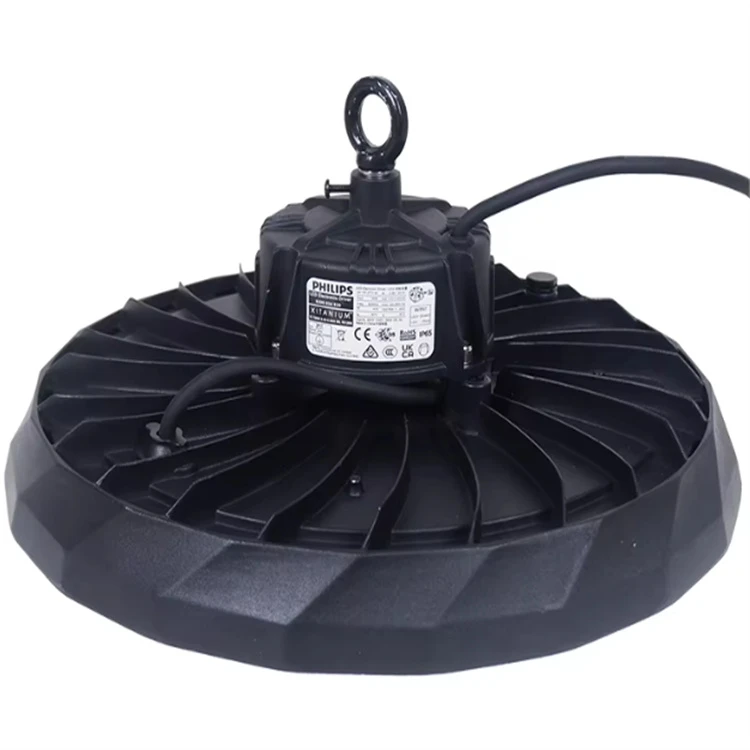
First, the housing itself must be constructed from a material that resists warping. The integrated die-cast aluminum shell used in this fixture provides exceptional rigidity. Unlike stamped steel or injection-molded plastics, which can flex and distort under mechanical stress or extreme temperature cycling, high-density die-cast aluminum maintains its precise tolerances, ensuring that the mating surfaces between the lens, the LED board, and the driver cavity remain perfectly flush.
Second, the sealing interface must utilize high-grade, industrial silicone gaskets. Unlike cheap rubber, silicone retains its elastomeric properties across a vast temperature range (-50°C to 200°C) and resists degradation from UV exposure and chemical solvents. The precise compression of this silicone gasket, secured by uniformly torqued stainless steel screws, forms a hermetic barrier that prevents the ingress of high-pressure washdown spray and fine particulate matter.
Material Resilience: Corrosion and Chemical Resistance
Waterproofing is rendered moot if the housing corrodes. In chemical plants or coastal installations, salt and acidic vapors can rapidly oxidize aluminum if it is not properly treated. A hardcore industrial light must undergo rigorous surface treatment. The die-cast aluminum body is typically subjected to a multi-stage chromate conversion coating followed by an electrostatically applied, oven-cured powder coat. This finish not only provides a high aesthetic appeal but creates a chemically inert barrier that withstands salt fog testing (ASTM B117) and protects the structural integrity of the heat sink for decades.
Washdown Capability and Long-Term Optical Clarity
In food and beverage processing, fixtures must withstand high-pressure, high-temperature washdowns involving caustic cleaning agents. A robust waterproofing system ensures that these chemicals cannot infiltrate the fixture. Furthermore, the polycarbonate (PC) lens plays a critical role here. Unlike glass, which can shatter under thermal shock (e.g., hot water hitting a cold lens), PC is highly impact-resistant. UV-stabilized PC also resists yellowing and chemical etching, ensuring that once the washdown is complete, the optical clarity and light transmission remain uncompromised.
Air Convection Cooling: The Physics of Passive Thermal Management
The Thermal Cascade: Junction Temperature and Lumen Depreciation
Every watt of electricity that does not become light becomes heat. In a high-wattage industrial LED fixture, this thermal load is substantial. The fundamental rule of LED reliability is the "10-degree rule": for every 10°C increase in the LED junction temperature, the expected lifespan of the chip is halved, and lumen depreciation accelerates.
If the heat generated by the LED array and the Philips drive power supply is not effectively removed, the fixture will rapidly degrade. In harsh environments where ambient temperatures are already high, the heat sink's efficiency is pushed to its absolute limits.
Natural Convection Mechanics in High Bay Geometries
Active cooling methods, such as mechanical fans, are categorically unsuitable for harsh industrial environments. Fans draw in dust, grease, and moisture, which quickly clog heat sinks and destroy bearings, turning a cooling asset into a point of failure. Therefore, a hardcore industrial light must rely on natural air convection-the passive movement of air driven by buoyancy and gravity.
The efficiency of natural convection is dictated entirely by the geometry of the heat sink. The goal is to maximize the surface area exposed to the air while minimizing the resistance to airflow. A simple flat plate is highly inefficient, as a boundary layer of stagnant hot air forms above it. Vertical or radial fins are necessary, but their spacing and depth must be mathematically optimized; if they are too close together, the air becomes choked and cannot flow; if they are too far apart, the available surface area is insufficient.
The Chimney Effect: How Hollow Radial Fins Maximize Airflow
The design of this specific "UFO" style fixture leverages a highly optimized passive thermal architecture: hollow radial fins and air convection pathways.
The heat sink consists of a series of radial fins that curve outward from the center, creating a high surface-area-to-volume ratio. However, the true brilliance lies in the hollow central chimney. As the LEDs and driver heat up, they warm the air inside this central cavity. This hot air becomes less dense and rises rapidly through the top of the fixture (the chimney effect). As it escapes, it creates a negative pressure zone at the bottom of the fixture, drawing cooler ambient air inward across the radial fins.
This continuous, self-sustaining cycle of hot air exhaust and cool air intake ensures that heat is efficiently wicked away from the core components. The one-piece molding of the die-cast aluminum ensures zero thermal resistance at the joints; heat travels seamlessly from the LED board to the outer fins, where it is surrendered to the convective airflow.
The Benefits of Passive Cooling Over Active Cooling
By eschewing fans entirely, the fixture eliminates moving parts. There is no bearing to wear out, no dust to clog filters, and no motor to short-circuit in a humid environment. This passive design is the cornerstone of reliability in harsh conditions. It requires zero maintenance, operates silently, and continues to function efficiently even after years of exposure to extreme environmental conditions.
System-Level Synergy: Waterproofing and Cooling Interlock
The Hermetic Seal vs. Thermal Expansion
While waterproofing and convection cooling are powerful individually, their interaction presents a significant engineering challenge: thermal expansion. As the fixture heats up and cools down daily, the metal housing expands and contracts, while the PC lens and silicone gaskets do so at different rates. Over thousands of cycles, this stress can mechanically break the waterproof seal.
To counteract this, the die-cast aluminum structure must be sufficiently thick and rigid to distribute thermal stress evenly, preventing localized warping at the gasket line. The structural integrity of the die-cast body is therefore essential for maintaining the waterproofing over the long term.
Internal Contaminants and the Case for Passive Cooling
If the fixture were designed with an active fan, it would require air intake and exhaust vents. Even with filters, these vents are a liability in dusty or wet environments; moisture and micro-particles will inevitably infiltrate over time. By utilizing a completely sealed, passive convection cooling system, the fixture achieves a true hermetic barrier. The heat is managed entirely through conduction through the metal shell and convection on the external fins, keeping the internal electrical and optical components in a pristine, dry, and dust-free state.
The Maintenance Multiplier Effect
The combination of flawless waterproofing and unyielding passive cooling creates a "maintenance multiplier effect." Because water cannot enter, the electrical components do not corrode or short out. Because dust cannot clog the internal workings and heat is efficiently dissipated by natural convection, the LEDs do not overheat. The Philips driver operates at lower internal temperatures, significantly extending the life of its electrolytic capacitors.
The result is a fixture that defies the typical lifecycle of industrial lighting. Instead of a 2-3 year replacement cycle, the luminaire is engineered for a 10+ year service life, drastically reducing the Total Cost of Ownership (TCO).
Procurement Framework: Specifying for Harsh Environments
Verifying IP Ratings and Structural Integrity
When procuring lighting for a harsh environment, buyers must look beyond the marketing. Demand the IP (Ingress Protection) test reports, specifically looking for the second digit (e.g., IP65 or IP67). Furthermore, inspect the structural design. Look for stainless steel hardware (to prevent rust), thick silicone gaskets, and a thick-walled die-cast aluminum housing. A lightweight or thin-walled fixture is highly susceptible to warping and seal failure under thermal cycling.
Evaluating Thermal Design
Do not accept "heavy" as a proxy for "good cooling." Examine the geometry. Does the heat sink feature optimized radial fins? Is there a central chimney effect for convective airflow? Most importantly, insist on LM-80 and TM-21 data for the LED packages, and verify the driver's temperature rating. If the fixture lacks a sophisticated passive heat dissipation structure, its high-wattage LEDs will inevitably degrade prematurely.
The Total Cost of Ownership (TCO) Calculation
The purchase price of a light fixture is only a fraction of its true cost. In an industrial setting, factor in:
Energy Savings: The high efficiency of the LED chips reduces electricity costs.
Maintenance Avoidance: The absolute elimination of replacement labor, lift rental, and downtime.
Safety and Compliance: Reliable, flicker-free, high-CRI illumination reduces accidents and ensures compliance with occupational safety standards.
A cheaper fixture that fails in 18 months is a financial drain. The "hardcore" industrial light, built with high-strength waterproofing and advanced convection cooling, pays for itself through uninterrupted performance.
Conclusion: Engineering for the Extremes
In the world of industrial lighting, harsh environments are the ultimate proving ground. Moisture, dust, extreme heat, and corrosive chemicals are unforgiving adversaries. A standard commercial fixture is simply not equipped for the fight.
This product represents a definitive answer to these environmental threats. By integrating a high-strength waterproofing system-anchored by a rigid die-cast aluminum shell and high-grade silicone seals-the internal electronics and optics are perfectly insulated from the outside world. Simultaneously, the air convection cooling architecture, featuring a hollow radial heat sink, ensures that the immense thermal load is dissipated passively and flawlessly, without the vulnerabilities of active fans.
When you specify a luminaire of this caliber, you are not merely buying a source of light; you are investing in operational continuity. You are choosing to eliminate maintenance headaches, to protect your facility from lighting-induced downtime, and to secure a decade of reliable, high-output illumination. In the harshest environments, only the most hardcore engineering survives-and this light is built to thrive.
How To Cooperate With Us?
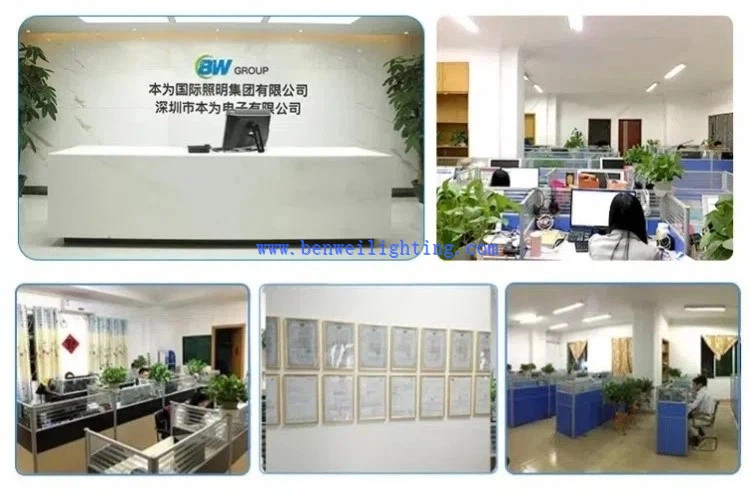
We are happy to have total control over the manufacturing process and the calibre of our products since we have our own facilities. Since we are producers rather than just brokers, we are dedicated to providing our customers with the best pricing. Since we are certain that the price and quality of our products are clear, we invite customers to see our samples first. Our commitment to quality and customer satisfaction drives us to continuously provide top-notch goods.
Our address
3rd Floor, 5th Building, Hebei Industrial Park, Hualian Community, Longhua District, Shenzhen, China





