

Introduction: The Thermal Paradox of Ultra-Thin Design
The Shift Toward Ultra-Thin Industrial Lighting
Industrial high bay lighting has traditionally been characterized by massive, heavy housings. The rationale was simple: more metal mass equals more heat absorption and a larger surface area for dissipation. However, the introduction of the "ultra-thin" UFO profile has challenged this convention. These modern fixtures offer distinct advantages, including reduced structural load on warehouse ceilings, lower shipping costs, and a cleaner, more modern aesthetic.
Yet, the fundamental laws of thermodynamics remain unchanged. An LED fixture operating at 150W or 200W converts a significant percentage of electrical energy into heat. If the ultra-thin housing cannot effectively conduct this heat away from the LED junction and the driver, the fixture will fail.
The Engineering Challenge: Mass vs. Conductivity
The paradox is straightforward: to make a fixture thinner, manufacturers must remove material. But removing material reduces the thermal mass available to absorb sudden temperature spikes and diminishes the surface area available for convective cooling. Many low-cost manufacturers attempt to solve this by using thinner stamped steel or thermoplastics, which inevitably leads to premature LED degradation and driver burnout.
The secret to breaking this paradox lies not in the amount of material used, but in its quality and structural configuration. Integrated die-cast aluminum is the only material science solution that allows for a highly compact, ultra-thin geometry while simultaneously delivering the high thermal conductivity required for industrial-grade reliability.
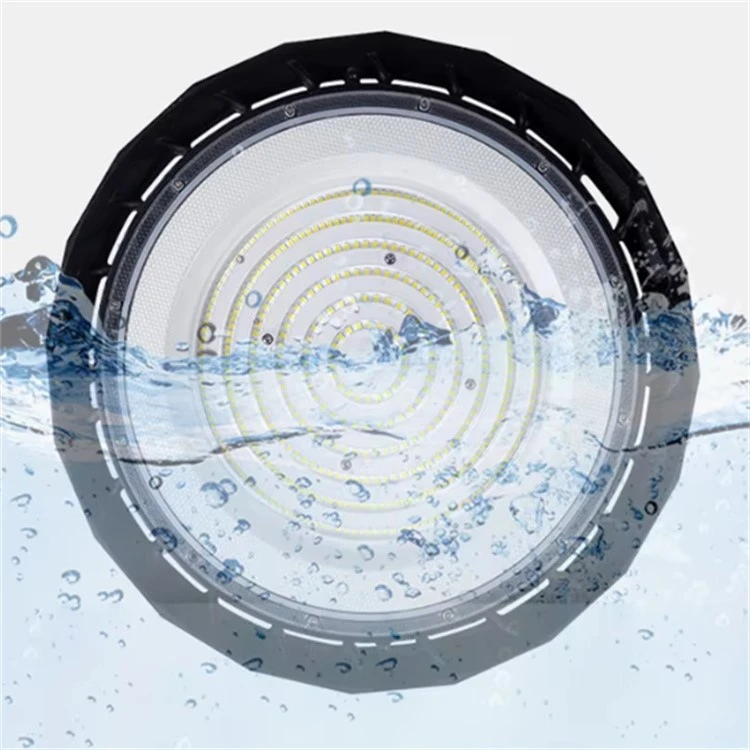
Material Science: Why Integrated Die-Cast Aluminum is Unrivaled
The Physics of Thermal Conductivity: A Comparative Analysis
The first-order determinant of a luminaire's cooling capability is the thermal conductivity of its housing material. Thermal conductivity is the ability of a material to conduct heat, measured in Watts per meter-Kelvin (W/m·K). The disparities between common housing materials are drastic:
Engineering Plastics (PC/ABS): ~0.2 to 0.3 W/m·K. Plastic is an insulator. It traps heat inside the fixture, guaranteeing rapid lumen depreciation and driver failure.
Stamped Steel/Iron: ~45 to 50 W/m·K. Steel is heavy, rusts easily, and conducts heat at a fraction of the rate of aluminum.
ADC12 Die-Cast Aluminum Alloy: ~96 to 120 W/m·K.
High-Purity Aluminum: 200 to 230 W/m·K.
Industrial-grade die-cast aluminum (typically ADC12 alloy) offers the optimal balance of structural rigidity, corrosion resistance, and thermal conductivity. It conducts heat at more than double the rate of steel and hundreds of times faster than plastic.
The "Integrated" Advantage: Eliminating Interfacial Resistance
Material conductivity is only half the battle. The second, more critical factor is interfacial thermal resistance.
In traditional fixtures, the heat sink is often a separate component bolted or screwed onto the main housing. The LED board is attached to a metal plate, which is then attached to the heat sink. Every point of connection-no matter how tightly screwed or how much thermal paste is applied-introduces a microscopic air gap. Air is a terrible conductor of heat (~0.026 W/m·K). These interfaces act as thermal bottlenecks, causing heat to "back up" at the LED junction.
The ultra-thin UFO high bay utilizes integrated die-casting. The LED mounting base, the central housing, and the exterior heat-dissipation fins are molded as a single, continuous, monolithic piece of aluminum. There are no spliced joints, no bolted plates, and no thermal paste. Heat flows directly from the LED board through the continuous aluminum lattice to the ambient air, achieving near-zero interfacial thermal resistance.
Structural Integrity for Ultra-Thin Profiles
Die-cast aluminum provides exceptional dimensional stability. In an ultra-thin profile, structural flexing is a major risk. If the housing warps due to heat or mechanical stress, the waterproof gasket can fail, leading to IP rating breaches. The high rigidity of die-cast aluminum ensures that the ultra-thin body remains perfectly flat and structurally sound, maintaining its hermetic seal and precise optical alignment over a decade of thermal cycling.
Structural Engineering: How the Thin-Walled Housing Achieves Efficient Heat Dissipation
Optimized Heat Conduction Pathways
In a standard flat housing, heat from the center of the LED array must travel a long distance to reach the edges. This creates a severe "hot spot" in the middle of the fixture. The integrated die-cast design of the ultra-thin UFO high bay solves this by utilizing a central heat conduction axis. The thickness of the aluminum at the core (where the LED board and driver are mounted) is maximized for rapid heat absorption, while the outer shell is tapered to remain ultra-thin. This ensures that heat is rapidly wicked away from the core and distributed uniformly across the entire surface area.
The Aerodynamics of Radial Fin Geometry
The exterior of the housing is where the heat is finally dissipated into the ambient environment via convection. The ultra-thin profile is not a flat plate; it features a highly complex, radially finned architecture.
The fins are engineered with precise spacing and depth. If the fins are too close together, the boundary layer of hot air becomes trapped, choking the airflow (thermal stacking). If they are too far apart, the surface area is insufficient. The radial layout creates an optimal channel for natural convection. As the hot air rises off the fins, cooler ambient air is drawn in from the sides. The ultra-thin design actually facilitates this by keeping the thermal boundary layer exceptionally thin, allowing for rapid air exchange.
The Chimney Effect in a Slim Profile
A key feature of this UFO design is the hollow central mounting cavity. The integrated die-cast body creates a vertical chimney effect. Heat from the driver-which is mounted directly above the LED array-rises into the central cavity. The hollow, open-top architecture of the UFO shape allows this intensely hot air to escape unimpeded. As it exits the top, it creates a negative pressure zone that aggressively pulls cooler air across the radial fins from the perimeter. This self-sustaining airflow loop is highly efficient, ensuring that the fixture operates at a significantly lower steady-state temperature despite its slim footprint.
Surface Treatment and Anti-Corrosion
An ultra-thin aluminum housing is only as good as its surface treatment. The integrated die-cast body undergoes a rigorous multi-stage pre-treatment process, followed by an electrostatic powder coating. This coating provides a chemically inert barrier that prevents the aluminum from oxidizing or corroding in harsh industrial environments. A corroded surface creates a thermal barrier, drastically reducing heat dissipation efficiency. The robust powder coating ensures the thermal interface remains pristine for years.
System-Level Synergy: The Ultra-Thin Body's Impact on Core Components
Prolonging the Life of the Philips Drive Power Supply
The most critical component for the reliability of any LED fixture is the driver, and the most temperature-sensitive element inside the driver is the electrolytic capacitor. The rule of thumb in power electronics is that for every 10°C reduction in operating temperature, the lifespan of a capacitor is doubled.
By utilizing integrated die-cast aluminum, the ultra-thin UFO high bay isolates the driver from the heat of the LED array. The thermal mass of the aluminum acts as a heat spreader, conducting the driver's heat away from the electronics and dispersing it to the exterior fins. By maintaining a lower internal ambient temperature, the premium Philips driver is protected from thermal degradation, ensuring consistent, flicker-free power delivery for tens of thousands of hours.
Preserving PC Lens Optical Integrity
The optical lens (usually made of high-grade Polycarbonate) is positioned directly in the path of the LED heat. If the die-cast housing fails to conduct heat away from the face of the LED board, the PC lens will absorb this radiant heat. Over time, excessive heat causes PC lenses to warp, yellow, and lose light transmission. The integrated aluminum housing acts as a massive heat sink behind the lens, pulling the radiant heat backward and away from the optics. This preserves the lens's clarity and prevents catastrophic color shift.
Procurement Framework: How to Verify "Integrated Die-Cast" Quality
Assessing Material and Weight
A common mistake in procurement is equating "ultra-thin" with "ultra-light." If an ultra-thin fixture feels incredibly light, it is likely made of stamped steel or thin plastic. Buyers should ask specific questions: Is the housing constructed from ADC12 die-cast aluminum? Is it a single continuous piece? The integrated nature means there should be no visible seams or bolted-on heat sink sections.
Evaluating the Fin Architecture
Look closely at the exterior. Are the fins merely decorative, or are they structurally optimized for convection? An effective thermal design will show deep, radially arranged fins with a central exhaust cavity. Look for signs of "thermal stacking"-fins packed so tightly that air cannot circulate.
The Total Cost of Ownership (TCO) Equation
The ultra-thin profile is a premium engineering achievement, and its cost is reflected in the initial price. However, the TCO calculation is compelling. A cheap plastic or steel fixture will suffer from severe lumen depreciation (reaching L70 in 2-3 years) and driver failure. Replacing a high-ceiling fixture requires scissor lifts, labor, and downtime, which often costs 5 to 10 times the price of the fixture itself. The integrated die-cast aluminum housing provides a return on investment within the first few years through zero maintenance costs, and continues to deliver energy savings and reliable illumination for a decade.
Conclusion: The Engineering Triumph of Integration
The "ultra-thin" UFO high bay is not just a design fad; it is the result of advanced material science and thermal engineering. The paradox of achieving superior cooling in a reduced footprint is solved entirely by the continuous, monolithic structure of integrated die-cast aluminum.
By eliminating interfacial thermal resistance, optimizing radial convective airflow, and acting as an unyielding barrier against environmental degradation, the die-cast body is the absolute core of the luminaire's longevity. It protects the premium Philips driver and the delicate optical PC lens from the destructive forces of heat. For the facility manager or procurement officer, the secret behind this fixture's efficiency is not a mystery-it is a verifiable, engineering-grade reality. When specifying high bay lighting, the difference between a budget fixture and a hardcore industrial luminaire lies entirely in the molecular integrity of its housing. Choose integrated die-cast aluminum, and invest in a decade of uncompromised illumination.
How To Cooperate With Us?
We are happy to have total control over the manufacturing process and the calibre of our products since we have our own facilities. Since we are producers rather than just brokers, we are dedicated to providing our customers with the best pricing. Since we are certain that the price and quality of our products are clear, we invite customers to see our samples first. Our commitment to quality and customer satisfaction drives us to continuously provide top-notch goods.
Our address
3rd Floor, 5th Building, Hebei Industrial Park, Hualian Community, Longhua District, Shenzhen, China





