

Introduction: The Illusion of "Premium" in the High Bay Market
The Crisis of Commodity Power Electronics
The industrial high bay market is driven by volume, and manufacturers frequently compete on price. To achieve aggressive price points, many manufacturers cut costs in the most invisible yet critical component: the LED driver. The driver is an active power electronics system responsible for converting AC power to the precise DC current required by the LEDs. Commodity drivers often utilize low-grade electrolytic capacitors, minimal electromagnetic interference (EMI) filtering, and lack robust surge protection.
According to industry failure-mode analyses, driver failure accounts for over 65% of all catastrophic LED luminaire failures, with an additional 20% of failures linked to driver-induced electrical stress on the LED chips. A luminaire is only as reliable as its weakest electrical component. If the driver fails, the entire fixture becomes a dark liability, regardless of how advanced the LED chips may be.
The Deception of "Power Derating" and False Wattage
A common industry trick to artificially inflate the lifespan of low-quality LED chips is power derating. Manufacturers will label a fixture as "150W" but internally configure the driver to output only enough current to run the LEDs at 100W or 120W. While this reduces heat and slows lumen depreciation on the cheap chips, it severely undercuts the actual brightness delivered to the facility floor.
This deceptive practice means that buyers are paying for 150 watts but receiving the illuminance of a 100-watt fixture, leading to inadequate lighting, the need for more fixtures, and higher overall project costs.
Redefining the Standard: True Power, True Reliability
This product redefines the premium standard by addressing both crises head-on. By integrating a genuine Philips drive power supply and guaranteeing true full-wattage brightness, this luminaire does not play the margins game. It delivers exactly what it advertises: world-class electrical stability and the uncompromised luminous output required for demanding industrial environments.
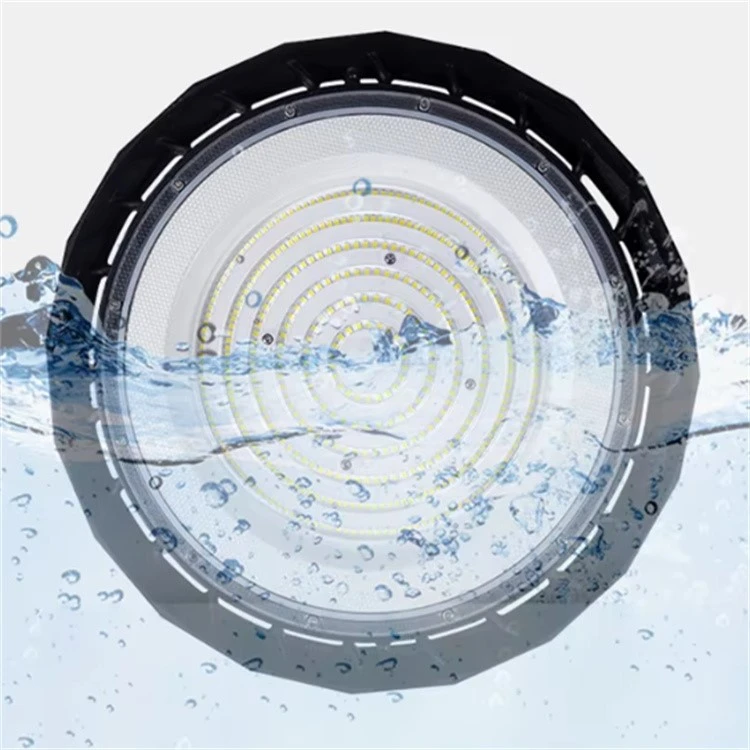
The Philips Driver: The Electrical Heart of Premium Illumination
Why a Tier-1 Driver is Non-Negotiable
The Philips Xitanium platform (and equivalent premium Philips industrial drivers) represents the gold standard in LED power electronics. Operating alongside top-tier brands like Mean Well and Tridonic, Philips drivers are engineered for extreme environments. They feature Mean Time Between Failures (MTBF) ratings exceeding 100,000 hours at maximum case temperatures.
In contrast, generic drivers found in budget high bays typically exhibit MTBF ratings of 10,000 to 30,000 hours. For a facility running 12 to 16 hours a day, a generic driver could fail within the first 3 to 5 years. A Philips driver is engineered to outlive the facility's maintenance planning horizon, effectively eliminating the need for mid-life luminaire replacement.
Surge Immunity: Protection Against the Invisible Threat
Industrial electrical grids are inherently dirty. Heavy machinery startups, capacitor bank switching, and lightning strikes generate transient voltage spikes that travel through the facility's wiring. A standard low-end driver might withstand a 1 kV surge; a severe transient will instantly destroy its rectifier bridge, or worse, cause a latent failure that manifests months later as a flickering or dead fixture.
The Philips driver is built with integrated surge protection rated at 4 kV to 6 kV (Line-Line and Line-Earth). This means the driver can absorb the massive energy spikes prevalent in heavy manufacturing or coastal environments without shutting down or degrading. It acts as a fortress, protecting the sensitive LED array downstream from electrical harm.
Power Factor (PF) and Total Harmonic Distortion (THD)
Energy efficiency is not just about lumens per watt; it is also about how efficiently the driver draws power from the grid. Premium Philips drivers maintain a Power Factor (PF) of ≥ 0.95, meaning 95% or more of the supplied AC power is converted into usable work, with minimal reactive power wasted. Furthermore, they maintain a Total Harmonic Distortion (THD) of < 20% (often < 10% in premium models).
Low THD and high PF are critical for facilities with hundreds of fixtures. Poor power factor can result in utility penalties, overloaded transformers, and voltage drops on the line. A commodity driver with a PF of 0.50 to 0.85 is a hidden financial liability that erodes the savings promised by LED technology.
Thermal Derating: Protection at the Limits
Premium Philips drivers feature programmable thermal derating (often referred to as DTL). If the ambient temperature inside the fixture exceeds safe operating limits, the driver does not simply burn out. Instead, it intelligently reduces the output current to protect the internal capacitors and the LED chips. This ensures that the fixture degrades gracefully rather than failing catastrophically, guaranteeing that the lights stay on, even under extreme thermal stress.
Full-Wattage Brightness: The Truth Behind the Lumens
The Reality of Luminous Flux and Efficacy
"Full-wattage brightness" means that a 200W fixture actually draws 200W from the wall and drives the LEDs to their rated output. This is only possible if the LED chips are of high quality and the thermal design is robust enough to handle the resulting heat.
This luminaire utilizes high-efficiency LED chips arranged in a circular array. By driving these chips at their true, full current, the fixture delivers an exceptionally high Luminous Flux (measured in lumens). For a 150W model, this means delivering upwards of 19,500 to 21,000 lumens (an efficacy of roughly 130-140 lm/W), rather than the 13,000-15,000 lumens delivered by derated competitors.
High Color Rendering Index (CRI) for Safety and Productivity
Brightness is not merely about raw lumens; it is about visual clarity. A premium high bay must deliver a Color Rendering Index (CRI) of 80+ (often 90+ for specific models). A high CRI ensures that colors appear natural and vibrant, which is critical for quality control inspections, safety identification (such as color-coded wiring or warning signs), and worker comfort. Commodity fixtures often sacrifice CRI for raw output, resulting in a harsh, washed-out light that can cause eye strain and fatigue.
Uniform Illuminance and Glare Control
The circular arrangement of the LEDs, combined with the PC lens, ensures that the full-wattage output is distributed evenly across the floor. Unlike concentrated chip clusters that create a blinding "hot spot" directly beneath the fixture and leave dark zones between aisles, this architecture acts as a large surface emitter. The result is a uniformity ratio (U0) that meets or exceeds EN 12464-1 standards, reducing the required fixture count and providing a safer, more ergonomic working environment.
The Thermal Backbone for Full-Wattage Operation
Running LEDs at full wattage generates more heat than derating them. The only way to sustain full-wattage operation without catastrophic lumen depreciation is through superior heat dissipation. This is where the integrated die-cast aluminum housing becomes essential. The monolithic aluminum structure, featuring optimized radial fins, ensures that the heat from the full-wattage LED array is conducted away from the junction and exhausted into the ambient air. Without this thermal backbone, full-wattage operation would quickly destroy the LEDs.
System-Level Synergy: How the Philips Driver Maximizes Full-Wattage Output
Intelligent Current Matching
A Philips driver is not a generic voltage source; it is a sophisticated constant-current power supply. It can be programmed to match the specific forward voltage and current requirements of the LED array with extreme precision. This precise matching ensures that the LEDs operate at their peak efficiency curve, maximizing the lumens produced per watt consumed. Over-driving or under-driving the LEDs (common with mismatched generic drivers) leads to efficiency loss, color shift, and premature failure.
Flicker-Free Operation and Visual Comfort
The Philips driver employs advanced topology (such as LLC resonant conversion) to minimize output ripple. With a flicker modulation depth of < 5% (often < 2%), the light output is virtually constant. This is critical for industrial environments where workers operate heavy machinery. Flicker can cause headaches, eye fatigue, and the stroboscopic effect (where rotating machinery appears stationary), which is a severe safety hazard. A premium driver eliminates this risk entirely.
Long-Term Lumen Maintenance (L70/L80)
The combination of a high-quality driver and a robust thermal design ensures that the full-wattage brightness is maintained over time. The fixture is rated for L70 or L80 lifespan metrics, meaning it will retain 70% to 80% of its initial brightness after 50,000 hours of operation. By comparison, derated cheap fixtures often suffer from severe phosphor degradation and driver drift, losing 30-50% of their light output within 20,000 hours, forcing premature replacement.
Procurement Framework: How to Identify a True Premium High Bay
Verifying the Driver Authenticity
When evaluating a high bay light, procurement officers must look beyond the marketing claims. Ask for the specific Philips driver model number (e.g., Philips Xitanium). Check the datasheet for the MTBF, surge protection rating, and power factor. If the manufacturer claims "Philips driver" but cannot provide the exact model or if the driver is hidden inside a sealed compartment, it is a red flag.
Testing the Full-Wattage Claim
To verify full-wattage brightness, demand third-party photometric and electrical testing data (such as LM-79 reports). The report will show the actual input wattage and the exact lumen output. A true full-wattage fixture will show an input power extremely close to its labeled wattage (e.g., 200W fixture pulling 200W-205W) and a luminous efficacy that matches the advertised claims.
The Total Cost of Ownership (TCO) Analysis
The unit price of a premium fixture is higher than a commodity alternative, but the TCO calculation tells a different story.
Energy Savings: A high-efficiency driver and full-wattage output mean fewer fixtures are needed to achieve the target lux levels, reducing energy consumption.
Maintenance Avoidance: The extended MTBF of the Philips driver eliminates the need for mid-life replacements. The cost of a bucket truck, scissor lift, and certified electrician to replace a single high bay fixture often exceeds $300-$500.
Productivity and Safety: Consistent, flicker-free, high-CRI lighting reduces accidents and increases worker productivity.
A fixture that requires zero maintenance for 10 years and maintains its brightness provides a far greater return on investment than a cheaper fixture that fails in year three.
Conclusion: The New Standard for Industrial Lighting
The industrial lighting market is at a crossroads. Buyers can continue to purchase disposable fixtures that promise high wattage but deliver derated light and fail prematurely, or they can invest in a luminaire engineered to a higher standard.
The integration of a genuine Philips drive power supply and true full-wattage brightness is not a marketing gimmick; it is a fundamental shift in how industrial lighting reliability is defined. The Philips driver guarantees electrical stability, surge immunity, and seamless integration with the LED array, while the full-wattage operation delivers the uncompromised illuminance needed for safe and productive operations.
This high bay light is more than just a source of light; it is a capital asset designed to operate at peak performance for a decade or more. In the pursuit of operational excellence, the standard for premium high bay lighting has been unequivocally redefined.
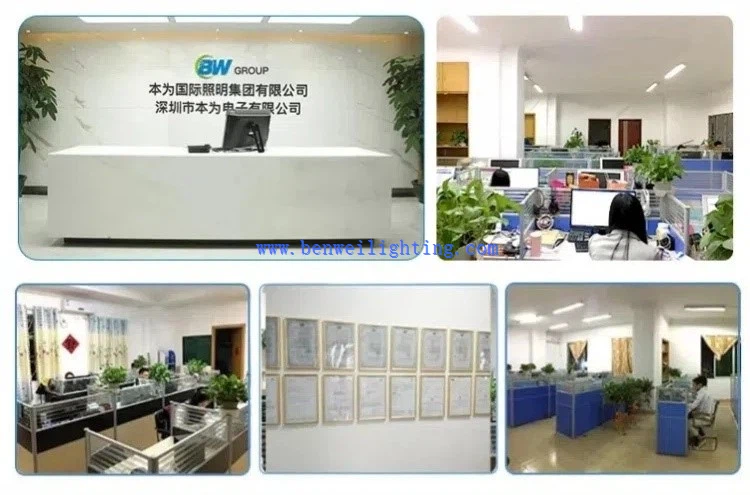
How To Cooperate With Us?
We are happy to have total control over the manufacturing process and the calibre of our products since we have our own facilities. Since we are producers rather than just brokers, we are dedicated to providing our customers with the best pricing. Since we are certain that the price and quality of our products are clear, we invite customers to see our samples first. Our commitment to quality and customer satisfaction drives us to continuously provide top-notch goods.
Our address
3rd Floor, 5th Building, Hebei Industrial Park, Hualian Community, Longhua District, Shenzhen, China





