

In recent years, you may have noticed that the halogen bulb you have routinely purchased is no longer available at your local hardware shop. LED spotlights are rapidly being brought to the market as a more energy-efficient option.
The switch to LED technology has altered several measures and considerations. If this is your initial acquisition of LED spotlights, you may feel apprehensive, perplexed, or exasperated.
Do not be concerned! Upon reviewing our four-point guidance below, you will be equipped to make a confident and informed purchase of an LED flashlight promptly.
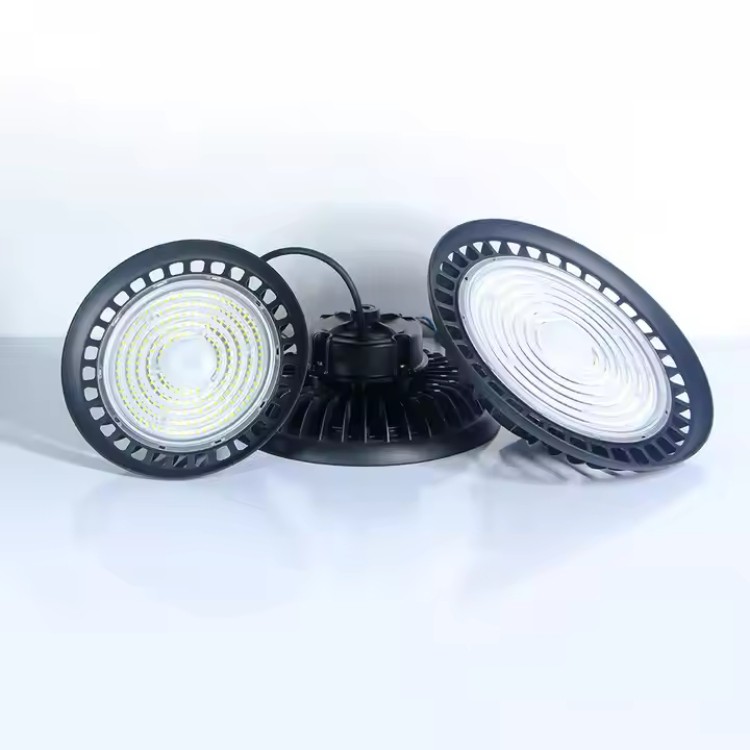
Factor #1: Dimensions and configuration
Initially, it is essential to refine your search for LED spotlights by identifying the required mechanical dimensions and configuration of the bulb.
There are three primary types of led spotlights: MR, BR, and PAR. The type designation is often succeeded by a two-digit numeral, signifying the bulb diameter in eighths of an inch.
MR16 bulbs represent the smallest category of spotlight, featuring a diameter of 2 inches. These bulbs are often employed for low-intensity applications. LED spotlights of this size often range from 5 to 8 Watts.
MR16 bulbs are available in two types distinguished by their base type, which determines how the bulb is affixed to the socket.
If you see a slender, two-pin connection lacking rounded bottoms, as depicted in the photograph below, you possess a GU 5.3 version. These are often characterised by a relatively low voltage, namely 12V AC or DC.
If you see a wider 2-prong connection with rounded bases as depicted in the image below, you possess a GU 10 variant. These are typically mains voltage (120/240V AC). Note: Certain manufacturers may occasionally designate MR16 bulbs with GU 5.3 bases simply as [MR16] (omitting the base number) and MR16 GU10 bulbs as [GU10] bulbs. This is not exactly accurate, but you may wish to consider this while evaluating product details.
PAR20
The subsequent size is a PAR20 bulb, measuring 2.5 inches in diameter. PAR20 bulbs are used in residential settings, particularly in smaller homes or areas with lower ceilings. LED spotlights of this dimension often use 13 Watts.
Most PAR20 lights utilise the E26 Edison screw base, same to that of regular A19 bulbs, and function on mains voltage (120/240V AC).
PAR30
PAR30 bulbs resemble PAR20 bulbs in appearance and function, although they are significantly bigger, measuring 3.75 inches in diameter. These are frequently utilised in applications with high ceilings. LED spotlights of this dimension often use 15 Watts.
PAR38
The most substantial of the often used residential lighting dimensions is the PAR38. Measuring 4.13 inches in diameter, these are substantial and luminous, certified for halogen lights exceeding 100W. LED spotlights of this dimension often use 18 Watts.
Having reviewed the many bulb kinds, how can one choose the appropriate selection? The concise response is: adhere to the instructions provided on the lampholder.
Examine any respectable light fixture for a label or stamp indicating the suitable bulb size.
The lampholder specifies "USE PAR20 TYPE," indicating the required type of LED spotlight.
Consideration #2: Colour - Correlated Colour Temperature (CCT) and Colour Rendering Index (CRI)
Halogen spotlights offered little variation in colour; virtually all models from all manufacturers exhibited same colour temperature and quality.
LED spotlights provide several possibilities for colour temperature and CRI, complicating the selection process for optimal suitability.
Select 3000K LED spotlights for colour temperature.
Colour temperature quantifies the degree of "yellow" or "blue" in a light's hue.
2700K is equivalent to the colour of traditional incandescent light bulbs. 3000K has a little bluer hue, akin to halogen bulb illumination, but yet maintaining a warm, welcoming yellow tone.
4000K is commonly referred to as "neutral white" because to its absence of blue or yellow tones, positioning it near the midpoint of the colour temperature spectrum.
Any temperature beyond 5000K will have a bluish hue and is not advisable for typical domestic use.
Illumination for your residence is really a subjective decision; nonetheless, we suggest commencing with 3000K LED spotlights for evaluation. If you find it very yellow, you may go for 3500K or 4000K instead. If you find it too blue, you may transition to 2700K.
The majority of these colour temperatures are easily accessible from most manufacturers.
CRI: choose 80 or above
The Colour Rendering Index (CRI) is quite complex to comprehend, as it is not readily apparent by merely observing an LED spotlight.
CRI is a value ranging from 0 to 100 that assesses the accuracy of item appearance under illumination. A higher score indicates greater accuracy.
What is the true meaning of accuracy?
Suppose you are attempting to illuminate a picture. An impeccably precise LED lighting would render the artwork identical to
Shenzhen Benwei Lighting Technology Co., Ltd was established in 2010. It is a national high-tech enterprise integrating design, R&D, production and sales of indoor and outdoor lighting products and also can do OEM ,ODM .For more details about our offerings, please contact us at bwzm18@ledbenweilighting.com





