

Introduction: The False Trade-Off
A persistent assumption in residential and commercial lighting decisions holds that brightness and low energy consumption exist in inverse relation-that to cut the electricity bill is to accept a dimmer, less capable space. This assumption was reasonable in the incandescent era, when efficacy was governed by the physics of a heated filament and waste heat was inseparable from visible output. It is no longer reasonable in the LED era.
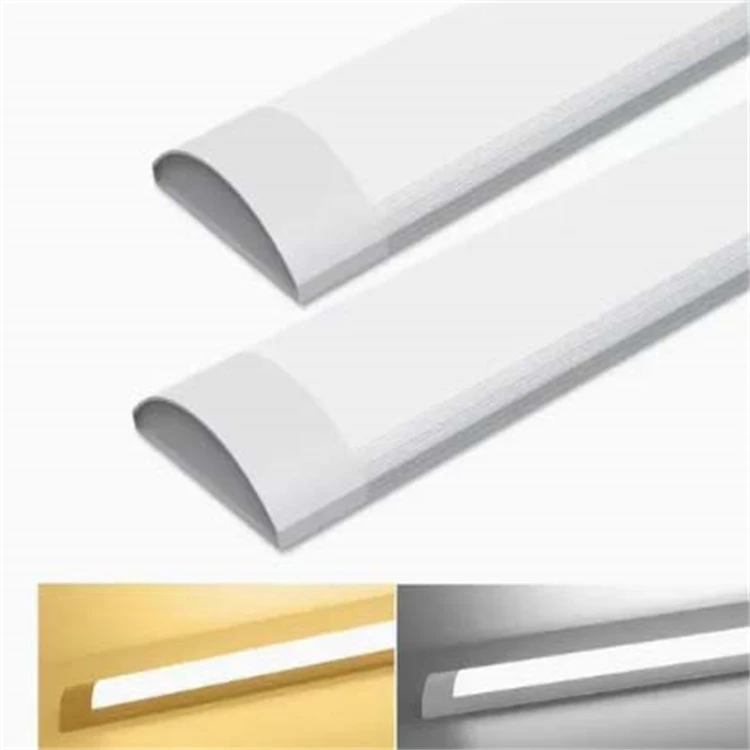
The low-energy LED batten light embodies a different proposition. It does not ask the occupant to choose between a lower bill and a well-lit room. It delivers both through a convergence of three technical realities: the fundamental efficacy advantage of solid-state emitters over gas-discharge sources; a thermal architecture that protects that efficacy across tens of thousands of hours; and a driver design that converts mains power to LED current with minimal loss. Each of these realities is measurable, and each carries direct consequences for the electricity bill.
This article proceeds in five parts. Section 2 establishes the efficiency baseline by comparing fluorescent and LED batten technologies. Section 3 examines the iron-clad base as the thermal foundation of sustained brightness. Section 4 extends the analysis to intelligent control, where the LED's dimmability multiplies the energy advantage. Section 5 quantifies the economic case, and Section 6 concludes with the investment logic of the upgrade.
The Efficiency Baseline: Why Halving the Wattage Does Not Halve the Light
Fluorescent Efficacy and the Ballast Penalty
The fluorescent batten, for decades the default linear fixture in utility and commercial spaces, is constrained by a luminous efficacy ceiling. Standard T8 fluorescent tubes typically achieve 80–100 lumens per watt. This figure, however, overstates the system-level performance of a fluorescent installation. The lamp requires a ballast-magnetic or electronic-which consumes power without contributing to visible output. In a Type A LED retrofit scenario, where the existing ballast remains in circuit, the ballast represents an ongoing energy cost of 3–8 watts per fixture, alongside a persistent failure point. The fluorescent batten's true wattage is therefore the lamp wattage plus the ballast burden, while its true light output is the lamp lumens minus optical losses within the fixture.
The practical consequence is that a 36-watt fluorescent tube, the most common linear format, delivers approximately 3,000 to 3,600 lumens at the lamp level, and less after fixture losses. Its electricity consumption per delivered lumen is structurally higher than a modern LED alternative before any consideration of lifespan or maintenance.
LED Efficacy and the Direct-Drive Advantage
Modern T8 LED tubes reach 130–160 lumens per watt, with high-performance linear products approaching or exceeding 150 lm/W in commercially available battens. This is not a marginal improvement. For the same delivered luminous flux, an LED batten draws approximately half the wattage of a fluorescent fixture. A 17.5-watt LED tube, for example, produces 2,200 lumens-roughly equivalent to a 36-watt fluorescent tube-representing an energy saving of up to 51% while delivering an "impressive" luminous output.
The mechanism of this advantage is architectural. An LED batten integrates the driver within the fixture, eliminating the ballast penalty entirely. The driver converts mains AC to low-voltage DC with switching-mode efficiency, and the LED emitter converts current to photons without the Stokes shift losses and thermal radiation of a gas-discharge lamp. The result is a fixture whose rated wattage is a closer approximation of its actual power draw, and whose delivered lumens are not filtered through a ballast's parasitic load.
The Comparative Energy Budget
At the system level, the divergence is substantial. LED battens use up to 60% less electricity than fluorescent tubes for equivalent illumination, and independent assessments place fluorescent energy consumption at 40–70% higher than LEDs. In a controlled office comparison, replacing fluorescent lamps with LEDs has been shown to produce energy savings in the range of 60.6% to 64.6% when dimming is employed, and savings of 32.5% to 38.6% relative to non-dimming LEDs.
The critical point for the "no compromise" argument is that these savings are achieved at parity or better in delivered light. The LED batten does not reduce consumption by reducing output. It reduces consumption by converting a greater fraction of each watt into visible photons and by eliminating the parasitic loads that fluorescent systems impose between the mains and the lamp.
The Iron-Clad Base: Thermal Integrity as the Guardian of Brightness
Light Decay and the Thermal Pathway
A low-energy claim that holds only on the first day of operation is not a low-energy claim; it is a specification-sheet artifact. LED brightness is thermally coupled. As junction temperature rises, luminous efficacy declines and the light output of the fixture diminishes-a phenomenon known as light decay or lumen depreciation. The thermal pathway from the LED die to the ambient environment determines whether the fixture's rated lumens are delivered at hour 1,000, hour 10,000, and hour 50,000.
Patent literature in LED luminaire design explicitly identifies the problem: conventional LED ceiling lamps relying on the metal base plate alone for heat conduction suffer from light decay, causing the lighting to become "darker and darker" over time. The base of the lamp body must therefore be engineered as a thermal component, not merely a mechanical one. A galvanized iron plate with higher thermal conductivity addresses this requirement directly.
Iron as a Thermal and Structural Platform
The iron-clad base of the batten light serves a dual function. Structurally, iron provides rigidity and corrosion resistance, ensuring the fixture maintains its form and optical alignment over years of service. Thermally, the iron base acts as a heat spreader, conducting heat away from the LED board and driver enclosure and distributing it across a larger surface area for dissipation to the ambient air.
The consequence for sustained brightness is quantifiable. A fixture with effective thermal management can achieve lumen maintenance of L80 at 50,000 hours-meaning that at least 90% of the LED population still delivers 80% of its original flux at the end of that period. This is the operational definition of "no compromise on brightness" across the product's useful life. Without the iron base's thermal contribution, the same LED emitters would exhibit accelerated decay, and the fixture's effective brightness would decline well before its electrical savings had been realized.
The Compounding Effect of Thermal Failure
The interaction between heat and energy consumption is non-linear. A thermally compromised fixture does not simply become dimmer; it becomes a less efficient converter of electricity into light. As junction temperature rises, the LED's forward voltage characteristics shift and its radiative efficiency declines. The fixture continues to draw the same wattage-or more, if the driver compensates for output loss-while delivering fewer lumens. The cost per delivered lumen rises silently, eroding the economic rationale for the upgrade.
The iron-clad base prevents this erosion by keeping the LED within its thermal design envelope. The energy savings and the brightness claim are therefore not independent specifications. They are linked through the thermal pathway, and the iron base is the component that sustains the link across the fixture's service life.
Intelligent Control: Multiplying the Savings Without Dimming the Experience
The Dimmability Advantage of LED
A low-energy fixture that operates only at full output is a partially optimized fixture. LEDs are inherently dimmable: their light output scales with forward current, and their efficacy remains relatively stable across a wide dimming range. This property enables control strategies that fluorescent technology cannot match. Fluorescent dimming is constrained by the discharge physics of the lamp, and deep dimming often produces instability, color shift, and reduced lamp life.
The LED batten's dimmability transforms the energy equation. It is not merely a more efficient source at full power; it is a source whose output can be matched continuously to actual need. In a residential hallway or a commercial corridor, the difference between full output and a 30% dimmed state is a 70% reduction in lighting power during periods when full brightness is unnecessary.
Occupancy and Daylight Sensing: Savings Where and When They Are Needed
The integration of LED battens with occupancy sensors and daylight sensors multiplies the savings achieved by the source efficiency alone. Simply switching to LEDs can cut lighting costs by up to 70%, but the benefits are greater when combined with controls that limit artificial lighting to where and when it is needed. Experimental results from office environments demonstrate power savings of approximately 80%, 48%, and 26% for one-, two-, and four-user occupancy scenarios, respectively, compared with traditional basic lighting installations. Dimming and occupancy detection together have been shown to achieve 65% energy savings in tested configurations.
These figures are not marginal refinements. They represent a second layer of savings that sits on top of the LED's baseline efficiency advantage. A fluorescent fixture with occupancy control can be switched off, but it cannot be gracefully dimmed to 20% output when a single occupant is present in a large space. The LED batten can.
The Total Savings Stack
When LED source efficiency, thermal stability, and intelligent control are combined, the achievable reduction in lighting energy reaches 60–90%. This is the stack that defines the low-energy batten light's proposition. The first layer-halving wattage through efficacy-is the foundation. The second layer-preserving delivered lumens through thermal integrity-ensures the first layer is not eroded. The third layer-matching output to demand through dimming and sensing-extends the savings beyond what source substitution alone can deliver.
Each layer is technically independent, and each is present in the fixture under examination. Their combination is what distinguishes a genuinely low-energy batten from a fixture that merely carries a lower wattage label.
The Economic Case: What the Bill Actually Reflects
Direct Energy Cost Reduction
The most immediate economic consequence of the upgrade is the reduction in kilowatt-hours consumed per fixture per year. For a 36-watt fluorescent batten operating 4,000 hours annually, the lamp alone consumes 144 kWh. The ballast adds a parasitic load that, at 5 watts, contributes a further 20 kWh. A 17.5-watt LED batten delivering comparable lumens consumes 70 kWh under the same operating hours. The annual saving per fixture is approximately 94 kWh before any dimming or occupancy control is applied.
At a commercial electricity rate of $0.15 per kWh, the per-fixture saving approaches $14 per year. This figure scales linearly with fixture count and operating hours. For a facility with 100 fixtures, the annual saving exceeds $1,400 from source substitution alone. When controls reduce average output by 30–50% during unoccupied or daylit hours, the effective saving per fixture rises proportionally.
Maintenance Cost Avoidance
The economic case extends beyond the electricity bill. A typical LED batten lasts 30,000 to 50,000 hours, compared with 10,000 to 15,000 hours for a fluorescent tube. The fluorescent fixture therefore requires two to four lamp replacements over the service life of a single LED fixture, each carrying the cost of the lamp, the labor for replacement, and the disposal of a mercury-containing product. LEDs contain no mercury and require no starter or tube replacement under normal operating conditions.
The maintenance saving is particularly significant in residential applications where fixture access is inconvenient-high ceilings, stairwells, and recessed linear installations. The labor cost of a single lamp replacement can equal or exceed the cost of the replacement lamp itself. The LED batten's service life converts this recurring expense into a one-time installation decision.
Return on Investment and the Upgrade Logic
The combined effect of energy savings and maintenance avoidance produces a return on investment that is both rapid and durable. The precise payback period depends on local electricity rates, operating hours, and the cost of the replacement fixture, but the structural logic is consistent: the LED batten's higher first cost is offset by a lower annual operating cost, and the offset compounds over the fixture's extended service life.
The economic case does not require the occupant to accept a dimmer space. It requires only the recognition that the fluorescent fixture's wattage understates its true energy burden (through ballast losses and maintenance) and that the LED fixture's wattage delivers more usable light per unit of electricity consumed. The bill reflects the difference.
Conclusion: A Category Defined by Simultaneous Satisfaction
The phrase "doesn't compromise on brightness" is often treated as a defensive qualifier-an admission that energy savings usually come at the expense of illumination. The evidence assembled here supports a different conclusion. The low-energy LED batten light is not a compromise product. It is a product category whose defining characteristic is the simultaneous satisfaction of two performance criteria that were historically in tension.
The efficacy advantage is structural: 130–160 lm/W versus 80–100 lm/W for fluorescent sources, with the ballast penalty eliminated and the driver losses minimized. The brightness preservation is thermal: the iron-clad base maintains junction temperatures within the envelope required for L80 lumen maintenance at 50,000 hours, ensuring that the efficiency advantage is not consumed by light decay. The savings are extensible: dimmability and sensor integration raise the achievable reduction from the 40–60% range of source substitution to the 60–90% range of a controlled LED system.
For the occupant, the decision reduces to a comparison of annual operating cost per delivered lumen. On that metric, the low-energy LED batten light does not ask the occupant to choose between a lower bill and a bright room. It makes the choice unnecessary. The light that costs less to operate is also the light that sustains its brightness longer, and the fixture that delivers both is the one that belongs in the space where the bill is actually paid.
How To Cooperate With Us?
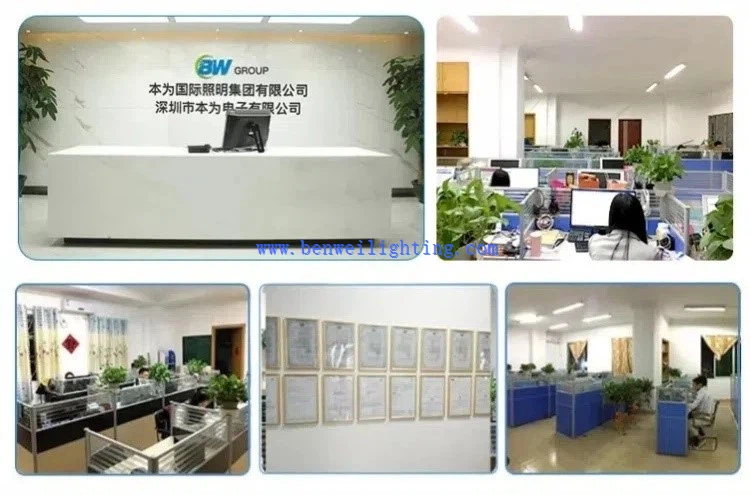
We are happy to have total control over the manufacturing process and the calibre of our products since we have our own facilities. Since we are producers rather than just brokers, we are dedicated to providing our customers with the best pricing. Since we are certain that the price and quality of our products are clear, we invite customers to see our samples first. Our commitment to quality and customer satisfaction drives us to continuously provide top-notch goods.
Our address
3rd Floor, 5th Building, Hebei Industrial Park, Hualian Community, Longhua District, Shenzhen, China





