

If you work in lighting procurement or project specification, you have likely encountered this scenario: with two seemingly identical Mini LED spotlights, one might light up as soon as it's connected to the mains, while the other requires an additional "small box"-without which it won't turn on, or worse, might burn out the moment power is applied.
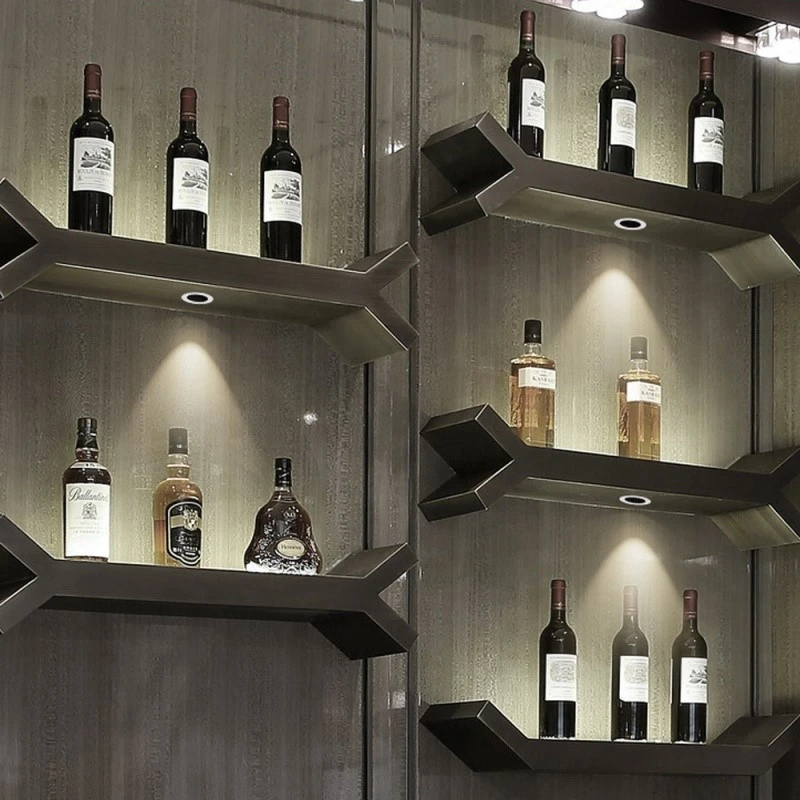
This "small box" is the LED driver (power supply). Mini LED spotlights are compact and offer flexible installation, making them ideal for display cases, wine cabinets, storefront windows, and accent lighting. However, whether the driver is built-in or external varies significantly between products; choosing the wrong type can lead to issues ranging from flickering or failure to light up, to the need for costly rework and product replacements.
The Bottom Line: Both Types Exist
There is no universal standard for Mini LED spotlights; they generally appear in two configurations:
Built-in driver: The driver is housed inside the lamp body or casing, allowing the unit to be connected directly to the mains (e.g., AC 100–240V).
External driver: The lamp body contains only the LED light source; it requires a separate external driver to supply the appropriate current or voltage.
Therefore, whether or not you need to purchase a separate driver depends entirely on which type you choose. One thing is certain: every LED requires a driver-the only difference is whether it is located inside or outside the fixture.
Why LED Spotlights Require a Driver
LEDs are low-voltage DC (direct current) devices that are highly sensitive to electrical current. Since mains power is high-voltage AC (alternating current), it cannot power an LED directly. A driver is necessary to perform the following functions:
Convert AC power into DC power.
Step down the voltage to a range suitable for the LED.
Stabilize the output current or voltage to prevent rapid lumen depreciation (dimming) or immediate burnout.
Mini LED spotlights typically have low power ratings-commonly between 1W and 12W-but this does not mean the driver can be omitted. In fact, lower-wattage LED chips are often even more sensitive to current fluctuations; if the driver is not properly matched, the light is more prone to flickering, color shifts, or a shortened lifespan.
Mini LED Spotlights with Integrated Drivers: Features and Use Cases
Advantages:
Simple installation-ready for use once wired-making them ideal for projects where installing separate drivers is undesirable.
The driver and fixture are pre-matched by the manufacturer, minimizing compatibility issues.
Maintenance is straightforward: the entire unit is replaced, eliminating the need to identify specific driver models.
Limitations:
The fixture must house the driver, resulting in a larger size and greater thickness compared to versions with external drivers.
Heat generated by the driver is concentrated inside the fixture; poor thermal design can negatively impact the unit's lifespan.
If the driver fails, the entire fixture typically needs to be replaced.
Suitable for: Residential spaces, small retail shops, renovation projects requiring rapid installation, and applications where strict constraints on fixture dimensions do not apply.
Mini LED Spotlights with External Drivers: Features and Use Cases
Advantages:
Fixtures can be designed to be extremely compact, making them perfect for integration into display cases, shelving, or ultra-narrow ceiling spaces.
Separating the driver from the fixture distributes heat, making it easier to manage the temperature of the light head.
If a driver fails, it can be replaced independently, allowing the fixture to remain in use.
A single driver can power multiple fixtures (within its rated wattage capacity), allowing for more centralized wiring.
Limitations:
Drivers must be selected and matched separately; mismatched specifications can lead to operational issues.
Space must be allocated for the driver, along with an accessible maintenance point.
The length and gauge of the wiring between the fixture and the driver can affect performance.
Suitable for: Jewelry displays, wine cabinets, museum exhibits, boutiques, and other projects where the appearance and dimensions of the fixture are critical-as well as installations requiring centralized power supply or unified dimming control.
Constant Current vs. Constant Voltage: How to Match an External Driver
You cannot simply purchase any external driver; they generally fall into two categories:
Constant Current (CC) Driver
Outputs a fixed current (e.g., 350mA, 500mA, 700mA).
The fixture will specify a "rated current"-the driver's output current must match this value.
Typically, one driver powers a single light fixture, or multiple fixtures connected in series.
Constant Voltage (CV) Driver
Outputs a fixed voltage (commonly 12V or 24V).
The light fixture contains built-in current-limiting circuitry and specifies a "rated voltage."
A single driver can power multiple fixtures connected in parallel, provided the total power consumption does not exceed the driver's rated capacity.
When matching, consider two factors: First, ensure the type (current or voltage) aligns correctly. Second, allow for a margin of approximately 20% above the total load-avoid running the driver at its maximum rated power.
Determining Whether a Driver Is Built-in or External Based on Product Specifications
You don't need to disassemble the light; you can usually tell by checking the specification sheet or product page:
If the input voltage is listed as AC 100–240V or AC 220V, it is likely a built-in driver.
If the input is listed as DC 12V, DC 24V, or a specific current value (e.g., 350mA/500mA), it is likely an external driver.
Look for "Driver included" or "Driver not included" in the specification sheet.
Examine the physical design: Does the fixture have a power plug or terminal block, or does a thin wire lead to a separate, small external box?
If the specification sheet is unclear, it is best to confirm with the supplier before placing your order. This saves the hassle of discovering that you need to purchase an additional driver after the product has arrived.
Dimming Requirements Influence Driver Selection
If a project requires dimming, the choice of driver must be considered early on, as not all drivers support dimming, and the methods vary:
TRIAC Dimming: Compatible with traditional wall-mounted dimmers; commonly used in home renovations.
0–10V Dimming: Frequently used in commercial and engineering projects.
DALI or Other Digital Dimming: Used for smart control systems.
PWM Dimming: Primarily used for low-voltage, constant-voltage systems.
Compatibility between the dimming driver and the dimmer is crucial. Mismatched components can lead to issues such as flickering at low brightness, a limited dimming range, or abrupt jumps in brightness. When dimming is required, it is recommended to evaluate the light fixture, driver, and dimmer as a complete system-ideally by testing samples beforehand.
Common Mistakes in Selection and Installation
Purchasing a light fixture without verifying whether a driver is required, only to discover upon arrival that it cannot be connected directly to a power source.
Connecting a constant-current light to a constant-voltage driver (or vice versa), which can cause the fixture to overload and burn out, or simply fail to light up.
Selecting a driver with a power rating exactly equal to the total power of the light fixture; operating at full capacity for extended periods leads to excessive heat and a shortened lifespan for the driver.
Using wires that are too long or have an insufficient gauge between the driver and the light; in low-voltage systems, this causes a significant voltage drop, resulting in inadequate brightness.
Enclosing the driver in a space with no ventilation; high temperatures will significantly reduce the driver's lifespan.
Most of these issues can be avoided by performing a few extra checks during the design phase.
Summary
Mini LED spotlights always require a driver; the only difference is whether the driver is built-in (internal) or external.
Fixtures with built-in drivers are easy to install and offer better compatibility, though the fixture itself is typically larger.
Fixtures with external drivers are more compact and offer greater flexibility for heat dissipation and maintenance, but the driver specifications must be carefully matched.
For external drivers, it is essential to distinguish between constant-current and constant-voltage types and to ensure sufficient power headroom.
By checking the input voltage, current ratings, and technical specifications, you can determine whether an additional driver is needed.
If dimming is required, the light fixture, driver, and dimmer must be evaluated together.
Need advice on product selection or a price quote? If you are selecting Mini LED spotlights for display cases, wine cabinets, retail spaces, or other professional projects and are unsure whether to choose a model with an internal or external driver, please get in touch with us. Simply let us know your installation space, power requirements, preferred power supply method, and whether you need dimming functionality. Our team will recommend the ideal solution for your specific needs and provide product specifications, samples, and a formal quote. Feel free to leave a message or send an inquiry-we typically respond within one business day.
Our address
No. 5-3 Niujiao Road, Yanchuan Community, Yanluo Subdistrict, Bao'an District, Shenzhen
bwzm18@ledbenweilighting.com






