

Introduction: The Thermal Imperative in High-Power Lighting
The Paradox of LED Efficiency
Light Emitting Diodes (LEDs) are universally recognized as the most energy-efficient lighting technology available today. However, the term "energy efficiency" often creates a dangerous misconception: that LEDs do not produce heat. While it is true that LEDs convert a higher percentage of electrical energy into visible light compared to legacy incandescent or HID lamps, they are not 100% efficient. In a high-wattage stadium environment-where fixtures frequently operate between 600W and 1500W-a substantial portion of the electrical energy (often 40% to 50%) is still converted into thermal energy.
The Destructive Power of Heat
Unlike traditional bulbs that radiate heat outward in all directions via infrared light, LEDs are semiconductor devices. The heat they generate is highly concentrated within the microscopic LED die (the P-N junction). If this internal heat is not extracted and expelled into the ambient environment immediately, the junction temperature (Tj) skyrockets. The consequences are immediate and devastating:
Lumen Depreciation: The phosphor coating on the LED degrades, causing the light output to dim rapidly over time.
Color Shift: The correlated color temperature (CCT) becomes unstable, leading to uneven lighting across the pitch, which violates strict broadcast standards.
Catastrophic Failure: Prolonged exposure to excessive heat leads to thermal runaway, permanently destroying the LED chip and the sensitive electronic driver.
Redefining Thermal Management
The ultimate longevity and efficiency of a stadium light are dictated by its ability to manage heat. Standard, basic radiators are no longer sufficient for modern high-power fixtures. To achieve maximum efficiency, an advanced thermal architecture is required-one that maximizes thermal conductivity and radically expands the available surface area for heat dissipation.
The Foundation: High Thermal Conductivity Materials
The Physics of Thermal Resistance
Heat transfer is a journey of overcoming resistance. Heat seeks to move from a hotter area (the LED) to a cooler area (the ambient air). The efficiency of this journey is measured by thermal resistance. To achieve high efficiency, the path from the LED junction to the external environment must have the lowest possible thermal resistance.
Precision-Engineered Die-Cast Aluminum
Material Selection and Properties
The primary structure of our stadium light is constructed from a specialized, high-pressure die-cast aluminum alloy. Aluminum is meticulously chosen for three synergistic properties:
High Thermal Conductivity: It possesses an excellent ability to absorb heat rapidly and spread it across its mass, eliminating dangerous localized hot spots.
Lightweight: Crucial for minimizing wind load and structural stress on stadium masts.
Corrosion Resistance: Ensures the fixture survives harsh outdoor environments (complemented by our IP65 waterproofing).
Minimizing Interface Resistance
Inside the fixture, the LED chips are mounted on Metal Core Printed Circuit Boards (MCPCBs), which are directly bonded to the aluminum housing. We utilize premium thermal interface materials (TIM) to bridge microscopic imperfections between surfaces. This guarantees an uninterrupted, high-conductivity path for heat to travel from the semiconductor junction directly into the massive aluminum chassis.
The Breakthrough: Doubling the Heat Dissipation Area
Once the heat is absorbed by the aluminum housing, it must be transferred to the air. This is achieved through convection. The rate of convective heat transfer is directly proportional to the surface area exposed to the air. This is where our engineering delivers a monumental advantage.
The Limitations of Conventional Radiators
Many standard stadium lights utilize a flat or mildly ribbed backplate as a heat sink. While economical to manufacture, these designs possess a severely limited surface area. When the fixture is operating at full power, the flat backplate becomes saturated with heat. Because it lacks sufficient surface area to interact with the surrounding air, the heat "backs up" into the LED junction, leading to overheating and premature failure.
Engineering the Advanced Fin Radiator
Surface Area Maximization
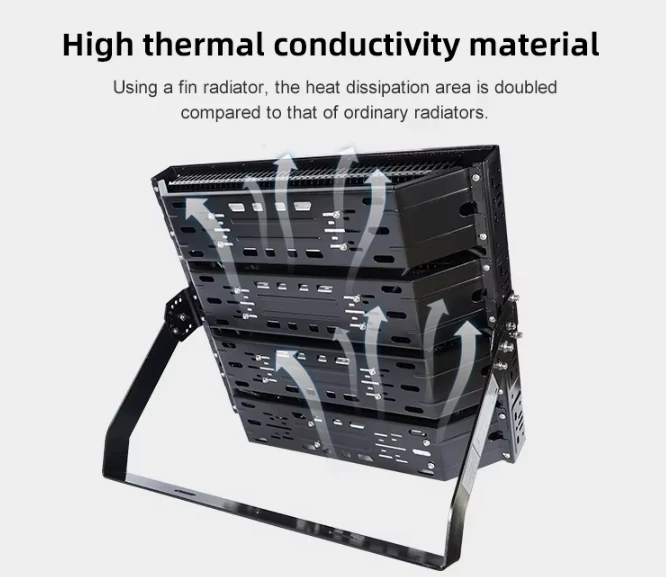
To shatter the limits of conventional cooling, our fixtures utilize a sophisticated fin radiator design. As explicitly engineered into our product, the rear of the fixture features a dense array of precision-molded aluminum fins. By utilizing dozens of vertical fins, we have effectively doubled the heat dissipation area compared to ordinary radiators. This massive expansion of surface area means the fixture has twice the "capacity" to interact with the air, ensuring that heat is pulled away from the LED chips at an incredibly rapid rate.
Geometric Optimization for Airflow
The design of these fins is not random; it is the result of rigorous computational fluid dynamics (CFD) modeling. The thickness, height, and spacing of the fins are mathematically optimized to maximize airflow while minimizing air resistance. The fins are vertically aligned, accommodating the natural upward flow of warming air, ensuring that the air does not stagnate between the fins.
The Synergy of Fin Radiators and Strong Air Convection
The Chimney Effect in Action
Our advanced fin radiator harnesses the natural laws of physics-specifically, the principle of strong air convection. As the LED heats the aluminum fins, the air immediately surrounding them becomes warmer and less dense, causing it to rise. This creates a continuous, passive updraft-the Chimney Effect. Cool air is constantly drawn in from the bottom of the fixture, passes over the massive fin radiators, absorbs the heat, and exits out the top. This passive cooling system is incredibly efficient and requires zero moving parts (like fans) that could break down or require maintenance.
Internal Chip Spiral Heat Dissipation
To complement the macro-level external fins, our design incorporates an internal chip spiral heat dissipation performance structure. This micro-design creates micro-turbulence within the internal thermal pathways, breaking up boundary layers of hot air and ensuring that heat is distributed uniformly across the entire fin structure. This ensures that every single fin is working at maximum efficiency, preventing any localized overheating.
Achieving Maximum Efficiency and Longevity
The profound structural advantages of doubling the heat dissipation area yield direct, measurable benefits in the performance and lifespan of the fixture.
Extending the Lifespan of the LED Light Source
As noted in our product specifications, the service life of the light source is guaranteed by this excellent heat dissipation performance. By maintaining a low junction temperature, the degradation of the LED phosphor is slowed dramatically. While poorly designed fixtures may lose 30% of their brightness in the first 5,000 hours, our thermally advanced fixtures maintain over 90% of their initial lumen output even after 50,000 hours of operation.
Protecting the Critical LED Driver
The LED driver (power supply) is the "brain" of the fixture and is highly sensitive to thermal stress. The lifespan of an electrolytic capacitor inside a driver is halved for every 10°C increase in operating temperature. Our thermal architecture ensures that the intense heat generated by the LED arrays is conducted away from the driver compartment and expelled via the fin radiators. This keeps the driver operating in its optimal thermal "sweet spot," vastly extending its reliability and preventing sudden power failures.
Maintaining Optical and IP65 Integrity Under Thermal Stress
Heat expands materials. If a fixture gets too hot, the constant expansion and contraction (thermal shock) will eventually compromise the waterproof gaskets. By efficiently dissipating heat, our fixture runs cooler, reducing thermal stress on the optical lenses and the heavy-duty stainless steel clasps. This ensures that the IP65 waterproof rating remains uncompromised, protecting the internal electronics from rain and dust for decades.
The Economic Value Proposition: Total Cost of Ownership (TCO)
For facility managers and stadium operators, maximum thermal efficiency translates directly into substantial financial savings.
Eliminating Premature Failures and Maintenance Costs
Replacing a stadium light mounted 30 meters high is an incredibly expensive operation. It requires scissor lifts or cranes, specialized electrical labor, and hours of stadium downtime. A cheap fixture with inadequate cooling will fail prematurely, forcing operators into a recurring cycle of costly maintenance. By investing in a fixture engineered with doubled heat dissipation area, operators eliminate this cycle. The fixture operates reliably for years without intervention, drastically reducing the Total Cost of Ownership (TCO).
Maximizing Energy Efficiency through Thermal Stability
An LED operating at high temperatures experiences a drop in electrical efficiency. As heat rises, the forward voltage drops, and the system requires more power to maintain the same light output. By keeping the LEDs cool, our fixtures maintain maximum electrical efficiency, ensuring that every watt of electricity consumed translates into maximum lumens on the pitch. This directly reduces the venue's energy bills.
Enabling Compact, Wind-Resistant Designs
Because our fin radiator is so highly efficient at expelling heat, we can pack more wattage into a more compact form factor. This provides a massive aerodynamic advantage. A smaller fixture presents a smaller "sail" to the wind, drastically reducing the wind load on the stadium masts. This improves the structural safety of the venue, especially in hurricane-prone regions, and allows for the use of lighter, less expensive mounting brackets.
OEM/ODM Customization for Extreme Environments
We understand that global climates vary drastically. A stadium in the Middle East faces vastly different thermal challenges than one in Northern Europe. Our comprehensive OEM/ODM customization allows us to tailor our thermal solutions to your specific environment.
Adapting Thermal Profiles for Harsh Climates
For extreme heat environments, we can further optimize the fin radiator geometry or apply specialized thermal coatings (such as anodized black finishes) to improve radiation heat transfer. We can also customize the LED driver to ensure it continues to operate at maximum efficiency even when ambient temperatures exceed 50°C (122°F).
Integration with Smart Thermal Monitoring
For high-end smart stadium projects, our ODM capabilities allow for the integration of IoT thermal sensors. These sensors can monitor the junction temperature of the fixture in real-time, feeding data back to a central facility management system. This allows operators to proactively monitor the health of their lighting grid and adjust power levels to maximize efficiency and lifespan.
Conclusion: The Gold Standard of Thermal Engineering
The Standard of Excellence
In the world of high-power LED stadium lighting, thermal management is not an afterthought; it is the core determinant of success. Raw power is useless if the fixture cannot survive its own heat. Our advanced thermal design-characterized by the use of high thermal conductivity materials, the powerful principle of strong air convection, and a revolutionary fin radiator design that doubles the heat dissipation area-represents the pinnacle of thermodynamic engineering.
Partner with Us for Unbeatable Reliability
Do not compromise the integrity of your sports facility with fixtures that are destined to overheat and fail. Equip your stadium with lighting scientifically engineered for maximum efficiency and ultimate longevity.
How To Cooperate With Us?
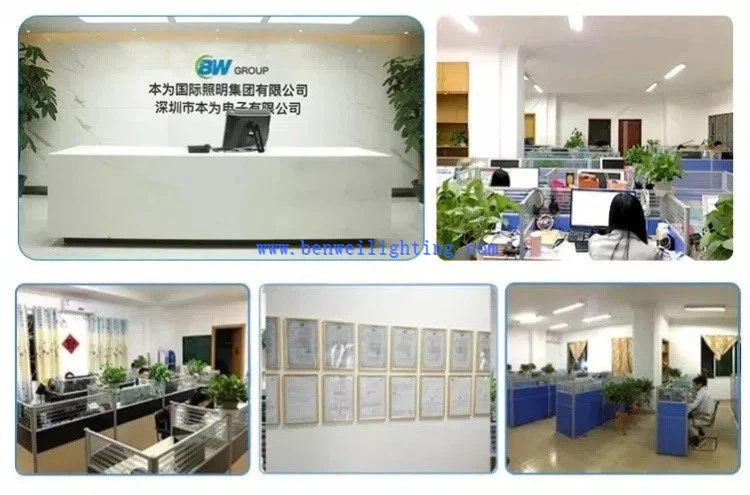
We are happy to have total control over the manufacturing process and the calibre of our products since we have our own facilities. Since we are producers rather than just brokers, we are dedicated to providing our customers with the best pricing. Since we are certain that the price and quality of our products are clear, we invite customers to see our samples first. Our commitment to quality and customer satisfaction drives us to continuously provide top-notch goods.
Our address
3rd Floor, 5th Building, Hebei Industrial Park, Hualian Community, Longhua District, Shenzhen, China





