

Introduction: Why the Bedroom and Living Room Demand More Than "Warm White"
The Limits of the Wattage-and-Color-Temperature Frame
A residential bulb purchase typically begins and ends with two numbers: the wattage equivalent printed in large type and the color temperature-2700K or 3000K-printed in smaller type beneath it. This frame is not wrong, but it is incomplete in a way that directly affects the two rooms where people spend the most restorative hours of their day. A bulb can be rated at the correct wattage equivalent and the correct warm color temperature and still produce harsh glare, uneven light distribution, poor color rendering, and lumen depreciation that turns a warm living room cold within two years.
The bedroom and the living room are not utility spaces. They are the rooms in which visual comfort, emotional atmosphere, and-in the bedroom's case-circadian timing are most directly shaped by the quality of light. The variables that determine that quality are optical and thermal, not merely electrical. The PC mask is where the optical variables are decided. The thermal architecture is where their durability is decided.
What "Soft Light" Actually Means as a Technical Property
"Soft light" is often used as a vague aesthetic descriptor. In optical terms, it refers to a specific set of measurable properties: the conversion of a point source into an extended area source, the reduction of peak luminance, the elimination of visible hotspots and shadow patterns, and a distribution that falls evenly across the room rather than concentrating in a cone beneath the fixture. A light-diffusing PC material achieves these properties by scattering light through dispersed diffusion particles, so that rays undergo multiple refractions and reflections before exiting the surface.
The consequence is a light that the eye can inhabit rather than avoid. A bare or lightly frosted LED source forces the visual system to accommodate around a concentrated point of luminance; a high-haze PC diffuser removes that point and replaces it with a uniform surface of moderate luminance. The result is the ambient, glare-free quality that makes a living room comfortable for conversation and a bedroom conducive to winding down.
The Energy Question: Efficiency Without Optical Sacrifice
The energy-saving case for LED lighting is well established: LED bulbs use up to 84% less energy than standard incandescent equivalents, and a 12.5W LED can replace a 100W incandescent lamp while delivering comparable light output. But the energy case for a diffused LED bulb carries a specific tension that this article examines directly. Diffusion is achieved by scattering light, and scattering always involves some loss. A low-grade diffuser that achieves softness through absorption converts optical inefficiency into heat inside the lamp volume, reducing delivered lumens and adding to the thermal load. A high-transmittance PC diffuser achieves the same softness with less parasitic absorption, preserving a larger fraction of the emitted light.
The "perfect energy-saving bulb" for a bedroom or living room is therefore not the bulb with the lowest wattage on the label. It is the bulb that delivers the required soft, comfortable light at the lowest delivered wattage-and that requires a diffuser that is both highly diffusing and highly transmissive.
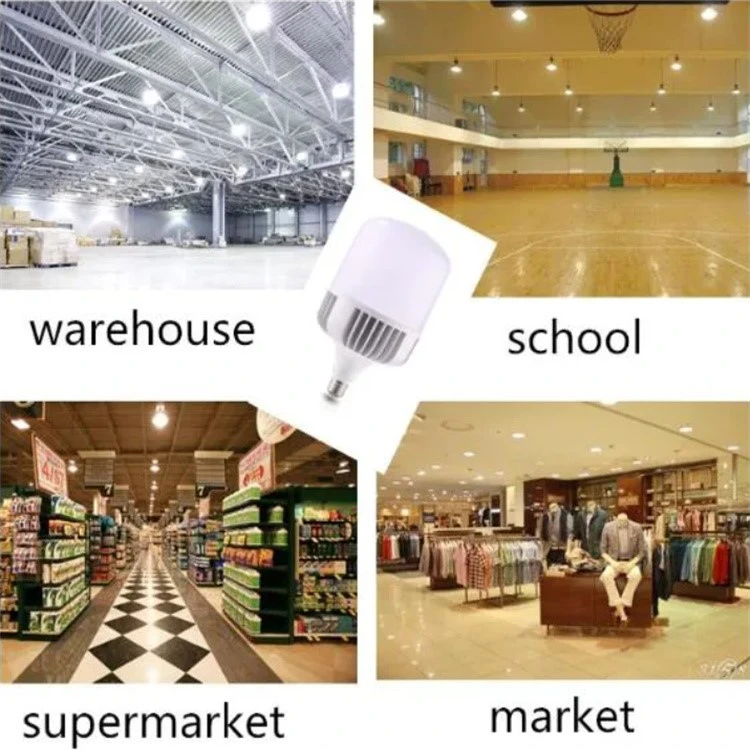
The PC Mask as Optical Infrastructure: Transmittance, Haze, and the Comfort Threshold
The Transmittance–Haze Relationship
Light-diffusing polycarbonate is a composite material: a PC base with dispersed diffusion particles that scatter light as it passes through. The two governing optical parameters are total transmittance-the fraction of visible light that exits the material-and haze, the fraction of transmitted light that is scattered rather than directly transmitted. These parameters are not independent. Higher haze generally means greater diffusion but lower direct transmission, and the material formulator's task is to find the combination that maximizes diffusion without sacrificing an unreasonable share of the light.
Published technical data for LED lampshade PC materials places visible light transmittance in the 70–90% range at a 2.0 mm thickness, with haze above 90% and, in optimized formulations, up to 99%. PC diffuser panels more broadly are specified at 60–85% transmittance with face luminance uniformity above 80%. The product's "high-transmittance PC mask" sits at the upper end of this performance band, which is the specification that makes soft light and energy efficiency compatible rather than competing.
Hotspot Elimination and the Conversion to a Surface Source
The functional purpose of the PC mask is to eliminate the visible LED array. In a fixture without adequate diffusion-a clear bulb in an open shade, or a bulb with a lightly frosted envelope-the individual LED chips or the filament can be seen as distinct bright points, and the shade material may show shadow lines where the light passes unevenly. The PC mask removes this by scattering the source emission across its entire surface, so that the eye perceives a single, uniform glowing plane rather than a collection of discrete points.
This conversion has a direct comfort consequence. The Unified Glare Rating (UGR) quantifies discomfort glare from a luminaire; lower values indicate less discomfort, and a UGR below 19 is the common threshold for comfortable lighting in residential and office settings. Frosted and opal diffusers are explicitly identified as the optical components that achieve this reduction by softening the light flux and removing visible hotspots. The PC mask on the product performs this function at the bulb level, which means the comfort benefit is available in any E27 fixture without replacing the fixture itself.
Opal Diffusion Versus Prismatic Control: Why Comfort Wins in the Bedroom
Diffuser design involves a trade-off between control and comfort. Prismatic diffusers use micro-structured patterns to direct light precisely where it is needed, achieving high transmission (85–92%) and strong glare control for performance spaces such as offices and classrooms. Opal diffusers, by contrast, are designed to soften and evenly distribute light, removing harshness and creating a uniform appearance. They are described as the comfort-first option, suited to spaces where visual ease matters more than directional control.
The bedroom and living room are opal-diffusion environments. The task is not to project a concentrated beam onto a work surface; it is to fill the room with a gentle, even ambient glow that supports relaxation, conversation, and the transition toward sleep. The product's PC mask belongs to the opal-diffusion family, and that is the correct optical choice for these rooms. Prismatic control would be appropriate in a home office or a kitchen task zone; it would be aesthetically and physiologically wrong in a bedroom.
Soft Light and Human-Centric Lighting: Circadian Timing and Evening Comfort
Why Bedrooms Are a Circadian Environment
Light does more than enable vision. It is the primary external signal that entrains the human circadian system, and the bedroom is the room in which that entrainment matters most. A systematic review of human-centric lighting research identifies correlated color temperature (CCT), illuminance, circadian stimulus, and equivalent melanopic lux as the lighting metrics that govern circadian response, with melatonin level, visual fatigue, and eye fatigue as the measured biosignal outcomes.
The direction of the findings is consistent: melatonin levels are higher under lighting with lower equivalent melanopic lux, and visual fatigue is higher under lighting with higher CCT and higher illuminance. In practical terms, a bedroom light that is too cool, too bright, or too concentrated in short-wavelength content suppresses the hormonal signals that prepare the body for sleep. A bedroom light that is warm, moderate in intensity, and softly distributed supports those signals rather than interfering with them.
The Soft-Light Contribution to Circadian Appropriateness
The PC mask does not change the spectral composition of the LED source; it changes the spatial distribution and the luminance profile. But that spatial change has a circadian consequence. A concentrated, high-luminance source in the field of view produces a higher effective circadian stimulus at the eye than the same source diffused across a larger surface, because the diffused source presents a lower peak luminance and a more uniform retinal exposure. The soft, glare-free light that the PC mask produces is therefore not only more comfortable to look at; it is less likely to deliver a concentrated circadian signal at the moment the occupant is trying to wind down.
This is the human-centric logic of the product's optical design. The warm CCT-2700K is the appropriate target for living spaces and bedrooms, where it creates a cosy, relaxed atmosphere-establishes the spectral baseline. The PC mask establishes the spatial and luminance baseline. Together they produce a bedroom light that supports rather than disrupts the evening transition.
Color Rendering and the Visual Quality of Restorative Space
Circadian appropriateness is one dimension of bedroom and living room light quality; color rendering is the other. The Color Rendering Index measures how accurately a light source renders object colors compared with a reference source, and its practical effect in a residential interior is the difference between materials that look rich and intentional and materials that look flat and slightly wrong.
The recommendation for living rooms and bedrooms is consistent across sources: CRI 80+ is the minimum for acceptable everyday lighting, CRI 90+ is preferred where furniture, wall paint, textiles, and décor matter, and higher values preserve the depth of natural wood and the subtle tonal variation in fabrics and artwork. The red spectrum (R9) is specifically important for wood grains and skin tones; a low R9 value makes both look dull or muddy regardless of the nominal CRI. A warm-white source at CRI 90 renders the amber tones of oak cabinetry more richly than a warm-white source at CRI 80, and the warmth of the light and the accuracy of the rendering compound each other when both are high.
The product's thermally stable LED array and high-transmittance PC mask support this color quality by keeping the junction temperature within the window where the phosphor chemistry performs as designed. A bulb that overheats loses CRI and shifts its spectral output; the PC mask cannot compensate for a degraded source. The optical and thermal specifications are therefore interdependent: the mask delivers the diffusion, and the thermal architecture preserves the color quality that the diffusion carries into the room.
The Energy-Saving Case: Efficiency, Thermal Stability, and Total Cost
Efficacy and the Delivered-Lumen Distinction
The energy case for a bedroom or living room LED bulb begins with efficacy-lumens delivered per watt consumed-rather than wattage alone. Contemporary residential LED bulbs achieve efficacies in the range of 120–140 lumens per watt, and a 12.5W LED can replace a 100W incandescent lamp, using up to 84% less energy for the same light output. This is the source-level advantage that makes the energy-saving claim credible.
But the relevant metric for a diffused bulb is delivered lumens after the optical system has done its work. A high-transmittance PC mask preserves a larger fraction of the source lumens than an absorptive diffuser, which means fewer watts are required to achieve the same illuminance in the room. The energy savings are not only in the LED chip; they are in the optical efficiency of the mask that sits between the chip and the occupant.
Thermal Architecture and the Durability of the Savings
Energy savings are calculated over a service life. A bulb that depreciates quickly or fails early delivers its savings for a shorter period, and the replacement cost-both the lamp and the labor-erodes the economic case. High junction temperatures reduce LED light output and accelerate the degradation mechanisms that shorten useful life; thermal management is therefore a direct input to the realized energy savings, not a separate engineering concern.
The product's aluminum fin heat sink and integrated active cooling fan address the thermal path in the compact E27 form factor. The fins conduct heat away from the LED board and increase the surface area available for convective transfer, while the fan raises the convective coefficient by forcing air across the fin surfaces. The practical result in a bedroom or living room fixture-often enclosed by a shade or globe that restricts airflow-is that the LED operates within its thermal window rather than above it. The energy savings the buyer pays for are therefore more likely to be realized over the full service life rather than eroded by premature degradation.
Annual Operating Cost and the Total-Cost Frame
At typical residential duty cycles-three hours per day at an electricity rate of around 11 cents per kWh-an efficient LED bulb in a bedroom or living room operates at an annual energy cost in the range of one to two dollars, and a bulb rated for 13.7 years of service at that duty cycle represents a negligible lifetime energy cost compared with its purchase price and its contribution to the room's comfort. The economic decision is therefore not dominated by the per-kilowatt-hour rate. It is dominated by the quality of the light the bulb delivers over that service life and the avoidance of early replacement.
This is the total-cost frame that the product's specification supports. The high-transmittance PC mask delivers the soft, glare-free light the room requires; the CRI and thermal stability preserve the color quality of the interior; the thermal architecture extends the service interval; and the efficacy reduces the operating cost. The "perfect energy-saving bulb" is the one in which all four properties are present simultaneously, because the absence of any one of them-a dim mask, a low-CRI source, a thermally marginal design, or a low-efficacy chip-undermines the value of the others.
Specification and Implementation Framework
Specify Transmittance and Haze, Not Just "Frosted"
When evaluating a diffused LED bulb for a bedroom or living room, request the PC mask's transmittance and haze figures rather than accepting "frosted" or "soft white" as a description. The target band is visible light transmittance in the upper portion of the 70–90% range at the relevant thickness, with haze above 90% to ensure hotspot elimination and glare control. A mask that achieves haze through heavy absorption may look soft but will deliver fewer lumens per watt and add unnecessary heat to the lamp.
Set a CRI Floor of 90 for Living Spaces
For living rooms and bedrooms where furniture, textiles, wood finishes, and skin tones are visually important, specify CRI 90 or higher, and verify the R9 (red) value where possible. CRI 80 is adequate for hallways and utility areas but leaves rich tones flattened and materials looking less intentional in the rooms where occupants spend their leisure hours. The warm CCT of 2700K is the appropriate baseline for these rooms, and a high CRI at that CCT compounds the warmth and the color accuracy rather than trading one for the other.
Verify Thermal Suitability for the Fixture
Confirm that the bulb's finned section and PC mask fit within the fixture's shade or globe, and that the fixture provides sufficient ventilation for the thermal design to function. In fully enclosed fixtures, the active cooling fan's airflow path may be restricted, and the manufacturer's suitability guidance should be followed. The thermal architecture is the warranty behind the color quality and the energy savings; a fixture that traps heat defeats it.
Match the Diffuser Type to the Room's Function
Use opal-diffusion bulbs in bedrooms and living rooms, where softness and uniformity are the priority. Reserve prismatic or controlled-distribution diffusers for task-oriented spaces such as home offices and kitchens, where directional light and high transmission serve a different visual purpose. The PC mask on the product is an opal-diffusion component, and that is the correct optical match for the restorative rooms this article addresses.
Conclusion
The perfect energy-saving bulb for a bedroom or living room is not defined by its wattage label alone. It is defined by the optical material that converts the LED source into soft, uniform, glare-free light; by the color quality that preserves the visual character of the room's materials and the natural appearance of skin; by the thermal architecture that holds both properties stable over the service life; and by the efficacy that keeps the operating cost low without sacrificing any of the preceding qualities. The high-transmittance PC mask is the component where the optical properties are decided-transmittance in the 70–90% band, haze above 90%, hotspot elimination, and a UGR contribution that keeps discomfort below the threshold of awareness. The soft light it produces is not an aesthetic luxury; it is the spatial and luminance condition that supports circadian-appropriate evening lighting and visual comfort in the rooms where comfort matters most.
The energy-saving claim is credible only when it is understood in delivered-lumen terms and over a full service life. The PC mask preserves a larger fraction of the source lumens, which means the bulb achieves the room's illuminance target at a lower wattage. The thermal architecture-aluminum fins and active cooling-keeps the LED within its operating window so that the color rendering and the lumen output remain stable, and the savings are realized over years rather than eroded by premature degradation. For the buyer furnishing a bedroom or living room, the specification to write is therefore not "warm white" alone. It is high-transmittance PC diffusion, CRI 90+, 2700K, and a thermal design that survives the fixture. The bulb that meets that specification is the one that earns the description "perfect" in both halves of its name: perfect light for the room, and perfect economy over the life of the installation.
How To Cooperate With Us?
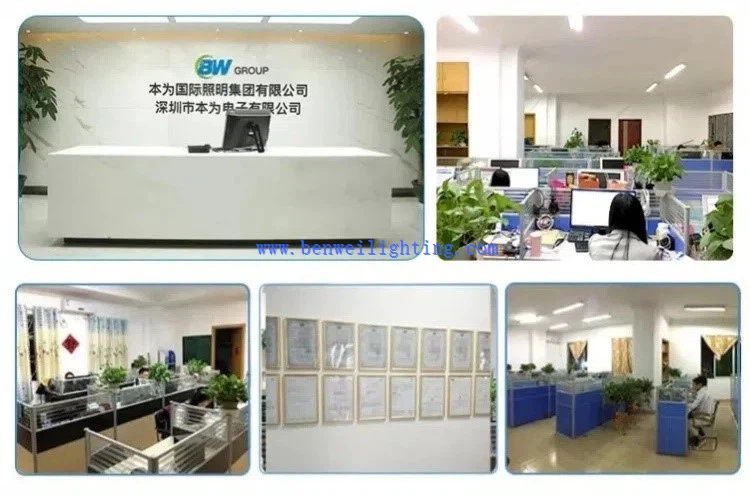
We are happy to have total control over the manufacturing process and the calibre of our products since we have our own facilities. Since we are producers rather than just brokers, we are dedicated to providing our customers with the best pricing. Since we are certain that the price and quality of our products are clear, we invite customers to see our samples first. Our commitment to quality and customer satisfaction drives us to continuously provide top-notch goods.
Our address
3rd Floor, 5th Building, Hebei Industrial Park, Hualian Community, Longhua District, Shenzhen, China





