

Introduction: What "Versatile" Must Mean for an Outdoor-Rated Bulb
The Marketing Claim and the Engineering Test
The phrase "indoor and outdoor" appears on packaging with little qualification. In practice, the two environments impose opposite constraints. An interior fixture is typically enclosed by a shade or globe that traps heat; an exterior fixture is exposed to wind-driven rain, dust, UV radiation, and ambient temperatures that swing from sub-zero mornings to sun-baked afternoons. A bulb marketed as versatile must satisfy the interior's demand for soft, glare-free light and the exterior's demand for environmental survival-and it must do both without the optical or thermal compromises that would make it second-best in either setting.
The cylindrical form factor is the first part of the answer. Its clean, elongated profile reads as a deliberate design element rather than a utilitarian bulb, which is why cylindrical fixtures are specified for entryways, facades, and landscape columns as well as for interior hallways and boardrooms. But form alone does not deliver versatility. The optical and thermal specifications determine whether the cylinder is a decorative shape that happens to produce light, or a lighting system that performs reliably wherever it is installed.
The E27 Interface as the Common Platform
The E27 screw base is the common platform that makes indoor-to-outdoor transfer possible. The same socket standard appears in interior table lamps, pendants, and sconces, and in exterior-rated post-top lanterns, wall lanterns, and decorative globes. This means the homeowner or facility manager can standardize on a single bulb type across the property's interior and sheltered exterior fixtures, maintaining optical continuity from the hallway to the porch.
The critical caveat is that the bulb's environmental protection is provided by the fixture, not by the bulb. An E27 bulb is not a sealed outdoor luminaire. The IP rating that governs moisture and dust ingress applies to the fixture enclosure that houses the bulb. Understanding this division of responsibility is the first step toward specifying the cylindrical bulb correctly for outdoor use.
The Scope of This Article
This article examines the cylindrical E27 bulb across the indoor–outdoor boundary. Part 2 analyzes the optical case for interior use, focusing on the PC mask and soft-light distribution. Part 3 examines the exterior environment: IP ratings, fixture protection, UV and temperature stress, and the specific applications where cylindrical bulbs are specified. Part 4 addresses the thermal architecture that must bridge the two environments. Part 5 presents the aesthetic case for continuity across interior and exterior zones, and Part 6 provides a practical specification and implementation framework.
The Interior Case: PC Diffusion and the Aesthetics of Soft Light
The Cylinder as a Visible Design Object
In interior settings, the cylindrical bulb is rarely hidden. It is used in fixtures where the bulb is visible-open pendants, exposed-socket sconces, glass globes, and table lamps with wide apertures-precisely because its clean, elongated silhouette contributes to the fixture's visual composition. A cylindrical bulb with a frosted PC shade reads as a designed element: a soft column of luminance that complements modern, transitional, and soft-contemporary interiors. A bare or clear bulb in the same fixture reads as a component, not a design decision.
The PC mask is what makes this visibility an asset rather than a liability. Without diffusion, a visible LED array produces concentrated points of luminance that the eye must accommodate around. With a high-transmittance PC diffuser, the source is converted into a uniform surface of moderate luminance, and the cylinder becomes a softly glowing architectural element rather than a source of glare.
Soft Light as a Measurable Optical Property
"Soft light" in technical terms refers to the conversion of a point source into an extended area source, the reduction of peak luminance, and the elimination of visible hotspots and shadow patterns. Light-diffusing polycarbonate achieves this through dispersed diffusion particles that scatter light internally, producing multiple refractions and reflections before the light exits the surface. At a 2.0 mm thickness, visible light transmittance falls in the 70–90% range, with haze reaching up to 99%. This combination of high transmittance and high haze is the optical signature of a diffuser that delivers comfort without a disproportionate loss of delivered lumens.
The practical interior consequence is a light that feels ambient rather than directional. In a living room or bedroom, the cylindrical bulb with a PC mask produces an even wash of light across the room rather than a concentrated cone beneath the fixture. Shadow lines on the shade material disappear, because the source is no longer a discrete set of points projecting through the fabric. The fixture's material and form read as intended, and the room achieves the calm, layered quality that residential design consistently associates with diffused rather than bare sources.
Color Quality and the Interior Material Palette
The optical quality of the PC mask is only half of the interior case. The other half is the color quality of the light that passes through it. A diffuser that produces soft light from a low-CRI source will still make wood finishes look flat, textiles look dull, and skin tones look slightly wrong. High-transmittance diffusion and high color rendering are complementary specifications: the mask delivers the spatial comfort, and the source's color rendering preserves the visual character of the interior.
The cylindrical bulb's thermally stable LED array, protected by its aluminum fin architecture, maintains its color rendering over the service life. High junction temperatures reduce CRI and shift the spectral output, which is why the thermal design is as important to interior color quality as it is to exterior survival. A bulb that holds its junction temperature holds its color rendering, and that is what allows the interior palette to look as intended year after year.
The Exterior Case: Protection, Environment, and Application Fit
The IP Division of Responsibility: Fixture, Not Bulb
The most important specification principle for outdoor use is that the IP rating belongs to the luminaire enclosure, not to the bulb inside it. Outdoor luminaires are classified by their resistance to solid objects and water: IP44 provides protection against solid objects larger than 1 mm and splashing water from any direction; IP65 provides complete protection against dust ingress and protection against low-pressure water jets from any direction; IP55 is the general minimum for exposed outdoor installation, while IP54 is acceptable under a canopy or eave where direct rain is blocked.
The cylindrical E27 bulb itself is not an IP-rated outdoor device. It is designed to be installed inside a fixture that provides the required environmental protection. In an exterior lantern with a sealed glass or PC enclosure, the fixture's IP rating governs the moisture and dust exposure that the bulb experiences. The bulb's role is to perform reliably within that protected envelope-and the specification task is to confirm that the fixture's IP rating is appropriate for the exposure zone and that the bulb is compatible with the fixture's enclosed thermal environment.
UV, Temperature Cycling, and Material Stability
The exterior environment imposes stresses that interior fixtures do not. Ultraviolet radiation from sunlight degrades polymers, causing yellowing, embrittlement, and loss of optical transmittance over time. Outdoor-rated PC materials are formulated with UV stabilizers to resist this degradation; standard PC grades can yellow and lose clarity, while UV-stabilized grades retain their optical properties for longer service intervals. The cylindrical bulb's PC mask should be understood as an optical component whose longevity depends on the fixture's protection from direct sun exposure and on the material's UV stability.
Temperature cycling is the second exterior stress. A fixture mounted on a porch or post experiences daily and seasonal temperature swings, and the bulb's driver and LED array must operate reliably across that range. The active cooling fan and aluminum fin architecture are particularly relevant here: they provide thermal headroom that allows the bulb to maintain its output even when the exterior ambient temperature rises, and they help the driver tolerate the thermal fluctuations that an outdoor installation imposes.
Applications Where the Cylindrical Form Fits
The cylindrical bulb's application range in exterior settings is defined by fixture type rather than by exposure to direct weather. The bulb is specified for outdoor lanterns, post-top globes, wall lanterns, and sheltered ceiling fixtures-enclosures that provide the IP protection and present a visible bulb within a decorative frame. Post-top lanterns on garden columns, wall-mounted lanterns flanking an entryway, and decorative globes on a porch are the canonical applications. In each case, the fixture's glass or PC enclosure provides the weather protection, and the cylindrical bulb provides the light within a form factor that complements the fixture's architectural character.
The cylindrical silhouette is particularly well suited to post-top and lantern fixtures because its vertical emphasis aligns with the fixture's own geometry. A tall, slender bulb inside a lantern enclosure reads as an intentional part of the fixture's design, whereas a squat or irregular bulb can look like an afterthought. This is the aesthetic dimension of outdoor versatility: the bulb does not merely survive inside the fixture; it belongs there.
The Thermal Bridge: Why the Same Architecture Serves Both Environments
Enclosed Fixtures as the Shared Thermal Challenge
Interior shades and exterior lanterns share a common thermal constraint: they restrict airflow. A fabric or glass shade traps heat around the bulb; a sealed lantern enclosure does the same, and in an exterior setting the trapped heat may be compounded by solar gain on the fixture surface. The engineering literature on socket-type LED lamps consistently identifies enclosed operation as the condition that accelerates junction temperature rise and lumen depreciation.
The cylindrical bulb's aluminum fin heat sink addresses this shared challenge by conducting heat away from the LED board and spreading it across a larger surface area. The fins are the conductive-convective bridge between the LED junction and the air inside the fixture enclosure. In a compact high-wattage form factor, passive finning alone has a practical ceiling; the integrated active cooling fan changes the convective coefficient on the fin surfaces, increasing heat transfer by a factor of two to five compared with natural convection depending on airflow and geometry. This is what allows the bulb to sustain a high output in the restricted-airflow environments that both interior and exterior fixtures present.
The Driver as a Shared Reliability Component
The driver is the second thermally sensitive subsystem, and its reliability determines whether the bulb survives in either environment. Electrolytic capacitors and semiconductor components degrade faster at elevated temperatures, and driver failure is a common mode of premature LED failure even when the LED chips remain functional. The IC constant-current driver maintains stable current delivery despite input voltage fluctuation and reduces susceptibility to electrical noise on the mains supply-a relevant consideration in both residential circuits and outdoor installations sharing a supply with pumps, irrigation controllers, or exterior lighting transformers.
The active cooling fan protects the driver by keeping the entire electronic assembly within its operating window. This is why the thermal architecture is a genuine versatility specification: it is the mechanism that allows the same bulb to perform in the enclosed shade of a bedside lamp and the sealed globe of a porch lantern without the differential degradation that would otherwise make one installation shorter-lived than the other.
The Limits of Thermal Versatility
A candid assessment requires acknowledging the limits. The cylindrical bulb's active cooling is designed for the airflow conditions of typical residential and sheltered commercial fixtures. In a fully sealed exterior enclosure with no ventilation and high solar gain, the internal air temperature may rise beyond the bulb's design window. The specification task is to confirm that the fixture provides some thermal pathway-ventilation slots, a glass enclosure with air gaps, or a metallic housing that conducts heat-and to avoid installing the bulb in airtight enclosures where the active cooling cannot function. The product is versatile within the class of fixtures that provide reasonable airflow, not as a substitute for a purpose-built sealed outdoor luminaire.
The Aesthetic Case: Continuity Across the Indoor–Outdoor Boundary
The Cylinder as a Unifying Visual Language
The strongest argument for a single cylindrical bulb across interior and exterior zones is visual continuity. A home's lighting language extends from the interior rooms to the porch, the entryway, and the garden columns. When the same cylindrical silhouette and the same soft, diffused light character appear in the hallway pendant and the exterior post-top lantern, the property reads as a coherent design rather than a collection of separately specified fixtures. This is the decor value of versatility: not that the bulb can go anywhere, but that it makes the places it goes feel related.
The cylindrical form is particularly effective as a unifying language because it is neutral without being anonymous. It does not impose a stylistic reference-it is not a vintage filament, a globe, or a candelabra-but it has a clear geometric identity that complements modern, transitional, and architectural fixture designs. In an interior pendant and an exterior lantern, the same cylinder reads as the same design decision, repeated.
Soft Light and the Quality of Transition Spaces
Transition spaces-porches, entryways, covered patios, and walkways-are where interior and exterior lighting meet. A bulb that produces soft, glare-free light in the living room but a harsh, concentrated source in the entryway lantern creates a discontinuity in the experience of the home. The cylindrical bulb's PC diffusion delivers the same low-glare, uniform character in the transition space that it delivers indoors, so the eye does not have to re-adapt as it moves from the interior to the sheltered exterior.
This is a comfort specification as much as an aesthetic one. In the evening, the transition from a softly lit living room to a porch lantern that produces a harsh point of light is visually jarring. A diffused cylindrical bulb preserves the continuity of visual comfort, which is part of what makes a home feel considered rather than simply lit.
Specification and Implementation Framework
Confirm the Fixture's IP Rating Before Outdoor Installation
For any exterior location, identify the fixture's IP rating from its label or documentation. An exposed location requires at least IP55; a position under a canopy or eave may accept IP54; an IP44 fixture is suitable only for sheltered positions where splashing is the primary concern and direct rain is blocked. The cylindrical bulb must never be installed in an exterior socket without an enclosure that provides the appropriate IP protection.
Verify Thermal Ventilation in the Fixture Enclosure
Confirm that the fixture enclosure allows some airflow around the bulb's finned section. A lantern with a glass enclosure and gaps at the top or bottom, or a fixture with a metallic housing that conducts heat, is suitable. A fully sealed enclosure with no ventilation may cause the internal temperature to exceed the bulb's design window, particularly in summer or in direct sun. Where ventilation is marginal, a lower-output bulb may be the more reliable specification.
Select CCT for the Zone, Not for the Whole Property
Interior living spaces and bedrooms benefit from a warm 2700K–3000K source, while exterior entryways, pathways, and landscape fixtures may use the same warm CCT for continuity or a slightly cooler CCT for visual clarity and safety. The cylindrical bulb's availability across CCT options allows zone-appropriate selection without abandoning the unified silhouette and diffusion quality.
Standardize the Silhouette Across Compatible Fixtures
Apply the cylindrical bulb consistently across all E27 fixtures that share the same visual exposure-interior pendants and sconces, exterior lanterns and post-tops-so that the bulb's form and diffusion quality become a recognizable element of the property's lighting design. The versatility claim is realized not by using one bulb in one fixture, but by using one bulb family across the fixtures where its optical and thermal characteristics are appropriate.
Conclusion
The cylindrical LED bulb earns the description "versatile" not because it can be screwed into any E27 socket, but because its optical and thermal architecture aligns with the real constraints of both interior and sheltered exterior fixtures. In the interior, the high-transmittance PC mask converts the LED source into the soft, uniform, hotspot-free light that makes a visible bulb an aesthetic asset rather than a source of glare. In the exterior, the same bulb operates within a fixture that provides the IP-rated environmental protection, while its aluminum fin and active cooling architecture compensate for the restricted airflow that lanterns and globes impose. The cylinder shape provides the visual language that unites the two zones, and the PC diffusion provides the continuity of comfort across the interior–exterior transition.
The practical conclusion is a specification principle: versatility is a property of alignment, not of marketing. The bulb is right for a given fixture when the fixture's IP rating protects it, when the fixture's airflow allows its thermal design to function, and when its diffusion quality matches the visual task of the space. Where those conditions are met-in the living room pendant, the bedside lamp, the porch lantern, and the garden post-top-the cylindrical bulb delivers the same considered light, and the property's lighting reads as a coherent design rather than a collection of unrelated purchases.
How To Cooperate With Us?
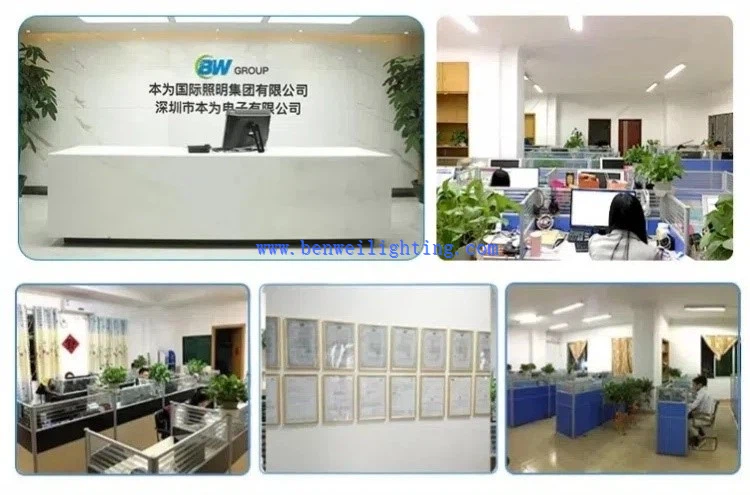
We are happy to have total control over the manufacturing process and the calibre of our products since we have our own facilities. Since we are producers rather than just brokers, we are dedicated to providing our customers with the best pricing. Since we are certain that the price and quality of our products are clear, we invite customers to see our samples first. Our commitment to quality and customer satisfaction drives us to continuously provide top-notch goods.
Our address
3rd Floor, 5th Building, Hebei Industrial Park, Hualian Community, Longhua District, Shenzhen, China





