

High-bay lights are common in warehouses and factories; however, when projects involve specialized environments-such as chemical plants, oil and gas facilities, or workshops with combustible dust-standard high-bay lights cannot be used directly and must be replaced with explosion-proof lights. Many clients overlook this distinction during the selection phase, only to discover non-compliance during final inspection. This article clarifies the differences between explosion-proof lights and standard high-bay lights to help you avoid pitfalls when selecting equipment.
Core Differences Between Explosion-Proof Lights and Standard High-Bay Lights
Standard high-bay lights are designed with a focus on lighting efficiency and cost control; their housings are typically made of ordinary aluminum alloy or sheet metal, and an IP65 ingress protection rating is considered quite good. The design logic for explosion-proof lights is entirely different-their primary objective is not merely to provide illumination, but to prevent ignition. In other words, even if an internal malfunction causes sparks or an abnormal temperature rise, the fixture must not ignite combustible gases, dust, or fibers in the surrounding environment. This fundamental difference dictates completely divergent paths regarding structure, materials, and certification.
Differences in Housing Structure and Materials
Explosion-proof light housings are usually made of cast aluminum or stainless steel with significantly thicker walls than those of standard high-bay lights. Joints feature precision-machined flameproof mating surfaces with strict tolerances for gap width and length; the goal is to ensure that any flame generated internally cools and extinguishes before it can propagate through the gap to the outside. Standard high-bay lights do not require these features; they only need to meet basic dust/water resistance and structural strength requirements, resulting in much lower costs.
Explosion-Proof Ratings and Certification Standards
Explosion-proof lights must pass specialized certifications-such as ATEX, IECEx, or domestic Ex certification systems. The certification process covers explosion-proof ratings (e.g., Ex d, Ex e), temperature classes (T1–T6), and applicable gas or dust zones (Zone 1/2, Zone 21/22). These parameters are not arbitrary; each corresponds to specific testing requirements. Standard high-bay lights only require conventional safety certifications (such as basic CE or UL electrical safety certification) and do not undergo explosion-proof testing, which is why the two types of lights are not interchangeable.
Differences in Heat Dissipation
Standard high-bay lights dissipate heat relatively freely; many utilize open cooling fins that exchange heat directly with the air via convection, resulting in high efficiency and simple construction. In contrast, explosion-proof lights require a sealed, flameproof housing structure; cooling fins cannot have openings, so heat dissipation relies on the thermal conductivity of the housing itself and natural convection. This necessitates a more conservative approach to rated power; for the same wattage, explosion-proof lights are often larger and heavier than standard high-bay lights-a fact that often surprises customers during the selection process.
Differences in Installation and Maintenance
Explosion-proof lights impose stricter requirements on on-site installation. Wiring must be routed through explosion-proof junction boxes or flexible explosion-proof conduits; standard electrical wiring practices are insufficient, as they could compromise the unit's overall explosion-proof integrity. Maintenance also prohibits casual opening of the housing; many designs mandate that power be disconnected before the cover is opened, and there are specific regulations regarding the frequency and method of opening. Standard high-bay lights offer much greater flexibility in this regard, with routine maintenance differing little from that of ordinary electrical equipment.
Comparison of Price and Application Scenarios
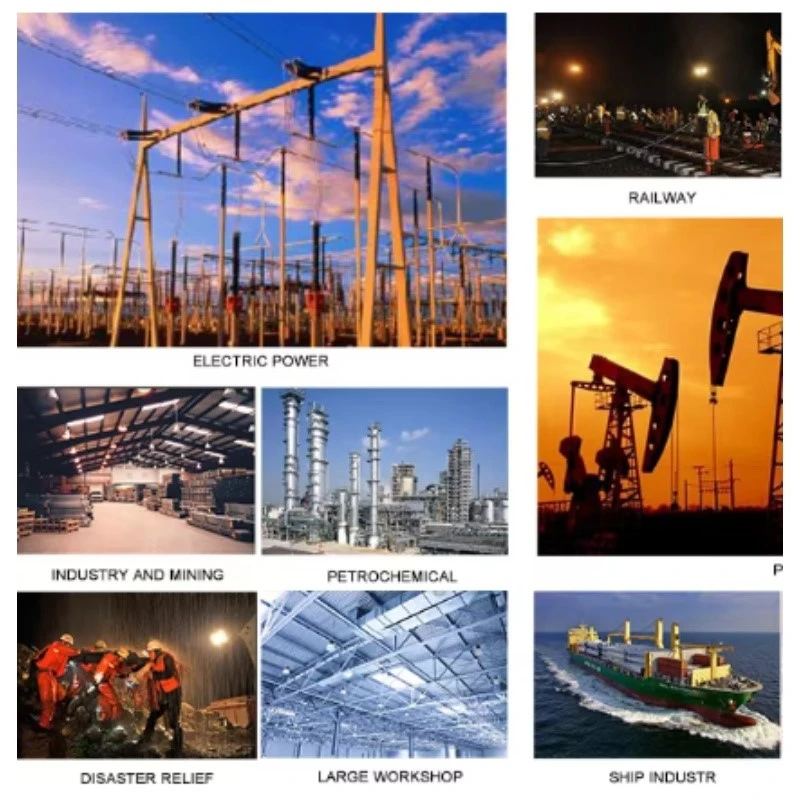
Regarding price, explosion-proof lights entail higher costs for materials, structural design, and certifications. For the same wattage, they typically cost two to four times (or even more) than standard high-bay lights, depending on the specific explosion-proof rating required. Application scenarios are clearly defined: standard high-bay lights are suitable for warehouses, general manufacturing plants, and logistics centers-environments free from flammable or explosive risks. Explosion-proof lights are mandatory for facilities containing explosive gases or dust, such as petrochemical plants, gas stations, dust-prone workshops, and paint-spraying facilities. Selecting the wrong type results in more than just wasted costs or suboptimal performance; it can lead to critical safety and compliance violations.
Summary
The distinction between explosion-proof lights and standard high-bay lights essentially reflects two different design philosophies: "safety first" versus "lighting efficiency first." These differences manifest across several dimensions, including housing materials, explosion-proof certifications, heat dissipation structures, installation and maintenance procedures, and pricing. The most critical step in selection is to first determine whether the site falls within a classified hazardous (explosive) zone before deciding on the product type; decisions should not be based solely on price or appearance. If your project involves chemical, oil and gas, or dusty environments and you need to determine the specific explosion-proof rating required for your lighting, please feel free to share details about the site conditions and wattage requirements with us. We can recommend suitable models based on your specific operational needs-please feel free to send an inquiry at any time.
Our address
No. 5-3 Niujiao Road, Yanchuan Community, Yanluo Subdistrict, Bao'an District, Shenzhen
bwzm18@ledbenweilighting.com






