

The task of illuminating artwork and accent walls involves more than just brightness; it also requires accuracy, directionality, and spectral purity. When it comes to lighting, traditional fixed downlights or track lighting sometimes fall short. They either create unequal pools of light, are prone to causing glare, or are unable to adjust to varied wall angles and the size of artwork. Through the integration of a tilting mechanism, ultra-slim profile, and multi-temperature adaptability, the 6 inch Slim Gimbal LED Downlight with 5CCT tuneable technology offers a solution to these issues. The purpose of this tutorial is to present a comprehensive and evidence-based investigation into the use of this gimbal downlight, which can effortlessly convert any artwork or textured wall into a focal point. This course will teach you the fundamental ideas and methods that transform interior lighting from just utilitarian to a magnificent experience. Topics covered include museum-grade colour rendering and energy-efficient directional control.

Introduction: The Art of Directional Illumination
Accent walls and wall-mounted artwork are examples of three-dimensional surfaces that interact with light in a variety of intricate ways. Brick, wood panelling, and plaster relief are examples of accent walls. Washing light gives a uniform glow, grazing light highlights texture, and framing light makes a painting stand out from the rest of the composition. The vast majority of recessed downlights produce a downward beam that is motionless and scarcely makes contact with a vertical surface. This paradigm is rethought on account of the gimbal LED downlight, which has an adjustable inner body (the "gimbal") that can tilt up to 35–40 degrees in any direction. This enables the beam to be aimed exactly where it is required. The design, which is 6 inches thin, is able to fit into narrow ceiling cavities (with a thickness of as little as 2 inches), which makes it retrofittable even in flats that have a restricted amount of plenum space. This downlight becomes a flexible tool for curators, interior designers, and homeowners who require both performance and aesthetics when it is paired with a colour temperature that can be selected, ranging from a soft white to daylight.
How to Use Gimbal LED Downlights to Highlight Artwork & Accent Walls
Effective accent lighting follows three photometric principles: beam angle, aiming angle, and spectral contrast. The gimbal downlight's adjustability addresses each.
Framing Artwork: The "Key Light" Technique
Treat a painting or photograph as you would a stage actor. Position one or two gimbal downlights 30–45 cm from the wall (measured from the ceiling plane) and tilt the gimbal so that the beam's centre hits the centre of the artwork. For a standard 60×90 cm canvas mounted with its centre at 150 cm above floor, a downlight placed 60 cm from the wall will require a tilt angle of approximately 30–35°. The result is a concentrated cone of light that creates a 3:1 luminance ratio between the artwork and the surrounding wall-the industry standard for visual emphasis. Use two lights spaced 80–120 cm apart for wider pieces (e.g., triptychs or panoramic prints), angling each towards the opposite edge to avoid "hot spots".
Grazing Accent Walls to Reveal Texture
Accent walls made of rough stone, reclaimed wood, brick, or Venetian plaster demand grazing illumination-light that strikes the surface at a very acute angle (≤15° from the wall plane). Install gimbal downlights within 20–30 cm of the wall, tilting them so the beam nearly parallels the surface. The 6‑inch slim housing allows placement close to the wall without structural conflict. This technique casts long, sharp shadows from every ridge and groove, amplifying the tactile quality of the material. For a brick accent wall behind a fireplace, a row of three gimbal downlights spaced 50 cm apart, each tilted to 40° and aimed downward at a 15° grazing angle, will turn each brick's irregular face into a dramatic chiaroscuro.
Washing for Uniform Colour on Smooth Walls
Smooth accent walls (painted drywall, wallpaper, or metal panels) benefit from a soft, even wash rather than harsh shadows. Here, mount the gimbal downlights 40–60 cm from the wall and tilt them to a 25–30° angle so the beam's spill overlaps with adjacent lights. The goal is a 2:1 max‑to‑min illuminance ratio across the wall. Thanks to the downlight's 90+ CRI (Colour Rendering Index), paint colours and wallpaper patterns appear true to their swatch. Avoid placing lights too close (which causes scalloping) or too far (which reduces intensity). For a 3‑m‑wide accent wall, four gimbal downlights spaced 75 cm apart, each set to 4000K for neutral whites, will deliver a museum‑grade wash.
Colour Temperature Selection for Different Artwork
The 5CCT selectable feature (detailed in Section 3) lets you match the light's character to the artwork's palette:
| Artwork Type | Recommended CCT | Effect |
|---|---|---|
| Oil paintings with warm tones (reds, golds, earths) | 2700K–3000K (Soft White / Warm White) | Enhances richness, reduces glare on varnished surfaces |
| Modern black‑and‑white photography or graphite drawings | 3500K–4000K (Neutral / Bright White) | Preserves contrast without yellow or blue casts |
| Watercolours, pastels, or blue/green‑dominated abstracts | 5000K (Daylight) | Reveals subtle hue variations, simulates north‑facing daylight |
| Textured accent walls (brick, wood) | 3000K–3500K | Warms natural materials without oversaturating |
The gimbal's built‑in CCT switch (often located on the driver box or fixture back) allows on‑site tuning-no additional purchases or returns.
Core Technologies of the 6‑Inch Slim Gimbal LED Downlight
Five engineering innovations make this downlight superior to fixed or bulky alternatives.
Gimbal Mechanism with 360° Rotation and 35° Tilt
Unlike gimbal lights that restrict movement to one axis, this 6‑inch model features a dual‑axis articulated housing. The inner LED module can be rotated 360° around the vertical axis and tilted up to 35° (often 40° in premium versions) from the horizontal plane. The mechanism uses a spring‑loaded friction joint that holds its position even after years of adjustment-no drooping or slipping. The gimbal ring is made of die‑cast aluminium, ensuring smooth motion without plastic wear. This flexibility allows you to re‑aim the light every time you rearrange wall art, without tools or ceiling damage.
5CCT Selectable Technology
Most downlights force you to choose a colour temperature at purchase, leading to mismatched lighting if your décor changes. The 5CCT selectable driver integrates five discrete LED chipsets (typically 2700K, 3000K, 3500K, 4000K, 5000K) or a single tunable‑white chip. A miniature DIP switch on the junction box lets you cycle through these options, producing a correlated colour temperature accurate to ±100K. This innovation eliminates inventory complexity (one SKU serves all rooms) and allows post‑installation fine‑tuning. For artwork illumination, being able to switch from 3500K (for a daytime gallery feel) to 2700K (for a cosy evening dinner party) transforms the same space.
Ultra‑Slim Design with IC‑Rated Housing
Traditional recessed downlights require 6–8 inches of vertical clearance, excluding them from shallow ceilings or floors with joists, ducts, or wiring. The slim gimbal housing is only 2‑inches (≈50 mm) deep, achieved by separating the LED driver from the fixture body (distant driver design). This allows installation in ceilings with as little as 2.5 inches of clearance. Furthermore, the housing is IC‑rated (Insulation Contact) and air‑tight (ASTM E283), meaning it can be safely buried in attic insulation without overheating and prevents conditioned air leakage-critical for energy‑efficient homes.
High Colour Rendering (CRI ≥90) and Flicker‑Free Driver
Artwork demands accurate colour discrimination. This downlight employs premium LED chips with a Colour Rendering Index (CRI) of 90 or higher (often R9 >50 to render reds faithfully). Low‑CRI lights (e.g., 80) desaturate pigments, making a Vermeer look muddy. Additionally, the flicker‑free constant current driver operates at ≥30 kHz switching frequency, eliminating the 100/120 Hz strobe effect found in cheap AC‑LEDs. Flicker not only causes visual fatigue but also distorts the perception of fine brushstrokes under rotating or moving viewing angles. For home galleries and professional studios, a flicker‑free source is non‑negotiable.
IP65 Wet‑Rated for Damp Locations
The product's IP65 rating (indicated in the file name) means it is dust‑tight and protected against low‑pressure water jets from any direction. This permits installation in bathrooms, covered patios, saunas, or even near kitchen sinks-spaces where you might highlight artwork above a bathtub or a tile accent wall in a shower. The gasket‑sealed lens prevents moisture ingress that would short conventional downlights.
Correct Usage and Application Scenarios
Proper deployment requires attention to spacing, tilt angles, and compatibility with dimmers. The following protocols are based on lighting engineering standards (IESNA RP‑6 for museum lighting and residential downlight best practices).
Spacing and Layout Rules
For artwork (framing): Place the gimbal downlight so that the distance from the wall (D) is 0.5 to 0.7 times the height of the artwork's centre above the fixture. A formula: Tilt angle = arctan( (H_art – H_fixture) / D ). For most 1.5 m‑high paintings with ceiling‑mounted lights (H_fixture ≈ 2.4 m), set D = 0.6 m and tilt ≈ 35°.
For accent wall grazing: Install downlights 0.2–0.3 m from the wall, spaced 0.6–1.0 m apart. Tilt each light to aim at 85° from vertical (i.e., nearly horizontal). Overlap the beam edges slightly to avoid dark bands.
For wall washing: Place downlights 0.5–0.8 m from the wall, spaced at 1.2–1.5 m intervals. Tilt to 25–30° and ensure that the beam's "field angle" (the 10% intensity edge) overlaps by at least 30% to achieve uniformity.
Dimming Compatibility
The downlight is compatible with triac (leading edge) and ELV (trailing edge) dimmers, but not all LEDs behave identically. Use a dimmer from the manufacturer's recommended list (e.g., Lutron, Leviton) to avoid flicker at low levels. For artwork highlighting, dimming to 25–40% is effective for evening ambience while still keeping the artwork as the brightest object in the room.
Application Scenarios
Living room gallery wall: Install four 6‑inch gimbal downlights 60 cm from a 4 m‑wide wall, each spaced 1 m apart. Set CCT to 3500K for balanced illumination of mixed media (family photos, oil paintings, textile art). Tilt two lights to centre on the largest piece and the others to wash the remaining area. Use a scene‑controller dimmer: 100% for viewing parties, 30% for movie nights.
Bathroom accent tile wall: Above a freestanding tub, install one IP65 gimbal downlight 30 cm from a floor‑to‑ceiling marble accent wall. Tilt to 15° grazing to emphasise the veining. Select 4000K (bright white) to enhance the stone's natural grey and white contrast. The slim housing fits into a vapour‑barriered ceiling.
Home office / artist's studio: Use a single gimbal downlight directly above an easel or drafting table, tilted 45° to illuminate the canvas without casting the artist's shadow. Set CCT to 5000K (daylight) for accurate colour judgement during daytime hours. The 90+ CRI ensures that the mixed paints match their tube labels.
Restaurant booth accent wall: To highlight a textured plaster wall behind seating, install a row of three gimbal downlights 20 cm from the wall, spaced 80 cm apart. Tilt each to a severe 15° grazing angle, set CCT to 2700K (warm white) to create an intimate, candle‑lit atmosphere while still revealing the wall's texture.
Installation and Safety Notes
The 6‑inch hole cutout is standard (152 mm). Use a hole saw or drywall saw.
Because the driver is separate (remote) to achieve the slim profile, ensure the driver box is accessible (e.g., through the hole or via an attic) for CCT adjustment and emergency maintenance.
For wet locations (IP65), seal the fixture's edge with silicone after installation and use a vapour‑tight junction box.
Always shut off circuit power before installation. The downlight operates on 120–277 V AC (universal input).
Conclusion
The 6‑inch Slim Gimbal LED Downlight with 5CCT selectable technology is not merely a light source-it is an adjustable, high‑precision optical instrument for interior storytelling. By mastering the techniques of framing, grazing, and washing, and by leveraging its 360° rotation, slimmest‑in‑class profile, and flicker‑free high‑CRI output, you can turn any artwork or accent wall into a captivating visual anchor. The IP65 rating expands its reach to humid and challenging spaces, while the five‑temperature selector future‑proofs your design decisions. Whether you are a homeowner, designer, or lighting professional, this downlight delivers museum‑grade results without the need for complex track systems or custom trim. Upgrade your space today-because great art deserves great light.
About Our Company
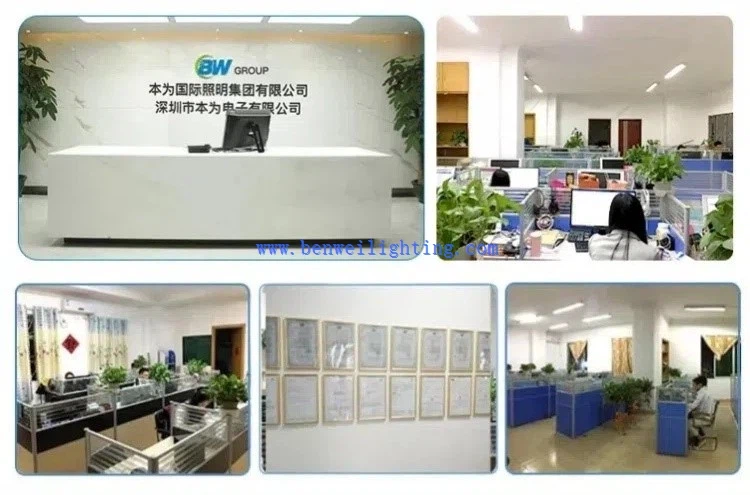
How To Cooperate With Us?
Our firm prides itself on owning its own factory, guaranteeing complete control over the production process and the quality of our goods. We are not only agents; we are manufacturers committed to offering our clients the most competitive rates available. We invite consumers to evaluate our samples first, as we are assured that the quality and pricing of our items are self-evident. Our dedication to excellence and client satisfaction compels us to consistently perform at our best and provide superior quality products.
Our address
3rd Floor, 5th Building, Hebei Industrial Park, Hualian Community, Longhua District, Shenzhen, China





