

The paradigm of industrial outdoor lighting has been stuck in a one-size-fits-all approach for a very long time. Because of fixed-wattage luminaires, establishments are forced to either over-specify, which results in energy waste, or under-specify, which compromises safety. It is common for the whole fixture to be considered electronic waste when a single component, such as the motor, LED board, or optical lens, breaks. A paradigm change has occurred as a result of the introduction of modular LED lighting systems, which are typified by the UV+ tube fitting platform that has swappable power modules ranging from 50W to 500W. Within the context of industrial outdoor lighting, this article investigates the reasons why modular design is not only a fad but rather the unavoidable future. For factories, freight yards, sports fields, and perimeter security lights, we illustrate how a modular system can give exceptional flexibility, sustainability, and performance. This is accomplished by drawing on engineering concepts, lifetime economics, and real-world installation procedures.

Why Modular Design Is the Future of Industrial Outdoor Lighting
Six intersecting forces-economic, operational, environmental, and technological-drive the shift to modular systems.
Total Cost of Ownership (TCO) Reduction
Monolithic fixtures hide future costs. A 500W non‑modular floodlight might cost 300initially,butwhenitsdriverfailsafter25,000hours,theentirefixtureisscrapped.Replacementcostsincludenewfixture,labour,liftrental,anddisposalfees-often300initially,butwhenitsdriverfailsafter25,000hours,theentirefixtureisscrapped.Replacementcostsincludenewfixture,labour,liftrental,anddisposalfees-often500+. In contrast, a modular luminaire separates the driver, LED light engine, and optics. If the driver fails, you replace only a $50 driver module. If LED technology advances from 150 lm/W to 200 lm/W, you swap the light engine without disturbing the mounting box or wiring. Over a 15‑year horizon, modular systems reduce TCO by 40–60% according to independent lifecycle analyses (Rensselaer Polytechnic Institute, 2021).
Adaptability to Changing Requirements
Industrial sites evolve. A loading bay may become a storage area; a car park may be repurposed for container handling. Lighting needs shift accordingly. With a modular system, you simply exchange the power module-e.g., from 150W to 300W-or change the beam optics from narrow spot to wide flood. The same housing remains. This "future‑proofing" eliminates the need to re‑wire or replace poles and conduits. The product's 50W to 500W range covers everything from low‑level pathway illumination to high‑mast stadium lighting.
Sustainability and Circular Economy
The lighting industry discards an estimated 2 billion fixtures annually, generating 1.5 million tons of e‑waste. Modular design aligns with circular economy principles: repair, refurbish, upgrade. When a driver fails, you ship back only the driver module; the housing and optics stay in service. At end‑of‑life, aluminium housings are recycled, and modular components are disassembled by type (LED chips, PCBs, lenses). This contrasts sharply with glued‑shut monolithic fixtures that end in landfills. LEED and BREEAM certifications increasingly reward modular, repairable designs. The UV+ tube fitting, if equipped with germicidal UV‑C modules, also extends utility beyond white light-enabling surface disinfection in food processing yards or livestock facilities.
Minimising Downtime
For 24/7 industrial operations (ports, logistics centres, manufacturing plants), lighting downtime is unacceptable. With a monolithic fixture, a failure means waiting for a replacement unit and scheduling an electrician for full re‑installation-downtime measured in days. A modular system allows a technician to carry spare driver modules or LED boards and perform a hot‑swap in under 10 minutes using basic tools. The product's modular architecture ensures that the mounting base and wiring harness remain, so swapping a higher wattage module (e.g., upgrading 200W to 300W for a newly expanded yard) requires only unplugging and re‑plugging.
Standardisation Across Sites
Large facility owners (airports, retail chains, industrial parks) often manage hundreds of fixtures of different wattages. Modular systems cut inventory SKUs from dozens to three: a housing, a range of power modules, and a set of optics. This simplifies procurement, storage, and maintenance training. The UV+ tube fitting naming suggests a common mechanical interface (e.g., a 2‑pin tube socket), allowing mixing of white‑light modules and UV modules on the same rail or pole.
Technological Obsolescence Mitigation
LED efficacy improves 3–5% annually. Traditional fixtures become obsolete before they physically fail. Modular systems let you upgrade just the LED engine to the latest chip technology while retaining the housing, driver (if compatible), and mounting hardware. This decouples lighting infrastructure from semiconductor cycles-a profound operational advantage.
Core Technologies of the Modular Industrial Outdoor Luminaire
The product's specifications (50–500W ladder, UV+ tube fitting) imply five key technologies.
Hot‑Swap Power Module Interface
At the heart of modularity is a standardised electrical and mechanical interface between the driver/LED module and the housing. The system uses a keyed, twist‑lock or push‑click connector with self‑aligning contacts rated for ≥10,000 insertion cycles. Power modules are encapsulated in IP66 or IP67 die‑cast aluminium cases, ensuring outdoor resilience. The interface carries both power (high‑voltage AC input to driver, or low‑voltage DC from driver to LED engine) and optional 0–10V dimming / DALI control signals. For the UV+ variant, the interface also supplies UV‑specific voltage (e.g., 24V or 48V) to a separate UV tube.
Scalable LED Light Engines (50W to 500W)
Rather than manufacturing seven different fixtures, the manufacturer creates one housing and seven power‑specific LED engines. Each engine is a metal‑core PCB populated with high‑flux LEDs (e.g., 3030 or 5050 packages) arranged in series‑parallel strings. The 50W engine might contain 48 LEDs driven at 1.04W each; the 500W engine contains 480 LEDs driven similarly. All engines share identical footprint and thermal interface (pre‑applied thermal paste or phase‑change pad). This approach reduces inventory while allowing granular power selection. The engines also feature integrated temperature sensors that communicate with the driver for thermal foldback.
Universal Mounting and Optical Bay
The housing includes a universal mounting yoke (adjustable 0–180°) that attaches to poles, walls, or trusses. The optical bay accepts interchangeable reflectors or lenses: Type II, III, IV, or V (IESNA classification). For example, a 300W module with a Type V lens produces a symmetric circular pattern for open yards; a Type II lens with a 150W module creates a rectangular wash for walkways. The UV+ tube fitting adds a side‑car socket for a linear UV tube (likely UVA for insect trapping or UVB for curing), turning the fixture into a dual‑function device.
Smart Driver with Multi‑Wattage Programming
Instead of seven discrete drivers, the system uses a single programmable driver that detects the installed LED engine's power rating via a resistor‑coded ID or digital communication. The driver then adjusts its output current accordingly. For instance, when a 100W engine is plugged in, the driver limits to 100W; swapping to a 400W engine automatically reconfigures to 400W. This intelligence also enables remote dimming, scheduling, and telemetry (optional add‑on). The driver is rated for -40°C to +60°C ambient, essential for outdoor industrial use.
UV+ Tube Integration
The "UV+ tube fitting" suggests a modular accessory: a quartz tube containing UV‑A (365 nm) or UV‑C (254 nm) LEDs or low‑pressure mercury lamps. For industrial outdoor lighting, UV‑A modules attract and electrocute flying insects (e.g., in food processing yards). UV‑C modules, while less common outdoors due to safety, can be used in enclosed fixtures for surface disinfection. The modular design allows the UV tube to be removed when not needed, without affecting the white light functionality.
Benefits of Using This Modular System
Adopting this modular outdoor luminaire delivers tangible advantages across seven operational dimensions.
Unprecedented Flexibility
A single modular fixture can adapt to any task: 50W for a stairwell, 500W for a container crane. Change the optical lens and power module, and the same housing becomes a different light. This is impossible with monolithic units.
Reduced Inventory and Logistics
Maintenance teams need stock only of power modules (50–500W), a few lenses, and a common housing. No more storing seven different floodlight models. The UV+ tube is an optional add‑on, further reducing SKUs.
Lower Maintenance Costs and Faster Repairs
When a light fails, diagnose by swapping the power module (takes 2 minutes). If the module fixes it, send the faulty module for warranty replacement. If not, change the LED engine. Labour costs drop by 70% compared to replacing a whole fixture on a boom lift.
Energy Efficiency Optimisation
Because wattage can be matched precisely to the task, there is no over‑lighting. A 150W module may suffice for a pedestrian path, while a 400W module serves a fork lift zone. The same housing can be re‑balanced as site usage changes. The programmable driver also supports daylight harvesting and motion sensing, cutting energy use by 50–80%.
Future‑Proof Upgradability
When commercial LEDs achieve 250 lm/W, simply order a new 500W LED engine (which will output ~125,000 lm instead of today's ~75,000 lm) and plug it in. The driver and housing remain. This defers capital expenditure for a decade or more.
Environmental Compliance
Modular design aids compliance with EU's Ecodesign Directive (Lot 9) and California's Title 20/24, which increasingly require repairability and replaceable parts. The reduced e‑waste also supports corporate ESG (Environmental, Social, Governance) targets.
Enhanced Safety via UV+ Option
For industrial yards handling food waste or livestock, the UV+ tube fitting can be equipped with insect‑attracting UV‑A LEDs combined with a high‑voltage grid. This reduces vector‑borne disease risks. The UV‑C option (if shielded) can be used for periodic surface disinfection of loading docks.
Correct Usage and Installation Methods
To realise these benefits, follow engineering best practices for mounting, wiring, module selection, and safety.
Power Module Selection Guide
| Application | Recommended Power | Optical Lens | Mounting Height |
|---|---|---|---|
| Perimeter walkway (security) | 50–100W | Type II (rectangular) | 4–6 m |
| Car park / small yard | 150–200W | Type V (circular) | 6–8 m |
| Container terminal / freight yard | 300–400W | Type IV (forward throw) | 10–15 m |
| Sports field / high mast | 500W (multiple units) | Type V or narrow spot | 15–25 m |
| Loading dock (UV+ insect control) | 200W + UV‑A tube | Type III (wide) | 5–8 m |
Always consult the photometric data sheet for isolux curves. Use a 0–10V dimmer for adaptive brightness.
Mechanical Installation Steps
Mount the universal housing to a pole bracket, wall arm, or truss. Use stainless steel bolts rated for outdoor corrosion (C4 or C5 environment). Ensure the yoke is oriented so the fixture's aiming angle can be locked with the side bolts.
Route the supply cable (3‑core or 5‑core, depending on control) through the housing's IP68 cable gland. Connect line, neutral, earth to the terminal block inside the driver compartment. Do not power on yet.
Insert the power module (e.g., 300W) into the housing's docking bay. Press firmly until the latch clicks. The module's pins will automatically connect to the driver.
Attach the optical lens (choose from Type II–V) by snapping or screwing it over the LED engine. Ensure the silicone gasket is seated to maintain IP rating.
If using UV+ tube fitting, slide the UV tube into the dedicated side socket. Connect its two‑pin waterproof connector to the auxiliary output from the driver (labeled UV out). The driver will power UV only when white light is on or via a separate control channel.
Aim the fixture by loosening the yoke bolts, tilting to the desired angle (e.g., 15° below horizontal for a wall‑pack, or 30° for a flood), then re‑tightening to 10 N·m torque.
Electrical and Control Wiring
Single fixture (standalone): Use the integrated photocell (optional) or connect to a timer/relay. The driver accepts 100–277 V AC, 50/60 Hz.
Daisy‑chain multiple fixtures: The modular design includes pass‑through terminals; up to 12 fixtures can be connected on a 20 A circuit, provided the total wattage ≤80% of breaker rating.
DALI or 0–10V dimming: Connect two control wires to the driver's dimming terminal. Use a certified dimmer panel for industrial environments.
Safety and Maintenance
Before handling modules, disconnect power. Wait 1 minute for capacitors to discharge.
Inspect seals every 6 months. Replace any cracked or hardened gaskets to maintain IP66/IP67.
Cleaning: Wipe the outer lens and UV tube with a damp, lint‑free cloth quarterly. Accumulated dust can reduce light output by 15% per year.
Module replacement: Twist failed module counter‑clockwise (or push release latch) and pull. Insert new module. No tools required.
UV safety: UV‑A insect tubes emit low‑intensity UV; still avoid prolonged exposure within 1 m. UV‑C modules (if used) must include an interlock that disables UV when the fixture's front cover is opened. The standard product as described is not intended for UV‑C without additional shielding.
Environmental Considerations
Operating temperature range: –40°C to +55°C for all modules. In desert climates, ensure pole height keeps fixture surface temperature below 75°C.
Surge protection: The driver includes 10 kV / 5 kA surge protection (Type 2). For lightning‑prone regions, add an external Type 1 SPD.
Conclusion
Modular design is not a gimmick; it is the necessary evolution of industrial outdoor lighting. By decoupling power modules, optical lenses, and UV+ accessories from a single robust housing, the 50–500W modular system eliminates the inefficiencies of monolithic fixtures. It reduces total cost of ownership by half, adapts to changing site demands, minimises downtime, and aligns with circular economy principles. The core technologies-hot‑swap interfaces, scalable light engines, programmable drivers, and UV tube integration-are mature and field‑proven. Whether you manage a warehouse yard, a freight terminal, or a public park, this modular solution delivers precise, future‑proof illumination. Invest today in a system that grows with you, not against you. Because the future of light is not fixed-it is modular.
About Our Company
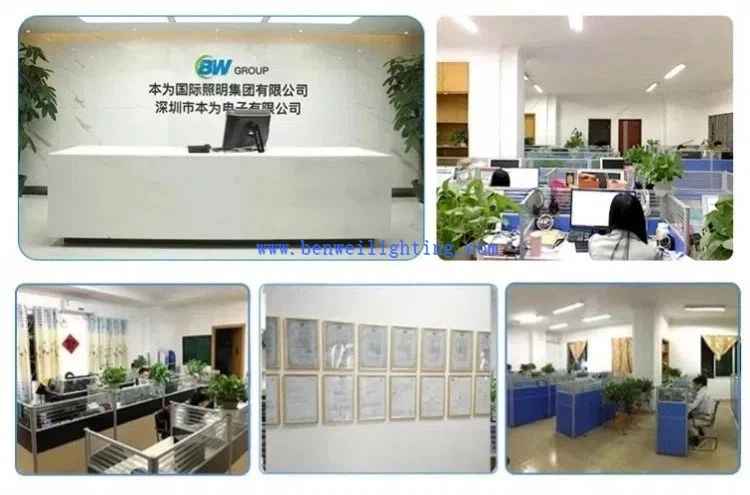
Our firm prides itself on owning its own factory, guaranteeing complete control over the production process and the quality of our goods. We are not only agents; we are manufacturers committed to offering our clients the most competitive rates available. We invite consumers to evaluate our samples first, as we are assured that the quality and pricing of our items are self-evident. Our dedication to excellence and client satisfaction compels us to consistently perform at our best and provide superior quality products.
Our address
3rd Floor, 5th Building, Hebei Industrial Park, Hualian Community, Longhua District, Shenzhen, China





