

Optimizing Airport Apron Lighting: A Comprehensive Guide to Intelligent LED Floodlight Systems
Table of Contents
Introduction: The Critical Role of Apron Lighting in Aviation Safety
What Are the Current Challenges in Traditional Airport Floodlighting?
How Do Advanced LED Floodlights Enhance Apron Illumination?
What is the Optimal Illumination Angle for Apron LED Floodlights?
How Can Intelligent Control Strategies Reduce Energy Consumption?
What Role Does AI Play in Proactive Floodlight Fault Diagnosis?
Industry Challenges & Practical Solutions for Airport Lighting Upgrades
Frequently Asked Questions (FAQ) on Airport LED Floodlight Systems
Conclusion and Next Steps
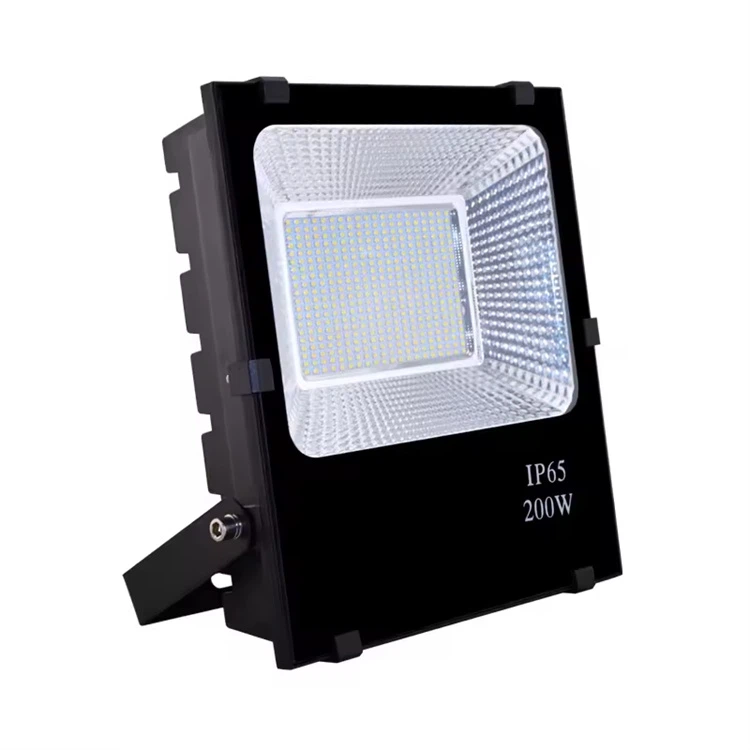
1. Introduction: The Critical Role of Apron Lighting in Aviation Safety
LED floodlight systems are the backbone of safe and efficient airport apron operations, providing the essential illumination for ground handling, aircraft maneuvering, and passenger boarding during night-time and low-visibility conditions. In the era of "Smart Airports" and the global push for the "Four Features Airport" initiative-emphasizing safety, greenness, intelligence, and humanity-optimizing apron lighting has become a paramount concern. Traditional lighting systems, often relying on high-intensity discharge (HID) lamps, are notoriously energy-intensive, inefficient, and lack adaptive control. This article delves into the technological evolution towards intelligent LED floodlighting systems, drawing upon authoritative research, including a seminal Master's thesis from the Civil Aviation University of China, to explore cutting-edge strategies for control, energy savings, and predictive maintenance. The transition to smart LED flood lights is not merely an upgrade; it's a fundamental shift towards safer, more sustainable, and more cost-effective airport operations, directly contributing to the core goals of modern aviation infrastructure.
2. What Are the Current Challenges in Traditional Airport Floodlighting?
Traditional airport apron lighting, typically comprising high-mast fixtures with multiple high-power HID or High-Pressure Sodium (HPS) lamps, faces several systemic challenges. Primarily, these systems exhibit excessively high energy consumption levels. Statistics indicate that apron lighting can constitute over 25% of an airport's total energy use, representing a significant operational cost and environmental footprint. Secondly, control methodologies are inefficient and rigid. Most systems operate on simple astronomical timers or require manual intervention, failing to adapt to dynamic factors like fluctuating flight schedules, varying weather conditions, or specific apron occupancy. This "always-on" or poorly timed approach leads to massive energy waste during low-traffic periods. Furthermore, maintenance and fault diagnosis are reactive and costly. Failures are often identified only after they occur, requiring manual inspection across vast apron areas, which leads to extended downtimes and potential safety hazards. A 2022 study highlighted that delayed fault detection in critical infrastructure like lighting can increase operational risks by up to 40%. These challenges underscore the urgent need for an intelligent, data-driven overhaul of apron flood lighting infrastructure.
3. How Do Advanced LED Floodlights Enhance Apron Illumination?
The adoption of LED flood light technology addresses the core deficiencies of traditional systems. Modern LED floodlights offer superior luminous efficacy, often exceeding 130 lumens per watt (lm/W), compared to 80-100 lm/W for HPS lamps. This translates to direct energy savings of 50-76% for equivalent illuminance. Beyond efficiency, LEDs provide superior optical control with precise beam distribution, reducing light pollution and glare-a critical factor for pilot visibility. Their extended lifespan (50,000-100,000 hours) drastically reduces replacement frequency and maintenance costs. Research demonstrates that the digital nature of LED systems enables seamless integration with smart sensors and control networks, forming the foundation for the Internet of Things (IoT) in airport lighting. This integration allows for granular control of individual or groups of luminaires, adaptive dimming, and real-time performance monitoring, transforming the LED floodlight from a passive light source into an active data node within the airport's operational ecosystem.
Table 1: Technical & Economic Comparison: Traditional HID vs. Modern LED Floodlights for Airports
|
Parameter |
High-Pressure Sodium (HPS) / HID Floodlight |
Modern Intelligent LED Floodlight |
Advantage / Impact |
|---|---|---|---|
|
Luminous Efficacy |
80 - 100 lm/W |
120 - 150+ lm/W |
~50% Higher Efficiency: Direct reduction in power draw for the same light output. |
|
Typical Lifespan (L70) |
15,000 - 24,000 hours |
50,000 - 100,000 hours |
3-5x Longer Life: Dramatically lowers maintenance, labor, and replacement lamp costs. |
|
Color Rendering Index (CRI) |
Low (Ra 20-30) |
High (Ra 70-80+) |
Improved Visibility: Better color distinction enhances safety for ground staff and pilots. |
|
Instant On/Off & Dimming |
Poor (requires warm-up, limited dimming) |
Excellent (instantaneous, fully dimmable 0-100%) |
Enhanced Control: Enables adaptive lighting strategies (e.g., occupancy-based dimming). |
|
System Connectivity |
Minimal or none |
Native (DALI, 0-10V, Zigbee, LoRaWAN) |
IoT Integration: Enables centralized monitoring, fault diagnosis, and data analytics. |
|
Total Cost of Ownership (10-year) |
High (energy + frequent maintenance + replacements) |
Significantly Lower (lower energy + minimal maintenance) |
Substantial ROI: Lower operational expenditure justifies upfront investment. |
4. What is the Optimal Illumination Angle for Apron LED Floodlights?

Achieving uniform, compliant illumination across the complex geometry of an aircraft stand is a critical engineering challenge. Relying solely on horizontal and vertical illuminance averages (e.g., ICAO Annex 14 standards) is insufficient for operational quality. Advanced research, utilizing simulation software like DIALux evo, proposes a refined evaluation framework with six key apron zone metrics: Aircraft Guidance Front Area (E_hAC), Baggage Loading Zone (E_hBL), Passenger Boarding Bridge Zone (E_hPB), Fueling Zone (E_hFF), Over-lit Area Grid Count (E_hOA), and Aircraft Towing Vertical Illuminance (E_vAT). Simulation studies on a typical 4D airport apron model with 7-lamp high masts have identified optimal LED floodlight aiming angles. The research found that a configuration where the primary lamp's pitch (X-axis) is set to 75° and its yaw (Y-axis) to 30° produced superior results. This configuration maximized illuminance in key operational zones while minimizing over-lit areas that waste energy and cause glare, ensuring compliance with stringent standards for all critical apron regions. This precise optical design is fundamental for deploying effective and efficient LED flood lighting.
5. How Can Intelligent Control Strategies Reduce Energy Consumption?
Intelligent control is the brain of a modern LED floodlight system, transforming static illumination into a dynamic, responsive resource. A multi-layered strategy is most effective:
Astronomical Time Control: Provides a reliable baseline based on sunset/sunrise but lacks adaptability.
Photocell (Lux) Control: Activates lights when ambient light falls below a set threshold (e.g., 30 lux), responding to sudden weather changes.
Flight-Linked Dynamic Control (The Most Impactful): This strategy synchronizes LED floodlight intensity with real-time flight schedules. Using a combination of the optimal illumination angles determined in Section 4, the system can operate in distinct modes. For example, when a stand is unoccupied, adjacent masts can operate in a reduced mode, providing safe background lighting (~30 lux). As an aircraft's scheduled arrival approaches (e.g., -60 minutes), the specific stand's lights ramp to full operational mode (~38 lux). After servicing, if the ground time is long, lights can dim again, reactivating for departure. This granular, schedule-driven control can yield energy savings exceeding 40% compared to all-night full-power operation, making the LED floodlight system a key player in an airport's sustainability goals.
Table 2: Intelligent LED Floodlight Control Strategy Matrix for Airport Aprons
|
Control Strategy |
Primary Trigger |
Action |
Key Benefit |
Limitation / Consideration |
|---|---|---|---|---|
|
Astronomical Timer |
Time of Day (Sunset/Sunrise) |
Automatic ON/OFF of all or groups of lights. |
Reliability, eliminates manual time-setting. |
Inflexible; does not account for weather or flight delays. |
|
Photocell (Lux Sensor) |
Ambient Light Level (e.g., <30 lux) |
Activates lights when natural light is insufficient. |
Responds to real-time weather (clouds, fog). |
Sensor placement critical; requires calibration; may conflict with other modes. |
|
Flight-Linked Dynamic |
Flight Schedule Data (A-CDM, FIDS) |
Adjusts light intensity/mode per stand based on aircraft occupancy & schedule. |
Maximizes Energy Savings (40%+); aligns light with actual need. |
Requires integration with airport operational databases; logic must handle flight delays. |
|
Emergency Manual Override |
Human Operator Input |
Direct, priority control of any light or group. |
Ensures ultimate human control for safety/scenarios. |
Should be used sparingly to maintain automated efficiency. |
6. What Role Does AI Play in Proactive Floodlight Fault Diagnosis?
Reactive maintenance is costly and risky. Modern systems employ Deep Neural Networks (DNN) and optimization algorithms like Particle Swarm Optimization (PSO) for predictive fault diagnosis. A diagnostic model is trained on historical LED floodlight operational data-voltage, current, power, power factor, internal temperature, and even external environmental data like humidity. The improved PSO algorithm optimizes the DNN's initial weights, accelerating convergence and improving accuracy. This model can classify common faults-such as integrated circuit failure, main circuit fault, distribution box overheating, switchgear failure, or short circuits-with high accuracy (>85%). By continuously analyzing real-time data streams, the system can alert maintenance crews to developing issues before a catastrophic failure occurs, shifting from schedule-based to condition-based maintenance. This AI-driven approach dramatically reduces unplanned downtime, improves safety, and optimizes maintenance resource allocation for the entire flood lighting network.
7. Industry Challenges & Practical Solutions for Airport Lighting Upgrades
Challenge 1: High Upfront Capital Investment. The initial cost of replacing hundreds of high-mast LED floodlights and installing a new control network is significant.
Solution: Develop a clear Total Cost of Ownership (TCO) model highlighting long-term energy (50-70% savings) and maintenance savings. Pursue green financing, energy performance contracts (EPCs), or phased rollout plans starting with the highest-use areas.
Challenge 2: Integration with Legacy Infrastructure and Airport Systems. Modernizing lighting must not disrupt 24/7 airport operations.
Solution: Choose systems with open-protocol communication (e.g., DALI, NEMA) for easier integration. Implement pilots in non-critical areas first. Ensure the lighting management system has a well-documented API for seamless integration with Flight Information Display Systems (FIDS) and Airport Operational Databases (AODB).
Challenge 3: Ensuring Compliance with Strict Aviation Standards (ICAO, FAA, Local). Lighting must meet precise photometric and performance regulations.
Solution: Engage lighting designers and manufacturers with proven aviation experience from the project's inception. Use simulation software (like DIALux evo) to model and validate designs against all relevant standards before installation.
Challenge 4: Staff Training and Change Management. Operations and maintenance teams must adapt to new technology.
Solution: Include comprehensive training programs as part of the implementation package. Develop clear new Standard Operating Procedures (SOPs) for the intelligent lighting system and its fault diagnosis dashboard.
8. Frequently Asked Questions (FAQ) on Airport LED Floodlight Systems

Q1: How does the light quality of LED compare to traditional HID for pilot and ground crew visibility?
A: Modern LED floodlights offer a higher Color Rendering Index (CRI), typically Ra >70 compared to Ra ~25 for HPS. This means colors are rendered more accurately, improving the ability of pilots and ground staff to distinguish signals, markings, and equipment, thereby enhancing situational awareness and safety.
Q2: Can intelligent LED systems be retrofitted onto existing high-mast poles?
A: In many cases, yes. A key feasibility study involves verifying the structural integrity of the existing pole to handle the weight (often lighter for LEDs) and wind load of the new luminaire. The electrical infrastructure must also be assessed to support the control wiring. Many manufacturers offer retrofit kits designed for this purpose.
Q3: What cybersecurity measures are needed for a networked lighting system?
A: This is critical. The lighting network should be physically or logically segregated from core airport IT networks using VLANs or separate hardware. Implement strong encryption for data transmission, require secure authentication for system access, and ensure regular security firmware updates are part of the maintenance contract.
Q4: How is data from the fault diagnosis model used in practice?
A: The model outputs are integrated into the airport's Computerized Maintenance Management System (CMMS). When a high-probability fault is predicted, the CMMS can automatically generate a work order, assign it to a technician, and even guide them with the suspected fault type and location, streamlining the repair process.
9. Conclusion and Next Steps
The evolution from static, energy-hungry lighting to intelligent, adaptive LED floodlight systems is a cornerstone of the smart, green airport of the future. By leveraging optimal optical design, flight-synchronized control strategies, and AI-powered predictive maintenance, airports can achieve unprecedented levels of safety, efficiency, and sustainability. The integration of these technologies transforms apron lighting from a utility into a strategic asset.
Ready to illuminate your airport's path to efficiency and safety? Contact our team of aviation lighting specialists for a customized consultation. We can provide a detailed feasibility study, TCO analysis, and a pilot project plan tailored to your airport's specific apron layout and operational needs.
Technical Notes & References
Technical Notes:
Luminous Efficacy (lm/W): A measure of how efficiently a light source produces visible light. Higher values indicate more light output per watt of electrical power consumed.
Color Rendering Index (CRI - Ra): A scale from 0 to 100 that measures a light source's ability to reveal the colors of objects faithfully compared to a natural light source.
L70 Lifetime: The number of operating hours after which the LED's light output depreciates to 70% of its initial value. This is a more meaningful metric than "time to complete failure."
Particle Swarm Optimization (PSO): A computational method that optimizes a problem by iteratively trying to improve a candidate solution with regard to a given measure of quality.
Deep Neural Network (DNN): A type of artificial intelligence architecture with multiple layers between input and output, capable of learning complex patterns from data.
References & Authority Links:
Xing, Z. (2023). Study on Control Strategy and Fault Diagnosis of Apron Flood Lighting [Master's Thesis, Civil Aviation University of China].
International Civil Aviation Organization (ICAO). Annex 14 - Aerodromes, Volume I - Aerodrome Design and Operations.
U.S. Federal Aviation Administration (FAA). *Advisory Circular 150/5340-30J, Design and Installation Details for Airport Visual Aids*.
DesignLights Consortium (DLC). Technical Requirements for Outdoor Area Lighting.
International Energy Agency (IEA). (2023). Lighting - Analysis. IEA. Reports on global energy consumption from lighting and efficiency trends.





