

Should a living room have a ceiling light? Finally, design experts settle the debate
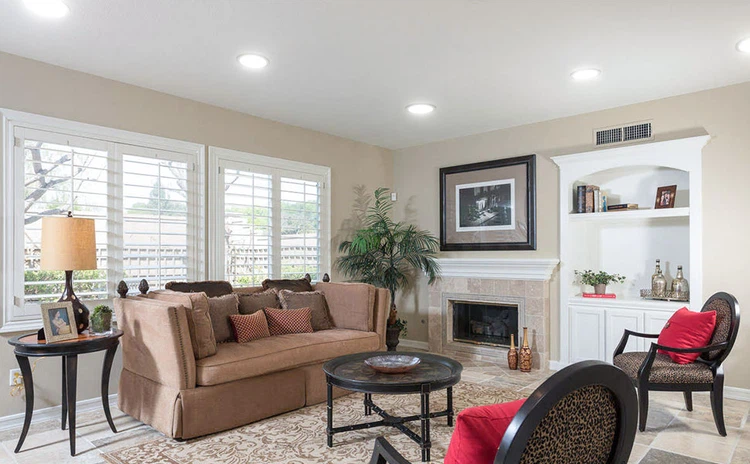
Making the choice to install a ceiling light in your sitting area can be challenging. The apparent inference might be that yes, your living room needs a ceiling light, but in a well-lit lighting arrangement, supplemental light sources might be able to create more atmosphere than your overhead lighting.
The answer to this query relies on a variety of factors, including the mood you want to generate. How much additional illumination are you prepared to add to your design? Your sitting area has what size? And do you want to use your illumination for practical purposes or just for decoration?
The craft of lighting has always existed. It feels like a discipline now more than ever, and one that's very simple to get lost in, according to Monique Tollgrd, director of interior design at Tollgrd Design Group. However, illumination is fundamentally a language. When spoken elegantly, it fosters friendliness and dialogue. It produces darker, moodier ponds where the eye doesn't need to be pulled and focuses attention on the areas that need illumination. When poorly spoken, it has the effect of lighting a space from the top down without consideration for what needs to be illuminated, creating grids of downlights.
DO YOU NEED A CEILING LIGHT IN A LIVING ROOM?
Most living areas are illuminated with a combination of overhead (or ambient), accent, and task lights, but if the levels of light are effective enough, ceiling lights may not be necessary. Additionally, ceiling lamps are frequently not the focal point of the lighting plan because many designs emphasize decoration over illumination. In your living room alone, task and accent lighting aids produce a pleasant and cozy atmosphere.
The illumination in the living area is essential to setting the appropriate atmosphere for relaxation. A room can feel uninviting and sterile if the lighting is very harsh and frigid, according to Will Earl, design director of the lighting company J Adams & Co.(opens in new tab).
"The lighting in the living room should be warm and welcoming; done properly, it will create a space that feels "natural" and enable people to feel content and at ease without even realizing it."
Do you really need overhead illumination when there are so many other elements that can have a significant impact? We balance the benefits and drawbacks below.
CURRENT CEILING LIGHTS' BENEFITS
The first component and base of your layered lighting design can be a ceiling lamp. From there, you can expand, replacing your overhead light with additional living room lighting fixtures as you go. A living area can be made to have adequate illumination throughout by using recessed lighting. Since all types of ceiling lights can be connected to a dimmer and are evenly spread out throughout the ceiling, you can regulate the amount of light that enters the area.
Additionally, ceiling lamps can offer character and design detail. According to Noor Charchafchi, creator and CEO of Celine Interior Design, "I do love a statement ceiling light – a chandelier or pendant lighting idea in a living room can add to the drama, mood, and energy of the whole space."(opens in new tab).
We are huge supporters of ornamental ceiling lights, says Monique Tollgrd of Tollgrd(opens in new tab). They direct the viewer's gaze and establish a focal point or center in architecture. They give a justification for why something like a dinner table is located where it is. In contrast to spotlights, pendants and chandeliers can often spread light outward from all directions rather than just downward, she adds.
Last but not least, an overhead lamp can also aid in faking height. A dangling light bulb can draw the viewer's attention upwards and play a cunning eye trick, and flush-mounted ceiling lights attached to the ceiling can also help a space feel taller. Interior designer Noa Santos of Nainoa(opens in new browser) used the aforementioned statement piece as part of a plan to give the room some serious drama and height.

AVOIDING CEILING LIGHTS
First off, adding an overhead lamp to a living room can add ornamental clutter, as opposed to keeping things aesthetically calming, tidy, and in line with minimalist interior design. You must take your living room's measurements into account before deciding whether a statement ceiling lamp is a smart choice for you.
According to Noor, "choosing the right light heavily depends on the ceiling height and the existing scheme." "A low ceiling room is better off without a central pendant or ceiling light, and similarly, a room that feels quite full in terms of design and style often doesn't need an additional statement light as it can produce a look that is too busy."
Statement ceiling lights frequently produce more heat than other lighting, which is another issue. This means that they may result in uncomfortable temps near windows or in busy places. Furthermore, these bulbs need more upkeep than other types of illumination, which may involve replacing the bulb about every few years.
Finally, while a statement lamp may have a stunning appearance, think about whether it will actually provide enough light or if it will just serve as decorative furnishings.
According to Jennifer J. Morris, director and interior designer at J Morris, "Some statement lights don't always give a ton of light, so you have to be careful to check your needs and expectations."(opens in new tab). See if the light coming from this overhead fixture is sufficient for you to perform your duties. Equally, some overhead lamps overshine the design. Oftentimes, recessed lighting is too intense. "Lighting shouldn't shine right into someone's eyes." Ever!' advises furniture decorator Joy Moyler.(opens in new tab). To counteract this, learn how to arrange recessed lighting so that your roof doesn't look like an aircraft runway.

WHAT TYPES OF CEILING LIGHT ARE AVAILABLE?
Statement chandelier-style ceiling fittings, pendants, flush-mounted ceiling lights, recessed and track lighting, or LED strip lights hidden within crown molding are all options for living room ceiling lighting.
A signature light, such as a chandelier, or pendants are very common in sitting rooms. A centrally located chandelier and other statement fittings that dangle from the ceiling help divide the room and create a strong focal point. They are frequently found in living rooms for aesthetic reasons rather than necessary to provide the most illumination.
Pendants frequently have an ornamental component in addition to hanging lower than statement lights or chandeliers. Although they were previously only allowed in the kitchen, where they would elegantly dangle over a dining room table or kitchen island, they are now appearing in living areas and even bedrooms.
Another type of light device for the living room is a flush-mounted ceiling light, which rests flat against the ceiling and casts light downward.
Living areas often have downlighting or recessed lighting. A light source is put into a hole in the ceiling, and the light shines downward as either a wide beam or a narrow limelight.
According to Alex Terry of Terry and Terry Architecture, "Rerecessed lighting produces a nice even light without interrupting the clean minimal lines of the ceiling."(opens in new tab). Recessed lighting can produce a well-balanced light throughout the room when it is positioned and customized for the particular area.
Finally, track lighting, another type of ceiling light available, has a mid-century modern feel. Each lamp is mounted on a train and can be turned to face a different direction.





