

Introduction: The Interface the Eye Actually Sees
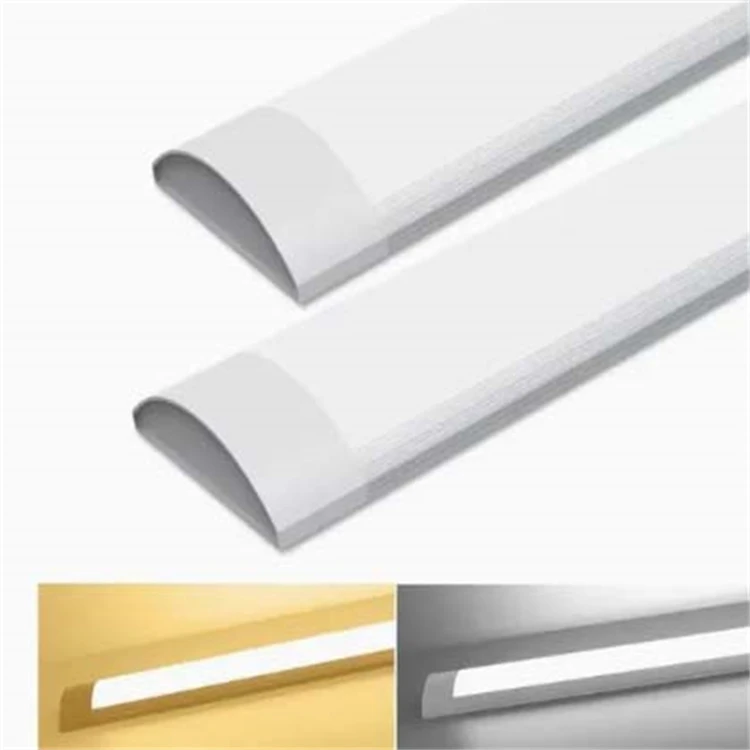
An LED batten is, optically speaking, a row of very small, very bright points. The eye never sees the LED chip directly in a well-designed fixture. What the eye sees is the cover-the polycarbonate sheet that sits between the emitters and the room. Every judgment the visual system makes about the light-whether it is comfortable, whether it is adequate, whether it can be looked at without aversion-is a judgment about that interface.
This is why the phrase "soft, bright, and safe" is not three separate marketing adjectives. It describes three properties of a single optical component, and the engineering challenge lies in satisfying them simultaneously. A cover can be made soft by making it milky and absorptive, but then it is not bright. It can be made bright by making it clear, but then it is not soft-the LED points remain visible and the glare is unrestrained. Safety, meanwhile, is not a property the eye can verify by looking. It is a property of the spectral and temporal characteristics of the light that the cover transmits, and of the cover's ability to remain optically stable across years of exposure to the LED's own radiation and heat.
The high-transmittance PC cover is the component that resolves these tensions. Its softness comes from volumetric light scattering, not from opacity. Its brightness comes from a transmittance specification that is measured, not assumed. Its safety comes from what it removes from the light-the peak luminance of the bare emitter, the spatial discontinuity of a point-source array-and from what it does not add: no significant spectral distortion, no photo-degradation products that would compromise the eye's environment over time. This article examines the optical mechanism (Section 2), the softness–brightness balance (Section 3), the safety dimensions of glare, spectrum, and flicker (Section 4), and the thermal condition that preserves the cover's protective function (Section 5).
The Optical Mechanism: How a PC Cover Converts Points into a Plane
Volumetric Scattering and the Elimination of Hot Spots
A raw LED emitter is a luminance concentration problem. Its light exits from a small area at high intensity, and when an array of such emitters is viewed through a clear or lightly frosted cover, the eye registers a series of bright points separated by darker intervals-the hot spot effect. The visual system cannot fuse this pattern into a comfortable field; it is forced to process a high-contrast, spatially fragmented stimulus.
The PC cover solves this through volumetric scattering. Polycarbonate is compounded with light-diffusing particles whose refractive index differs from that of the PC resin. When light crosses the boundary between resin and particle, it undergoes refraction, reflection, and scattering. After many such events through the thickness of the cover, the directional, point-like emission of the LED is redistributed into a Lambertian-like output from the cover's entire surface. The eye no longer sees the emitters; it sees a continuous luminous plane of comparatively low and uniform luminance.
The parameters that describe this transformation are transmittance and haze. Transmittance is the fraction of incident visible light that exits the cover. Haze is the fraction of transmitted light that is scattered away from the incident direction. A 2.0 mm light-diffusion PC sample can achieve visible light transmittance of 70–90% with haze adjustable up to 99%. Higher haze means more complete concealment of the LED points and a more uniform surface; transmittance determines how much of the LED's investment in lumens survives the cover. A high-haze, high-transmittance cover is the combination that makes "soft" and "bright" compatible.
Surface Micro-Structure and Angular Light Distribution
Volumetric scattering controls the uniformity of the luminous surface. Surface geometry controls the angular distribution of the light that leaves it. Many high-performance PC covers combine a volume-diffusing substrate with a micro-structured surface-micro-prisms, lenticular arrays, or fine matte textures-that redirects light away from the direct glare angles an occupant would encounter when looking toward the fixture from below or across a room.
This angular control is what distinguishes a diffuser from an anti-glare optic. A purely volumetric diffuser produces a uniform surface but may still emit significant intensity at high angles relative to the fixture's axis, which is precisely the direction in which glare is perceived. A micro-structured surface redistributes intensity toward more oblique downward angles, reducing the luminance presented to the eye at the viewing angles that matter in a room. The combination-volumetric scattering for surface uniformity, surface structure for angular redistribution-addresses both the spatial and directional components of glare.
Why Polycarbonate: Mechanical and Thermal Fitness for the Optical Role
The choice of PC as the substrate is not arbitrary. The cover is a structural component as well as an optical one, and it must maintain its optical geometry under thermal load. PC offers a heat deflection temperature of 125°C and a Vicat softening point of 145°C, allowing it to withstand the heat generated by an operating LED fixture without deformation that would alter the optical path. Its impact strength exceeds that of glass or acrylic, removing the risk of shattering in residential and educational settings, and its dimensional stability (molding shrinkage 0.4–0.6%) ensures that the cover retains its fit and optical alignment over service life.
The optical performance of the cover is therefore inseparable from its mechanical and thermal performance. A cover that scatters light beautifully at installation but warps under thermal cycling, or yellows under blue-light exposure, ceases to be a protective interface. PC's material properties are the foundation on which the optical specifications rest.
The Softness–Brightness Balance: Resolving an Apparent Trade-Off
The Transmittance Ceiling and the Cost of Excessive Diffusion
The claim that a cover is both soft and bright invites skepticism because the naive model of diffusion implies a cost: more scattering means more light lost. This model is not wrong in principle. A cover with extremely high loading of diffusing particles can achieve complete concealment of the LED points at the cost of transmittance, because scattering events that redirect light also increase the path length and the probability of absorption.
The engineering resolution is to specify transmittance within a range that preserves luminous efficacy while achieving the haze needed for comfort. Commercial light-diffusion PC products for LED covers target 70–90% visible transmittance at 2.0 mm, with haze independently adjustable up to 99%. Other extruded grades reach 86–93% transmittance with haze ≥ 90%. For linear lighting covers, practical guidance places the transmittance window at 85–92%: values above this range risk insufficient diffusion and residual glare, while values below it weaken the fixture's luminous efficiency without a proportional comfort gain.
The "high-transmittance" claim is therefore meaningful only when it is accompanied by a haze or UGR specification. A transmittance figure in isolation describes how much light survives the cover, not whether the surviving light has been rendered comfortable.
UGR as the Quantitative Bridge Between Soft and Safe
The Unified Glare Rating provides the metric that connects the cover's optical behavior to the occupant's visual experience. UGR is calculated from the luminance of the luminaire in the observer's field of view, the apparent size of the luminous surface, the background luminance, and the position of the luminaire relative to the line of sight. The cover influences the first two variables directly: volumetric scattering and surface structuring reduce the peak luminance of the fixture and increase the apparent area over which that luminance is distributed.
The resulting UGR values determine whether a cover's "softness" is functionally adequate. For offices and classrooms-environments of sustained visual work-the recommended ceiling is UGR ≤ 19, and classroom lighting specifications commonly demand UGR ≤ 16. A cover that achieves a visually smooth surface but leaves the fixture with a UGR of 25 has not delivered softness in any measurable sense. The high-transmittance PC cover earns the description when its optical architecture supports a UGR at or below the threshold appropriate to the installation.
Brightness as Delivered Luminous Flux, Not Source Intensity
The brightness that matters to the occupant is not the luminance of the LED chip; it is the luminous flux delivered to the task surface after the cover. A high-transmittance cover with effective diffusion preserves a larger fraction of the LED's flux while distributing it over a larger, lower-luminance area. The eye perceives a bright room, not a bright ceiling. This distinction resolves the apparent paradox of the article's title. Softness is a property of the luminous surface's luminance distribution; brightness is a property of the flux delivered to the space. A cover engineered for high transmittance and controlled haze optimizes both because it does not sacrifice flux to achieve concealment, and it does not sacrifice concealment to achieve flux.
The Safety Dimension: What the Cover Protects Against
Discomfort Glare as a Cumulative Ocular Stressor
The softness of the cover is not merely a comfort preference. Discomfort glare from luminaires in the field of view imposes a continuous regulatory load on the visual system: the pupil constricts against the bright source, the gaze is drawn away from the task, and the occupant spends attentional resources suppressing the aversion response. In offices and classrooms, this manifests as visual fatigue, reduced concentration, and the constellation of symptoms associated with poor lighting quality.
For children, the stakes are distinct. The visual system is still developing, and the accommodative and vergence mechanisms exercised during near work are sensitive to the contrast conditions in the surrounding field. A bare or inadequately diffused source introduces a high-luminance distractor that competes with the task and encourages postural adjustments-leaning, tilting, shielding-that distort the relationship between the eye and the work surface. The cover's role in eliminating the visible point source is therefore a developmental safeguard, not merely an aesthetic one.
Spectral Considerations: Blue-Light Peaks and the Role of Diffusion
The blue-light hazard of LED sources is a legitimate but frequently misrepresented concern. The photobiological safety framework established by IEC 62471 and CIE S 009:2002 defines exposure limits for retinal blue-light hazard across the 300–700 nm range, with the 400–500 nm band identified as the primary risk region for LED products. Compliance with these limits is a function of the source spectrum, the luminance of the source, and the exposure geometry.
The cover contributes to safety not by altering the LED's spectrum-a passive diffuser does not function as a blue-light filter-but by reducing the source luminance that reaches the eye. The blue-light hazard weighting function is applied to spectral radiance, and radiance is luminance per unit area in spectral terms. By spreading the same flux over a larger apparent area, the cover reduces the radiance presented to the observer from any given direction. A diffused luminous plane at moderate luminance presents a fundamentally different exposure profile from a bare emitter array at high luminance, even when the underlying spectral power distribution is identical. The cover's safety contribution is geometric and radiometric, not spectral, and it is most consequential for the populations with the highest exposure-children and occupants of long-duration work environments.
Flicker: The Temporal Dimension the Cover Cannot Solve Alone
The PC cover addresses the spatial dimension of ocular comfort. It does not address the temporal dimension. Flicker-modulation of light output at frequencies that may be invisible but are still registered by the visual system-is a driver-level property. The IEEE 1789-2015 recommended practice documents the association between modulation and headaches, eyestrain, and reduced performance on visual tasks, and it provides modulation limits intended to mitigate these risks.
The complete protective package for the eye therefore requires both components: a cover that eliminates spatial glare and a constant-current driver that eliminates temporal modulation. A flicker-free fixture behind a clear cover still presents a harsh, point-source stimulus. A beautifully diffused cover in front of a flickering driver still delivers a modulated light field to a visual system that cannot fully habituate to it. "Safe" is a system-level claim, and the cover is one indispensable half of it.
The Thermal Condition: Why the Cover's Protection Must Endure
Photo-Thermal Degradation of Polycarbonate
The optical properties of PC are not immutable. Polycarbonate is susceptible to photo-degradation under blue-light irradiation, particularly at elevated temperatures. Controlled studies of bisphenol-A polycarbonate plates exposed to blue light at 140°C for up to 1,920 hours show a progressive discoloration, loss of optical properties, decrease in light transmission, and increase in yellowing index. The yellowing proceeds in two stages: an induction period of roughly 500 hours during which the change is slow, followed by an accelerated regime in which the degradation rate increases. The mechanisms involve both photo-Fries rearrangement and photo-oxidation, with the former predominating as aging time increases.
The practical implication is direct. A cover that yellows loses transmittance-the "bright" property degrades-and its scattering characteristics may shift as the polymer chemistry changes. The protective interface becomes less protective not because its design was inadequate, but because the thermal environment accelerated a known degradation pathway.
The Iron Base as the Cover's Thermal Guardian
This is where the fixture's thermal architecture becomes an optical concern. The PC cover sits in close proximity to the LED board and the driver, both of which generate heat. The junction temperature of the LEDs and the ambient temperature within the fixture enclosure determine the cover's operating temperature, and that temperature governs the rate of photo-thermal yellowing.
An iron-clad base conducts heat away from the LED board and spreads it across a larger surface area for dissipation to the ambient air. By limiting the temperature rise within the fixture, the base keeps the cover within a thermal envelope in which the induction period of yellowing is extended and the accelerated degradation regime is delayed. The cover's optical protection is therefore conditional on the base's thermal performance. A fixture that specifies a high-transmittance PC cover but provides an inadequate thermal pathway is making a claim that is true at installation and progressively less true thereafter. The combination of cover and base is the condition under which "soft, bright, and safe" remains a description of the product rather than a description of its first day.
What "Safe" Means Over Time
The temporal dimension of safety is the one least visible to the buyer and most consequential to the occupant. A fixture that is glare-free and flicker-free at installation but whose cover yellows and scatters unevenly after two years of service has not delivered durable protection. The eye that reads beneath it in year three is exposed to a different stimulus than the one that was specified. The thermal integrity of the fixture is therefore not a separate engineering concern from the optical claim. It is the condition that makes the optical claim durable.
Conclusion: The Cover Is the Contract Between the Fixture and the Eye
The high-transmittance PC cover is often described as a diffuser, as if its only function were to make the light less visible. The analysis presented here supports a more precise characterization. The cover is the optical contract between the fixture and the visual system of the occupant. It promises that the light delivered will be spatially uniform rather than point-like (soft), that a specified proportion of the LED's luminous flux will survive the diffusing interface (bright), and that the ocular stressors the eye cannot consciously monitor-peak luminance, glare, and the radiance that drives blue-light exposure-will be held within limits that sustained occupancy can tolerate (safe).
The numbers that support this contract are measurable. Transmittance in the 70–90% range at 2.0 mm, with haze adjustable to 99%, establishes the softness–brightness baseline. A UGR at or below 19 for offices and classrooms-and below 16 where visual demands are highest-defines the threshold at which softness becomes functional safety. The IEC 62471 framework provides the radiance limits against which the diffused output is evaluated, and the IEEE 1789-2015 practices define the temporal modulation limits that the driver, not the cover, must satisfy. Finally, the photo-degradation data establish that the cover's optical properties are thermally contingent, and that the fixture's base is the component that determines whether the cover's protection endures.
A lighting fixture that honors these conditions does not ask the occupant to notice it. That is the point. The best cover is the one the eye never has reason to negotiate with-soft enough to disappear into the room, bright enough to make the task effortless, and stable enough that its protection does not expire while the fixture is still in service. That is what "soft, bright, and safe" means when the phrase is treated as an engineering specification rather than a slogan. The high-transmittance PC cover is the component that makes the specification achievable, provided the fixture around it is built to keep its promise.
How To Cooperate With Us?
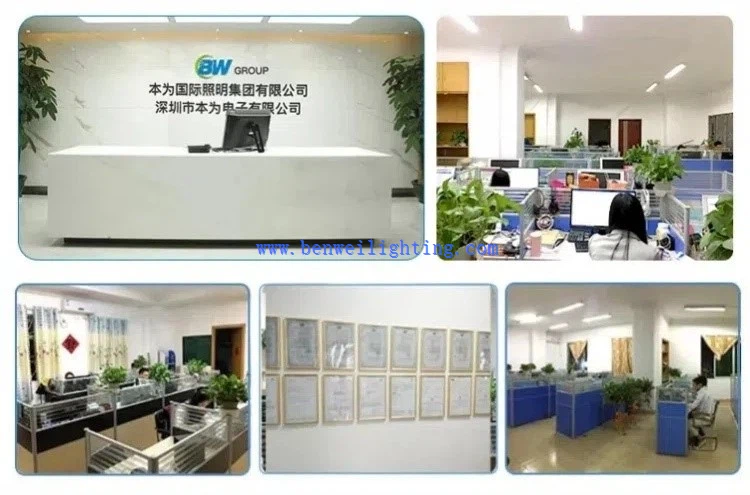
We are happy to have total control over the manufacturing process and the calibre of our products since we have our own facilities. Since we are producers rather than just brokers, we are dedicated to providing our customers with the best pricing. Since we are certain that the price and quality of our products are clear, we invite customers to see our samples first. Our commitment to quality and customer satisfaction drives us to continuously provide top-notch goods.
Our address
3rd Floor, 5th Building, Hebei Industrial Park, Hualian Community, Longhua District, Shenzhen, China





