

If you have ever sourced red light therapy bulbs, you have likely encountered specifications like "660nm + 850nm"-sometimes with the addition of 630nm, 810nm, or 940nm. Customers often ask: "Why not just use a single wavelength? Why combine them?"
The answer lies in how light interacts with human tissue, rather than in marketing jargon. Let's break it down across a few dimensions to help you understand the logic behind this "golden combination"-and to make it easier for you to explain it to your own customers.
660nm Red Light: Targeting the "Surface"
660nm falls within the visible red spectrum; it is clearly perceptible to the human eye. When it enters the skin, its penetration depth is relatively limited-generally reaching the epidermis and dermis, spanning a depth of only a few millimeters.
Target areas: The epidermis, dermis, and cells near the skin's surface.
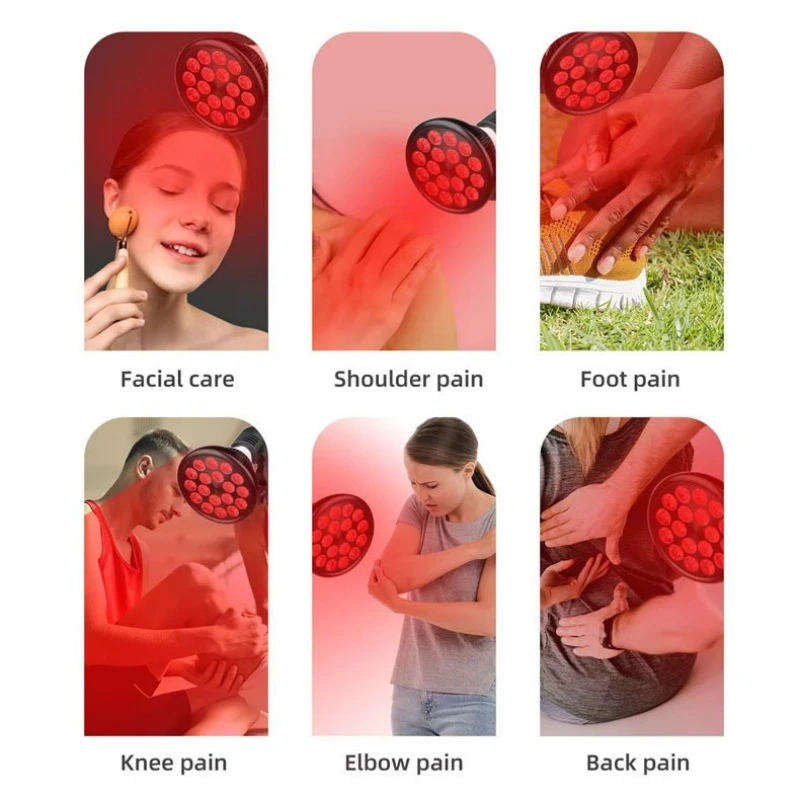
Common applications: Facial care, skin texture improvement, and general light therapy for superficial areas.
Product value: This wavelength is most frequently found in skincare and beauty-focused bulbs or masks; it is the selling point most easily grasped by end-users.
In short, 660nm is all about "surface-level" care.
850nm Near-Infrared Light: Reaching "Deeper Down"
850nm belongs to the near-infrared spectrum and is virtually invisible to the naked eye. If you see a faint, dim red glow when a bulb is on, that is simply visible light "leaking" from the edge of the LED spectrum.
Deeper penetration: At the same power level, 850nm light penetrates more effectively, reaching subcutaneous tissue, muscles, and the areas surrounding joints. The exact depth varies based on factors like skin tone, the thickness of subcutaneous fat, and the distance from the light source.
Common applications: Relieving muscle soreness, supporting joint health, and aiding post-exercise recovery.
User experience note: Because it is invisible, users might mistakenly assume the light isn't working. It is best to clarify this in your product packaging or user manuals to reduce the number of customer service inquiries.
Why a Single Wavelength Is Insufficient
Relying solely on 660nm provides good results for the skin's surface, but it falls short when it comes to reaching muscles and joints. Conversely, using only 850nm offers deeper penetration, yet it is less effective for the skin's surface than red light; furthermore, because this wavelength is invisible to the human eye, it can negatively impact the user experience and their level of trust in the product.
Combining both wavelengths into a single bulb allows a single session to cover both "superficial" and "deep" tissue layers. For users, this means one device can address both facial and bodily needs; for brands, it simplifies the product narrative and creates a clearer point of differentiation.
Why These Two Wavelengths Work Together: The "Optical Window"
Within the 600nm to 1100nm range, light absorption by hemoglobin and water is relatively low, allowing light to penetrate tissue more effectively-a range commonly referred to as the "optical window." Both 660nm and 850nm fall within this window; they do not interfere with each other, nor do they require additional filtering or isolation mechanisms.
Additionally, research suggests that cytochrome c oxidase-an enzyme found in mitochondria-responds to light in both of these wavelength bands. This is another reason why they are frequently used in tandem within the industry. It is worth noting that research in this field is ongoing, and specific parameters or outcomes may vary depending on experimental conditions. Therefore, it is advisable to use cautious, non-medical language in product marketing-such as "supports daily self-care" or "aids in relaxation"-rather than claiming medical efficacy.
Common Configurations for Combination Bulbs
There is no single industry standard, but common approaches include:
A ratio of approximately 1:1 (660nm to 850nm): The most prevalent configuration, suitable for general-purpose devices that cater to both the face and the body.
A higher proportion of red light: Typically geared toward beauty and skincare applications; the light appears visibly redder, providing a more intuitive experience for the user.
A higher proportion of near-infrared light: Generally focused on athletic recovery and physical therapy.
Multi-wavelength expansion: Beyond the standard 660nm and 850nm, you can incorporate 630nm, 810nm, or 940nm to create a more comprehensive spectral profile-an ideal approach for high-end product lines.
The specific configuration depends on your target audience and the intended use cases for your product.
Key parameters to consider during procurement
Wavelength combinations are just the starting point; the following factors are what truly determine product quality:
Wavelength accuracy: For a nominal 660nm or 850nm output, the actual peak deviation should ideally be kept within ±10nm. You can request a spectral test report from your supplier to verify this.
Irradiance: Measured values at a standard distance (e.g., 15cm or 30cm) are far more meaningful than wattage alone.
LED quality and quantity: The brand of the chip and the packaging method directly affect light degradation and performance consistency.
Flicker: A driver design that minimizes or eliminates low-frequency flicker ensures a more comfortable experience during extended use.
Thermal management: Poor heat dissipation leads to rapid light degradation and a shorter product lifespan.
Base type and voltage specifications: Ensure that the base type (e.g., E27, E26, GU10) and voltage standards align with the requirements of your target market.
Summary
660nm red light targets the surface layers, while 850nm near-infrared light reaches deeper tissues. Both fall within the "optical window," and combining them allows a single bulb to address needs for both facial and full-body applications. Ultimately, it is the details-wavelength accuracy, irradiance, LED quality, driver design, and thermal management-that truly set a product apart. When determining the ratio of wavelengths, don't simply default to a "1:1" split; instead, tailor it to your specific target market and product positioning.
Looking to launch your own brand of therapy bulbs?
If you are currently evaluating suppliers for 660nm + 850nm therapy bulbs, or if you are interested in customizing wavelength ratios, base types, power output, or packaging, please feel free to contact us directly. Please let us know your target market, intended use cases, and estimated procurement volume; we will provide spectral test reports, samples, and tailored solution recommendations.
Our address
No. 5-3 Niujiao Road, Yanchuan Community, Yanluo Subdistrict, Bao'an District, Shenzhen
bwzm18@ledbenweilighting.com






