

Introduction: The Ceiling That Fights Back
Light is supposed to serve the eye. In too many rooms, it competes with it.
The mechanism is glare: luminance that exceeds what the visual system can comfortably process. It arrives in two forms. Discomfort glare produces the instinctive aversion-the squint, the turn of the head, the impulse to shield the eyes from an overhead fixture that has become too bright in the wrong direction. Disability glare is more insidious: it degrades the ability to see detail without producing immediate conscious awareness of the cause. A glossy screen, a polished desk surface, or a white page under a poorly shielded linear light becomes a mirror of the luminaire rather than a medium for the task. The eye works harder. The task takes longer. The occupant concludes, wrongly, that they are tired.
The lighting industry has a metric for this: the Unified Glare Rating, or UGR. It is a numerical description of how much a luminaire is likely to cause discomfort glare in a given installation, and it is the variable that separates a light that disappears into the architecture from one that demands to be negotiated with. EN 12464-1, the European standard governing indoor workplace lighting, sets UGR ≤ 19 as the threshold for tasks involving visual display units (VDUs) and general office work. For VDU-heavy rooms, some guidance recommends UGR ≤ 16.
The glare-free LED batten is a response to this standard, but its relevance extends beyond the office. A child's study desk, a kitchen counter where recipes are read, a living room where a book is held at eye level-each of these is a visual task, and each is degraded by uncontrolled luminance in the field of view. This article argues that glare-free illumination is not a feature to be selected after brightness and efficiency have been settled. It is the condition under which brightness and efficiency become usable. The discussion proceeds through the optical mechanics of the soft mask (Section 2), the office case (Section 3), the children's room case (Section 4), and the residential synthesis (Section 5).

The Optical Mechanics of Glare Suppression: What a Soft Mask Actually Does
From Point Sources to a Uniform Luminous Plane
An LED batten without optical management is a row of discrete emitters viewed through a transparent or minimally diffusing cover. Each emitter is a small, high-luminance source. The eye does not perceive a continuous line of light; it perceives a sequence of bright points separated by darker intervals-the phenomenon known as the hot spot effect. Without a proper diffuser, the eye registers individual diodes as distinct glare points, fragmenting the light line and producing "multiple shadowing".
The soft mask's first function is to eliminate this spatial discontinuity. Polycarbonate (PC) diffusers formulated for LED applications achieve haze values above 95%, rendering the individual emitters invisible even in slim profiles where the distance between the LED and the diffuser surface is minimal. The result is not merely an aesthetic improvement. A continuous luminous plane presents a lower peak luminance to the eye than a row of point sources of equivalent total flux, and lower peak luminance is the direct lever on discomfort glare.
Transmittance and UGR: The Apparent Trade-Off and Its Resolution
A naïve model of glare control assumes that the only way to reduce glare is to reduce light. A denser diffuser scatters more, but it also absorbs more, and the fixture becomes dimmer. The technical achievement of the modern high-transmittance soft mask is the decoupling of these variables.
Micro-structured diffusers-particularly those with a micro-pyramid surface geometry-achieve light transmittance above 85% while simultaneously suppressing the UGR value. The micro-structure redirects and redistributes light rather than merely absorbing it, producing a well-defined beam angle (typically around 90° for general linear illumination) that improves optical efficiency while maintaining reasonable glare suppression. Independent product literature confirms the principle: PC diffusers with light transmission in the 80–88% range prevent glare and eye strain by lowering UGR, ensuring compliance with UGR < 19 under EN 12464-1.
The implication for the buyer is that "glare-free" and "bright" are not opposing specifications in a well-engineered fixture. A batten that achieves UGR ≤ 19 while maintaining high transmittance delivers both the luminous environment the task requires and the visual comfort sustained occupancy demands. A fixture that achieves low glare only by sacrificing output has solved the glare problem at the expense of the lighting problem.
Prismatic Versus Opal: Choosing the Right Diffusion Strategy
Not all diffusers are equivalent, and the choice between them reflects a design priority. Prismatic diffusers, with their structured surface geometry, offer stronger glare control (lower UGR) and higher efficiency; they are the appropriate choice where performance and glare suppression are paramount. Opal diffusers, which rely on volume scattering rather than surface structure, provide superior uniformity and a softer aesthetic, at a slight cost in efficiency. For a linear batten intended for homes, offices, and children's rooms-environments where comfort and uniformity are valued alongside glare control-the optimal architecture often combines a micro-structured anti-glare layer with a volume-diffusing substrate, capturing the UGR benefit of the prismatic approach and the visual softness of the opal approach.
The critical point is that glare control is an optical design outcome, not a material label. A fixture that claims "soft light" without a specified UGR value has not demonstrated glare control; it has described an appearance.
The Office Case: UGR ≤ 19 as the Threshold of Cognitive Endurance
Glare as a Continuous Cognitive Tax
Office lighting is not evaluated by how it looks on a specification sheet. It is evaluated by what happens to the occupant after four hours beneath it. Discomfort glare from luminaires in normal sight lines is the difference between a comfortable workplace and a fatiguing one. The mechanism is cumulative: each glance toward the ceiling, each shift of gaze across a screen, encounters the luminaire's luminance. The visual system does not habituate to glare; it spends resources suppressing the aversion response, and those resources are drawn from the cognitive budget available for the task.
The empirical record supports this. Glare-reduced, homogeneous lighting has been shown to improve concentration and reduce fatigue during long meetings and sustained work. High-quality, low-glare illumination supports productivity and reduces visual strain across workspaces. In human-centric lighting research, conditions that reduce glare while maintaining appropriate illuminance are associated with greater comfort and faster cognitive processing.
The VDU Complication
Screen-based work raises the stakes. A monitor is a secondary light source and a specular surface. When an overhead luminaire produces high-angle luminance, the screen can reflect it, superimposing a veiling luminance over the displayed image. The occupant adjusts screen angle, tilts the display, or shifts position-minor accommodations that accumulate into postural strain and reduced task efficiency.
EN 12464-1 addresses this directly with the UGR ≤ 19 requirement for VDU tasks, and more stringent guidance for VDU-heavy rooms recommends UGR ≤ 16. A linear LED batten engineered to UGR ≤ 19 at standard mounting heights (2.8 m) meets the baseline; a fixture that achieves UGR ≤ 19 across a range of installation conditions provides a margin of safety against the variability of real office layouts.
Uniformity and the Absence of Dark Corners
Glare suppression without uniformity produces a different problem: a uniformly dim environment with isolated bright patches. EN 12464-1 requires a uniformity ratio (U₀) of at least 0.4 on the work plane, meaning that the darkest point on the desk must receive no less than 40% of the average illuminance. A linear batten with a well-designed diffuser contributes to this uniformity by distributing light along its length and across its beam angle, preventing the pools of brightness and shadow that force the eye to adapt repeatedly.
The office case therefore rests on a triplet of requirements: illuminance adequacy (300–500 lux at the work plane for general office tasks), glare limitation (UGR ≤ 19), and spatial uniformity (U₀ ≥ 0.4). A glare-free batten is the component that satisfies the second while supporting the third. It is not the entire lighting design, but it is the luminaire that makes the design habitable.
he Children's Room: Glare, Visual Development, and the Duty of CareT
Why the Child's Eye Is Not a Small Adult Eye
The physiological case for glare-free lighting in children's spaces is distinct from the adult case, and stronger. A child's visual system is still developing, and the accommodative and vergence mechanisms that maintain clear, single vision are exercised continuously during near work. Glare imposes an additional load on these mechanisms: it reduces contrast, prompts reflexive aversion, and encourages postural adjustments-the lean, the tilt, the shielding hand-that distort the relationship between the eye and the task surface.
The consequences are not limited to discomfort. Research on residential lighting and children's visual health identifies glare as a contributor to visual fatigue and a factor that can accelerate the progression of myopia. When a lamp's shade is too small, when the bulb is exposed, or when a fixture directs light into the child's eyes, the resulting glare reduces visual clarity and forces the child to squint and adjust posture, increasing visual burden. Ambient light quality matters as much as task lighting: reasonable lighting design can effectively avoid or reduce the influence of glare and shadow, improve indoor illumination uniformity, and reduce discomfort and visual fatigue.
The Uniformity Imperative
Children's study environments introduce a requirement that is less critical in adult offices: extreme uniformity. A child's gaze moves constantly-from book to notebook to screen to the parent across the room. If the ambient lighting is patchy, with a bright pool over the desk and darker zones elsewhere, the child's eye must readapt every time attention shifts. The standard applied to classroom lighting is instructive: maintained average illuminance on the desk surface of no less than 300 lux, with a uniformity ratio of no less than 0.7; for the writing board, 500 lux with uniformity no less than 0.8. The classroom standard also prohibits bare light sources, requiring that the lowest point of the luminaire's emitting surface be at least 1.7 meters above the desk surface-a direct measure to prevent strong light from shining into the eyes.
A glare-free LED batten translates these principles into the home. Its continuous diffused surface eliminates the bare-source hazard. Its linear geometry distributes light along the length of the room rather than concentrating it at a single point. Its UGR suppression keeps the ceiling from becoming a source of aversion when the child looks up from the page. The batten does not replace the desk lamp; it establishes the ambient condition in which the desk lamp can perform its task without competing against a hostile ceiling.
The Long Exposure
A child's room is occupied for years. The fixture installed above a study desk will witness homework, reading, drawing, screen use, and the slow development of the visual system itself. The parameters that matter across that exposure are not the ones featured on the front of the packaging. They are the ones that determine whether the light remains a neutral background or becomes a persistent irritant: glare control, uniformity, the absence of flicker, and the stability of color rendering over time. A glare-free batten is an investment in the ambient condition of a room that will shape a child's relationship with light for the rest of their life.
The Residential Synthesis: From Task Rooms to the Whole Home
Glare in the Living Room, the Kitchen, and the Corridor
The home is not a single lighting environment. It is a sequence of visual tasks, each with its own glare profile. In the kitchen, a linear ceiling fixture reflects off polished countertops and stainless appliances; uncontrolled high-angle luminance becomes a secondary light source that obscures the cutting board. In the living room, a batten mounted above a bookshelf or behind a television can produce a veiling reflection on the screen or a direct glare source in the peripheral field during reading. In the corridor, a bare or poorly diffused fixture produces the nighttime glare that disrupts melatonin suppression and makes the transition from sleep to wakefulness unnecessarily harsh.
The glare-free batten addresses these scenarios through the same mechanism: a continuous diffused luminous plane that presents low peak luminance to the eye across the angles from which the fixture is actually seen. In a residential context, the occupant is rarely directly beneath the fixture and looking straight up. They are at an oblique angle, in the peripheral field, in motion. It is precisely at these oblique viewing angles that a poorly shielded linear source produces the most discomfort, and precisely where a soft mask with controlled angular light distribution earns its value.
The Synergy with Flicker-Free Operation
Glare and flicker are distinct stressors, and the resolution of one does not automatically resolve the other. But they belong to the same family of lighting quality, and the engineering that addresses one tends to support the other. A constant-current driver that suppresses the current ripple responsible for flicker operates within the IEEE 1789-2015 recommended practices, which address modulation frequencies and percent flicker to mitigate health risks including headache and eyestrain. The same fixture's optical architecture determines whether the steady light it produces is delivered to the eye as a comfortable luminous plane or as a harsh array of point sources.
The complete glare-free batten therefore delivers a compound condition: temporally stable light (no flicker) presented through a spatially controlled aperture (low UGR). Neither alone is sufficient for the environments described in this article. A flicker-free fixture that glares still produces aversion; a glare-free fixture that flickers still produces cortical stress. The upgrade is justified only when both are present.
The Thermal Foundation of Optical Consistency
A final consideration connects the optical performance to the fixture's physical construction. The soft mask's optical properties-haze, transmittance, color stability-are temperature-sensitive. Polycarbonate diffusers formulated for LED applications resist photo-degradation and maintain their optical characteristics under luminous stress, but that resistance depends on the thermal environment the housing provides. An iron-clad base that conducts heat away from the LED board and the diffuser preserves the mask's transmittance and haze over tens of thousands of hours. A thermally inadequate housing accelerates yellowing and optical drift, and the glare control that was specified at installation degrades silently.
The "ultimate" glare-free batten is therefore a system: the driver eliminates temporal modulation, the diffuser manages spatial luminance, and the thermal base preserves the diffuser's optical integrity across the fixture's service life. The upgrade is not the substitution of one component. It is the adoption of a lighting architecture in which comfort is a structural property rather than a transient first-day impression.Conclusion: The Upgrade Is the Removal of an Obstacle
The language of "upgrading" lighting usually implies addition-more lumens, more features, more connectivity. The argument presented here points in a different direction. The upgrade that matters most is subtractive. It removes the glare that the occupant has learned to tolerate without naming, the flicker that the visual system registers without reporting, and the thermal drift that erodes optical quality without announcing its departure.
The evidence is specific. UGR ≤ 19 is the EN 12464-1 threshold for screen-based work, and VDU-heavy environments may warrant UGR ≤ 16. High-transmittance micro-structured diffusers can achieve transmittance above 85% while suppressing UGR, resolving the apparent trade-off between brightness and comfort. Glare-reduced homogeneous lighting is associated with improved concentration and reduced fatigue in offices, and glare control in children's environments is a recognized component of visual health protection. Flicker-free operation, per IEEE 1789-2015, addresses a parallel stressor that compounds glare's effects on the visual system.
A lighting fixture that satisfies these conditions is not a luxury product. It is the minimum physical infrastructure of a room that respects the people in it-the adult reading a screen at midnight, the child tracing letters in a workbook, the family moving through a corridor in the half-light before sleep. The glare-free LED batten is the form that infrastructure takes when it is designed around the eye rather than around the specification sheet. The upgrade is the removal of the obstacle between light and sight. Once removed, the room does not feel brighter. It feels quieter, steadier, and-for the first time-on the occupant's side.
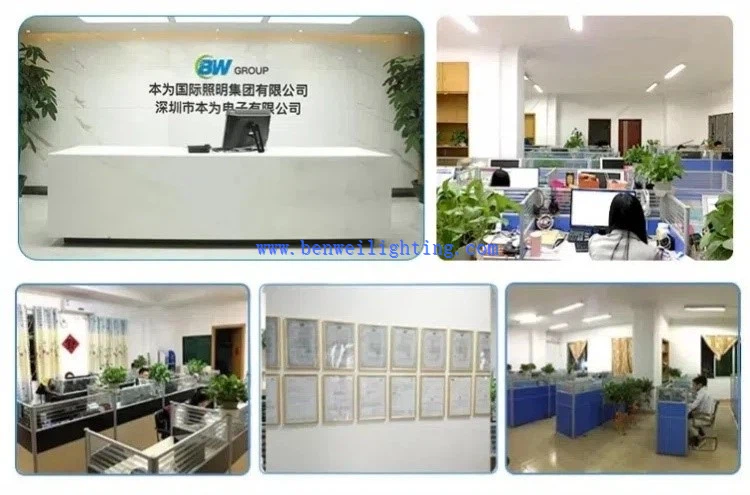
How To Cooperate With Us?
We are happy to have total control over the manufacturing process and the calibre of our products since we have our own facilities. Since we are producers rather than just brokers, we are dedicated to providing our customers with the best pricing. Since we are certain that the price and quality of our products are clear, we invite customers to see our samples first. Our commitment to quality and customer satisfaction drives us to continuously provide top-notch goods.
Our address
3rd Floor, 5th Building, Hebei Industrial Park, Hualian Community, Longhua District, Shenzhen, China





