

Introduction: The Financial Burden of Premature Lighting Failure
The decision to install lighting in a poultry house is often viewed as a one-time capital expenditure. However, for facilities relying on legacy lighting or standard commercial LEDs, the reality is an endless, frustrating cycle of replacement and repair.
The Hidden Costs of Frequent Replacements
When a light burns out in a chicken coop, the cost extends far beyond the price of a replacement bulb. The true financial drain lies in the labor required to replace it. Maintenance workers must navigate a physically demanding, highly biosecure environment, often requiring specialized equipment to reach ceiling-mounted fixtures. Every hour spent replacing a bulb is an hour diverted from flock management. Furthermore, frequent failures disrupt the photoperiod, causing stress to the birds and leading to measurable declines in feed conversion and egg production.
The Vulnerability of Traditional Fixtures
The standard incandescent and fluorescent bulbs historically used in agriculture are fundamentally incompatible with the realities of poultry housing. Incandescent bulbs are highly fragile and rely on a delicate filament that breaks easily. Fluorescent tubes, while more efficient, contain toxic mercury and are prone to premature failure due to electrode degradation, especially in environments where they are frequently switched on and off. Neither technology is engineered to withstand the chemical and physical assault of a commercial coop, making burnout an inevitability rather than an anomaly.
The Paradigm Shift: Engineered Agricultural LEDs
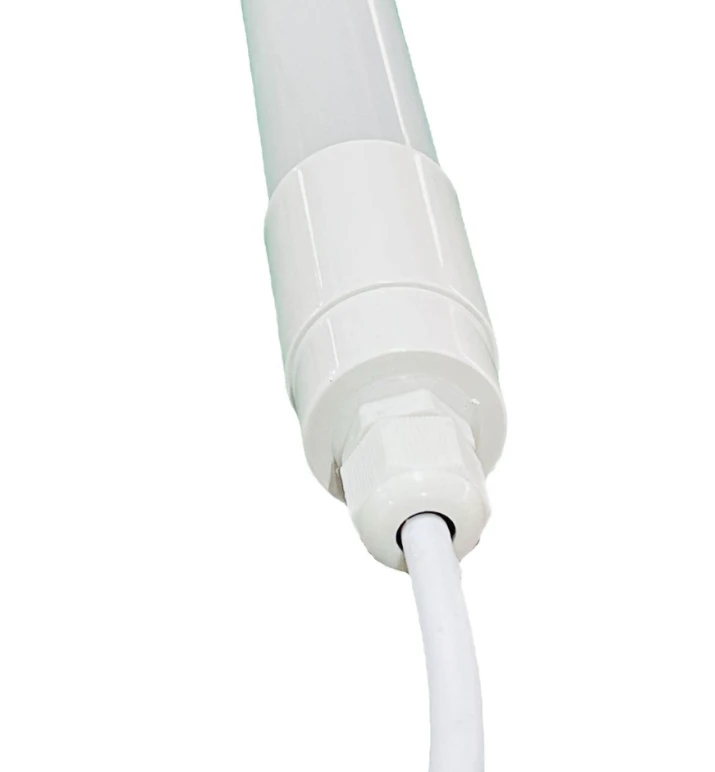
The solution to the replacement cycle is not simply buying a cheaper light; it is upgrading to a highly durable, purpose-engineered system. The featured waterproof, double-end wired LED tube light represents a paradigm shift in agricultural lighting. It is not merely an alternative light source; it is a long-term infrastructural asset designed to outlast the most hostile environmental conditions.
Root Causes of Lighting Burnout in Poultry Coops
To appreciate the longevity of the engineered solution, one must first understand the specific mechanisms of failure in a chicken house. Burnouts are rarely random; they are the direct result of environmental and electrical stressors.
Thermal Degradation and Poor Heat Dissipation
The most common cause of LED failure is thermal degradation. LEDs do not emit heat as light (like incandescent bulbs); they generate heat at the semiconductor junction.
The Phosphor Degradation Mechanism
If this heat is not efficiently drawn away from the LED chip, the temperature of the junction rises rapidly. Excessive heat causes the phosphor coating on the chip to degrade, leading to a phenomenon known as lumen depreciation, where the light gradually dims. More critically, chronic overheating causes the delicate wire bonds inside the LED package to break, resulting in a sudden and total burnout. Standard LED tubes use cheap fiberglass circuit boards that act as thermal insulators, trapping heat and guaranteeing premature failure.
Moisture Ingress and Ammonia Corrosion
The poultry environment is uniquely hostile to electrical components.
The Electrolytic Corrosion Process
Chickens generate massive amounts of moisture through respiration and excretion. When this moisture combines with ammonia gas from decomposing manure, it forms a highly corrosive alkaline solution. In standard light fixtures, this solution easily penetrates microscopic gaps around the end-caps and pins. Once inside, it attacks the exposed metal traces on the circuit board, causing electrolytic corrosion, short circuits, and catastrophic burnout. This is the leading cause of lighting failure in damp coops.
Electrical Instability and Driver Failure
The driver is the power supply that regulates the electricity flowing to the LEDs.
The Vulnerability of Non-Isolated Drivers
Many budget LED lights utilize non-isolated drivers, which lack a physical barrier between the high-voltage AC input and the low-voltage DC output. In agricultural settings, power grids are often subject to voltage fluctuations and surges (e.g., from large ventilation fans or feed augers kicking on). These surges can easily overwhelm a non-isolated driver, causing it to overheat and fail. Furthermore, non-isolated drivers are highly susceptible to moisture, which can cause immediate shorting.
The Engineering Solution: Anatomy of a Long-Lasting LED Tube
The featured product is specifically engineered to neutralize every root cause of lighting failure. By integrating advanced thermal, electrical, and sealing technologies, it provides the definitive solution to the burnout epidemic.
Advanced Thermal Management: High Lumen LED PCB
The foundation of the light's longevity lies in its internal architecture.
Aluminum-Backed PCBs for Good Dissipation
The featured product utilizes a High Lumen LED PCB mounted on an aluminum substrate. Aluminum possesses excellent thermal conductivity. This architecture ensures "good dissipation," rapidly conducting heat away from the delicate LED junctions and spreading it across the entire surface area of the tube. This prevents localized overheating, ensuring the LEDs maintain their maximum lumen output and high CRI over their entire lifespan, which can exceed 50,000 hours.
Fortress-Level Waterproofing: The Key to Survival
To prevent moisture and ammonia from destroying the electronics, the light must be completely sealed.
The Waterproof Base and Silicone Gland
The most vulnerable point of any tube light is the power cable entry. The featured light utilizes a specialized waterproof base. A heavy-duty, threaded cable gland physically compresses a medical-grade silicone seal tightly against the power cord. This creates a watertight, airtight barrier that prevents moisture from wicking into the tube. It is designed to withstand high-pressure washdowns and 100% humidity without failure.
Sealed Double-End Wire Connectors
When connecting multiple lights in a series, the junctions between them are prime targets for moisture ingress. The featured product utilizes a Double End Wires design with molded, waterproof male and female connectors. When locked together, these connectors form a seamless, watertight seal with internal O-rings. This completely eliminates the need for exposed, moisture-prone junction boxes, ensuring the entire electrical chain is protected.
Electrical Stability: The Isolated Driver
To survive power fluctuations and ensure safety, the driver must be robust.
High Efficiency and Stable Operation
The featured light incorporates an isolated driver. This engineering design uses a transformer to physically separate the high-voltage input from the low-voltage output. This provides two critical benefits:
Immunity to Surges: It protects the sensitive LED chips from voltage spikes, preventing sudden burnout.
Safety: It eliminates the risk of electrical shock, even in damp conditions.
Eliminating Flicker and Heat
An isolated driver operates at high efficiency, generating less heat than cheaper drivers. It also delivers a highly stable, flicker-free current. Flicker-free operation is vital, as it prevents chronic stress in the flock, reducing aggressive pecking and improving feed conversion.
Physical Durability: The High-Efficiency PC Diffusion Cover
The outer shell of the light must withstand physical impacts and chemical exposure.
Impact and Chemical Resistance
The light is housed in a High Efficiency PC (Polycarbonate) diffusion cover. Unlike fragile glass fluorescent tubes, polycarbonate is virtually unbreakable. It is highly resistant to the corrosive effects of ammonia and the chemical disinfectants used during sanitation.
Uniform Light Distribution
The frosted PC cover scatters the light, providing a soft, even illumination across the coop floor. This reduces harsh shadows and glare, encouraging birds to utilize the entire floor space evenly, which improves litter quality and reduces the risk of smothering.
The Double-End Advantage: Streamlining Maintenance
Beyond preventing burnouts, the design of the light must simplify the installation and maintenance process, reducing the labor burden on the farmer.
Seamless Daisy-Chaining
The Double End Wires design allows multiple lights to be connected end-to-end in a continuous chain.
Reduction of Wiring and Labor
This plug-and-play architecture drastically reduces the amount of external copper cabling, conduit, and electrical hardware required. A single power drop can illuminate an entire row of the coop. This saves significant installation time, reducing initial labor costs and creating a much cleaner, more organized ceiling environment.
Elimination of Vulnerable Junction Boxes
Traditional wiring requires junction boxes where cables connect to the lights. In a poultry house, these boxes are notorious for collecting dust, moisture, and ammonia, leading to corrosion and electrical failures. The double-end connector system eliminates these boxes entirely, removing a major point of failure and simplifying the sanitation process.
The Economic and Biological ROI: Why Upgrade?
While the initial cost of a premium agricultural LED tube may be higher than a standard commercial bulb, the Return on Investment (ROI) is substantial and rapid.
The End of the Replacement Cycle
By installing lights with isolated drivers, aluminum PCBs, and robust waterproofing, farmers effectively end the cycle of frequent replacements. The lights are designed to last for years. The money previously spent on replacement bulbs, and the labor hours spent installing them, are redirected into other areas of the farm.
Enhanced Biosecurity and Sanitation
Because the lights are completely waterproof, the entire lighting system can be safely high-pressure washed with disinfectants between flocks. This eliminates the lighting fixtures as a vector for disease, improving overall biosecurity and reducing mortality rates.
Maximizing Flock Performance
A reliable lighting system is essential for consistent biological performance. The flicker-free, high-CRI light provided by the isolated driver and high-quality LEDs ensures that the flock is calm, feeds efficiently, and grows uniformly.
Improved Feed Conversion Ratio (FCR)
Birds kept in a stress-free, evenly lit environment direct more energy toward growth. This leads to a measurably improved FCR for broilers, translating to higher profitability per flock.
Optimal Egg Production
For layer houses, the consistent photoperiod and spectral quality provided by these lights ensure optimal hormone release, maximizing peak egg production and shell quality.
Conclusion: The Definitive Solution for Poultry Producers
The frustration of constantly replacing burnt-out coop lights is a symptom of using equipment that is fundamentally unsuited for the agricultural environment. Heat, moisture, ammonia, and electrical fluctuations will inevitably destroy standard fixtures.
The solution is a strategic upgrade to purpose-engineered waterproof LED tube lights. By integrating a High Lumen LED PCB for exceptional heat dissipation; a waterproof base with a silicone gland and double-end waterproof connectors for absolute moisture and ammonia resistance; an isolated driver for stable, surge-resistant power; and a High-Efficiency PC diffusion cover for durability and uniform lighting, this product addresses every vulnerability of traditional lighting.
Investing in this technology is not merely a purchase of light bulbs; it is the acquisition of a maintenance-free, long-term infrastructural asset. It eliminates the labor and financial drain of replacements, enhances biosecurity, and provides the precise biological environment required to maximize the health and productivity of the flock. For the modern poultry producer, it is the only definitive solution to the burnout epidemic.
Shenzhen Benwei Lighting Technology Co., Ltd
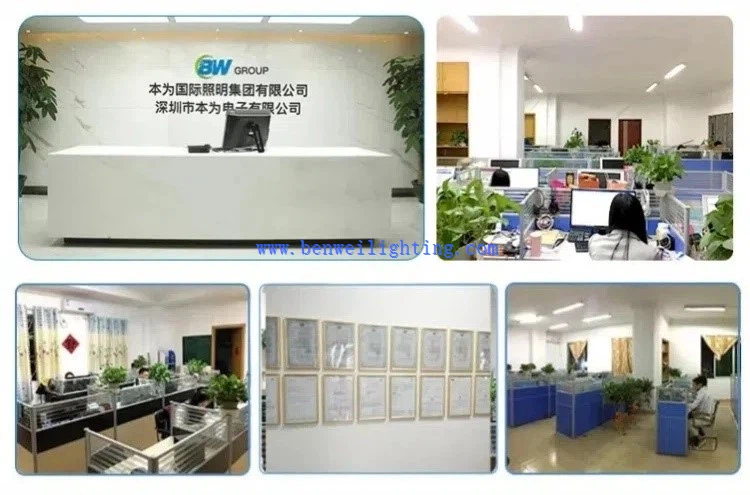
Shenzhen Benwei Lighting Technology Co., Ltd is a well-known company that designs, develops, makes, and sells high-tech goods, including LED lighting products. The plant where we work opened in 2010 and is in Shenzhen.
Our address
3rd Floor, 5th Building, Hebei Industrial Park, Hualian Community, Longhua District, Shenzhen, China





