

Whether you are a home balcony gardening enthusiast or the operator of a small-scale indoor farm, you have likely encountered a common set of frustrations: insufficient light during the autumn and winter months causes greenery to yellow and become leggy; uneven lighting in indoor corners leads to inconsistent growth among potted plants; and attempts to cultivate seedlings on a larger scale are hindered by the inherent unpredictability of natural light. The advent of plant grow lights was designed specifically to address these pain points. Far from being mere "lighting tools," they represent a sophisticated "artificial light source solution" precisely tailored to meet the specific growth requirements of plants. Today, we will take a detailed look at the core applications of plant grow lights to help you understand why they have become an indispensable tool for indoor cultivation.
Replacing Natural Light: Breaking Through Environmental Constraints on Cultivation
One of the fundamental requirements for plant growth is photosynthesis-a process that is impossible without adequate lighting. Natural light is notoriously unstable, subject to a multitude of variables such as season, weather, geographic location, and indoor layout. For instance, short daylight hours in winter, insufficient light on overcast or rainy days, and the near-total absence of natural light in shaded indoor corners can all lead to inefficient photosynthesis. This, in turn, results in a host of problems, including leggy growth, yellowing leaves, and a failure to bloom or bear fruit.
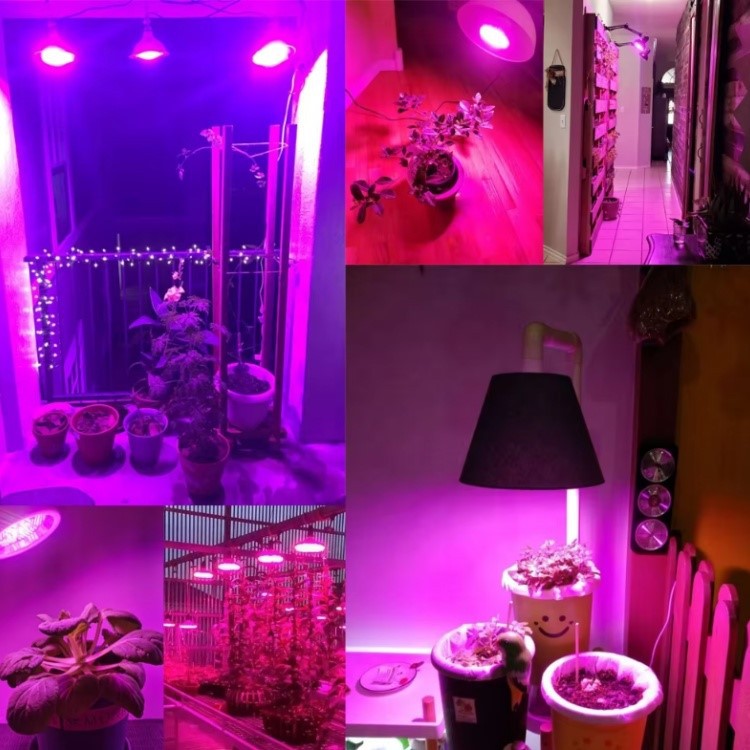
The primary function of a plant grow light is to precisely replicate natural light, providing plants with consistent and stable illumination to completely overcome the limitations of their growing environment. By simulating the spectral characteristics of sunlight, these lights enable areas previously deemed unsuitable for cultivation-such as indoor rooms, basements, or enclosed balconies-to fully meet the lighting demands of growing plants. This allows for "uninterrupted, year-round cultivation," liberating everything from home gardening and vegetable growing to small-scale commercial seedling propagation from the constraints imposed by natural light.
Precise Spectral Control: Tailoring Light to the Entire Growth Cycle
Many people mistakenly believe that a plant grow light is effective simply if it is "bright enough." In reality, this is not the case; a plant's core requirement regarding light lies in its *spectrum*-the specific composition of light wavelengths-rather than mere brightness alone. Light of different wavelengths exerts distinct effects on plant growth. For instance, blue light (400–500 nm) inhibits stem elongation and promotes leaf development, making it ideal for the seedling stage; red light (600–700 nm) stimulates photosynthesis, flowering, and fruiting, making it suitable for the flowering and fruiting stages; far-red light (700–800 nm) can regulate the timing of flowering; and ultraviolet light (280–400 nm) enhances plant resilience and improves fruit coloration.
High-quality plant growth lights allow for precise spectral control. By matching specific spectral ratios to a plant's growth stage-such as germination, seedling, vegetative, flowering, or fruiting-and its crop type (e.g., leafy greens, flowering/fruiting crops, or ornamentals), these lights ensure that plants receive optimal illumination at every phase. This prevents issues such as stunted growth or poor quality often caused by unsuitable lighting spectra, representing one of the core advantages that distinguish them from standard general-purpose lighting fixtures.
Enhancing Cultivation Efficiency and Optimizing Crop Quality and Yield
For growers-whether engaging in home gardening to achieve "vigorous growth and aesthetic appeal," or commercial farming to pursue "high yields and superior quality"-plant growth lights play a pivotal role. On one hand, by providing a stable and consistent light supply, these lights extend the effective duration of photosynthesis and accelerate photosynthetic rates, thereby shortening the overall plant growth cycle. For example, under optimal lighting conditions, the growth period for leafy vegetables can be reduced by approximately one-third. On the other hand, precise spectral control promotes nutrient accumulation within the plants, resulting in thicker leaves, more vibrant flowers, and plumper fruits, while simultaneously boosting the crops' resistance to environmental stressors and reducing the incidence of pests and diseases.
Furthermore, most plant growth lights feature energy-efficient designs (such as LED technology). While providing ample illumination, they consume significantly less energy than traditional light sources. Moreover, by allowing for adjustable light intensity and duration, they maximize light energy utilization, thereby lowering cultivation costs and striking a balance between operational efficiency and economic viability.
Adaptable to Diverse Cultivation Environments: Balancing Practicality with Convenience
The utility of plant growth lights spans a wide spectrum of cultivation scenarios, offering flexible adaptability for everything from small-scale home gardening to large-scale commercial crop production. In home settings, small, portable grow lights are ideal for supplementing light for potted plants on balconies or desktops; they are simple to install and easy to operate, requiring no specialized knowledge to use effectively. In commercial settings, high-power, modular grow lights are utilized in greenhouses, plant factories, and seedling nurseries to provide uniform illumination over large areas, accommodating various cultivation methods such as hydroponics and soil-based planting.
Furthermore, many plant grow lights feature built-in timers and dimming capabilities, allowing users to customize light duration and intensity according to specific plant requirements. This eliminates the need for frequent manual adjustments-freeing up your time while ensuring precise lighting conditions-thereby balancing practicality with convenience to meet the diverse needs of different growers.
Summary of the Core Applications of Plant Grow Lights
In summary, the core function of plant grow lights is, essentially, to "simulate and optimize natural sunlight using artificial light sources." This core concept revolves around four key points: First, replacing natural light to overcome environmental limitations and enable year-round cultivation; second, precisely regulating the light spectrum to suit a plant's entire growth cycle and address its specific lighting needs at every stage; third, boosting cultivation efficiency by optimizing crop quality and yield while simultaneously reducing operational costs; and fourth, adapting to diverse environments-balancing practicality with convenience-to satisfy the varied cultivation demands of both home enthusiasts and commercial enterprises.
Simply put, the role of plant grow lights is to liberate plants from their "dependence on natural sunlight," enabling them to grow healthily and rapidly in any environment. Whether you are a novice tending to houseplants or a professional engaged in large-scale cultivation, these lights serve as an indispensable tool for enhancing the growing experience and ensuring successful results.
Having reached this point, we trust you now have a clear understanding of the core applications of plant grow lights and why they have become an essential staple for indoor cultivation. If your current growing environment is plagued by issues such as insufficient lighting or stunted crop growth-or if you are looking to scale up your crop production and boost efficiency-we invite you to contact us. Based on your specific growing environment, crop types, and requirements, we will recommend the most suitable grow light products and provide professional lighting solutions to help you effortlessly unlock new possibilities in indoor cultivation. Should you have any questions, please feel free to leave a comment or send us a private message; we will be sure to provide you with a prompt response!
Our address
No. 5-3 Niujiao Road, Yanchuan Community, Yanluo Subdistrict, Bao'an District, Shenzhen
benwei10@benweilighting.com






