

Introduction: The Hidden Defects of Traditional Outdoor LED Flood Lights
Common Operational Pain Points of Traditional Integrated LED Flood Lights
Most conventional outdoor LED flood lights adopt an integrated cavity design, where the LED light source, constant-current driver, circuit board, and heat sink are all assembled inside a closed single housing. This integrated manufacturing process features simple production and low cost, so it occupies the low-end and middle-end outdoor lighting market for a long time. Nevertheless, for high-power lighting scenarios requiring long-term continuous operation, such as all-weather stadium lighting, 24-hour industrial yard lighting, and coastal port lighting, the integrated structure exposes fatal technical defects. First, high-power LED chips generate massive heat during continuous operation. The closed cavity structure hinders natural air convection, resulting in heat accumulation inside the lamp body and a sharp rise in operating temperature. Second, the built-in driver and circuit components are highly sensitive to high temperature. Long-term high-temperature operation will accelerate the aging of electronic components, cause circuit drift and current instability, and further induce lamp flicker, brightness attenuation, and even short-circuit damage.
Technical Bottlenecks Restricting the Service Life of Outdoor Lighting Equipment
The core factor determining the service life of LED flood lights is the operating temperature of the chip and the stability of the driving system. Industry data shows that for every 10℃ increase in the operating temperature of LED chips, the lumen attenuation rate increases exponentially, and the overall service life of the lamp is reduced by nearly 30%. Traditional integrated lamps cannot isolate the heat generated by the light source from the electrical system. The high temperature conducted by the heat sink continuously erodes the driver and circuit modules, forming a vicious cycle of "heat accumulation - electrical instability - accelerated aging - rapid light decay". In addition, outdoor complex environments such as rainwater immersion, sandstorm erosion, and high humidity will exacerbate the failure rate of integrated structural lamps. Once the internal temperature difference causes condensation, the built-in electrical components are prone to short circuit and corrosion, leading to frequent equipment failure and extremely high later maintenance costs. These bottlenecks make traditional LED flood lights unable to meet the long-term, high-stability, and low-consumption operation requirements of professional outdoor lighting projects.

Core Definition and Working Principle of Thermoelectric Separation Technology
Professional Definition of Thermoelectric Separation
Thermoelectric separation is an advanced structural optimization technology specially designed for high-power LED lighting equipment. Its core definition is to physically isolate the thermal system and electrical system of the lamp through a modular split structure, completely separating the heat-generating light source module and the heat-sensitive driving power module into two independent closed spaces. Different from the thermoelectric effect of semiconductor materials such as the Seebeck effect, the thermoelectric separation applied in LED flood lights focuses on structural physical isolation rather than energy conversion. It fundamentally cuts off the heat conduction path from the light source heat sink to the driver circuit, realizing independent heat dissipation of the thermal system and independent stable operation of the electrical system, and eliminating the mutual interference between heat and electricity inside the lamp body.
Structural Composition and Working Mechanism of Thermoelectric Separation System
The thermoelectric separation structure of premium outdoor LED flood lights is composed of three core independent modules: a high-efficiency heat dissipation light source module, an external isolated waterproof drive module, and an insulating fixed support structure. Each module operates independently without thermal and electrical cross-interference. First, the light source module adopts a thickened ribbed aluminum alloy heat sink and high-precision LED chip layout. All heat generated by the chip during operation is directly conducted to the external heat sink and dissipated rapidly through natural air convection, ensuring the light source always works in a low-temperature and constant-temperature environment. Second, the driving power module is externally installed on a dedicated anti-corrosion bracket, completely separated from the high-temperature heat sink of the light source. The independent fully sealed waterproof cavity isolates the driver from external humid air, rainwater, and internal heat radiation, ensuring the constant-current circuit operates stably at normal temperature. Third, the high-strength insulating support structure fixes the two modules without any heat conduction medium, thoroughly blocking potential heat transfer channels.
Essential Differences Between Thermoelectric Separation Structure and Traditional Integrated Structure
There are essential technical differences between thermoelectric separation structure and traditional integrated structure in heat dissipation logic and electrical stability. Traditional integrated lamps adopt a "co-location integration" design, where heat sources and electrical components share the same cavity. Heat cannot be dissipated in time, and high temperature continuously impacts the driver, resulting in unstable current and reduced chip luminous efficiency. In contrast, the thermoelectric separation structure adopts a "partitioned independent operation" mode. The thermal system is exclusively responsible for heat conduction and dissipation, and the electrical system independently controls constant current and voltage stabilization. The two systems do not interfere with each other. This structural innovation solves the inherent defect of thermal-electrical coupling of traditional lamps, realizes zero heat interference of the electrical system, and creates the most suitable operating temperature environment for both LED chips and driving components simultaneously.
Core Technical Advantages of Thermoelectric Separation for Outdoor LED Flood Lights
Ultra-Low Lumen Decay, Maximizing Long-Term Lighting Consistency
Light attenuation is the key index that determines the long-term use value of outdoor flood lights. The main cause of rapid light decay of traditional LED lamps is the high-temperature aging of chips and fluorescent powder. Relying on efficient heat dissipation and thermal-electrical isolation capabilities, thermoelectric separation technology keeps the LED chip operating temperature stable within the optimal range of 45-65℃ for a long time, avoiding high-temperature burnout and aging of chip particles. For the premium circular modular LED flood light equipped with thermoelectric separation structure, after 50,000 hours of continuous operation, the lumen retention rate is still higher than 70%, which is far superior to the 40%-50% lumen retention rate of traditional integrated lamps under the same service life. In long-term lighting projects such as stadium night games and square landscape lighting, ultra-low light decay ensures consistent illumination uniformity and brightness, avoiding the problem of dark field and uneven lighting caused by lamp aging, and always meeting professional lighting standard specifications.
Extend Overall Lamp Service Life and Reduce Replacement Frequency
The service life of LED flood lights depends on the dual stability of light source chips and driving power supplies. According to industry test data, the service life of LED chips itself can reach more than 80,000 hours, but the service life of traditional integrated lamps is often only 20,000-30,000 hours. The core reason is that the high-temperature environment accelerates the aging and failure of the driving power supply. The thermoelectric separation structure completely protects the core electrical components from high-temperature erosion. The external independent waterproof driver operates at normal temperature all year round, with extremely low component aging rate. The overall rated service life of the lamp is stably increased to 50,000 hours, and the actual service life in conventional outdoor environments can even reach more than 60,000 hours. For large-scale outdoor lighting projects with hundreds of lamps, the ultra-long service life greatly reduces the annual equipment replacement frequency, avoids project lighting interruption caused by frequent replacement, and improves the overall operational stability of the lighting system.
Improve Electrical Stability and Avoid Complex Power Grid Environment Failure
Outdoor lighting equipment often faces complex power grid environments such as voltage fluctuation, surge impact, and unstable current. Traditional integrated lamps are prone to circuit drift and parameter changes under high-temperature operation, which reduces the driver's ability to resist voltage fluctuation and easily causes lamp flicker, sudden extinction, and even burnout. The thermoelectric separation structure ensures that the driving module is always in a normal-temperature and dry sealed environment. The internal circuit parameters are stable without temperature drift, and the constant-current output accuracy is maintained at ±1%. It can adapt to a wide voltage range and resist instantaneous surge impact and voltage fluctuation in complex power grids. Whether it is low-voltage operation in rainy weather or high-load continuous operation in high-temperature summer, the lamp can maintain zero stroboscopic, zero flicker, and constant brightness, completely solving the common failure problems of traditional outdoor lamps in harsh power environments.
Enhance Environmental Adaptability and Realize All-Weather Stable Operation
Outdoor flood lights need to cope with extreme environments such as heavy rain, typhoon, sandstorm, high temperature, low temperature, and coastal high humidity. Traditional integrated closed cavities are prone to internal condensation due to temperature difference. Once water vapor enters the cavity, high-temperature heating will form humid and high-temperature microenvironment, corrode circuit boards and chips, and cause equipment failure. The thermoelectric separation modular structure matches the IP66 highest outdoor protection rating. The independent sealed cavities of the light source module and the driving module can completely block dust, rainwater, and humid air. More importantly, the physical isolation structure avoids condensation caused by temperature difference heat conduction. Even in coastal salt fog erosion, desert sandstorm environment, and extreme temperature weather from -40℃ to +60℃, the lamp can operate stably without water accumulation, corrosion, and short circuit, realizing true all-weather fault-free operation.
Commercial Value and Procurement Advantages of Thermoelectric Separation Technology
Significantly Reduce Whole-Life Cycle Operation and Maintenance Costs
For engineering purchasers and project operators, the comprehensive cost of lighting equipment includes procurement cost, energy consumption cost, maintenance cost, and replacement cost. Although the one-time procurement cost of thermoelectric separation structure LED flood lights is slightly higher than that of traditional low-end integrated lamps, the later comprehensive cost is far lower. First, the ultra-long service life reduces the replacement cost by more than 60% compared with traditional lamps. Second, ultra-low light decay avoids frequent brightness detection and lamp debugging, saving manual maintenance costs. Third, high energy efficiency and stable luminous efficiency reduce long-term power consumption. Traditional lamps will gradually increase power consumption with aging, while thermoelectric separation lamps maintain stable energy-saving efficiency for a long time. Calculated based on a 5-year project cycle, the comprehensive operation cost of thermoelectric separation LED flood lights is saved by more than 45% compared with traditional products, bringing huge economic benefits for large-scale lighting projects.
Improve Project Qualification and Meet High-Standard Lighting Requirements
Professional scenarios such as sports stadium competitions, commercial plaza lighting, and port terminal operations have extremely strict requirements for lighting stability, uniformity, and durability. International sports lighting standards and commercial outdoor lighting specifications clearly stipulate that the light attenuation of venue lighting equipment shall not exceed 30% within 5 years, and the equipment failure rate shall be lower than 1%. Traditional integrated LED lamps are difficult to meet this standard due to rapid light decay and high failure rate. The thermoelectric separation LED flood lights perfectly meet international high-standard lighting specifications with their ultra-low attenuation, high stability, and low failure rate. For engineering contractors, adopting this technical product can effectively improve project qualification, pass various professional acceptance standards, enhance project competitiveness, and win more high-end engineering orders.
Zero Hidden Safety Hazards and Improve Project Operational Safety
High-temperature operation of traditional outdoor lamps is easy to cause shell overheating, circuit aging, and short-circuit ignition, which brings potential fire safety hazards to outdoor public spaces and industrial sites. The thermoelectric separation structure realizes hierarchical heat dissipation and electrical isolation. The surface temperature of the lamp body is always kept within the safe range, and the electrical system is completely isolated from high-temperature heat sources, eliminating the safety hazards of circuit aging and short-circuit ignition caused by heat accumulation. In addition, the external independent driver has over-current, over-voltage, and over-temperature protection functions, which can automatically cut off the power in case of abnormal power supply, ensuring zero safety accidents during long-term operation. It is the safest and most reliable lighting solution for crowded public venues and high-standard industrial sites.
Product Matching: Premium Circular Modular LED Flood Light with Thermoelectric Separation
Exclusive Optimized Structural Design
The premium circular modular LED flood light fully iterates and upgrades based on thermoelectric separation core technology, realizing the perfect combination of structural innovation and performance optimization. The product adopts a fully split thermoelectric separation layout, with the light source module equipped with thickened dense fin aluminum alloy heat sink, which enlarges the heat dissipation area by 80% compared with ordinary lamps and realizes rapid heat conduction and convection heat dissipation. The external independent waterproof driver is fixed by a special anti-loosening bracket, which is physically isolated from the high-temperature heat sink without any heat interference. The overall die-cast aluminum shell adopts anti-corrosion electrostatic spraying technology, which resists ultraviolet aging and acid rain erosion, adapting to long-term outdoor harsh environment operation.
Synchronous Upgrade of Supporting Performance
Based on the stable foundation of thermoelectric separation technology, the product has achieved all-round performance upgrades. Equipped with non-yellowing high-precision PC optical lens and professional anti-glare visor, it realizes precise light control, uniform illumination, and zero light pollution, meeting anti-glare standards for sports venues. It supports 360° arbitrary angle adjustment and high-pole precise aiming installation, with flexible and convenient construction. With IP66 full waterproof and dustproof protection, wide voltage adaptive design, and zero-strobe constant-current drive, the product maintains stable and efficient operation in all outdoor scenarios, and its comprehensive performance is far ahead of traditional integrated LED flood lights.
Conclusion: Thermoelectric Separation Is the Core Standard for High-End Outdoor Lighting
Through systematic technical analysis and commercial value verification, thermoelectric separation technology is not a dispensable auxiliary design, but the core technical standard that distinguishes high-end professional outdoor LED flood lights from ordinary low-end products. It fundamentally solves the three major industry pain points of traditional lighting equipment: rapid light decay, short service life, and poor environmental stability caused by thermal-electrical coupling interference. For outdoor lighting projects pursuing long-term stability, low consumption, low failure rate, and high comprehensive cost performance, thermoelectric separation structure has become an indispensable core configuration. The premium circular modular LED flood light with exclusive optimized thermoelectric separation design can provide ultra-long-life, ultra-low attenuation, high-stability, and all-weather reliable lighting solutions for sports stadiums, commercial plazas, port terminals, and industrial yard projects, effectively reducing project operation and maintenance costs, improving project quality and safety, and is the most worthy high-cost-performance choice for global engineering procurement and project upgrading.
How To Cooperate With Us?
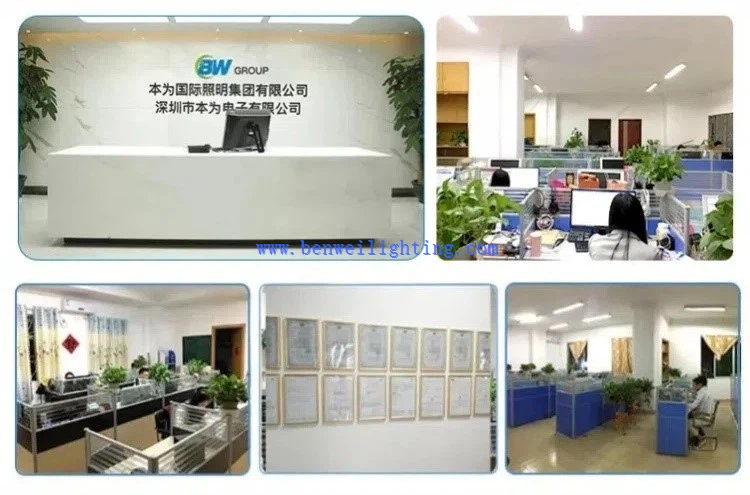
Since we have our own facilities, we are pleased to have complete control over the production process and the quality of our goods. We are committed to giving our clients the finest prices since we are manufacturers rather than just brokers. We encourage buyers to see our samples first since we are certain that the cost and calibre of our items are transparent. Our dedication to excellence and client happiness motivates us to consistently provide superior products.
Our address
3rd Floor, 5th Building, Hebei Industrial Park, Hualian Community, Longhua District, Shenzhen, China





