

Introduction: Structural Defects of Traditional Square Arena Lights
Design Limitations of Conventional Square Floodlight Housing
Traditional square arena LED floodlights adopt a rigid square closed shell structure, which is designed for standardized mass production rather than professional outdoor lighting logic. The square frame forms four right-angle dead corners inside the lamp body, which completely block natural air convection during equipment operation. Different from the radial symmetrical structure of circular lamps, the square structure has unbalanced spatial stress and airflow distribution, resulting in concentrated heat accumulation at the four corners of the lamp body. Most traditional square lamps adopt an integrated internal cavity design, where the LED light source, driving power, and circuit board are tightly arranged in a limited square space. The closed right-angle structure cannot form effective heat circulation, making high-power square lamps prone to local overheating during long-term continuous operation. In addition, the square outer frame has large wind resistance and poor streamline performance. When installed on high poles of stadiums and ports, the lamps bear strong wind impact for a long time, which easily causes bracket deformation, shell vibration, and even loose internal components, seriously affecting the stability and service life of lighting equipment.
Core Pain Points in Practical Application of Square Arena Lights
In actual stadium and large-area outdoor lighting projects, traditional square floodlights expose many irreparable performance defects. First, the square light source layout and square lens form fixed rectangular light spots. When multiple lamps are arranged for large-area lighting, overlapping bright areas and blind dark areas are inevitable, resulting in uneven overall field illumination, which cannot meet the uniform illumination standards of professional sports competitions and high-standard commercial venues. Second, the heat dissipation dead corners of square lamps lead to inconsistent temperature of each LED chip. The chips in high-temperature areas age rapidly with severe light decay, while the chips in low-temperature areas maintain normal brightness, resulting in gradual color difference and brightness imbalance of the whole lamp after 1-2 years of use. Third, the square integrated structure has poor environmental adaptability. The right-angle gaps are easy to accumulate dust, rainwater, and sand, and internal condensation is more likely to occur under temperature difference changes, causing circuit corrosion and frequent lamp failure. These practical pain points make traditional square arena lights only suitable for low-demand and short-term temporary lighting scenarios, and cannot meet the long-term stable operation requirements of high-end professional lighting projects.

Structural Innovation: Inherent Advantages of Circular Modular Design
Radial Symmetrical Optical Structure of Circular Lamp Body
The core advantage of circular modular LED floodlights lies in its radial symmetrical circular structure, which perfectly matches the natural light-emitting law of LED chips. LED light sources emit light in a radial diffusion form, and the circular lamp body and circular optical lens can completely fit the light diffusion track, realizing 360° uniform light control without dead angles. Different from the forced rectangular light shaping of square lamps, the circular structure adopts a free curved optical design, which can flexibly adjust the light projection angle according to different venue requirements, forming a continuous and uniform circular irradiation area. In stadium lighting, multiple circular modular lamps can form a seamless and superimposed lighting network, completely eliminating dark zones and overlapping bright spots, and realizing ultra-high uniformity field illumination. This structural design fundamentally solves the optical distortion and uneven illumination problems caused by the mismatch between the square shell and radial light source of traditional square lamps, and fully complies with the illumination uniformity requirements of international FIFA, IAAF and other professional sports lighting standards.
Modular Split Structure Upgrade
Different from the integrated one-piece structure of traditional square floodlights, premium circular LED floodlights adopt an independent modular split design, including independent light source module, independent heat dissipation module, and external independent driving module. Each functional module operates independently without mutual interference, realizing professional division of labor in heat dissipation, light emission, and power supply. The modular structure allows each LED chip group to correspond to an independent heat dissipation unit, ensuring consistent temperature of all chips and synchronous luminous performance. Meanwhile, the split modular design greatly improves the maintainability of the equipment. When individual modules fail, there is no need to replace the whole lamp, which only needs targeted replacement of faulty modules, greatly reducing later maintenance costs and project operation downtime. In contrast, the integrated structure of square lamps makes it impossible to disassemble and repair separately. Once a local component fails, the whole lamp will be scrapped directly, resulting in extremely high comprehensive replacement costs in long-term project operation.
Streamlined Aerodynamic Appearance Design
The circular streamlined shell completely abandons the rigid right-angle structure of square lamps, realizing ultra-low wind resistance design. In high-pole installation scenarios such as stadiums, port terminals, and large yards, outdoor lamps need to resist strong winds, typhoons, and sandstorms all year round. The right-angle structure of square lamps will generate strong wind resistance and turbulence, resulting in long-term vibration of the lamp body, loose internal wiring, and aging of fixing parts. The circular arc streamline structure can smoothly guide airflow, reduce wind impact and wind resistance by more than 30% compared with square lamps, effectively avoiding lamp body vibration and structural deformation. This excellent aerodynamic performance ensures that the circular modular floodlight can maintain stable structural performance in extreme weather such as strong winds and typhoons, greatly improving the outdoor weather resistance and structural durability of the equipment.
Performance Comparison: Circular Modular Lights vs Traditional Square Arena Lights
Optical Performance and Illumination Uniformity
Optical performance is the core index to distinguish professional arena lighting from ordinary outdoor lighting. Traditional square arena lights are limited by square lenses and square shell constraints, and the light spot presents a rigid rectangular shape with obvious edge attenuation. The illumination brightness at the center of the light spot is too high, while the edge brightness decays rapidly, forming a sharp contrast between bright center and dark edge. When multiple square lamps are arranged for large-area paving, the overlapping parts are over-bright and the gaps are dark, resulting in serious uneven field illumination, which affects athletes' visual judgment and audience viewing experience, and cannot meet the lighting requirements of formal competitions and live broadcasts. Circular modular LED floodlights adopt customized circular high-precision PC optical lenses, with uniform radial light distribution and gentle edge light attenuation. The overall light spot is smooth and without dark corners, realizing ultra-high uniformity illumination of the whole field. Professional test data shows that the field uniformity of circular modular lamps can reach more than 0.9, while that of traditional square lamps is only 0.6-0.7. In addition, equipped with a professional anti-glare visor, circular lamps can effectively block upward light spillage, reduce glare and light pollution, fully meeting the anti-glare standards of professional sports venues and high-standard urban outdoor lighting.
Thermal Management and Lumen Decay Control
Heat dissipation efficiency directly determines the light attenuation speed and service life of LED floodlights. Traditional square floodlights have four right-angle heat dissipation dead corners, and the internal closed cavity cannot form effective air convection. The heat generated by high-power LED chips accumulates inside the lamp body for a long time, resulting in a continuous high-temperature operating environment. Long-term high-temperature operation accelerates the aging of LED chips and fluorescent powder, leading to rapid lumen decay. After 20,000 hours of operation, the luminous flux retention rate of traditional square lamps is only 50%-60%, and the lamps are basically in a scrapped state after 30,000 hours. The circular modular floodlight adopts dense fin-type thickened aluminum alloy heat sink, which matches the radial symmetrical structure, with larger heat dissipation area and more uniform heat conduction. Combined with the core thermoelectric separation technology, the light source heat dissipation module and the driving power module are physically isolated, completely eliminating the heat interference of electrical components. The circular structure forms an all-round natural air convection channel, which can quickly take away heat and keep the chip operating temperature stable at 45-65℃. After 50,000 hours of continuous operation, the lumen retention rate of circular modular lamps is still higher than 70%, with ultra-low light decay, far exceeding the performance of traditional square lamps.
Environmental Adaptability and Protection Performance
Outdoor arena lighting equipment needs to adapt to complex and harsh environments such as heavy rain, high humidity, sandstorm, high temperature, low temperature, and coastal salt fog. Traditional square floodlights have right-angle gaps and closed dead corners, which are easy to accumulate dust and rainwater. The internal temperature difference is easy to form condensation water, which corrodes circuit boards and chips, leading to frequent short-circuit faults. Most square lamps have poor sealing performance, and the protection grade is mostly IP65, which cannot resist strong water jet impact and long-term dust accumulation. The circular modular floodlight adopts an all-round seamless sealing process, with no dead corners in the arc structure, not easy to accumulate dust and water stains, and easier to clean and maintain. The whole machine reaches the highest outdoor IP66 protection grade, which can completely block dust invasion and resist all-directional strong water jet impact. Whether it is -40℃ low-temperature freezing environment or 60℃ high-temperature scorching environment, coastal high-humidity salt fog weather or desert sandstorm environment, circular modular lamps can operate stably for a long time without condensation, corrosion, and failure, realizing true all-weather fault-free operation.
Structural Stability and Installation Flexibility
In terms of installation adaptability and structural stability, circular modular floodlights also have absolute advantages over traditional square lamps. Traditional square lamps have a single installation angle, and the square frame is easy to block the light during angle adjustment, resulting in limited irradiation range and poor flexibility. The rigid square shell has poor pressure resistance and is easy to deform under external force and strong wind impact. The circular modular lamp is equipped with a 360° freely adjustable U-shaped locking bracket, which supports arbitrary angle fine-tuning, and can accurately locate the irradiation direction according to venue layout requirements, adapting to high-pole installation, wall-mounted installation, and gantry installation of various venues. The arc streamlined shell has uniform structural stress, strong compression resistance and impact resistance, and is not easy to deform. In addition, individual modules of circular lamps can be adjusted independently, with flexible lighting layout, which can meet the personalized lighting needs of different areas of stadiums, plazas, and ports. The fixed bracket is equipped with a professional anti-loosening structure, which can avoid displacement caused by long-term vibration and ensure long-term installation stability of the equipment.
Commercial and Procurement Value Advantages of Circular Modular Floodlights
Whole-Life Cycle Cost Saving
For engineering project investors and operators, the comprehensive cost of lighting equipment includes one-time procurement cost, energy consumption cost, maintenance cost, and replacement cost throughout the life cycle. Although the unit procurement cost of circular modular LED floodlights is slightly higher than that of traditional square lamps, the long-term comprehensive cost is far lower. First, the ultra-long service life of 50,000 hours reduces the equipment replacement frequency by more than 60% compared with square lamps, saving a lot of repeated procurement and construction costs. Second, the ultra-low light decay performance avoids frequent lamp replacement and debugging caused by brightness attenuation, reducing manual maintenance and equipment downtime costs. Third, the high luminous efficiency and stable energy-saving performance make the power consumption 70% lower than that of traditional square lamps, bringing long-term stable electricity cost savings. Calculated based on a 5-year project operation cycle, the comprehensive operation cost of circular modular floodlights is reduced by more than 45% compared with traditional square arena lights, with extremely high long-term cost performance.
Improve Project Quality and Pass High-Standard Acceptance
Professional sports venues, key municipal plazas, and port terminal projects have extremely strict acceptance standards for lighting systems, with clear requirements for illumination uniformity, glare value, light decay rate, and equipment failure rate. Traditional square arena lights are difficult to meet high-standard acceptance requirements due to uneven illumination, rapid light decay, and high failure rate, which easily leads to project acceptance delay and unqualified evaluation. The circular modular floodlight, with its uniform optical performance, ultra-low light decay, high stability, and low failure rate, fully meets international professional sports lighting standards and municipal engineering lighting specifications. Adopting circular modular lighting solutions can effectively improve the overall quality of the project, ensure one-time pass of professional acceptance, enhance the market competitiveness of engineering contractors, and help win more high-end engineering project cooperation opportunities.
Higher Safety and Scalability
The modular split structure of circular floodlights brings higher operational safety and later scalability. The thermoelectric separation design avoids safety hazards such as circuit aging and short-circuit ignition caused by heat accumulation of traditional square lamps. The external independent driver has multiple protection functions such as over-current, over-voltage, and over-temperature protection, which can automatically cut off the power in case of abnormal power supply, ensuring zero safety accidents during long-term operation. At the same time, the modular design supports later functional upgrading and power adjustment. According to the upgrading of venue lighting standards, the light source modules and lens modules can be replaced separately to realize lighting effect upgrading without replacing the whole lamp. Traditional integrated square lamps have no scalability, and can only be completely scrapped and replaced when the lighting standards are upgraded, resulting in serious waste of resources and increased project costs.
Application Scenario Verification: Practical Performance Advantages in Professional Venues
Sports Stadium Competition Lighting
In formal sports competition scenarios such as football fields, tennis courts, and basketball courts, lighting uniformity, low glare, and stable brightness are the core indicators affecting competition fairness and broadcasting effect. Traditional square lamps have uneven illumination and serious edge light decay, which lead to different visibility in different areas of the field, affecting athletes' running and judgment. The glare problem of square lamps also interferes with athletes' vision and reduces the viewing experience of live audiences and online viewers. Circular modular LED floodlights achieve seamless uniform lighting through radial optical design, with soft and uniform light, ultra-low glare value, no stroboscopic, and high color rendering index, which can perfectly adapt to high-definition live broadcast and slow-motion shooting. The stable brightness and no light decay ensure consistent lighting effect in the whole competition process, fully meeting the lighting needs of professional competitions and commercial events.
Large-Scale Outdoor Public and Industrial Lighting
In municipal plazas, scenic spots, port terminals, and industrial storage yards, lighting equipment needs long-term 24-hour continuous operation and adapt to complex outdoor environments. Traditional square lamps are prone to rapid aging and frequent failure in long-term high-load operation, requiring frequent maintenance and replacement. Circular modular floodlights rely on excellent heat dissipation, weather resistance, and stability, realizing long-term fault-free operation. The streamlined wind resistance design ensures stable operation in extreme weather, and the modular structure reduces maintenance difficulty and cost. The uniform large-area illumination effect avoids dark areas of plazas and yards, improves site safety, and creates a high-quality and safe outdoor lighting environment for public places and industrial sites.
Conclusion: Circular Modular Design Becomes the New Standard of Professional Arena Lighting
Through systematic performance comparison and scenario verification, it is fully proved that circular modular LED floodlights have all-round crushing advantages over traditional square arena lights in optical performance, heat dissipation efficiency, environmental adaptability, structural stability, and commercial value. The inherent structural defects of square lamps, including heat dissipation dead corners, uneven light distribution, large wind resistance, and poor scalability, make them unable to adapt to the upgrading needs of modern high-standard outdoor lighting projects. The circular radial symmetrical structure, modular split design, streamlined aerodynamic shape, and supporting thermoelectric separation technology endow circular modular floodlights with ultra-low light decay, ultra-long service life, high stability, and high cost performance. For all professional outdoor lighting projects that pursue high quality, low failure rate, and low long-term operation cost, circular modular LED floodlights are the most ideal upgraded alternative to traditional square arena lights. In the future outdoor high-power lighting market, circular modular design will completely replace traditional square structure and become the universal new standard of professional arena lighting.
How To Cooperate With Us?
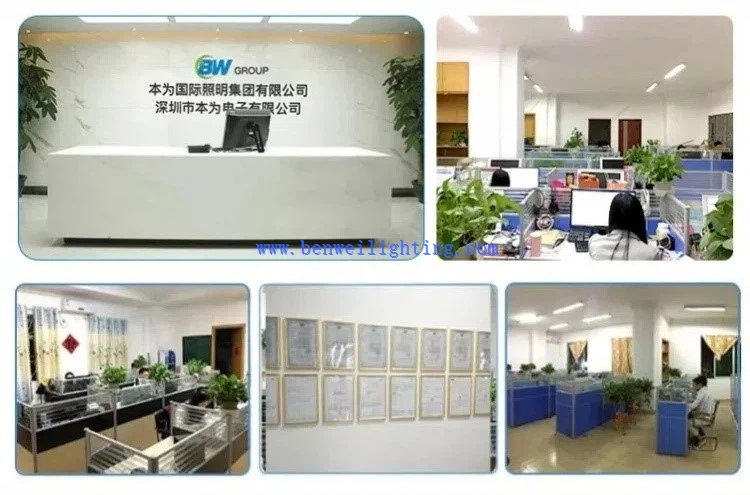
Since we have our own facilities, we are pleased to have complete control over the production process and the quality of our goods. We are committed to giving our clients the finest prices since we are manufacturers rather than just brokers. We encourage buyers to see our samples first since we are certain that the cost and calibre of our items are transparent. Our dedication to excellence and client happiness motivates us to consistently provide superior products.
Our address
3rd Floor, 5th Building, Hebei Industrial Park, Hualian Community, Longhua District, Shenzhen, China





